Porte d'Italie, Toulon
City Gate, Historic Site and Monument in Toulon
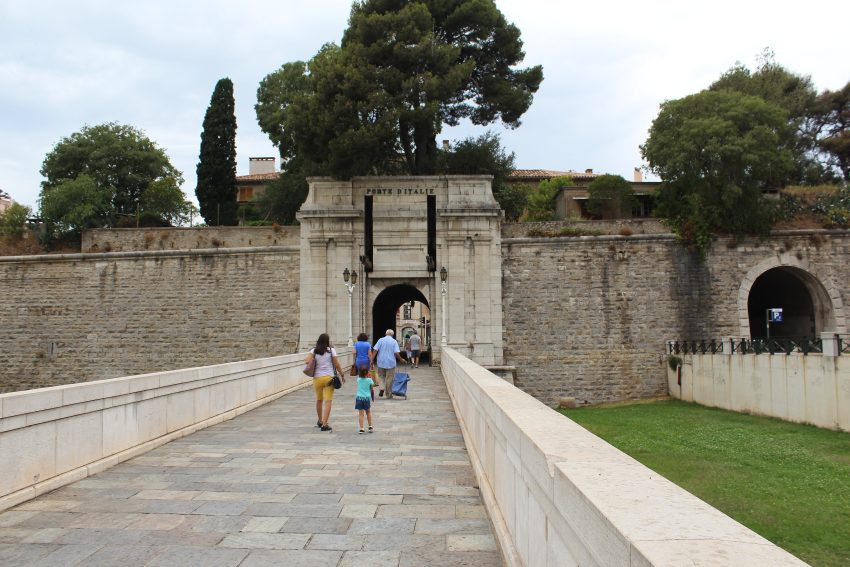
The Porte d'Italie is one of Toulon's most recognizable historic gateways, a surviving fragment of the city's former fortifications and a memorable landmark on the edge of the central districts. It sits in a busy urban setting where routes from the port-side center, Mayol, and the university area converge, making it an easy “pass-by” sight that still rewards a closer look.
It works especially well as a stop on a self-guided walking tour: pair it with the old town streets, the harbor front, and a market or café break nearby. For the best views, step back to take in the full arch and surrounding stonework, then circle around to notice details you might miss when simply crossing the junction.
Table of Contents
- History and Significance of the Porte d’Italie
- Things to See and Do in the Porte d’Italie
- How to Get to the Porte d’Italie
- Practical Tips on Visiting the Porte d’Italie
- Where to Stay Close to the Porte d’Italie
- Is the Porte d’Italie Worth Visiting?
- For Different Travelers
- FAQs for Visiting Porte d’Italie
- Nearby Attractions to the Porte d’Italie
History and Significance of the Porte d’Italie
The Porte d'Italie is closely linked to Toulon's long history as a fortified city. Over centuries, Toulon expanded behind successive defensive walls, and the gate is among the last visible traces of that once-extensive system.
Much of the structure visitors see today reflects major construction and redesign phases in the 18th century, when fortification thinking and military engineering shaped the city's edges. The gate's identity is also tied to a famous moment in French history: it is traditionally associated with Bonaparte and the departure of troops toward the Italian campaign, which helped cement the name “Porte d'Italie.”
Beyond the headline history, the gate is significant because it anchors a real, everyday piece of Toulon: it's not isolated in a museum setting, but integrated into the city's movement patterns, which makes it a living landmark rather than a static monument.
Things to See and Do in the Porte d’Italie
Start by appreciating the gate as architecture: look for the overall proportions of the arch, the solidity of the stonework, and how the structure frames the streets around it. If you enjoy urban history, it’s a satisfying spot to imagine where walls, bastions, and controlled entry points once shaped daily life.
Next, use it as a navigation point for a short loop walk. From here you can stitch together a compact itinerary that includes central Toulon streets, shopping and cafés, and a quick detour toward the port atmosphere—ideal if you have limited time between train connections or a shore-side day.
Finally, treat it as a photo stop with context. Wide shots work best from a safe distance where you can include the gate and the city energy around it; detail shots reward a slower pace, especially if you like textures, stone, and historic urban layers.
How to Get to the Porte d’Italie
The nearest major airports for Toulon are Toulon Hyères Airport (TLN) for the quickest arrival, with Marseille Provence Airport (MRS) and Nice Côte d'Azur Airport (NCE) as larger alternatives with more flight options. For the best deals and a seamless booking experience, check out these flights to Toulon on Booking.com.
Toulon is well connected by rail, and arriving at Toulon train station makes it straightforward to continue on foot, by local bus, or by a short taxi ride into the central areas near the gate. You can use SNCF Connect to check schedules, compare routes, and purchase tickets for National (SNCF ) and regional trains (TER). For a more streamlined experience, we recommend using Omio, which allows you to easily compare prices, schedules, and book tickets for both National and Regional travel across all of Europe, all in one place.
If you're driving, aim for central Toulon parking and then walk the last stretch to the Porte d'Italie to avoid the stress of navigating the busiest junctions right beside the monument. If you are looking to rent a car in France I recommend having a look at Discover Cars, first, as they compare prices and review multiple car rental agencies for you.
Practical Tips on Visiting the Porte d’Italie
- Official website: https://toulon.fr/laissez-seduire/article/porte-d-italie
- Entrance fee: Free.
- Opening hours: 24 Hours.
- Best time to visit: Go in the morning for softer light and fewer crowds, or near sunset for warmer tones on the stone and more atmospheric photos.
- How long to spend: Plan 10–20 minutes for photos and a quick look, or 45–90 minutes if you're using it as a waypoint in a longer central Toulon walk.
- Accessibility: The area is an active city junction with sidewalks and crossings; expect typical urban surfaces and be prepared for traffic noise and curb changes.
- Facilities: There are no dedicated on-site facilities at the gate itself, but you'll find cafés, shops, and public services within a short walk in central Toulon.
Where to Stay Close to the Porte d’Italie
For most travelers, the best area to base yourself is central Toulon so you can walk to the old town, the port, and key sights without relying on transport.
If you want a classic, comfortable city stay close to the action, consider a well-located central hotel that makes early walks and late dinners easy. OKKO Hotels Toulon Centre This is a strong pick for modern comfort and a convenient base near the center, ideal if you like a streamlined, contemporary hotel style.
For travelers who prioritize quick access to trains and easy arrivals/departures, staying near the station can be a practical win while still keeping the center walkable. Grand Hôtel Dauphiné, Boutique Hôtel & Suites Chosen for its central positioning and boutique feel, it’s a good match for a short city break where you want comfort without being far from sights.
If you prefer a reliable, no-fuss option with a familiar standard, a major chain in the center can simplify planning. Holiday Inn Toulon - City Centre Included for dependable amenities and an easygoing base for exploring on foot.
For a slightly more intimate, characterful stay, a smaller central property can feel more personal and local. Hôtel Bonaparte A good choice if you like a simpler, classic city-hotel vibe and want to stay close to Toulon’s historic core.
If you’re watching your budget but still want a central location, a straightforward hotel can keep costs down while keeping you close to the action. ibis Styles Toulon Centre Port Picked for value and convenience, especially if you plan to spend most of your time out exploring rather than in the room.
Is the Porte d’Italie Worth Visiting?
Yes—especially if you enjoy historic city details, quick photo stops, and places that add context to a walking tour. The Porte d'Italie is not a “big-ticket” attraction, but it's a meaningful fragment of Toulon's fortified past and a satisfying landmark to connect the old city story with the modern street scene.
Honest Pivot: If you’re short on time and prefer immersive attractions (museums, viewpoints, or beaches) over urban monuments, you can skip a dedicated visit and simply note it in passing while heading to the port, markets, or other highlights.
What Other Travellers Say...

Reviews are largely positive, with visitors describing the Porte d'Italie as a worthwhile historic landmark and a meaningful piece of Toulon's past. Common highlights include its 18th-century heritage, its role as a notable city gateway, and the sense of local history connected to famous figures and campaigns. A few comments also note its practical location as a crossroads between central areas, which makes it easy to include on a walk. The main downside mentioned implicitly is that it sits in a busy urban setting, so the experience can feel more like a quick stop than a quiet, immersive visit.


For Different Travelers
The Porte d'Italie is flexible: it can be a quick check-in for casual visitors or a deeper “connect-the-dots” stop for travelers who like mapping a city's past onto today's streets. It's best enjoyed when paired with nearby neighborhoods and a short itinerary rather than treated as a standalone destination.
Families with Kids
Kids may enjoy it most as a brief “gateway” moment on a walk—an easy landmark to spot and photograph without requiring a long attention span. It also works well as a simple history prompt: a chance to talk about walls, gates, and how cities used to protect themselves.
Plan to combine it with a more kid-friendly payoff nearby, like a market snack stop or a waterfront stroll. That way, the gate becomes a fun waypoint rather than the main event.
Couples & Romantic Getaways
For couples, the appeal is in the atmosphere and the photos: historic stone, city energy, and a natural excuse to wander hand-in-hand into central streets. It’s a low-pressure stop that fits neatly into an afternoon of cafés and exploring.
If you time it for golden hour, you’ll get warmer light and a more cinematic feel. Pair it with a relaxed dinner nearby to turn a quick landmark into part of a romantic, unhurried evening.
Budget Travelers
This is an easy win for budget travelers because it's a meaningful sight that doesn't require tickets or a long detour. You can fold it into a free walking route that also includes central streets, viewpoints, and public spaces.
To keep costs down, plan your route so you’re walking between clusters of sights rather than using taxis. Bring water and take advantage of nearby bakeries or market-style food for affordable breaks.
History Buffs
History lovers will appreciate the Porte d'Italie as a tangible remnant of Toulon's defensive system and urban growth. It's the kind of place where a few minutes of reading up beforehand makes the stones feel far more “alive.”
Use it as a starting point to trace where walls and gates once stood, then look for other fragments and alignments in the street plan. Even without a museum label, it can be a rewarding piece of historical detective work.
FAQs for Visiting Porte d’Italie
Getting There
Tickets & Entry
Visiting Experience
Tours, Context & Itineraries
Photography
Accessibility & Facilities
Food & Breaks Nearby
Safety & Timing
Nearby Attractions to the Porte d’Italie
- Toulon Old Town (Vieille Ville): A compact maze of streets and squares that's ideal for wandering, shopping, and café stops.
- Port of Toulon (harborfront): A scenic waterfront area for strolling, boat-watching, and soaking up the maritime atmosphere.
- Halles de Toulon: A lively covered market-style food hall that's great for tasting local products and grabbing a casual meal.
- Place de la Liberté: A central square that's a natural meeting point and a good place to pause between sights.
- Musée National de la Marine (Toulon): A strong option for understanding Toulon's naval identity through exhibits and artifacts.
The Porte d'Italie appears in our Complete Guide to Visiting Toulon!

Moira & Andy
Hey! We're Moira & Andy. From hiking the Camino to trips around Europe in Bert our campervan — we've been traveling together since retirement in 2020!
This website uses affiliate links which may earn a commission at no additional cost to you!
Planning Your Visit
24 Hours.
Free.
Nearby Attractions
- Le Marche du Cours Lafayette (0.2) km
Market - Cathedrale Sainte-Marie-de-la-Seds (0.2) km
Cathedral, Church and Religious Building - Halles Raspail (0.3) km
Attraction, Bazaar and Market - Eglise Saint-Francois de Paule (0.3) km
Church, Historic Building and Religious Building - Rue d'Alger (0.4) km
Street - Port de Toulon (0.5) km
Ferry, Harbour and Port - Toulon Opera (0.5) km
Arts Venue, Opera House and Theatre - Ancienne Corderie (0.6) km
Archive, Historic Building and Historic Site - Musee national de la Marine (0.7) km
Attraction, Museum and Port - Place de la Liberte (0.7) km
Area, Attraction and Square