Porta Nuova, Assisi
City Gate in Assisi
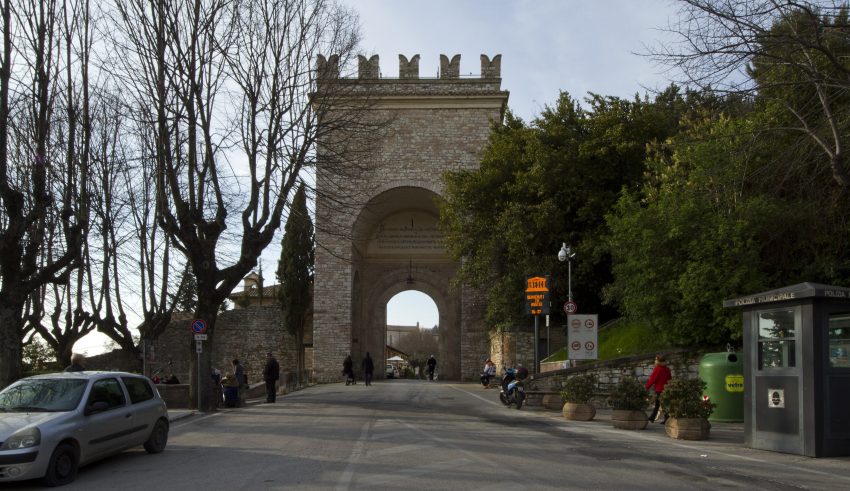
Porta Nuova is one of those Assisi sights you “experience” rather than simply “visit.” It's a working gateway in the city walls-an impressive medieval arch you pass through as you move between the modern approach roads and the dense, atmospheric streets of the historic centre. The effect is immediate: one step and the town feels quieter, older, and more deliberately paced.
What makes the gate especially memorable is the sense of meaning attached to it. Above the arch you'll notice a Latin inscription associated with Saint Francis' blessing of the city, and once you're inside the walls you're perfectly placed to begin a classic Assisi route, with the Basilica of Saint Clare only a short walk away.
Table of Contents
- History and Significance of the Porta Nuova
- Things to See and Do in the Porta Nuova
- How to Get to the Porta Nuova
- Practical Tips on Visiting the Porta Nuova
- Where to Stay Close to the Porta Nuova
- Is the Porta Nuova Worth Visiting?
- For Different Travelers
- FAQs for Visiting Porta Nuova
- Nearby Attractions to the Porta Nuova
History and Significance of the Porta Nuova
Porta Nuova is tied to Assisi's later medieval expansion, when the city's walls and access points were strengthened and formalised to manage movement, security, and trade. The gate is traditionally associated with a 1365 inauguration and blessing by Cardinal Egidio Albornoz, which anchors it firmly in the political-religious reality of medieval Umbria rather than being “just” a scenic arch.
Its significance today is as much symbolic as architectural. This is a threshold between two Assisis: outside the walls, the practical world of arriving and parking; inside, the tightly packed lanes, stone façades, and pilgrimage geography that define the town. For many visitors, it becomes the mental “start line” of the historic centre.
The Franciscan inscription above the arch adds a distinctive layer of meaning. In a destination with major basilicas and world-famous fresco cycles, Porta Nuova offers something different: a smaller, street-level moment where Assisi's identity feels embedded into daily movement, not only into monumental interiors.
Things to See and Do in the Porta Nuova
Walk through slowly and look up. The details are easy to miss if you treat it as a simple passage, but the inscription and stonework reward a deliberate pause. It’s also a good place to notice how Assisi’s Gothic-medieval vocabulary shows up in practical structures, not only churches.
Use the gate as a natural orientation point. If you're building a walking route, Porta Nuova works well as a starting marker: step inside, settle into the town's pace, then head toward Santa Chiara and continue onward to the central lanes and squares.
Stay for a minute on either side of the arch to appreciate the “before and after” feeling. This is one of the few spots where you can sense the walls doing their original job-separating the outer edge from the inner city fabric-without needing any historical imagination.
How to Get to the Porta Nuova
The most convenient airports for reaching Assisi are Perugia San Francesco d'Assisi Airport (PEG) for proximity, with Rome Fiumicino (FCO) and Florence (FLR) as common alternatives for wider flight options. For the best deals and a seamless booking experience, check out these flights to Assisi on Booking.com.
By train, most travellers arrive at Assisi station in Santa Maria degli Angeli and continue uphill by bus or taxi into the historic centre, where Porta Nuova is one of the most practical “walk-in” entry points. Use Omnio to easily compare schedules, book train tickets, and find the best prices all in one place for a hassle-free journey across Italy.
By bus, Porta Nuova is also a useful reference point because it's a signed area for local stops used when moving between the station area and the upper town, and it sits close to the routes that lead directly toward Santa Chiara.
If you're travelling by car, the Saba Porta Nuova car park at Piazza Porta Nuova is the most convenient option for accessing this side of the historic centre, especially if your plan is to start with Santa Chiara and the eastern lanes. If you are looking to rent a car in Italy I recommend having a look at Discover Cars, first, as they compare prices and review multiple car rental agencies for you.
Practical Tips on Visiting the Porta Nuova
- Entrance fee: Free
- Opening hours: 24 Hours
- Best time to visit: Early morning for a quieter, more atmospheric “arrival,” or late afternoon when the light flatters the stone and the town feels calmer.
- How long to spend: 10-20 minutes if you’re pausing for details and photos, or simply treat it as a gateway moment at the start of a longer walk.
- Accessibility: Generally straightforward to pass through, but nearby streets involve slopes, cobbles, and uneven stone surfaces typical of Assisi’s historic centre.
- Facilities: None at the gate itself; plan cafés, restrooms, and breaks around Santa Chiara or Piazza del Comune.
Where to Stay Close to the Porta Nuova
For a culture-heavy itinerary, base yourself inside Assisi’s historic centre so you can walk to Santa Chiara, the main squares, and the basilicas at quieter hours; if your priority is easy transport links and quick rail access, stay in Santa Maria degli Angeli near the station and come up to the old town for focused sightseeing blocks.
For a central, high-comfort stay that keeps you well placed for walking routes beginning near Porta Nuova, consider Nun Assisi Relais & Spa Museum. If you want a classic old-town base with an easy walk to the main lanes and an Assisi “historic centre” feel, Giotto Hotel & Spa is a strong choice. For travellers prioritising station convenience and day trips, TH Assisi - Hotel Cenacolo keeps logistics simple while still making Assisi’s upper town very manageable.
Is the Porta Nuova Worth Visiting?
Yes, in the sense that it's one of the best ways to begin Assisi properly. It's not a standalone “destination” like a basilica interior, but it delivers a genuine arrival moment, frames the town's medieval identity, and drops you directly into a highly walkable route toward Santa Chiara and beyond.
Honest pivot: if you're short on time and entering Assisi from the San Francesco side, you may never pass through Porta Nuova and you won't be missing a major interior or ticketed highlight. It's most worthwhile for travellers who enjoy city walls, gates, and the subtle pleasure of crossing a historic threshold.
What Other Travellers Say...

Porta Nuova, near the parking area on Via Fonti di Moiano at the edge of Assisi's upper town, is essentially a gateway into the historic centre rather than a standalone “attraction.” Reviewers describe it as a well-preserved starting point for exploring Assisi's old streets, with a strong sense of atmosphere and spirituality as you enter the medieval fabric of the city. It is positively reviewed overall (4.7 from 36 ratings), and is generally considered something to appreciate in passing as you walk from the car park into the heart of town.


For Different Travelers
Families with Kids
Porta Nuova works well for families because it's simple and tangible: a real gate in real walls that kids can walk through, touch, and understand immediately. Treat it like the “level start” of your Assisi walk-step through, point out the inscription, then keep moving toward the next bigger reward, like Santa Chiara or a gelato stop.
If you’re managing strollers, the gate itself is easy, but the streets just beyond it can be steep and uneven. Plan your route so you’re not constantly fighting the slope, and build in short breaks early.
Couples & Romantic Getaways
For couples, Porta Nuova is a small, quietly cinematic moment-especially early or late in the day. Walking through together gives your Assisi visit a sense of narrative: you're not just “in town,” you've entered it, and the medieval lanes ahead feel like they belong to the same story.
Pair it with a gentle route toward Santa Chiara and then onward into the backstreets, keeping pace slow. Assisi is at its best when you let the town's texture set the rhythm rather than trying to “tick off” sights.
Budget Travelers
This is an ideal budget “sight” because it costs nothing and still adds meaning to your day. Use it as a structural point in your itinerary: start here, walk to Santa Chiara, continue to Piazza del Comune, and you've built a strong Assisi spine without needing tours or extra tickets.
It's also practical: Porta Nuova is close to useful arrival infrastructure, so you can reduce taxis and keep your movement efficient by starting your walking day right at the edge of the historic centre.
FAQs for Visiting Porta Nuova
Getting There
Tickets & Entry
Visiting Experience
Tours, Context & Itineraries
Photography
Accessibility & Facilities
Safety & Timing
Nearby Attractions to the Porta Nuova
- Basilica di Santa Chiara: The most immediate major landmark from this side of town, central to Clare's story and Assisi's pilgrimage identity.
- Chiesa Nuova: A compact, often-overlooked stop tied to Francis' family setting, easy to combine with a central walk.
- Oratorio di San Francesco Piccolino: A small, atmospheric oratory that adds a “hidden Assisi” layer close to the main lanes.
- Piazza del Comune and the Temple of Minerva: Assisi's civic heart, ideal for a mid-walk pause, cafés, and a strong sense of the town's public life.
- Basilica di San Francesco d'Assisi: The essential Assisi complex for frescoes, pilgrimage atmosphere, and the town's biggest cultural “anchor” sight.
The Porta Nuova appears in our Complete Guide to Visiting Assisi!

Moira & Andy
Hey! We're Moira & Andy. From hiking the Camino to trips around Europe in Bert our campervan — we've been traveling together since retirement in 2020!
This website uses affiliate links which may earn a commission at no additional cost to you!
Planning Your Visit
24 Hours
Free
Nearby Attractions
- Basilica di Santa Chiara (0.3) km
Basilica - Capuchins Gate (0.3) km
Attraction, City Gate and Historic Site - Cattedrale di San Rufino di Assisi (0.4) km
Cathedral - Diocesan Museum and San Rufino Crypt (0.4) km
Museum - Roman Amphitheatre (0.4) km
Amphitheatre - Casa natale di San Francesco (0.4) km
Historic Site - Oratorio di San Francesco Piccolino (0.5) km
Religious Building - Chiesa Nuova (0.5) km
Church - Chiesa di Santa Maria Maggiore (0.5) km
Basilica, Historic Building and Historic Site - Rocca Minore (0.5) km
Castle