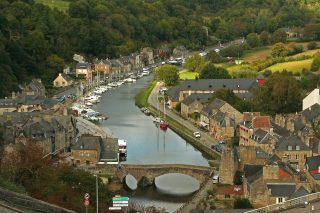
Pont Medard, Quimper
Bridge and Street in Quimper
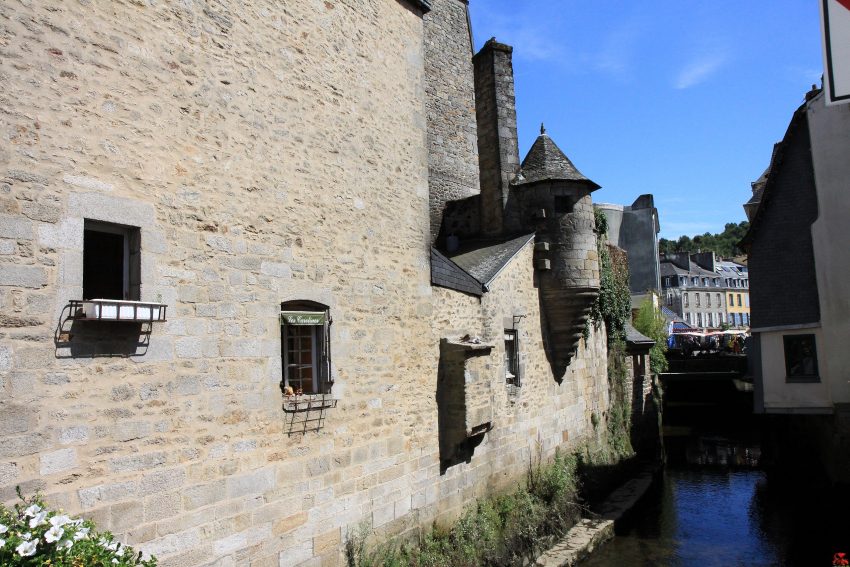
Pont Médard is one of those small Quimper landmarks you might cross without thinking, yet it quietly explains how the historic centre was organised. Spanning the Steir River, the bridge links Rue Kéréon to the old faubourg ducal, marking a key threshold in the medieval city where the episcopal quarter and the ducal domain once met. If you enjoy noticing how streets and waterways shaped old towns, this is one of the top sights in Quimper to look for as you explore on foot.
What makes the setting especially enjoyable is what sits on either side of the crossing. Rue Kéréon is Quimper's classic old-town street, lined with half-timbered façades and sturdier granite-fronted buildings that tell a story of change and rebuilding over time. Today it's a lively pedestrian route filled with shops and cafés, and it naturally draws you toward Place Saint-Corentin and the cathedral, so Pont Médard becomes a simple but memorable “connector” moment within a wider historic walk.
Table of Contents
History and Significance of the Pont Médard
Pont Médard began life as a drawbridge, which immediately signals its historical importance: this was not just a convenience crossing, but a controlled point of passage. In medieval Quimper, the bridge helped define boundaries between the episcopal quarter and the ducal domain, reinforcing how power, jurisdiction, and daily movement were structured within a compact riverside town.
Over time, as Quimper developed and the city's needs changed, the crossing evolved into a permanent stone structure. That transition is typical of historic towns where defensive and administrative features gradually became everyday urban infrastructure. The bridge's long continuity as a thoroughfare helps explain why the surrounding streets still feel like a coherent historic network rather than a collection of isolated monuments.
The bridge's significance is also tied to its relationship with Rue Kéréon, a street whose name reflects the craft trades that once shaped it, including cordwainers and shoemakers. After a major fire in 1762, parts of the street were rebuilt with more stone, which is why the architecture often shifts from timbered charm to granite solidity as you walk along it. Seen in that context, Pont Médard is part of a broader story about Quimper's resilience, rebuilding, and the steady transformation of a medieval layout into a modern city centre.
Things to See and Do in the Pont Médard
The best way to experience Pont Médard is to treat it as a pause point on a walking route rather than a standalone destination. Cross slowly, look upstream and downstream along the Steir, and notice how the river still carves out subtle “edges” in the old town. It's a good moment to orient yourself and understand how Quimper's historic streets align with waterways, bridges, and old boundaries.
Pair the bridge with a stroll along Rue Kéréon, which remains one of Quimper's most iconic streets. The pleasure here is in the details: half-timber patterns, granite façades, shopfronts set into older buildings, and the gradual pull toward Place Saint-Corentin. Even if you're not shopping, the street's mix of architecture and everyday city life makes it a rewarding walk, especially when you compare quieter early-morning atmosphere with busier afternoon energy.
If you enjoy photography, Pont Médard is a practical spot for framing “Quimper-in-one-shot” scenes: historic buildings, a narrow river, and a bridge that feels naturally embedded in the city. It's also an excellent place to appreciate the rhythm of the old town, where the most memorable moments often come from small transitions between streets, squares, and river crossings.
Practical Tips on Visiting the Pont Médard
- Suggested tips: Use Pont Médard as your marker when linking Rue Kéréon with the cathedral quarter, and take a brief stop to look along the Steir before continuing.
- Best time to visit: Early morning for quieter photos and a calmer feel on Rue Kéréon, or late afternoon when the old town is most lively.
- Entrance fee: Free.
- Opening hours: Open at all times as a public crossing.
- How long to spend: 10-25 minutes for a slow crossing and river views, longer if you combine it with a full Rue Kéréon walk.
- Accessibility: Generally easy to reach in the pedestrian centre, though surfaces in the historic core can be uneven in places.
- Facilities: Immediate access to cafés, bakeries, and shops on Rue Kéréon and nearby streets.
- Photography tip: Stand slightly off-centre to capture the river’s line and the street’s façades together, rather than photographing straight across.
- Guided tours: A guided walking tour of Quimper's old town often adds useful context about medieval boundaries and the city's districts.
- Nearby food options: Rue Kéréon and the cathedral area are ideal for a crêpe stop, a café break, or a quick bakery lunch.
Where to Stay close to the Pont Médard
For a stay that keeps you within easy walking distance of Rue Kéréon, the cathedral, and the riverside streets, Hôtel Ginkgo is a convenient base in the central area. If you want dependable comfort with straightforward access for day trips while still being close to the historic core, Mercure Quimper Centre works well for short breaks. For a central, practical option that keeps you close to the pedestrian streets and shops, Best Western Plus Hôtel Kregenn is another solid choice.
Is the Pont Médard Worth Visiting?
Yes, because it's one of those small, authentic features that makes Quimper feel like a real historic town rather than a set of separate attractions. The bridge is not a grand monument, but it gives you a clear sense of how medieval Quimper was organised, with waterways and controlled crossings shaping movement between districts.
It's also worth it because it costs no time or effort to include. If you're already walking Rue Kéréon or heading toward Place Saint-Corentin, you'll likely cross Pont Médard naturally, and taking an extra minute to notice it adds depth to the whole old-town experience.
FAQs for Visiting Pont Médard
What Other Travellers Say...

Pont Médard in Quimper is a compact, flower-covered bridge in the historic centre that visitors often encounter while exploring the town; reviewers praise its charm, floral decorations and the pleasant views along the long waterway, and note a nearby corbelled tower that makes the spot especially photogenic.


For Different Travelers
Families with Kids
Pont Médard works well for families because it’s quick, central, and naturally breaks up a longer old-town walk. Kids often enjoy the simple “bridge moment” of looking down at the river, spotting reflections, and watching how the water moves through the city.
To keep it easy, treat it as a short pause between more engaging stops, such as the cathedral square or a snack break on Rue Kéréon. It's a low-effort way to add a touch of history and scenery without needing a long attention span.
Couples & Romantic Getaways
For couples, Pont Médard is a pleasant detail that adds texture to a Quimper stroll. The combination of river, historic façades, and the gentle transition between districts makes it a natural place to slow down, take a photo, and enjoy the atmosphere of the old town.
It also pairs nicely with an unhurried café stop nearby. Cross the bridge, wander Rue Kéréon toward the cathedral, then settle in for a long drink or dessert, letting the city's rhythm set the pace for the afternoon.
Budget Travelers
Pont Médard is perfect for budget travellers because it’s completely free and sits on the main walking routes you’ll already be using. It’s an easy way to build a satisfying “historic centre loop” without spending on tickets, transport, or guided experiences.
Use it as a waypoint: river crossing, Rue Kéréon architecture, cathedral square, then back through quieter lanes. Add a bakery snack and you've got a strong Quimper experience that costs very little.
Nearby Attractions to the Pont Médard
- Odet River Quays: A scenic riverside walk that shows Quimper’s calmer side and links well with a historic-centre stroll.
- Place Saint-Corentin: The central square by the cathedral, ideal for soaking up Quimper’s historic core and people-watching.
- Saint-Corentin Cathedral: The city's defining Gothic landmark and the natural highlight at the top end of Rue Kéréon.
- Musée Départemental Breton: A deep introduction to Breton culture and regional history in the cathedral quarter.
- Jardin de l'Évêché: A peaceful cathedral-side garden that becomes especially lively during summer cultural events.
The Pont Medard appears in our Complete Guide to Visiting Quimper!

Moira & Andy
Hey! We're Moira & Andy. From hiking the Camino to trips around Europe in Bert our campervan — we've been traveling together since retirement in 2020!
This website uses affiliate links which may earn a commission at no additional cost to you!
Planning Your Visit
Open at all times as a public crossing.
Free.
Nearby Attractions
- Place Terre au Duc (0) km
Square - Place Terre au Duc (0) km
Square - Couvent des Ursulines de Quimper (0.2) km
Convent - Hotel de Boisbilly (0.2) km
Historic Building - Musée des Beaux-Arts de Quimper (0.3) km
Museum - Musée Départemental Breton (0.3) km
Museum - Quimper Cathedral (0.3) km
Cathedral - Jardin de l’Eveche (0.4) km
Gardens - Quimper Ramparts (0.4) km
City Walls - Mont Frugy (0.4) km
Viewing Point