Perfume Pagoda, Hanoi
Buddhist Temple near Hanoi
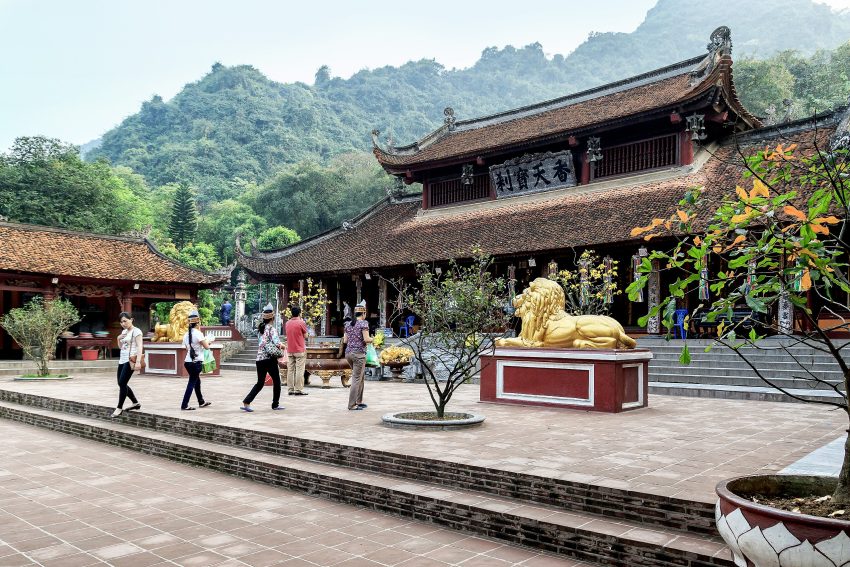
The Perfume Pagoda, or Chùa Hương, is one of Vietnam's most revered pilgrimage destinations, set among steep limestone mountains around 60 kilometres southwest of Hanoi. This vast complex of more than 30 Buddhist temples, pagodas, and shrines is hidden within the dramatic landscape of Hương Tích Sơn, where forested cliffs rise from rice paddies and streams. With legends dating back over two millennia and temples carved into magnificent caves, the Perfume Pagoda is one of the top attractions in Hanoi for travellers seeking both natural splendour and spiritual depth.
Visiting the Perfume Pagoda involves a memorable journey through rural scenery, river valleys, and mountain trails, making it a highlight of any walking tour of Hanoi's countryside excursions. From boats gliding along the Yến River to cave temples filled with incense and shimmering altars, the experience blends adventure, culture, and devotion into a single unforgettable day trip.
Table of Contents
- History and Significance of the Perfume Pagoda
- Things to See and Do in the Perfume Pagoda
- How to Get to the Perfume Pagoda
- Practical Tips on Visiting the Perfume Pagoda
- Where to Stay close to the Perfume Pagoda
- Is the Perfume Pagoda Worth Visiting?
- FAQs for Visiting the Perfume Pagoda
- Nearby Attractions to the Perfume Pagoda
History and Significance of the Perfume Pagoda
The Perfume Pagoda is believed to have been discovered by a Buddhist monk over 2,000 years ago, who meditated in the Hương Tích mountains and recognised the area's spiritual potential. The first temple was likely built in the 15th century, though most cave temples seen today date from the 17th century.
The entire complex evolved into one of Vietnam’s greatest Buddhist pilgrimage sites, centred around Hương Tích Cave-regarded as the “most beautiful cave in the south” since the late 18th century. Legends surrounding stalactites and stalagmites promise blessings for prosperity, fertility, health, or success, contributing to the site’s deep cultural resonance.
Over the centuries, thousands of devotees travelled here each spring to pray for luck and happiness. Today, the Perfume Pagoda remains both a spiritual sanctuary and a remarkable cultural landscape, where temples harmonise with the natural environment in a setting unlike any other in Vietnam.
Things to See and Do in the Perfume Pagoda
The Perfume Pagoda complex is extensive, with several major temples worth exploring.
Đền Trình (Presentation Shrine)
Located near the start of the pilgrimage route, this impressive shrine honours a general of the Hùng Kings. Visitors pass two kneeling stone elephants as they enter, setting the tone for the spiritual journey ahead.
Thiên Trù Temple (Heaven Kitchen Temple)
Also known as Chùa Ngoài (Outer Temple), Thiên Trù is the main ceremonial complex. Highlights include the Viên Công Bảo Stupa containing the remains of Master Trần Đạo Viên Quang, the naturally formed Thiên Thủy Stupa, a bell tower, and the Hall of the Triple Gem with a statue of Quan Âm Nam Hải. This area is rich with Buddhist symbolism and atmospheric architecture.
Giải Oan Temple (Clearing Unjust Charges Pagoda)
Situated along the trail toward Hương Tích Cave, this peaceful temple sits by Giải Oan Stream and Thiên Nhiên Thanh Trì (Natural Blue Pond). The nine flowing sources of the stream create a calming ambience.
Hương Tích Cave (Inner Perfume Pagoda)
The spiritual heart of the pilgrimage, the cave entrance resembles a dragon’s open mouth and leads into a vast cavern filled with altars, incense, and statues. The main sanctuary was built in 1575 and houses a revered stone statue of Quan Âm dating to 1793. Along the path, several additional shrines and caves-including Vọng Temple, Thuyết Kinh Cave, and Thiên Sơn Pagoda-offer opportunities for reflection and exploration.
How to Get to the Perfume Pagoda
The Perfume Pagoda is typically reached on day tours from Hanoi that include transport, guides, and boat rides. Travellers arriving by air will land at Nội Bài International Airport, located north of Hanoi. For the best deals and a seamless booking experience, check out these flights to Hanoi on Booking.com.
Visitors arriving by train can take a taxi or bus onward from Hanoi Railway Station toward Mỹ Đức district. Train schedules and bookings can be found on Omio.
Travelling by car from central Hanoi follows the route Pháp Vân - Cầu Giẽ - Đồng Văn - National Road 38 - Đậu Market - Chùa Hương, taking around one hour.
Independent travellers can choose:
- Motorbike: Via Nguyễn Trãi - Hà Đông - Ba La - Vân Đình; under two hours.
- Taxi: Convenient and direct.
- Bus: Routes 211, 78, and 75 connect to the pagoda.
- Boat: From Bến Đục village, a serene one-hour journey along the Yến River leads to the base of the pilgrimage route.
Practical Tips on Visiting the Perfume Pagoda
- Suggested tips: Wear good walking shoes; paths can be steep and uneven.
- Best time to visit: October to December for calm scenery; February to mid-March for the bustling Perfume Pagoda Festival.
- How long to spend: A full day, especially if visiting multiple temples.
- Accessibility: The boat ride is smooth, but the hike to Hương Tích Cave requires moderate fitness.
- Facilities: Food stalls, shops, rest stops, and cable cars near the main paths.
- Photography tip: Capture the Yến River boat journey in the early morning light.
- Guided tours: Strongly recommended for understanding the complex’s history and layout.
- Nearby food options: Vendors along temple paths and simple eateries near Bến Đục village.
Where to Stay close to the Perfume Pagoda
Most travellers stay in Hanoi and visit as a day trip. For central convenience and comfort, consider Sofitel Legend Metropole Hanoi. A modern option nearby is Movenpick Hotel Hanoi. For boutique charm, La Siesta Classic Hang Thung is a popular choice.
Is the Perfume Pagoda Worth Visiting?
Yes, the Perfume Pagoda is absolutely worth visiting. Whether you are drawn by its spiritual significance, its impressive cave temples, or its stunning natural scenery, the complex offers a powerful and unforgettable experience. The combination of riverboat journeys, mountain paths, and sacred architecture makes it one of northern Vietnam's most remarkable destinations.
What Other Travellers Say...

Huong Pagoda is a vast complex of Buddhist temples, grottos and shrines tucked into the limestone Huong Tich mountains near Mỹ Đức; visitors reach the site by boat along a scenic river and can continue up to the main cave temple either on foot via stairways or by cable car, with the cave and Thien Tru Pagoda highlighted as must-see spots. Pilgrimage season in the early lunar months brings very large crowds and many temporary stalls and eateries, while outside festival times the area is much calmer and offers peaceful scenery, though the route involves steep climbs and can be hot and exposed. Boats are typically shared unless you hire one privately, a leaflet at the ticket area helps orient you to the sites, and a full visit exploring surrounding temples usually takes a whole day.


FAQs for Visiting the Perfume Pagoda
Nearby Attractions to the Perfume Pagoda
- Mỹ Đức Countryside: Peaceful rice fields and village scenery.
- Ba Vi National Park: Forested mountain landscapes northwest of Hanoi.
- Van Phuc Silk Village: Traditional silk weaving near Hà Đông.
- Thay Pagoda: A historic pagoda set into limestone cliffs.
- Tay Phuong Pagoda: A hilltop temple known for its wooden sculptures.
The Perfume Pagoda appears in our Complete Guide to Visiting Hanoi!

Moira & Andy
Hey! We're Moira & Andy. From hiking the Camino to trips around Europe in Bert our campervan — we've been traveling together since retirement in 2020!
This website uses affiliate links which may earn a commission at no additional cost to you!
Planning Your Visit
120,000 VND
Nearby Attractions
- Cuc Phuong National Park (36.5) km
National Park - Bai Dinh Pagoda (40.0) km
Buddhist Temple - Hoa Lu Ancient Capital (40.8) km
Historic Building - Am Tien Pagoda Cave (41.6) km
Lake and Pagoda - Trang An Caves (44.4) km
River - Quán Sứ Pagoda (46.3) km
Buddhist Temple - Museum of Vietnamese Women (46.3) km
Museum - Hoa Lo Prison (46.4) km
Museum - Temple of Literature (46.5) km
Religious Building - Trang Tien Plaza (46.5) km
Shopping Centre