Pazo da Capitanía, La Coruna
Historic Building and Museum in La Coruna
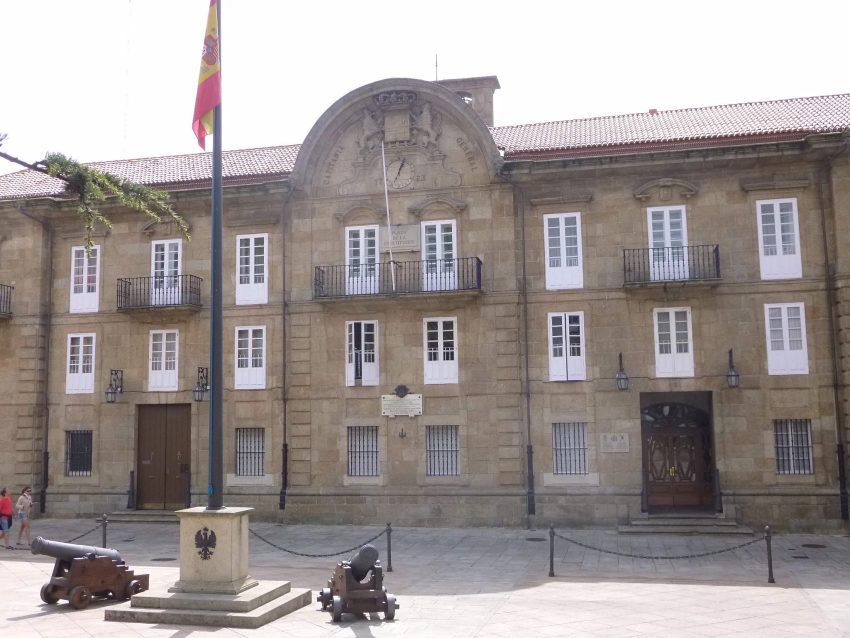
Set right on Praza da Constitución in the Old Town, the Palacio de Capitanía General de A Coruña is one of those buildings you can’t help but pause for: formal balconies, a stately façade, and the kind of presence that tells you it has always mattered. Even if you only see it from the square, it’s a strong “anchor stop” on any first-time wander through the historic centre.
What makes it especially worthwhile is how naturally it fits into a walking day. You can come here as part of a compact Old Town loop (perfect if you’re short on time) or build it into a longer route that layers in churches, viewpoints, and the waterfront. When the palace is open for a scheduled visit, it’s a rare chance to see inside a working historic institution rather than a museum staged for tourists.
Table of Contents
- History and Significance of the Palacio de Capitanía General de A Coruña
- Things to See and Do in the Palacio de Capitanía General de A Coruña
- How to Get to the Palacio de Capitanía General de A Coruña
- Practical Tips on Visiting the Palacio de Capitanía General de A Coruña
- Where to Stay Close to the Palacio de Capitanía General de A Coruña
- Is the Palacio de Capitanía General de A Coruña Worth Visiting?
- For Different Travelers
- FAQs for Visiting Palacio de Capitanía General de A Coruña
- Nearby Attractions to the Palacio de Capitanía General de A Coruña
History and Significance of the Palacio de Capitanía General de A Coruña
The site’s story reaches back to the 16th century, but the building you’re looking at today is largely the mid-18th-century rebuild, created to house the Captain General and key administrative functions tied to royal authority. In other words, this wasn’t just a grand residence-it was a control room for the region, designed to project stability and command right in the city’s most symbolic square.
That symbolic role is exactly why it appears in A Coruña's pivotal moments. In 1808, as resistance flared against Napoleon Bonaparte's forces, the palace became part of the city's political drama; in 1820, during the liberal uprising, it was stormed and the Captain General was arrested and taken to Castillo de San Antón. Those aren't “small footnote” events-this is a building that has repeatedly sat at the intersection of civic life, military authority, and public mood.
Things to See and Do in the Palacio de Capitanía General de A Coruña
Start with the simplest pleasure: stand back in the square and take in the palace’s scale and symmetry. The Old Town here is intimate, so a building with this kind of formality reads almost like a stage set-especially when the light hits the stone and the plaza quiets down between café rushes.
If you time your visit to a scheduled guided opening, the draw is the interior sequence: ceremonial rooms, architectural details you won’t see from the plaza, and the sense of stepping into a place that still has an official pulse. These visits are typically positioned as cultural outreach rather than standard daily touring, which is why they feel more “special occasion” than “drop-in attraction.”
Even when you can’t go inside, this is a great context stop. Use it as the moment on your walk where you switch from “pretty streets” to “what happened here,” because its history makes the surrounding Old Town feel instantly more layered and less like a postcard.
How to Get to the Palacio de Capitanía General de A Coruña
The palace is in A Coruña’s Old Town on Praza da Constitución, an easy walk from most central hotels and a natural waypoint between the harbour edge and the historic core.
If you’re flying in, the closest airport is A Coruña Airport (LCG), and it’s usually the most convenient option if schedules line up. If you want more flight choices, Santiago-Rosalía de Castro Airport (SCQ) is a common alternative for the region. For the best deals and a seamless booking experience, check out these flights to La Coruna on Booking.com.
By train, arrive at A Coruña’s main station and take a short taxi ride or a straightforward city-bus connection toward the Old Town; once you’re in the centre, walking is the fastest way to move between sights. Train schedules and bookings can be found on Omio.
If you’re driving, treat this as an Old Town walking stop: park once in a central garage on the edge of the historic area and do the rest on foot rather than trying to “hop” by car between narrow streets and limited access zones. If you are looking to rent a car in Spain I recommend having a look at Discover Cars, first, as they compare prices and review multiple car rental agencies for you.
Practical Tips on Visiting the Palacio de Capitanía General de A Coruña
- Entrance fee: Free (during scheduled guided visits).
- Opening hours: (Summer) Wednesday: 12:00. July–August. Friday: 11:00. Last Friday of the month.
- Official website: https://ejercito.defensa.gob.es/unidades/Coruna/mando_apoyo_maniobra/Localizacion/Capitania.html
- Best time to visit: Aim for a scheduled guided opening, then linger in the square afterwards when the Old Town is at its most atmospheric.
- How long to spend: 10-15 minutes for the exterior and the plaza; allow around an hour if you join a guided visit.
- Accessibility: The plaza approach is generally manageable, but interior access can vary because this is an official historic building; check ahead if step-free access is essential.
- Facilities: Don’t count on typical museum-style facilities on-site; plan cafés and restrooms around the Old Town streets nearby.
Where to Stay Close to the Palacio de Capitanía General de A Coruña
For a culture-heavy itinerary, base yourself in or beside the Old Town so you can walk to the main sights early and late; if your trip is more beach-and-evening focused, staying closer to the seafront and dining strips can make more sense while still keeping the historic core within an easy stroll.
A strong all-rounder near the waterfront edge of the centre is NH Collection A Coruña Finisterre, which is well placed for combining Old Town wandering with harbour walks. If you want a simple, central base that keeps you flexible for restaurants and daytime routes, Hotel Zenit Coruña is practical and walkable to many core sights. For a quieter feel with easy access to coastal viewpoints (and still not far from the centre by taxi or bus), Eurostars Ciudad de La Coruña is a good option.
Is the Palacio de Capitanía General de A Coruña Worth Visiting?
Yes-especially as part of an Old Town walk. Even when it’s closed, it’s a high-impact exterior stop in a prime square, and its backstory gives real meaning to the surrounding streets rather than turning them into “just another historic centre.”
Honest pivot: if you only enjoy attractions you can freely enter at any time, or you’re trying to pack in a long list of guaranteed-open interiors in one day, this can feel frustrating because access depends on scheduled visits rather than standard daily opening. In that case, treat it as a quick photo-and-context stop and prioritise places with predictable hours.
What Other Travellers Say...

Reviews highlight the palace as an important historic and architectural landmark in Plaza de la Constitución, noted for its neoclassical style and role in key events. Visitors especially appreciate the free, guided tour offered on the last Friday of each month, which covers notable interior spaces like the courtyard, stained glass, and ceremonial rooms. The main limitation mentioned is that visits are restricted to this limited schedule.


For Different Travelers
Families with Kids
If you’re touring with kids, use the palace as a short, story-driven stop: “this is where power sat” and “this is where people protested” lands better than architectural detail. Keep it brief in the square, then reward everyone with a nearby treat or a waterfront stroll.
If you manage to join a guided visit, set expectations upfront that it may be more formal than interactive. A good tactic is to give kids one “mission” (spot a coat of arms, find the grandest room, count balconies from the plaza) so it feels like a game rather than a lecture.
Couples & Romantic Getaways
This is a great stop for couples because it naturally sets up an easy, elegant mini-route: palace and plaza first, then drift through Old Town lanes toward a long lunch or a harbour-edge walk. It’s the kind of place that makes you slow down and notice atmosphere rather than chase checklists.
For photos, the romantic move is timing: come earlier for clean light and fewer people, then circle back at dusk when the square feels softer and more cinematic. Pair it with a calm viewpoint or a waterfront drink to end the loop.
Budget Travelers
Budget-wise, this is a smart stop because the exterior is always part of the walk, and scheduled visits are often free-so you get “big history energy” without paying museum prices. Build a day around walking: Old Town lanes, key churches, and a long coastal promenade.
To keep costs down, avoid taxi-hopping between points that are easily walkable once you’re central. Spend your money where it counts (a good lunch menu or a memorable bakery stop) and let the city do the rest.
History Buffs
History lovers will appreciate that this isn’t a decorative relic-it’s tied to real political tension, protest, and shifting power, including early resistance against Napoleonic forces and the liberal upheaval of 1820. The building is a useful lens for understanding A Coruña as a place shaped by institutions as much as by seafaring and trade.
If you can attend a guided visit, focus on how the interior is designed to communicate authority: the flow of rooms, the ceremonial feel, and the way the building relates to the square outside. Then continue to San Antón to keep the narrative thread going.
FAQs for Visiting Palacio de Capitanía General de A Coruña
Getting There
Tickets & Entry
Visiting Experience
Tours, Context & Itineraries
Photography
Accessibility & Facilities
Food & Breaks Nearby
Safety & Timing
Nearby Attractions to the Palacio de Capitanía General de A Coruña
- Praza de María Pita: The city's grand central square, ideal for soaking up A Coruña's civic energy and café culture.
- Igrexa de Santiago: One of the oldest churches in the city, compact and atmospheric, and an easy Old Town add-on.
- Colexiata de Santa María do Campo: A handsome Romanesque-rooted church that adds depth to an Old Town architecture walk.
- Castillo de San Antón: A sea-wrapped fortress with strong history vibes, directly tied to the palace's 1820 story thread.
- Torre de Hércules: The city's iconic lighthouse monument and a perfect “fresh air” counterpart to Old Town streets.
The Pazo da Capitanía appears in our Complete Guide to Visiting La Coruna!

Moira & Andy
Hey! We're Moira & Andy. From hiking the Camino to trips around Europe in Bert our campervan — we've been traveling together since retirement in 2020!
This website uses affiliate links which may earn a commission at no additional cost to you!
Planning Your Visit
(Summer) Wednesday: 12:00. July-August.
Friday: 11:00. Last Friday of the month.
Free (during scheduled guided visits).
Nearby Attractions
- Colexiata de Santa María do Campo (0.2) km
Church, Historic Building and Historic Site - Museo Histórico Militar (0.3) km
Attraction, Historic Site and Museum - Ruins of the Convent of Saint Francis (0.3) km
Convent, Historic Site and Ruins - Coruña City Hall (0.3) km
Attraction, Historic Building and Town Hall - Praza de María Pita (0.3) km
Area, Attraction and Square - Church of St. George (0.4) km
Church, Historic Building and Religious Building - Teatro Rosalía de Castro (0.4) km
Arts Venue, Historic Building and Theatre - Avenida da Mariña (0.5) km
Area, Promenade and Street - Mercado de San Agustín (0.5) km
Market - Cruise Terminal (0.5) km
Docks, Pier and Port