Palazzo Baldeschi al Corso, Perugia
Palace in Perugia
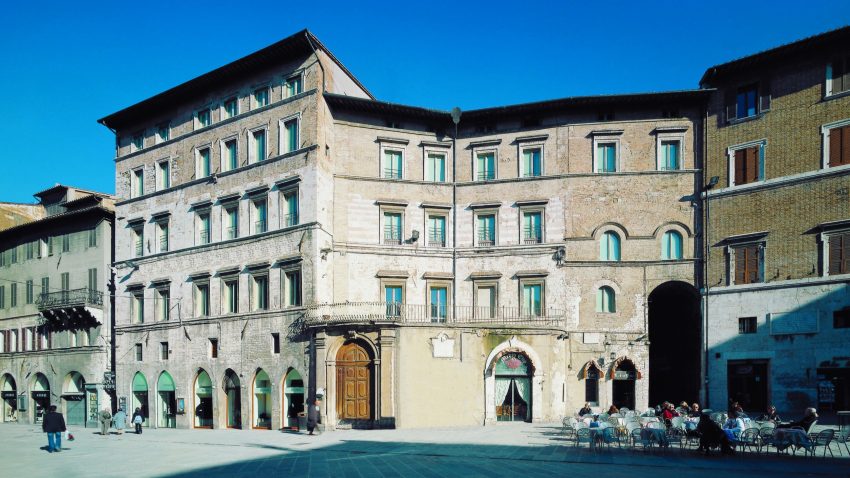
Right on Corso Vannucci in the heart of Perugia, Palazzo Baldeschi al Corso blends medieval roots with 19th century elegance and 21st century culture. Once the residence of the renowned 14th century jurist Baldo degli Ubaldi, the building has grown over time by absorbing neighbouring houses on streets like Via Danzetta, Via Baldo, Via dello Struzzo and Via Baglioni, eventually becoming the unified, palace like façade you see today. Its stately travertine portal and matching windows running along Corso Vannucci make it one of the best places to visit in Perugia if you enjoy combining architecture and art.
Today the palace houses the Cassa di Risparmio di Perugia Foundation's exceptional collections, from Renaissance majolica to paintings, sculptures and decorative arts spanning the 16th to 20th centuries. With temporary exhibitions on the main floor and permanent collections spread over the upper levels, this is very much a living cultural space rather than a static monument, and it is a highlight of any walking tour of Perugia when you want to step indoors and see how the city's artistic heritage has been curated behind one of its smartest façades.
Table of Contents
- History and Significance of the Palazzo Baldeschi al Corso
- Things to See and Do in the Palazzo Baldeschi al Corso
- How to Get to the Palazzo Baldeschi al Corso
- Practical Tips on Visiting the Palazzo Baldeschi al Corso
- Where to Stay close to the Palazzo Baldeschi al Corso
- Is the Palazzo Baldeschi al Corso Worth Visiting
- FAQs for Visiting Palazzo Baldeschi al Corso
- Nearby Attractions to the Palazzo Baldeschi al Corso
History and Significance of the Palazzo Baldeschi al Corso
Palazzo Baldeschi al Corso began as the home of Baldo degli Ubaldi, one of Italy's most important jurists of the 14th century. In 1369 he decided to separate from his brothers and expand his own dwelling, merging it with several neighbouring properties that backed onto Perugia's main thoroughfare and surrounding streets. This act of consolidation created the backbone of the palace you see today and anchored his name firmly to this central slice of the city.
The building did not stop evolving there. It underwent further enlargements in 1480 and again between 1489 and 1496, reflecting changing needs and tastes as Perugia moved through the late Middle Ages into the Renaissance. By the 19th century, the Baldeschi family wanted the structure to look more modern and cohesive, so in the 1870s they remodelled the medieval mass into a more uniform, palazzo style volume. They added a travertine portal onto Corso Vannucci and installed a rhythm of identical travertine framed windows along the façade, giving the building a regular, almost neo Renaissance character while still sitting on medieval bones.
The most recent chapter began in 2002, when the Cassa di Risparmio di Perugia Foundation acquired the palace and transformed it into a major cultural venue. This move not only preserved an important historic residence, but also turned it into a public facing space where visitors can engage with Perugia's artistic and collecting traditions across several centuries. In this way the building continues to embody the city's layered identity, from jurist's house to bourgeois palace to contemporary museum.
Things to See and Do in the Palazzo Baldeschi al Corso
Start on Corso Vannucci by taking in the façade as a whole: the travertine portal, the uniform windows and the way the palace stretches along the street all speak of 19th century ambitions to present a polished, modern front to Perugia's main promenade. Once inside, the main floor is usually dedicated to temporary exhibitions, so depending on when you visit you might find anything from focused shows on Umbrian masters to themed displays built around pieces from the Foundation's holdings or loans from other institutions.
The second floor houses the Marabottini Collection, a remarkable donation of over 700 items. Here you move through rooms filled with paintings, sculptures, drawings, engravings, miniatures, waxes, glass, ivory, porcelain and furnishings from the 16th to the 20th centuries. The collection feels almost like walking through the curated interior of a passionate collector’s home, where fine art and decorative objects sit side by side and tell stories about taste, travel and the way people have surrounded themselves with beautiful things over time.
On the third and fourth floors you will find the Foundation's own collection of more than 200 artworks. These span from the 15th to the 19th centuries and include works by Perugino, Pinturicchio, Signorelli, Matteo da Gualdo and Niccolò di Liberatore, known as l'Alunno. Moving between these floors you get a compact but rich overview of Umbrian and Italian art across four centuries, from altarpiece style works to more intimate devotional paintings and portraits. Take your time to move between the floors, using the palace's windows to glance back out over Corso Vannucci and remind yourself that you are right in the heart of historic Perugia while surrounded by its artistic legacy.
How to Get to the Palazzo Baldeschi al Corso
Most visitors reach Perugia via Perugia San Francesco d'Assisi Airport, a small regional airport with connections to other Italian and European cities. For the best deals and a seamless booking experience, check out these flights to Perugia on Booking.com. From the airport, shuttle buses and taxis bring you into town, where you can connect to the minimetro or local buses heading up towards the historic centre.
If you arrive by train, you will come into Perugia's main station in the lower part of the city, served by regional and intercity services from places like Rome, Florence and Assisi.Use Omnio to easily compare schedules, book train tickets, and find the best prices all in one place for a hassle-free journey across Italy. From the station, the minimetro or a city bus will carry you up to the centre; once you are on Corso Vannucci, Palazzo Baldeschi al Corso is easy to find along the main street.
Travelling by car, major roads link Perugia with the Umbrian countryside and neighbouring regions, and you will typically park in one of the multi storey or terrace car parks below or around the historic core.If you are looking to rent a car in Italy I recommend having a look at Discover Cars, first, as they compare prices and review multiple car rental agencies for you. From there, escalators, lifts and short walks bring you up to Piazza Italia or nearby points, from which it is just a few minutes on foot along Corso Vannucci to the palace.
Practical Tips on Visiting the Palazzo Baldeschi al Corso
- Suggested tips: Check ahead to see which temporary exhibition is on the main floor so you can plan enough time for both the changing shows and the permanent collections upstairs.
- Best time to visit: Late morning or mid afternoon works well, giving you time to explore the palace without rushing and to fit in a coffee or aperitivo on Corso Vannucci before or after.
- Entrance fee: Adults: €15.00
- Opening hours: Tuesday - Thursday: 3:00 pm - 7:30 pm; Friday - Sunday: 11:00 am - 1:30 pm / 2:30 pm - 7:30 pm
- Official website: https://ticket.midaticket.it/palazzobaldeschiperugia/
- How long to spend: Plan at least 1-2 hours if you want to see the temporary show plus the Marabottini Collection and the Foundation’s own works on the upper floors.
- Accessibility: As a historic palace adapted for museum use, there are lifts and modern facilities in parts of the building, but some areas may still involve steps; visitors with mobility needs should confirm accessible routes at the entrance.
- Facilities: Expect a ticket desk, cloakroom options and possibly a small bookshop or information area; for cafés and restaurants you can simply step back onto Corso Vannucci.
- Photography tip: Look for angles that frame details of the travertine windows and portal from the street, and inside, focus on close ups of majolica and decorative objects to capture colour and texture.
- Guided tours: If available, guided visits or audio guides are useful for understanding the story behind the palace’s transformation and the logic of the different collections.
- Nearby food options: Corso Vannucci and the surrounding lanes are full of cafés, gelaterie and trattorie, so it is easy to build a relaxed lunch or coffee break into your museum visit.
Where to Stay close to the Palazzo Baldeschi al Corso
Staying in or near Perugia's historic centre makes visiting Palazzo Baldeschi al Corso effortless, as it sits directly on Corso Vannucci. A classic, well located choice is Sina Brufani, which offers views over the valley and a short stroll to the main street. For a more intimate and characterful option, Hotel Fortuna lies just off Corso Vannucci, giving you easy access to the palace and the city’s key sights. If you prefer a boutique atmosphere, Hotel Priori Secret Garden provides a stylish base within the old town, with a pleasant walk to the palace and plenty of restaurants and bars nearby.
Is the Palazzo Baldeschi al Corso Worth Visiting
If you enjoy art, architecture and the feeling of stepping inside a historic building that is still very much alive, Palazzo Baldeschi al Corso is absolutely worth visiting. It brings together the story of a prominent medieval jurist, centuries of architectural evolution and an impressive concentration of artworks and decorative objects under one roof. Because it sits right on Corso Vannucci, it is easy to fit into a day of exploring Perugia, and you come away with a richer sense of how the city's cultural and financial institutions have shaped its streets and skyline over time.
What Other Travellers Say...

Palazzo Baldeschi al Corso on Corso Pietro Vannucci houses an eclectic museum in a historic palace with four floors of art ranging from Renaissance ceramics and 14th–16th century local paintings to contemporary sculpture, installations and a private modern collection; visitors note striking ceiling paintings and notable works by Dottori and Massimo Caggiano, and say rotating temporary exhibitions can be a highlight though contemporary displays don't appeal to everyone, so it's best if you have extra time to explore.


FAQs for Visiting Palazzo Baldeschi al Corso
Nearby Attractions to the Palazzo Baldeschi al Corso
- Corso Vannucci: Perugia's main pedestrian street, perfect for a stroll, shopping and people watching before or after your palace visit.
- Piazza IV Novembre and Fontana Maggiore: The city's central square with its famous medieval fountain, cathedral and Palazzo dei Priori.
- Palazzo dei Priori: A powerful civic palace housing important art collections, including works by Perugino and other Umbrian masters.
- Rocca Paolina: An underground fortress complex carved into the hill, offering atmospheric tunnels and a very different side of Perugia's history.
- National Gallery of Umbria: One of the region's key museums, showcasing an outstanding collection of Umbrian art just a short walk away.
The Palazzo Baldeschi al Corso appears in our Complete Guide to Visiting Perugia!

Moira & Andy
Hey! We're Moira & Andy. From hiking the Camino to trips around Europe in Bert our campervan — we've been traveling together since retirement in 2020!
This website uses affiliate links which may earn a commission at no additional cost to you!
Planning Your Visit
Tuesday – Thursday: 3:00 pm – 7:30 pm; Friday – Sunday: 11:00 am – 1:30 pm / 2:30 pm – 7:30 pm
Adults: €15.00
Nearby Attractions
- Perugino Monument (0.0) km
Monument - Nobile Collegio del Cambio (0.1) km
Museum - Corso Vannucci (0.1) km
Street - National Gallery of Umbria (0.1) km
Gallery - Palazzo del Capitano del Popolo (0.1) km
Palace - Nobile Collegio della Mercanzia (0.1) km
Historic Building and Museum - Palazzo dei Priori (0.2) km
Town Hall - Piazza IV Novembre (0.2) km
Square - Piazza Italia (0.2) km
Square - Fontana Maggiore (0.2) km
Fountain