National Pantheon, Lisbon
Historic Building in Lisbon
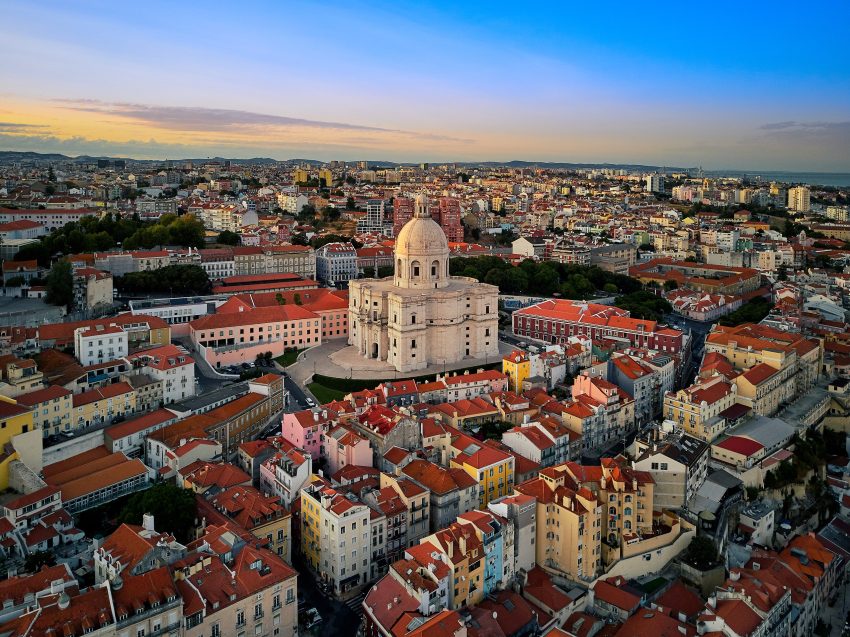
The National Pantheon, or Panteão Nacional, rises above the rooftops of Alfama like a gleaming white ship, its vast dome an unmistakable landmark on Lisbon's skyline. Originally built in the 17th century as the Church of Santa Engrácia, it famously took almost 300 years to complete, passing through different rulers, styles, and priorities before finally being finished in the 20th century. Stepping inside today, you are greeted by a soaring, echoing space lined with polished marble in soft shades of pink, yellow, and grey, all arranged in intricate geometric patterns that pull your eye toward the centre.
This monumental interior is both a place of remembrance and a celebration of Portuguese identity. Around the nave and in side chapels you will find tombs and cenotaphs dedicated to presidents, writers, military leaders, and cultural icons such as Amália Rodrigues, Portugal's beloved queen of Fado, along with symbolic tributes to great explorers. It feels at once solemn and uplifting, and the way sunlight filters through the high dome makes the whole space glow. As a combination of history, architecture, and sweeping views from its rooftop terrace, the Pantheon is easily one of the must-see places in Lisbon for travellers who enjoy pairing big stories with big vistas.
Table of Contents
- History and Significance of National Pantheon
- Things to See and Do in National Pantheon
- How to Get to National Pantheon
- Practical Tips on Visiting National Pantheon
- Where to Stay close to National Pantheon
- Is the National Pantheon Worth Visiting?
- FAQs for Visiting National Pantheon
- Nearby Attractions to National Pantheon
History and Significance of National Pantheon
The story of the National Pantheon begins in the 17th century, when construction of the Church of Santa Engrácia started on a hill above the Alfama district. Progress was slow from the start, and a mix of engineering difficulties, funding gaps, and political changes meant the project dragged on far longer than intended. Over time, this famously sluggish construction gave birth to the Portuguese expression “obras de Santa Engrácia,” used to describe any job that never seems to end.
Architecturally, the building blends late Mannerist and Baroque influences. The Greek-cross ground plan, curving façades, and grand staircase speak to its Baroque ambition, while the restrained decoration and balanced proportions hint at earlier tastes. In the 20th century, long after its original religious role had faded, the decision was made to transform the church into the National Pantheon, dedicating it to the memory of the nation's great figures. This shift turned Santa Engrácia from an unfinished church into a powerful symbol of Portugal's historical and cultural continuity.
Today, the Pantheon houses the tombs and cenotaphs of presidents, writers, and cultural icons, with names that many Portuguese visitors know from schoolbooks and songs. Walking around the interior, you move through a kind of marble biography of the country, from political leaders to poets and performers. The building's long gestation, dramatic setting, and new purpose combine to make it one of the top attractions in Lisbon for anyone keen to understand how Portugal remembers and honours its past.
Things to See and Do in National Pantheon
Inside the main nave, your attention is immediately drawn to the intricate marble floor, laid out in complex geometric designs that echo the curved shape of the building. Look up and you will see balconies running around the upper levels, giving different perspectives on the space, and above them, the dome with its beautifully coffered interior. Take a slow lap of the ground floor to appreciate how the colours and patterns shift as you move, and notice how the light changes depending on the time of day.
As you walk, you will pass the tombs and cenotaphs of some of Portugal’s most important figures. Among them is Amália Rodrigues, whose presence here underlines how deeply Fado is woven into the country’s identity, alongside statesmen, military leaders, and literary giants. Even if you are not familiar with every name, the combination of inscriptions, flags, and symbolic details makes the Pantheon feel like a marble encyclopedia of Portuguese achievement. Exhibitions mounted in side spaces and galleries from time to time add extra layers of context, highlighting themes from exploration to cultural history.
One of the undeniable highlights is climbing up to the terraces that encircle the dome. From there, you get wide-open views over the terracotta roofs of Alfama, the blue sweep of the Tagus River, and the cruise ships and ferries that come and go from the waterfront. It is a superb spot for photography, especially towards late afternoon when the light softens and the city glows. Because the Pantheon is surrounded by everyday life-from the Feira da Ladra flea market to local cafés and viewpoints-you can easily combine your visit with a wander through the streets below, turning it into a full Alfama experience. This spot is one of the best places to see in National Pantheon's surrounding neighbourhood if you are chasing those classic Lisbon panoramas.
How to Get to National Pantheon
The National Pantheon stands in the Alfama district, a short walk uphill from the Santa Apolónia train and metro station and within reach of several tram and bus routes. From the lower parts of Alfama or from Praça do Comércio, you can follow the narrow streets and stairways up through the neighbourhood, using the white dome as your landmark. The walk itself is part of the charm, taking you past small squares, viewpoints, and local homes.
If you are arriving in Lisbon by air, you will land at Humberto Delgado Airport, which is connected to the city centre by metro, bus, and taxi in roughly 20-30 minutes depending on traffic. For the best deals and a seamless booking experience, check out these flights to Lisbon on Booking.com. From the airport, a convenient route is to take the metro to Santa Apolónia, then walk uphill to the Pantheon in about 10 minutes, or use a short bus or taxi ride if you prefer to save your energy for exploring Alfama.
Travellers arriving by train often disembark at Santa Apolónia or Oriente stations. From Oriente, you can transfer to the metro and continue to Santa Apolónia before heading on foot to the Pantheon.Train schedules and bookings can be found on Omio. Alternatively, if you are staying in the Baixa or Chiado districts, regular buses and trams can bring you close to Alfama, where you can complete the journey on foot through the historic streets.
If you are driving, be aware that Alfama’s streets are narrow, often one-way, and can be tricky to navigate, with limited parking close to major sights.If you are looking to rent a car in Portugal I recommend having a look at Discover Cars, first, as they compare prices and review multiple car rental agencies for you. It is usually easier to leave your car in a larger car park near the riverfront or at Santa Apolónia and then walk up to the Pantheon, enjoying the views and local atmosphere as you go.
Practical Tips on Visiting National Pantheon
- Suggested tips: Combine your visit with a stroll through Alfama and a stop at the nearby Feira da Ladra flea market on market days to get both monumental history and everyday local life in one outing.
- Best time to visit: Late morning or mid-afternoon tends to be a good compromise between softer light and manageable crowds; sunset is spectacular from the terraces if you are happy to time your visit carefully.
- Entrance fee: Adult: €10.00
- Opening hours: October / March: From Tuesday to Sunday from 10:00 to 17:00 (last entry at 16:40). April / September: From Tuesday to Sunday: from 10:00 to 18:00 (last entry at 17:40) Closed: Monday; January 1st, Easter Sunday, May 1st, June 13th and December 25th.
- Official website: https://www.museusemonumentos.pt/pt/museus-e-monumentos/panteao-nacional
- How long to spend: Allow 45-90 minutes to explore the interior, read the inscriptions, and climb to the terraces; give yourself a bit longer if you plan to take many photos or linger over the views.
- Accessibility: The ground floor is generally accessible, but upper levels and terrace access involve stairs and may not be suitable for visitors with reduced mobility; check the latest accessibility details if this is a concern.
- Facilities: Expect a ticket office, basic restrooms, and sometimes a small shop or information area; for cafés, restaurants, and additional services, head into Alfama’s streets just outside.
- Photography tip: Inside, try shooting from the upper balconies to capture the geometric marble floor and symmetrical layout; outside on the terrace, use a wider lens to frame both the dome balustrade and the river beyond.
- Guided tours: When available, guided visits or audio guides offer helpful background on the building’s long construction, its transformation into a pantheon, and the stories behind some of the people commemorated here.
- Nearby food options: After your visit, wander downhill into Alfama for small tascas, wine bars, and cafés where you can sit with a drink or a snack and enjoy the neighbourhood’s lived-in feel.
Where to Stay close to National Pantheon
Staying near the National Pantheon gives you a quieter, more local perspective on Lisbon while still keeping you within easy reach of the main sights. For a comfortable base overlooking the river and close to Santa Apolónia, Alfama Lisbon Lounge Suites offers apartment-style rooms that are ideal if you like having a bit of extra space. If you prefer a boutique feel in the heart of Alfama, Memmo Alfama Hotel combines stylish interiors with terraces that look out over the Tagus and the red rooftops. For something a little more classic but still within walking distance of the Pantheon, Hotel Convento do Salvador occupies a converted convent and offers a peaceful setting just a short stroll from Alfama’s main streets.
Is the National Pantheon Worth Visiting?
The National Pantheon is absolutely worth visiting, especially if you are interested in how a country remembers its heroes and tells its own story. The combination of a light-filled marble interior, historically significant tombs and cenotaphs, and sweeping views from the terraces makes it a varied and rewarding stop rather than just a quick photo opportunity. Add in its location above Alfama, close to the Feira da Ladra flea market and other neighbourhood landmarks, and it becomes a natural anchor for a day spent exploring Lisbon's oldest quarter, often visited on walking tours of Lisbon that focus on history, culture, and viewpoints.
What Other Travellers Say...

The National Pantheon on Campo de Santa Clara is a 17th-century baroque church turned mausoleum with striking architecture and sweeping city views — visitors praise its beautiful exterior and interior, the climb through viewing balconies to the top (around 180–200 steps) for 360-degree panoramas, occasional exhibits inside, and sometimes limited entry so expect waits at busy times; rooftop access can be closed in bad weather and facilities like the gift shop may be shut.


FAQs for Visiting National Pantheon
Nearby Attractions to National Pantheon
- Feira da Ladra - Lisbon’s famous flea market, held nearby on set days each week, perfect for browsing antiques, curios, and everyday treasures.
- Igreja de São Vicente de Fora - Imposing church and monastery complex not far from the Pantheon, with tiled cloisters and rooftop views.
- Alfama District - Lisbon’s oldest neighbourhood, a maze of narrow streets, Fado houses, and small squares that invites slow exploration.
- Miradouro de Santa Luzia - Beautiful viewpoint with azulejo panels and sweeping views over Alfama and the river.
- Castelo de São Jorge - Historic hilltop castle overlooking the city, offering walls to wander and some of the best panoramas in Lisbon.
The National Pantheon appears in our Complete Guide to Visiting Lisbon!

Moira & Andy
Hey! We're Moira & Andy. From hiking the Camino to trips around Europe in Bert our campervan — we've been traveling together since retirement in 2020!
This website uses affiliate links which may earn a commission at no additional cost to you!
Planning Your Visit
October / March: From Tuesday to Sunday from 10:00 to 17:00 (last entry at 16:40).
April / September: From Tuesday to Sunday: from 10:00 to 18:00 (last entry at 17:40)
Closed: Monday; January 1st, Easter Sunday, May 1st, June 13th and December 25th.
Adult: €10.00
Nearby Attractions
- São Vicente de Fora (0.1) km
Monastery - São Jorge Castle (0.8) km
Castle - Lisbon Cathedral (0.9) km
Cathedral - Praça do Rossio (1.3) km
Square - Arco da Rua Augusta (1.3) km
Historic Building and Viewing Point - Elevador de Santa Justa (1.3) km
Viewing Point - Carmo Convent (1.4) km
Convent - Museu Nacional do Azulejo (1.5) km
Museum - Teatro Nacional de São Carlos (1.6) km
Theatre - Miradouro de São Pedro de Alcântara (1.7) km
Viewing Point