National Gallery of Umbria, Perugia
Gallery in Perugia
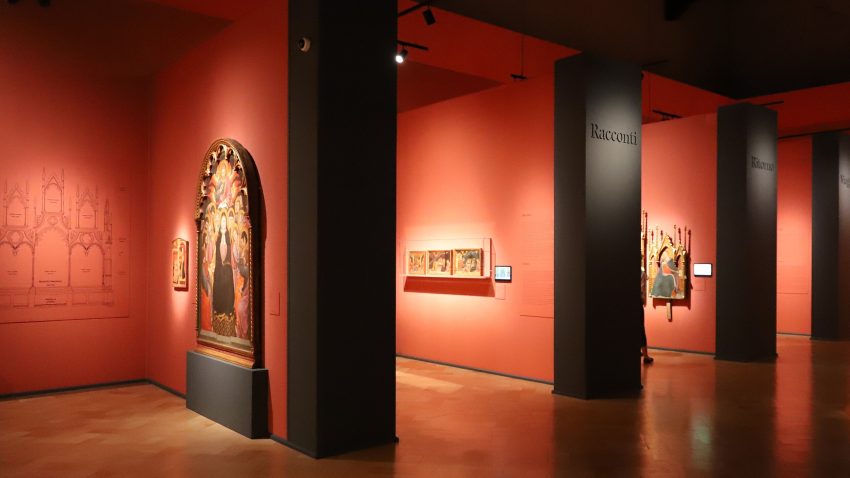
Perched on the upper floors of the Palazzo dei Priori in Perugia's historic centre, the National Gallery of Umbria (Galleria Nazionale dell'Umbria) brings centuries of Umbrian art together under one medieval roof. Spread across 40 rooms, the collection spans from the 13th to the 19th century and is especially rich in works by Pietro Vannucci, better known as Perugino, whose gentle Madonnas and serene altarpieces helped define Renaissance painting in central Italy. Presented in a clear chronological layout, the museum guides you from gold-ground panel paintings and carved crucifixes through to later canvases, sculptures and decorative arts.
Part of the joy of visiting is the setting itself. Palazzo dei Priori, with its Romanesque portal, stone atrium and original bronze griffin and lion statues (symbols of Perugia) is already worth the climb before you have seen a single painting. As you move between galleries filled with paintings, sculptures, metalwork, fabrics, furniture and other decorative objects, you are constantly reminded that you are in the old civic heart of the city, not in an anonymous white cube. For anyone interested in art, history or simply understanding what makes this city tick, the National Gallery of Umbria is a highlight of any walking tour of Perugia.
Table of Contents
- History and Significance of the National Gallery of Umbria
- Things to See and Do in the National Gallery of Umbria
- How to Get to the National Gallery of Umbria
- Practical Tips on Visiting the National Gallery of Umbria
- Where to Stay close to the National Gallery of Umbria
- Is the National Gallery of Umbria Worth Visiting?
- FAQs for Visiting National Gallery of Umbria
- Nearby Attractions to the National Gallery of Umbria
History and Significance of the National Gallery of Umbria
The National Gallery of Umbria was created to bring together the most important artistic heritage of the region, and its home in the Palazzo dei Priori is no accident. This medieval palace was long the seat of communal power, and installing the gallery on its upper floors symbolically links political history with cultural memory. Over time, works from churches, confraternities, private collections and public institutions across Umbria were gathered here, forming a survey of the region's production from the 1200s through the 1800s.
The museum’s chronological layout allows you to trace the evolution of Umbrian art in context. Early rooms highlight medieval panel painting, crucifixes and sculpture influenced by both local traditions and broader Italian trends. As you move forward in time, you encounter the flourishing of the Renaissance, with Perugino as one of the central figures. His calm, luminous style, seen in altarpieces and devotional works, had a profound impact on later artists (including, indirectly, Raphael), and seeing multiple pieces together gives you a sense of his range and influence.
Later galleries showcase Baroque and post-Baroque works, along with objects in metal, textiles, and furniture that reveal how artistic ideas filtered into everyday life. Because the collection is focused on Umbrian production, you gain a very specific sense of regional identity: how Perugia and its neighbours assimilated external influences while preserving their own visual language. In this way, the National Gallery acts as both a museum of masterpieces and a narrative of Umbria's artistic evolution.
Things to See and Do in the National Gallery of Umbria
Once inside, start with the earliest rooms and let the chronological route guide you upwards. Take your time with the medieval panels and sculptures: the gold backgrounds, expressive faces and dense iconography can feel unfamiliar at first, but they provide the foundation for everything that follows. Look closely at details such as inscriptions, decorative borders and the way light is suggested in the gilding; these touches show the skill of artists working centuries before the Renaissance.
When you reach the galleries dedicated to Perugino, slow down and allow yourself to be drawn into his balanced compositions and soft, atmospheric landscapes. Notice how his figures often exude a sense of calm and harmony, with gentle gestures and carefully controlled colour palettes. Seeing several of his works together helps you understand why he became such an important figure in central Italian painting, and why his influence extended beyond Umbria. Alongside Perugino, you will find works by his contemporaries and followers, which make it easier to spot shared motifs and stylistic shifts.
Do not ignore the “applied” arts as you move through the galleries. Metalwork, fabrics, liturgical objects, furniture and other decorative pieces provide a more tactile sense of daily life and religious practice, from embroidered vestments to finely crafted reliquaries. As you go, appreciate how the historic spaces of the Palazzo dei Priori frame the art: from stone arches to glimpses of the city through windows, you are constantly reminded that this is one of the best places to visit in Perugia if you want to connect artworks with the urban fabric outside. Before you leave, consider spending a few minutes in the book and gift shop on the first floor, where tickets are sold and where you can pick up catalogues or postcards to extend your visit beyond the galleries.
How to Get to the National Gallery of Umbria
The National Gallery of Umbria is located on the upper floors of Palazzo dei Priori, directly on Corso Vannucci and overlooking Piazza IV Novembre in the centre of Perugia. Perugia itself is served by San Francesco d'Assisi - Umbria International Airport and can also be reached from major hubs such as Rome and Florence, with onward connections by regional train, coach or hire car. For the best deals and a seamless booking experience, check out these flights to Perugia on Booking.com. From the airport or bus terminals, local buses, the minimetrò and taxis will bring you up to the hilltop historic centre, from where it is a short walk along Corso Vannucci to the palace entrance.
If you are travelling by train, Perugia’s main station at Fontivegge is connected to cities across central Italy. Use Omnio to easily compare schedules, book train tickets, and find the best prices all in one place for a hassle-free journey across Italy. From the station, take the minimetrò or a city bus to the centro storico, then follow signs to Corso Vannucci and Piazza IV Novembre; Palazzo dei Priori is one of the main buildings on this spine, with access to the gallery via the internal stairways and lifts.
Visitors arriving by car should follow signs for Perugia and then the historic centre, but be aware that much of the old town is a restricted-traffic zone. Park in one of the public car parks around the perimeter or below the centre and use escalators, lifts or well-marked pedestrian routes to reach Corso Vannucci. If you are looking to rent a car in Italy I recommend having a look at Discover Cars, first, as they compare prices and review multiple car rental agencies for you. From there, the Palazzo dei Priori and the entrance to the National Gallery of Umbria are clearly visible and easy to reach on foot.
Practical Tips on Visiting the National Gallery of Umbria
- Suggested tips: Start early in the day so you can enjoy the galleries at a relaxed pace, then step straight out onto Corso Vannucci or Piazza IV Novembre for a coffee and a walk through the historic centre.
- Best time to visit: Late morning or mid-afternoon tends to be quieter; visiting during the week rather than on Sundays or holidays usually means fewer crowds in the rooms.
- Entrance fee: Adults: €10
- Opening hours: Tuesday to Friday 8:30 – 19:00 Monday From April 1 to October 31: 12:00-19:30
- Official website: https://gallerianazionaledellumbria.it/museo/
- How long to spend: Allow at least 1.5 to 2 hours to explore the 40 rooms without rushing; art enthusiasts may easily spend half a day moving through the collection.
- Accessibility: The gallery is inside a historic building but is generally equipped with lifts and signposted routes; visitors with reduced mobility should ask staff for the most accessible path between floors.
- Facilities: Toilets, an information desk and a combined book and gift shop (also the ticket office) are available; cafés, bars and restaurants can be found immediately outside on Corso Vannucci and nearby squares.
- Photography tip: Focus on individual works by Perugino and their details, then step back for wider shots that include stone arches or windows of Palazzo dei Priori to show the connection between art and setting; always follow any photography restrictions.
- Guided tours: Consider joining a guided tour or using an audio guide if available, as this can help you navigate the chronological layout and better understand key works and artists.
- Nearby food options: After your visit, head to Piazza IV Novembre or adjacent streets for gelato, coffee or a full meal featuring Umbrian specialties such as cured meats, cheeses and fresh pasta.
Where to Stay close to the National Gallery of Umbria
Staying near the National Gallery of Umbria means you are right in the middle of Perugia's historic and cultural core. For an elegant option within a short walk of Palazzo dei Priori, Sina Brufani offers classic rooms, sweeping views and easy access along Corso Vannucci to the gallery. If you prefer a more intimate base tucked into medieval streets near the main squares, Hotel Priori Secret Garden combines historic character with modern comfort just a few minutes' walk from both the palace and Piazza IV Novembre. A friendly, budget-conscious choice is Albergo Morlacchi, which places you close enough to stroll to the gallery, cathedral and main shopping streets while still feeling slightly removed from the busiest corners.
Is the National Gallery of Umbria Worth Visiting?
The National Gallery of Umbria is absolutely worth visiting, especially if you want to understand Perugia and the wider region beyond its streets and squares. Its rich collection of paintings, sculptures and decorative arts, particularly the works by Perugino and other Umbrian masters, offers a clear narrative of how local artistic styles developed over six centuries. Combined with the atmospheric setting of Palazzo dei Priori and its position right in the heart of the city, the gallery makes for a rewarding visit whether you are a dedicated art lover or simply a curious traveller looking to deepen your appreciation of Umbria.
What Other Travellers Say...

The National Gallery on Corso Pietro Vannucci is housed in a Gothic palazzo and showcases regional art and artefacts from the 13th to 19th centuries; visitors praise its luminous Renaissance rooms, religious works and sculptures by noted artists, find it larger and more rewarding than expected, and often spend 1–3 hours exploring, though some mention confusing signage and a policy against bringing water that can bother visitors.


FAQs for Visiting National Gallery of Umbria
Nearby Attractions to the National Gallery of Umbria
- Piazza IV Novembre: Perugia's main square, centred on the Great Fountain and Cathedral of San Lorenzo, just steps from Palazzo dei Priori.
- Great Fountain of Perugia: Monumental medieval fountain celebrating the city's hydraulic ingenuity, a focal point of Piazza IV Novembre.
- Cathedral of San Lorenzo: Historic cathedral overlooking the main square, built on the site of the ancient Roman forum.
- Rocca Paolina: Dramatic remains of a 16th century fortress integrated into an underground network of passages and spaces beneath the modern city.
- Civic Museum at Palazzo della Penna: Museum of historic interiors and modern art, including works by Gerardo Dottori and displays on the “Beuys Burri” meeting, a short walk from the gallery.
The National Gallery of Umbria appears in our Complete Guide to Visiting Perugia!

Moira & Andy
Hey! We're Moira & Andy. From hiking the Camino to trips around Europe in Bert our campervan — we've been traveling together since retirement in 2020!
This website uses affiliate links which may earn a commission at no additional cost to you!
Planning Your Visit
Tuesday to Friday 8:30 - 19:00
Monday From April 1 to October 31: 12:00-19:30
Adults: €10
Nearby Attractions
- Nobile Collegio della Mercanzia (0.0) km
Historic Building and Museum - Palazzo dei Priori (0.0) km
Town Hall - Corso Vannucci (0.0) km
Street - Piazza IV Novembre (0.0) km
Square - Nobile Collegio del Cambio (0.1) km
Museum - Fontana Maggiore (0.1) km
Fountain - Underground Perugia (0.1) km
Historic Site - Cathedral of San Lorenzo (0.1) km
Cathedral - Palazzo del Capitano del Popolo (0.1) km
Palace - Perugino Monument (0.1) km
Monument