Musee du Compagnonnage, Tours (Loire)
Museum in Tours (Loire)
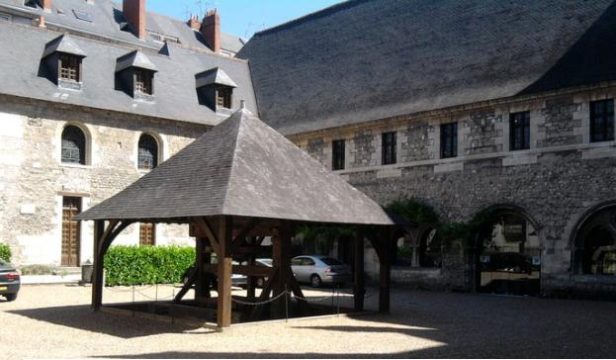
Tucked into the Cloître Saint-Julien just off Rue Nationale, the Musée du Compagnonnage is the kind of place you wander into out of curiosity and leave genuinely impressed. It’s compact, quiet, and intensely visual, with rooms filled by the working-world beauty of French craftsmanship: precision joinery, carved stone details, metalwork, and the distinctive “masterpieces” made to prove a maker’s skill.
If you enjoy museums that feel specific to the city you're in, this is one of the things to do in Tours that delivers real local character, not just “another gallery.” It also drops neatly into a walking tour of Tours, because you can pair it with the riverside, the old streets around Saint-Julien, and a cathedral-and-cafés afternoon without complicated logistics.
Table of Contents
- History and Significance of the Musée du Compagnonnage
- Things to See and Do in the Musée du Compagnonnage
- How to Get to the Musée du Compagnonnage
- Practical Tips on Visiting the Musée du Compagnonnage
- Where to Stay Close to the Musée du Compagnonnage
- Is the Musée du Compagnonnage Worth Visiting?
- For Different Travelers
- FAQs for Visiting Musée du Compagnonnage
- Nearby Attractions to the Musée du Compagnonnage
History and Significance of the Musée du Compagnonnage
Compagnonnage is more than a set of trades; it’s a culture of learning, travel, and identity that shaped how France built its churches, bridges, staircases, and civic buildings. The museum’s story is rooted in that idea of passing knowledge down through hands and generations, and it was created with a clear purpose: preserving a living heritage that might otherwise have stayed hidden in workshops and guild houses.
The museum opened in 1968, building on earlier efforts in Tours to collect and present compagnonnage works to the public. That matters because it frames the visit as something more than a display of beautiful objects: it's a record of education, standards, and pride in craft, with Tours as a long-standing node in that wider network of training and mobility.
A useful lens as you walk through is the famous “Tour de France” tradition of apprentices travelling between towns to learn, refine technique, and be assessed by peers. Even if you know nothing about guild systems, the collection makes the concept easy to grasp: the objects here are proof of competence, discipline, and creativity, and they show how technical excellence becomes cultural identity.
Things to See and Do in the Musée du Compagnonnage
The headline exhibits are the carpentry models-intricate timber frameworks built at a smaller scale, where you can see complex geometry and structural logic in a way that’s almost impossible to read in a full-size roof or spire. They’re the kind of pieces that make you lean in, because the precision is so tight it feels unreal, and you start noticing how every joint has a reason.
Beyond woodwork, look for the contrast between trades: stonemasonry elements that echo cathedral decoration, metalwork that balances strength with ornament, and the tools themselves, which often tell a story about how work was measured and controlled before modern machinery. It’s a museum where the “how” is as interesting as the “what,” so take time with the labels and diagrams that explain technique rather than just authorship.
If you can, aim to catch any themed visits or demonstrations that are running during your stay, because they add context to what you’re seeing in the cases. Even without a scheduled activity, the visit is naturally immersive: you’re surrounded by the objects of work-templates, models, and finished pieces-and it’s easy to leave with a sharper sense of how France’s historic buildings were actually made.
How to Get to the Musée du Compagnonnage
The nearest airport is Tours Val de Loire Airport (TUF), with Paris Charles de Gaulle (CDG) and Paris Orly (ORY) as the most common international gateways for visitors continuing to Tours. For the best deals and a seamless booking experience, check out these flights to Tours (Loire) on Booking.com.
Tours is exceptionally easy by rail, and arriving by train is often the simplest choice if you're coming from Paris or using Tours as a Loire Valley base. You can use SNCF Connect to check schedules, compare routes, and purchase tickets for National (SNCF ) and regional trains (TER). For a more streamlined experience, we recommend using Omio, which allows you to easily compare prices, schedules, and book tickets for both National and Regional travel across all of Europe, all in one place. From Tours station, the museum is a comfortable walk through the centre, and it sits close to the Saint-Julien area near the Loire.
Local buses and trams can help you cut walking time, but the final approach works best on foot because the museum is embedded in the historic core. Driving into the centre is rarely necessary for this stop; if you do have a car, use a central car park and walk the last stretch. If you are looking to rent a car in France I recommend having a look at Discover Cars, first, as they compare prices and review multiple car rental agencies for you.
Practical Tips on Visiting the Musée du Compagnonnage
- Entrance fee: Adults: €6.60; Reduced: €3.30; Under 18: free.
- Opening hours: Monday, Wednesday, Friday – Sunday: 09:00–12:30 & 14:00–18:00. Thursday: 09:30–12:30 & 14:00–18:00. Closed on Tuesday. Closed on 1 January, 1 May, 14 July, 1 November, 11 November & 25 December.
- Official website: https://www.museecompagnonnage.fr/
- Best time to visit: Mid-morning or mid-afternoon is ideal, when you can take your time without feeling rushed between other Tours sights. If you want a quieter experience, avoid the first hour after reopening in the afternoon when many visitors return from lunch.
- How long to spend: Plan 45-90 minutes for a satisfying visit, longer if you like reading technique-focused displays and comparing trades across the rooms.
- Accessibility: Expect multiple levels and historic circulation typical of an older complex; if mobility is a concern, build a shorter route around the most accessible galleries.
- Facilities: Treat it as a focused museum visit and plan your longer break nearby in the Saint-Julien and old-town café zones, which are well set up for a post-visit pause.
Where to Stay Close to the Musée du Compagnonnage
For a culture-heavy itinerary, base yourself in Vieux Tours or the cathedral quarter so you can walk to museums, evening dining, and the riverside; if day trips and early starts are your priority, staying near Tours station makes transport links effortless.
For an old-town base that keeps you within easy walking distance of the museum and Tours’ most atmospheric streets, Hôtel du Cygne is a strong choice. If you want a classic central address that sits neatly between the museum area and the old-town restaurant scene, Hôtel Colbert is well located for a walkable itinerary. For a comfortable, transport-friendly stay that still keeps the historic centre within easy reach, Oceania L'Univers Tours works particularly well if you’re arriving late or leaving early.
Is the Musée du Compagnonnage Worth Visiting?
Yes, especially if you’re looking for a museum that feels genuinely unique to France rather than interchangeable with any other city. The craftsmanship on display is visually striking even if you’re not “into” tools or building, and the models and masterpieces make the learning feel intuitive rather than academic.
It’s also an excellent balance to Tours’ major monuments. Where the cathedral shows you the finished grandeur, this museum shows you the intelligence of making-how precision, tradition, and training translate into the structures and details you admire elsewhere in the city.
What Other Travellers Say...

Museum of Fine Arts, located at 18 Place François Sicard in Tours, occupies a former archbishop's palace and displays furniture and paintings including works by Rubens and Degas; visitors praise its Belgian and Dutch paintings, local landscape scenes, three floors of framed art and a room about the history of Tours, and many enjoy the gardens and a café with outdoor seating, though one visitor reported an unfriendly experience at the ticket desk and some language difficulties.


For Different Travelers
Families with Kids
This museum can work very well for kids because the carpentry models are like real-life puzzles: small, detailed, and satisfying to look at even without reading every panel. Keep the visit short and focused, and frame it around “spot the clever joinery” or “find the most surprising object,” then reward attention with a nearby snack stop.
If you’re travelling with younger children, aim for a time when they’re most patient, because the museum experience is more about looking closely than moving constantly. Pairing it with a riverside walk nearby is an easy way to add energy back into the day.
Couples & Romantic Getaways
For couples, this is a quietly memorable stop: intimate, thoughtful, and different from the standard château-and-cathedral rhythm of the Loire. It’s ideal on a slower day when you want a shared experience that sparks conversation, because the objects naturally invite questions about how they were made and why they mattered.
It also pairs nicely with a leisurely old-town lunch or an early-evening wander through Vieux Tours. You can do the museum in under two hours and still feel like you've added something genuinely distinctive to your Tours itinerary.
Budget Travelers
This is a strong-value museum because you can get a rich, visually rewarding visit without a big time commitment or expensive add-ons. It also sits in a walkable part of Tours, so you can build a full low-cost day around it by combining nearby streets, river views, and another free landmark.
If you're keeping spending tight, plan your paid entries strategically: one museum like this, then the rest of the day as walking and atmosphere. Tours is particularly good for that style of travel because the city's best moments often happen between the sights.
History Buffs
If you like the “how it was built” side of history, this museum is unusually satisfying. The collection makes craft traditions feel like a historical force-shaping buildings, standards, and professional identity-rather than a footnote to royal dates and architectural styles.
Look for the evidence of training systems and the progression of skill: models that demonstrate structural mastery, tools that show evolving technique, and pieces that blend utility with symbolism. It's a museum that adds depth to everything else you see in Tours, because it connects monuments back to the people who physically made them.
FAQs for Visiting Musée du Compagnonnage
Getting There
Tickets & Entry
Visiting Experience
Tours, Context & Itineraries
Photography
Accessibility & Facilities
Food & Breaks Nearby
Safety & Timing
Nearby Attractions to the Musée du Compagnonnage
- Cathédrale Saint-Gatien de Tours: A Gothic landmark with stained glass that's especially beautiful when the light is strong.
- Cloître de la Psalette: A calm, historic cloister space that offers a quieter counterpoint to the city streets.
- Vieux Tours and Place Plumereau: The classic old-town zone for timbered houses, terraces, and an easy evening atmosphere.
- Musée des Beaux-Arts de Tours: A strong fine-arts collection in a setting that feels grand without being overwhelming.
- Château de Tours: A compact riverside château space that often hosts exhibitions and adds variety to a Tours culture day.
The Musee du Compagnonnage appears in our Complete Guide to Visiting Tours (Loire)!

Moira & Andy
Hey! We're Moira & Andy. From hiking the Camino to trips around Europe in Bert our campervan — we've been traveling together since retirement in 2020!
This website uses affiliate links which may earn a commission at no additional cost to you!
Planning Your Visit
Monday, Wednesday, Friday - Sunday: 09:00-12:30 & 14:00-18:00.
Thursday: 09:30-12:30 & 14:00-18:00.
Closed on Tuesday. Closed on 1 January, 1 May, 14 July, 1 November, 11 November & 25 December.
Adults: €6.60; Reduced: €3.30; Under 18: free.
Nearby Attractions
- Cathédrale Saint-Gatien (0.5) km
Cathedral - Musée des Beaux-Arts de Tours (0.6) km
Museum - Jardin Botanique De Tours (1.9) km
Gardens - La Forteresse de Montbazon (12.5) km
Castle - Château de Villandry (14.4) km
Castle - Château de Langeais (22.6) km
Castle - Château d’Azay-le-Rideau (22.6) km
Castle - Royal d’Amboise (22.6) km
Castle - Château du Clos Lucé (23.0) km
Castle - Château de Chenonceau (30.0) km
Castle