Musée des Confluences, Lyon
Museum in Lyon
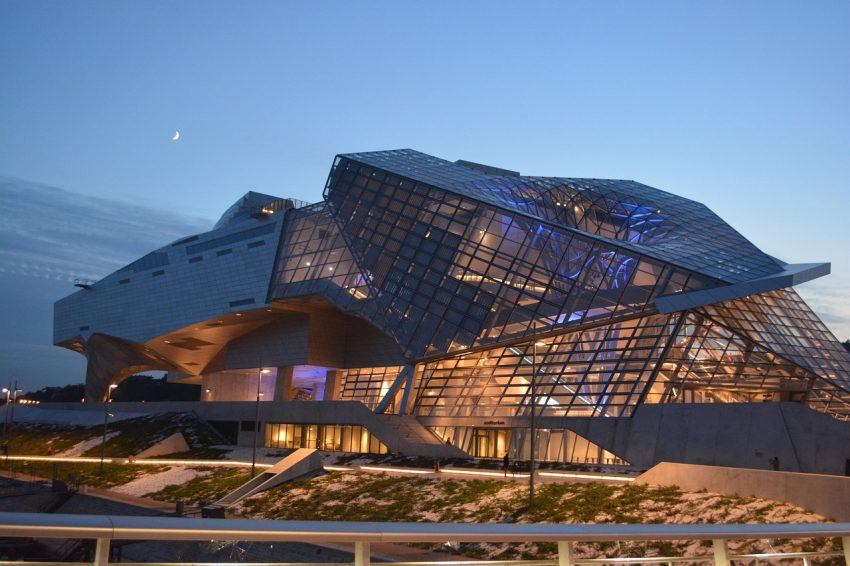
The Musée des Confluences is one of the top attractions in Lyon if you're curious about big ideas and love bold architecture. Perched at the literal meeting point of the Rhône and Saône, the building itself looks like a glass-and-metal cloud or spaceship that has gently landed on a riverside plaza. Step inside and you're invited to explore humanity from every angle: life and death, origins and futures, nature and culture, all presented through immersive, interactive displays that feel more like storytelling than a traditional museum visit.
Rather than being organised strictly by chronology, the permanent galleries are thematic, blending anthropology, natural history, science, and art in a way that keeps you engaged from one room to the next. Dinosaur skeletons share space with meteorites, ceremonial masks, rare animals, and objects linked to space exploration, with clever scenography that speaks to adults and kids at the same time. It's a great place to visit on a walking tour of Lyon if you're heading down to the modern Confluence district and want to pair waterfront views with a few hours of pure curiosity.
Table of Contents
- History and Significance of the Musée des Confluences
- Things to See and Do in the Musée des Confluences
- How to Get to the Musée des Confluences
- Practical Tips on Visiting the Musée des Confluences
- Where to Stay close to the Musée des Confluences
- Is the Musée des Confluences Worth Visiting?
- FAQs for Visiting Musée des Confluences
- Nearby Attractions to the Musée des Confluences
History and Significance of the Musée des Confluences
The Musée des Confluences grew out of Lyon's long-standing collections in natural history, ethnography, and science, which were previously housed in older, more traditional spaces. The vision behind the new museum was to bring these disciplines together under one roof, in a building that visually embodied the idea of a “confluence” of knowledge. Its location at the tip of the Presqu'île, where the Rhône and Saône meet, underlines that metaphor perfectly-this is a place where currents of water, history, and ideas literally intersect.
Architecturally, the museum is a statement piece for contemporary Lyon. With its angular glass and metal volumes-sometimes described as the “Crystal” and the “Cloud”-it contrasts sharply with the Renaissance façades of Vieux Lyon and the 19th-century boulevards of the Presqu'île. Love it or find it perplexing, it's hard to ignore, and it has quickly become a landmark for the revitalised Confluence district, which has transformed old industrial and port areas into a mix of housing, offices, green spaces, and cultural venues.
In terms of content, the Musée des Confluences positions itself as a “museum of societies, sciences, and civilizations.” Instead of simply displaying objects in cases, it uses them as starting points for questions: Where do we come from? What are we doing here? Where are we going? This thematic, cross-disciplinary approach makes the museum significant not just for what it houses, but for how it encourages visitors to connect dots between cultures, eras, and species. It feels less like a static archive and more like a dynamic dialogue between past, present, and possible futures.
Things to See and Do in the Musée des Confluences
A good way to start your visit is simply to walk around the outside of the building and along the riverside paths. From the forecourt and nearby footbridges, you get great views of the museum’s dramatic angles and of the point where the two rivers merge. Once inside, take a moment in the entrance hall to get your bearings-maps, signage, and staff will help you decide which themed galleries to tackle first, depending on your interests and energy levels.
The permanent exhibitions are divided into several major themes. In one, you might find dinosaur skeletons, fossils, and displays about the origins of life on Earth; in another, objects from world cultures-masks, textiles, ritual artefacts-invite you to think about belief, identity, and how societies organise themselves. Elsewhere, you can encounter taxidermied animals, models, and scientific instruments that trace the relationship between humans and the natural world, or explore sections that deal with death, memory, and our attempts to understand the cosmos. Interactive stations, videos, and soundscapes keep things lively and accessible.
Make sure to allow time for the temporary exhibitions, which often focus on specific themes such as particular ecosystems, technologies, or cultural phenomena, and can feel quite different from one year to the next. Between galleries, look out for windows and terraces that open onto panoramic views of the Rhône, Saône, and the city skyline-these are great places to pause for a few minutes and reset your brain. When you’re ready for a longer break, the on-site café and bookshop offer snacks, drinks, and a chance to browse books and objects that extend the museum experience beyond the displays.
How to Get to the Musée des Confluences
Most visitors arriving from outside the region will land at Lyon-Saint Exupéry Airport (LYS), which has frequent connections to major European cities and some long-haul destinations. For the best deals and a seamless booking experience, check out these flights to Lyon on Booking.com. From the airport, the Rhônexpress tram links to Lyon Part-Dieu station, where you can connect to local transport to reach the Confluence district.
From central Lyon by public transport, the easiest route is usually to take tram line T1 and get off at the “Musée des Confluences” stop, which is right next to the museum entrance.You can use SNCF Connect to check schedules, compare routes, and purchase tickets for National (SNCF ) and regional trains (TER). For a more streamlined experience, we recommend using Omio, which allows you to easily compare prices, schedules, and book tickets for both National and Regional travel across all of Europe, all in one place. You can also reach the area via buses that serve the southern Presqu’île, or by walking or cycling along the riverside paths from the city centre-a pleasant option if the weather is good and you enjoy seeing the gradual shift from historic core to modern waterfront.
If you’re travelling by car, follow signs for the Confluence district and look for parking facilities near the museum or in nearby shopping and leisure complexes.If you are looking to rent a car in France I recommend having a look at Discover Cars, first, as they compare prices and review multiple car rental agencies for you. Traffic and parking are generally easier here than in the densest part of the Presqu’île, but many visitors still prefer to park once and explore on foot, especially if they plan to combine the museum with a stroll along the riverbanks or a meal in the neighbourhood.
Practical Tips on Visiting the Musée des Confluences
- Suggested tips: Plan your route through the galleries in advance if you’re on a tight schedule-there’s a lot to see, and it’s easy to linger longer than expected in the most immersive sections.
- Best time to visit: Weekday mornings or late afternoons are usually quieter; weekends and school holidays can be busier, but the museum handles crowds fairly well thanks to its spacious layout.
- Entrance fee: Adults: €12.00; reduced tickets from €7.00; free for visitors under 18 and several concession categories.
- Opening hours: Tuesday to Sunday: 10:30 AM – 6:30 PM Closed on Mondays and January 1, May 1, and December 25
- Official website: https://www.museedesconfluences.fr/en
- How long to spend: Allow at least 2-3 hours for a first visit; families or museum fans could easily spend half a day exploring the permanent galleries, temporary exhibitions, and viewpoints.
- Accessibility: The museum is modern and generally well adapted for visitors with reduced mobility, with lifts, ramps, and wide circulation spaces throughout.
- Facilities: On-site you’ll find a café, bookshop, cloakrooms, toilets, and plenty of seating areas; cycle parking and tram stops are right outside, and additional services are available in the surrounding Confluence district.
- Photography tip: Use the large windows and terraces to frame shots of the rivers and city; outside, try wide-angle views that capture both the museum’s angular forms and the water below.
- Guided tours: Check for scheduled guided visits, themed tours, or workshops-these can help make the more conceptual parts of the museum especially engaging and are great for families or school-age children.
- Nearby food options: Beyond the museum café, the Confluence area offers riverside restaurants, food-court options in nearby shopping centres, and casual spots where you can eat with views over the water.
Where to Stay close to the Musée des Confluences
If you’d like to stay right in the heart of the Confluence district, Novotel Lyon Confluence is an excellent choice, sitting a short walk from the museum along the river. It’s ideal if you want modern comfort, easy access to tram links, and the option to wander between the museum, shops, and waterfront terraces without ever needing a car.
For a more creative, boutique vibe just along the quay, MOB Hotel Lyon Confluence offers colourful, design-conscious rooms and a relaxed atmosphere that fits well with the contemporary character of the district. From here, you can stroll to the Musée des Confluences in minutes, then continue your day with a walk or bike ride along the river paths.
If you prefer to be closer to the historic centre while still having straightforward tram access to the museum, ibis Lyon Centre Perrache near Perrache station is a practical base. You're well placed for exploring the Presqu'île and Vieux Lyon, and a quick tram ride brings you down to the Confluence area and the museum whenever you're ready for a more futuristic side of the city.
Is the Musée des Confluences Worth Visiting?
The Musée des Confluences is absolutely worth visiting, especially if you enjoy museums that mix disciplines and don't feel overly traditional. It manages to be thought-provoking without being dry, visually striking without being shallow, and genuinely engaging for visitors of all ages. The combination of bold architecture, rich collections, and sweeping river views makes it one of the must-see places in Lyon for travellers who like their culture with a side of big questions. Even if you usually pick art galleries over science museums-or vice versa-this one has a good chance of surprising you.
What Other Travellers Say...

Confluence of the Rhône and Saône in Lyon sits at the tip of the peninsula where the two rivers meet, offering a photogenic riverside spot with contrasting currents and colors, pleasant views of the city and nearby wildflowers; it's free to access, easy to reach from the Musée des Confluences by a short walk or public transport, and while many visitors praise the striking meeting of the waters and the urban-renewal atmosphere, some note the park can feel a bit rundown in places.


FAQs for Visiting Musée des Confluences
Nearby Attractions to the Musée des Confluences
- Place Bellecour - Lyon's vast central square further north on the Presqu'île, easily reached by tram and a good starting point for exploring the rest of the city.
- Confluence District - A modern neighbourhood of bold architecture, shops, offices, and riverside promenades, perfect for a walk before or after your museum visit.
- Pôle de Commerces et de Loisirs Confluence - A large shopping and leisure complex nearby, with restaurants, cinemas, and stores overlooking the water.
- Saône and Rhône Riverbanks - Reworked quays with paths for walking and cycling, offering long, scenic routes back towards the historic centre.
- La Sucrière - A former sugar warehouse turned contemporary art and events space, often hosting major exhibitions and festivals in the Confluence area.
The Musée des Confluences appears in our Complete Guide to Visiting Lyon!

Moira & Andy
Hey! We're Moira & Andy. From hiking the Camino to trips around Europe in Bert our campervan — we've been traveling together since retirement in 2020!
This website uses affiliate links which may earn a commission at no additional cost to you!
Planning Your Visit
Tuesday to Sunday: 10:30 AM - 6:30 PM
Closed on Mondays and January 1, May 1, and December 25
Adults: €12.00; reduced tickets from €7.00; free for visitors under 18 and several concession categories.
Nearby Attractions
- Aquarium (0.6) km
Aquarium - Le Cube Orange (0.8) km
Notable Building - Abbaye Saint-Martin d’Ainay (2.4) km
Abbey - Tomb of Turpio (2.6) km
Roman Site - Ancient Baths of Lyon (2.7) km
Roman Site - Odeon of Lyon (2.9) km
Roman Site - Place Bellecour (3.0) km
Square - Ancient Theatre of Fourvière (3.0) km
Roman Site - Gallo-Roman Museum of Lyon-Fourvière (3.1) km
Museum - Funiculaire de Lyon (3.1) km
Cable Car