Monument to the Ghetto Heroes, Warsaw
Monument in Warsaw
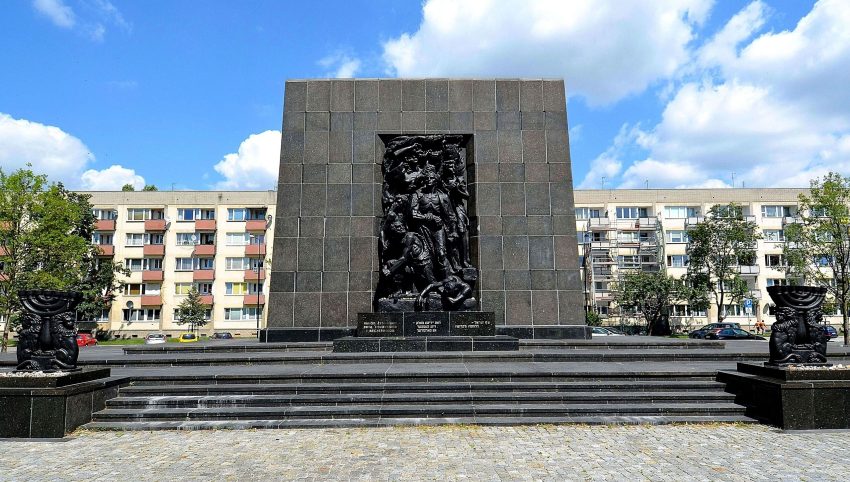
The Monument to the Ghetto Heroes stands in Warsaw's Muranów district, on the open square facing the POLIN Museum of the History of Polish Jews. It's an outdoor memorial you can visit at any time, but it rarely feels like a casual stop: the scale, the heavy stone backdrop, and the bronze scenes create a space that naturally slows you down, even when the city is busy around you.
This is one of the must-see places in Warsaw because it anchors the story of the Warsaw Ghetto Uprising in a real, present-day streetscape-no glass cases, no distance, just a direct encounter with memory. It also fits naturally into a walking tour of Warsaw, especially if you're tracing the city's wartime history alongside today's museums, neighbourhoods, and rebuilt streets.
Table of Contents
- History and Significance of the Monument to the Ghetto Heroes
- Things to See and Do in the Monument to the Ghetto Heroes
- How to Get to the Monument to the Ghetto Heroes
- Practical Tips on Visiting the Monument to the Ghetto Heroes
- Where to Stay Close to the Monument to the Ghetto Heroes
- Is the Monument to the Ghetto Heroes Worth Visiting?
- For Different Travelers
- FAQs for Visiting the Monument to the Ghetto Heroes
- Nearby Attractions to the Monument to the Ghetto Heroes
History and Significance of the Monument to the Ghetto Heroes
Unveiled in 1948, the monument commemorates the Warsaw Ghetto Uprising of April-May 1943 and, more broadly, the Jewish victims and fighters of the ghetto. Its location is not symbolic “in general” but specific: it stands in the former ghetto area, close to where the uprising began, which gives the memorial a weight that's hard to replicate elsewhere.
The monument’s design is intentionally dual-sided, and that matters to how you read it. One side presents armed resistance and defiance; the other shows suffering, deportation, and the crushing machinery of persecution. Together, they avoid a single narrative and instead insist on a fuller truth: courage and catastrophe, struggle and annihilation, held in the same frame.
It’s also a landmark in post-war European memory culture. The monument has hosted major commemorations for decades, and it became globally recognised after the 1970 gesture of German Chancellor Willy Brandt kneeling here-an image that shaped how many people understand public remembrance, accountability, and post-war reconciliation.
Things to See and Do in the Monument to the Ghetto Heroes
Start by walking around it slowly and viewing both main faces. The “combat” side is the one most people photograph first: clustered figures, tension in posture, a sense of resistance and urgency. Then move to the opposite side and take in the relief of civilians being driven onward-quieter in style, but often more devastating in emotional impact.
Pay attention to the monument’s setting and approach. The broad steps and open square create a deliberate pause before you reach the sculpture, and the nearby POLIN building adds a powerful contrast: commemoration facing a museum of life, continuity, and cultural history. If you want deeper context without overloading your day, visiting POLIN before or after can turn this stop into a coherent, meaningful mini-route.
Finally, treat this as a place for a short moment of stillness rather than a quick photo-and-go. Many visitors leave a small stone or a flower in quiet remembrance; even if you don’t, taking a minute to stand back and read the space is part of the experience.
How to Get to the Monument to the Ghetto Heroes
The nearest airports are Warsaw Chopin Airport (WAW) and Warsaw Modlin Airport (WMI). For the best deals and a seamless booking experience, check out these flights to Warsaw on Booking.com. From the centre, you’re aiming for Muranów and the POLIN Museum area, then crossing the square to the monument.
If you arrive by train at Warszawa Centralna, the simplest option is public transport toward the city centre and onward to the Muranów/POLIN area, then a short walk across the square to the memorial.You can easily check schedules and book tickets through the PKP Intercity website. However, for a smoother experience, we recommend using Omio, which simplifies the booking process and lets you compare prices and schedules all in one place. If you’re already exploring the Old Town, you can also walk here in roughly 20-30 minutes, which works well if you want the route itself to feel like part of the story.
If you’re travelling by car, plan to park outside the tightest central streets and walk the final stretch, as traffic and parking can be frustrating close to major memorial and museum zones.If you are looking to rent a car in Poland I recommend having a look at Discover Cars, first, as they compare prices and review multiple car rental agencies for you.
Practical Tips on Visiting the Monument to the Ghetto Heroes
- Entrance fee: Free
- Opening hours: 24 hours
- Best time to visit: Early morning gives you space and quiet, while late afternoon can feel especially reflective as the light softens across the bronze reliefs.
- How long to spend: Allow 20-40 minutes for an unhurried visit, or longer if you’re pairing it with POLIN and nearby ghetto-history sites.
- Accessibility: The square is generally flat and manageable, though surfaces can feel uneven in places; approach slowly if you use a wheelchair or push a stroller.
- Facilities: There are no dedicated facilities at the monument itself, so plan restrooms and breaks around POLIN or nearby cafés in Muranów.
Where to Stay Close to the Monument to the Ghetto Heroes
For a culture-heavy itinerary, base yourself in central Śródmieście or on the Old Town/Muranów edge so you can walk between museums and historic streets; if your priority is nightlife and dining, Nowy Świat is a better hub while still keeping this area within easy reach. For a practical, close base that keeps you near both the Old Town and Muranów, ibis Warszawa Stare Miasto is a convenient option for simple logistics and fast walks to key sights. If you want a more polished stay with a classic location that still makes reaching the monument easy, Sofitel Warsaw Victoria works well for a central base with strong transport links. For an atmospheric, high-comfort choice near the Old Town that pairs nicely with reflective, history-led days, Mamaison Hotel Le Regina Warsaw is an excellent fit.
Is the Monument to the Ghetto Heroes Worth Visiting?
Yes, particularly if you want to understand Warsaw beyond its rebuilt façades and headline landmarks. The monument is direct, uncompromising, and deeply tied to the ground it stands on-an experience that feels more like witnessing than sightseeing.
It’s also worth visiting because it connects naturally to a wider set of places and stories nearby, letting you build a meaningful route without crisscrossing the city. Even a short visit tends to leave a long impression.
What Other Travellers Say...

Monument to the Ghetto Heroes on Ludwika Zamenhofa in Warsaw is a memorial honoring those who died during the unsuccessful Warsaw Ghetto Uprising of 1943; visitors describe it as a powerful, humbling site with strong, well-presented exhibits in Polish and English, a museum worth taking time to explore, and recommend guided visits to fully understand the emotional story of loss, courage and dignity it commemorates.


For Different Travelers
Families with Kids
For families, the key is framing: this is a place about bravery and remembrance, and you can explain it in simple terms without graphic detail. Keep the visit short, focus on respectful behaviour, and let kids ask questions as they notice the figures and expressions in the bronze.
It helps to pair the stop with something calmer and more open immediately afterward, like a short walk through nearby green space or a café break. That gives children a natural emotional reset while still keeping the day coherent.
Couples & Romantic Getaways
This is not a “romantic” stop in the usual sense, but it can be a meaningful one to share. Visiting together often deepens your sense of the city, and it’s the kind of place that prompts quieter conversations later as you walk back toward livelier streets.
Plan to follow it with a gentle route-perhaps toward the Old Town or along central avenues-rather than jumping straight into a crowded attraction. The contrast can make Warsaw feel more layered and real.
Budget Travelers
As a free, outdoor memorial, it’s a high-impact stop that doesn’t strain your budget. You can build a strong day around it by combining nearby sites on foot, keeping transport costs low while still covering some of Warsaw’s most important history.
If you’re travelling cheaply, focus on creating a tight walking loop in this area-monument, POLIN surroundings, and a couple of nearby memorial points-so your day feels intentional rather than scattered.
FAQs for Visiting the Monument to the Ghetto Heroes
Getting There
Tickets & Entry
Visiting Experience
Tours, Context & Itineraries
Photography
Accessibility & Facilities
Food & Breaks Nearby
Safety & Timing
Nearby Attractions to the Monument to the Ghetto Heroes
- POLIN Museum of the History of Polish Jews, a major museum directly opposite the monument that provides essential historical context.
- Umschlagplatz Monument, a stark memorial marking the deportation point from which Jews were sent to extermination camps.
- Pawiak Prison Museum, a sobering site that documents Nazi terror and imprisonment in occupied Warsaw.
- Nożyk Synagogue, the city’s best-known surviving pre-war synagogue and an important living place of worship.
- Warsaw Ghetto Wall fragments, small surviving sections of wall that make the ghetto's boundaries feel real in today's streets.
The Monument to the Ghetto Heroes appears in our Complete Guide to Visiting Warsaw!

Moira & Andy
Hey! We're Moira & Andy. From hiking the Camino to trips around Europe in Bert our campervan — we've been traveling together since retirement in 2020!
This website uses affiliate links which may earn a commission at no additional cost to you!
Planning Your Visit
24 hours
Free
Nearby Attractions
- POLIN Museum of the History of Polish Jews (0.1) km
Museum - Krasiński Garden (0.6) km
Gardens - Krasiński Palace (0.7) km
Palace - Warsaw Ghetto Boundary Markers (0.8) km
Historic Site - Warsaw Uprising Monument (0.8) km
Monument - Field Cathedral of the Polish Army (0.9) km
Cathedral - Maria Skłodowska-Curie Museum (1.0) km
Museum - New Town Market Square (1.0) km
Square - Mały Powstaniec, Little Insurgent Monument (1.1) km
Monument - Warsaw Barbican (1.1) km
Castle