Large Onofrio's Fountain, Dubrovnik
Fountain, Historic Site and Monument in Dubrovnik
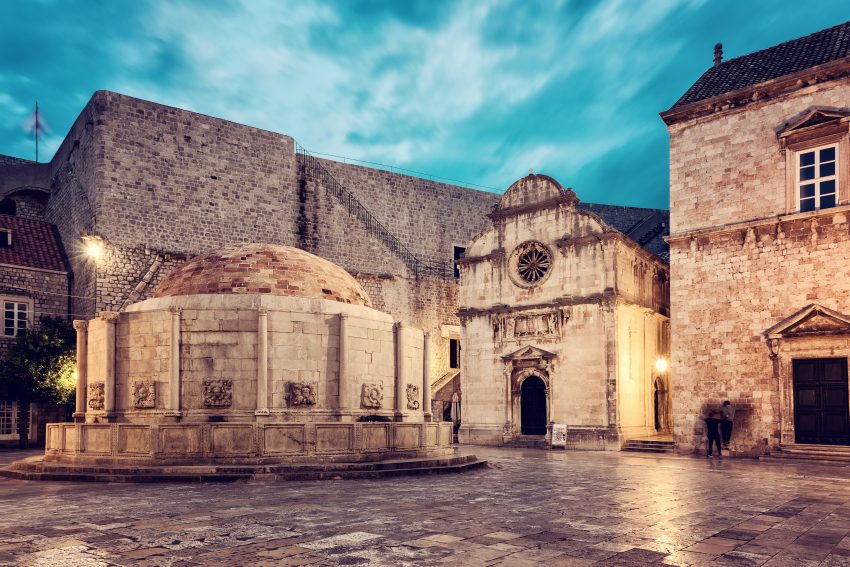
Large Onofrio's Fountain sits just inside Dubrovnik's Pile Gate, the main western entrance to the Old Town, where the Stradun begins. It's one of those landmarks you'll almost certainly pass on day one, whether you're arriving on foot from the bus drop-off area or joining a guided walking tour that starts at the gate.
The circular stone fountain is both a photo stop and a practical pit stop: you can top up a bottle with cool drinking water before heading deeper into the lanes, walls, and squares. For the best views, step back toward the Pile Gate approach for a wide shot, then circle the fountain to spot the carved mask spouts and details.
Table of Contents
- History and Significance of the Large Onofrio’s Fountain
- Things to See and Do in the Large Onofrio’s Fountain
- How to Get to the Large Onofrio’s Fountain
- Practical Tips on Visiting the Large Onofrio’s Fountain
- Where to Stay Close to the Large Onofrio’s Fountain
- Is the Large Onofrio’s Fountain Worth Visiting?
- For Different Travelers
- FAQs for Visiting Large Onofrio’s Fountain
- Nearby Attractions to the Large Onofrio’s Fountain
History and Significance of the Large Onofrio’s Fountain
Large Onofrio's Fountain is closely tied to Dubrovnik's historic water-supply system, created to bring fresh water into the fortified city. In a place built to withstand sieges, a reliable public water source was a serious piece of infrastructure, not just decoration.
The fountain’s design is associated with the engineer Onofrio della Cava and the ambitious project to channel water from springs outside the city. Over the centuries, the fountain has endured earthquakes, repairs, and the daily wear of being one of Dubrovnik’s busiest gathering points.
Today, its significance is twofold: it’s a symbol of Dubrovnik’s engineering and civic planning, and it remains a living part of the city experience because the water still runs and visitors still use it.
Things to See and Do in the Large Onofrio’s Fountain
Start by walking a slow circle around the fountain to appreciate the stonework and the series of carved faces that serve as spouts. It’s easy to rush past in the crowd, but taking 2–3 minutes to look closely makes it feel less like a checkpoint and more like a historic monument.
Use it as a reset point in your Old Town walk: fill your bottle, regroup with your travel companions, and decide whether to head straight down the Stradun, duck into the Franciscan Monastery area nearby, or linger for people-watching. Because it's right at the entrance, it's also a convenient meeting spot if your group gets separated.
If you're doing a self-guided itinerary, the fountain works well as the “start line” for a loop: Pile Gate and the fountain, down the Stradun, up into side streets, then back toward the walls or a sunset viewpoint later.
How to Get to the Large Onofrio’s Fountain
The nearest airport is Dubrovnik Airport (DBV), around 20 km from the Old Town, with seasonal and year-round connections via major European hubs. For the best deals and a seamless booking experience, check out these flights to Dubrovnik on Booking.com.
Dubrovnik does not have a central passenger train station serving the city in the way many European destinations do, so most travelers arriving “by train” will actually route via other Croatian cities and continue by bus. Train schedules and bookings can be found on Omio..
If you're traveling by car, aim for parking outside the Old Town area and then walk to Pile Gate, since the historic core is pedestrian-only and access is restricted.
Once you reach Pile Gate, the fountain is immediately inside the entrance—hard to miss, and usually surrounded by visitors filling bottles or taking photos.
Practical Tips on Visiting the Large Onofrio’s Fountain
- Entrance fee: Free.
- Opening hours: 24 Hours.
- Best time to visit: Early morning for cleaner photos and fewer tour groups, or evening when the Old Town lights make the stonework feel more atmospheric.
- How long to spend: 5–15 minutes is plenty for photos, a quick look at the details, and a water refill before continuing your walk.
- Accessibility: The area is generally step-free, but the Old Town paving is uneven and can be slippery when wet; supportive shoes help.
- Facilities: No dedicated visitor facilities at the fountain itself, but you’ll find plenty of cafés, restaurants, and public amenities within a short walk inside the Old Town.
Where to Stay Close to the Large Onofrio’s Fountain
Base yourself inside Dubrovnik Old Town (or just outside the Pile Gate area) for the easiest early starts, late-night strolls, and minimal uphill walking between sights.
For a classic, high-comfort stay with a strong sense of Dubrovnik history, consider a heritage-style property within the walls so you can step out early before the day-trippers arrive.
Hilton Imperial Dubrovnik Chosen for its landmark feel and prime position just outside Pile Gate, making the fountain and Stradun an easy walk.
Hotel Stari Grad A boutique Old Town option for travelers who want to sleep inside the walls and be close to the main lanes while still feeling tucked away.
The Pucic Palace A romantic, upscale pick near Old Town squares—great if you want atmosphere, service, and a special-occasion vibe.
Rixos Premium Dubrovnik Included for resort-style amenities (pool/spa) while still being close enough to reach Pile Gate and the fountain on foot or via a short ride.
Hotel Lapad A good-value, comfortable base in Lapad with easy transport links—ideal if you prefer a calmer area and don’t need to be inside the Old Town.
Is the Large Onofrio’s Fountain Worth Visiting?
Yes—because it’s genuinely iconic, historically meaningful, and you’ll likely pass it anyway. It adds context to Dubrovnik’s story as a fortified, self-sufficient city, and the running drinking water makes it more than just a “look but don’t touch” monument.
Honest Pivot: if you dislike crowds and quick photo stops, don’t make a special trip just for the fountain at peak hours. Instead, treat it as a brief moment on your way to the city walls, quieter side streets, or a longer museum visit.
What Other Travellers Say...

Google reviewers rate Large Onofrio's Fountain very highly, often describing it as a beautiful, iconic first landmark when entering Dubrovnik's Old Town. Common highlights include the cool, drinkable water (handy for refilling bottles), the historic feel and stone details, and the lively atmosphere with plenty of nearby cafés for a quick break. A minor downside mentioned is that some taps/spouts may not always be working, and the area can be busy with people stopping to rest or take photos.


For Different Travelers
Large Onofrio's Fountain is a small stop with outsized value: it's easy to reach, easy to understand, and it anchors the start of most Old Town itineraries. Think of it as a practical landmark (and meeting point) rather than a stand-alone attraction.
Families with Kids
Kids usually enjoy the simple ritual of refilling water bottles and spotting the carved faces around the fountain. It's also a helpful “reset” location to regroup before tackling the longer walk down the Stradun.
Because it’s right by the entrance, it works well with shorter attention spans: you can do a quick stop, then move on to open spaces like the main street or a snack break nearby. Keep an eye on little ones around wet stone and busy foot traffic.
Couples & Romantic Getaways
For couples, the fountain is a classic “first photo in Dubrovnik” moment, especially early in the morning when the Old Town feels more intimate. It's also a convenient starting point for a slow stroll down the Stradun with coffee stops.
In the evening, the area can feel more cinematic as the crowds thin and the lighting warms the stone. Pair it with a sunset plan afterward—either a viewpoint or a relaxed dinner just outside the busiest lanes.
Budget Travelers
This is one of Dubrovnik’s best free experiences: a landmark you can enjoy without tickets, plus drinkable water that helps you avoid constantly buying bottles. Use it as your refill point before walking the walls or exploring side streets.
Because it’s central, it’s also a smart navigation anchor—meet friends here, start a self-guided route, and keep your day efficient without paying for transport inside the Old Town.
History Buffs
History-minded travelers will appreciate that the fountain represents Dubrovnik’s civic engineering and survival planning, not just aesthetics. It’s a physical reminder that the city’s prosperity relied on infrastructure as much as diplomacy and trade.
To deepen the context, connect the fountain to nearby historic sites and museums in the Old Town, and look for details that hint at repairs and changes over time.
FAQs for Visiting Large Onofrio’s Fountain
Getting There
Tickets & Entry
Visiting Experience
Tours, Context & Itineraries
Photography
Accessibility & Facilities
Food & Breaks Nearby
Safety & Timing
Nearby Attractions to the Large Onofrio’s Fountain
- Pile Gate: Dubrovnik's main Old Town entrance, perfect for photos and a natural starting point for walking routes.
- Stradun (Placa): The city's central limestone street lined with landmarks, cafés, and classic Dubrovnik views.
- Franciscan Monastery and Museum: A historic complex near the entrance, known for its cloister and cultural exhibits.
- Dubrovnik City Walls: The must-do walk for panoramic views over terracotta roofs and the Adriatic.
- Fort Lovrijenac: A dramatic fortress outside the walls with sweeping sea views and strong Dubrovnik history.
The Large Onofrio's Fountain appears in our Complete Guide to Visiting Dubrovnik!

Moira & Andy
Hey! We're Moira & Andy. From hiking the Camino to trips around Europe in Bert our campervan — we've been traveling together since retirement in 2020!
This website uses affiliate links which may earn a commission at no additional cost to you!
Planning Your Visit
24 Hours.
Free.
Nearby Attractions
- Saint Saviour's Church (0) km
Church, Historic Building and Religious Building - Franciscan Monastery & Museum (0) km
Monastery, Museum and Religious Building - Stradun Street (0.1) km
Attraction, Promenade and Street - Pile Gate (0.1) km
Attraction, City Gate and Historic Site - Fort Bokar (0.1) km
Castle, City Walls and Historic Site - Dubrovnik Ethnographic Museum (0.1) km
Museum - Minceta Tower (0.2) km
City Walls, Tower and Viewing Point - Dubrovnik West Harbour and Pier (0.2) km
Docks, Harbour and Pier - Fort Lovrijenac (0.3) km
Attraction, Castle and Historic Site - Saint Blaise's Church (0.3) km
Church, Historic Building and Religious Building