Church of Jesus and the Saints Ambrogio and Andrea, Genoa
Church in Genoa
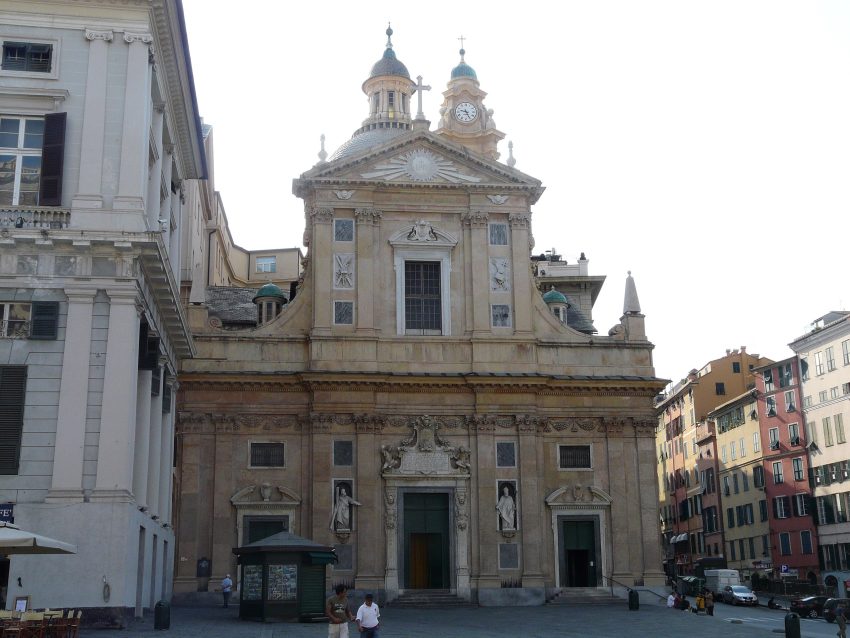
The Church of Jesus and the Saints Ambrogio and Andrea is one of the must-see places in Genoa for lovers of Baroque art and architecture. Standing on Piazza Matteotti beside the Doge's Palace, the church is instantly recognisable for its elegant façade and richly decorated interior. Originally overseen by the Jesuits, it became one of the most prestigious religious buildings in the city, a status reflected in the extraordinary artworks found inside, including masterpieces by Peter Paul Rubens and Guido Reni. Its location, bridging Piazza Matteotti and Piazza De Ferrari, makes it one of the best places to visit in Church of Jesus and the Saints Ambrogio and Andrea surroundings and a highlight of any walking tour of Genoa.
Step inside and the church reveals a stunning ensemble of frescoes, sculptures, and luminous altarpieces. The Carlone family, leaders of the Genoese Baroque movement, adorned the nave and dome with dynamic fresco cycles. Major artworks, from Rubens’ “Circumcision” to Guido Reni’s “Assumption,” bring international prestige to this otherwise local parish, blending Italian, Flemish, and Ligurian artistic traditions into a single harmonious space.
Table of Contents
- History and Significance of the Church of Jesus and the Saints Ambrogio and Andrea
- Things to See and Do in the Church of Jesus and the Saints Ambrogio and Andrea
- How to Get to the Church of Jesus and the Saints Ambrogio and Andrea
- Practical Tips on Visiting the Church of Jesus and the Saints Ambrogio and Andrea
- Where to Stay close to the Church of Jesus and the Saints Ambrogio and Andrea
- Is the Church of Jesus and the Saints Ambrogio and Andrea Worth Visiting?
- FAQs for Visiting the Church of Jesus and the Saints Ambrogio and Andrea
- Nearby Attractions to the Church of Jesus and the Saints Ambrogio and Andrea
History and Significance of the Church of Jesus and the Saints Ambrogio and Andrea
The origins of the site stretch back to the 6th century, when clergy fleeing Lombard persecution in Milan took refuge in Genoa. Their influence shaped early religious life in the city, and for over a century Genoa remained under the ecclesiastical authority of Milanese bishops. These roots established the site's longstanding sacred function.
By the early 16th century, the Jesuits assumed control of the existing church. Under their direction, a major reconstruction began in 1589, led by architect Giuseppe Valeriano. His design established the structure’s definitive Baroque form, characterised by dramatic interior spaces, rich decoration, and an emphasis on teaching through visual art-a hallmark of Jesuit architecture.
The façade visitors see today dates from a complete reconstruction in the late 19th century. Completed in 1894, it features statues of Saints Ambrogio and Andrea by Michele Ramognino, reflecting the church’s spiritual dedication. The combination of early Christian roots, Jesuit transformation, and later architectural interventions gives the church a layered historical identity central to Genoa’s religious and cultural heritage.
Things to See and Do in the Church of Jesus and the Saints Ambrogio and Andrea
The church is one of the top attractions in Genoa for its extraordinary collection of Baroque artworks:
• Admire the frescoes in the nave and dome by Giovanni Carlone and Giovanni Battista Carlone.
• See Rubens’ “Circumcision” (1608) above the main altar, a powerful example of his early Italian phase.
• View the “Massacre of the Innocents” by Giovanni Battista Merano and Domenico Piola’s “Flight into Egypt.”
• Notice the statues of Saints Peter and Paul by Giuseppe Carlone flanking the altar.
• Explore the side chapels:
- First chapel: fresco by Giuseppe Galeotti and painting by Giovanni Andrea De Ferrari.
- Second chapel: fresco by Lorenzo De Ferrari, Crucifixion by Simon Vouet, and Tommaso Orsolino’s nativity sculpture.
- Third chapel: frescoes by Lorenzo De Ferrari and Guido Reni’s “Assumption.”
Together, these works reveal the richness of Genoa’s artistic Golden Age.
How to Get to the Church of Jesus and the Saints Ambrogio and Andrea
Most visitors arrive through Genoa Cristoforo Colombo Airport, then continue by bus, taxi, or private transfer into the historic centre. For the best deals and a seamless booking experience, check out these flights to Genoa on Booking.com.
The church is within walking distance of both Genova Brignole and Genoa Piazza Principe railway stations, and easily reached via metro and bus connections to Piazza De Ferrari. Use Omnio to easily compare schedules, book train tickets, and find the best prices all in one place for a hassle-free journey across Italy.
Those travelling by car can park in the garages around Piazza De Ferrari and walk the short distance through the pedestrian zones. If you are looking to rent a car in Italy I recommend having a look at Discover Cars, first, as they compare prices and review multiple car rental agencies for you.
Practical Tips on Visiting the Church of Jesus and the Saints Ambrogio and Andrea
- Suggested tips: Pair your visit with Piazza Matteotti and the Doge's Palace directly beside the church.
- Best time to visit: Late morning for optimal interior light.
- Entrance fee in Euros: Free entry.
- Opening hours: Typically 07:00-12:00 and 15:00-19:00; may vary.
- Official website: Check the Genoa Diocese listings.
- How long to spend: 30-45 minutes.
- Accessibility: Entrance level; some chapels may have steps.
- Facilities: Cafés and restrooms available nearby.
- Photography tip: Capture the nave from just inside the entrance for depth and symmetry.
- Guided tours: Included in some art-focused walking tours.
- Nearby food options: Numerous cafés and trattorias around Piazza Matteotti and Piazza De Ferrari.
Where to Stay close to the Church of Jesus and the Saints Ambrogio and Andrea
The central location makes accommodation easy. Hotel Bristol Palace offers refined rooms near Piazza De Ferrari. For historic charm, Hotel Palazzo Grillo is ideal. A waterfront option can be found at NH Collection Genova Marina, within walking distance of the Old Town.
Is the Church of Jesus and the Saints Ambrogio and Andrea Worth Visiting?
Yes. Its exceptional artworks, Jesuit heritage, and commanding location beside major landmarks make it an essential stop for anyone exploring Genoa. The combination of Rubens, Reni, and Genoese Baroque masters makes it one of the city's most rewarding sacred spaces.
What Other Travellers Say...

Basilica of Sant'Ambrogio, on Piazza Sant'Ambrogio 15, is a well-preserved Romanesque church known for its elegant courtyard and a crypt displaying the remains of St Ambrose; visitors praise its solemn, calm interior, notable mosaics (including behind the ciborium and in the Oratory of San Vittore in Ciel d'Oro), a golden altar, intricately carved Romanesque pulpit, adjoining small museum, and historic towers and quadriportico, with easy access near the metro.


FAQs for Visiting the Church of Jesus and the Saints Ambrogio and Andrea
Nearby Attractions to the Church of Jesus and the Saints Ambrogio and Andrea
- Piazza Matteotti: A key historic square bordered by the Doge's Palace.
- Doge's Palace: Former seat of Genoa's government.
- Cathedral of San Lorenzo: Gothic-Romanesque cathedral with sacred relics.
- Piazza De Ferrari: Genoa's central civic square.
- Via Garibaldi: UNESCO-listed palaces and museums.
The Church of Jesus and the Saints Ambrogio and Andrea appears in our Complete Guide to Visiting Genoa!

Moira & Andy
Hey! We're Moira & Andy. From hiking the Camino to trips around Europe in Bert our campervan — we've been traveling together since retirement in 2020!
This website uses affiliate links which may earn a commission at no additional cost to you!
Planning Your Visit
Nearby Attractions
- Piazza Matteotti (0.1) km
Square - Doge’s Palace (0.1) km
Palace - Piazza De Ferrari (0.1) km
Square - Cathedral of San Lorenzo (0.2) km
Cathedral - Porta Soprana (0.2) km
City Gate and City Walls - Christopher Columbus House (0.2) km
Historic Building - Santa Maria di Castello (0.3) km
Church - Palazzo San Giorgio (0.5) km
Palace - National Gallery in Palazzo Spinola (0.5) km
Gallery and Historic Building - Via Garibaldi Palaces (0.5) km
Palace


