Japanese Garden, Wrocław
in Wrocław
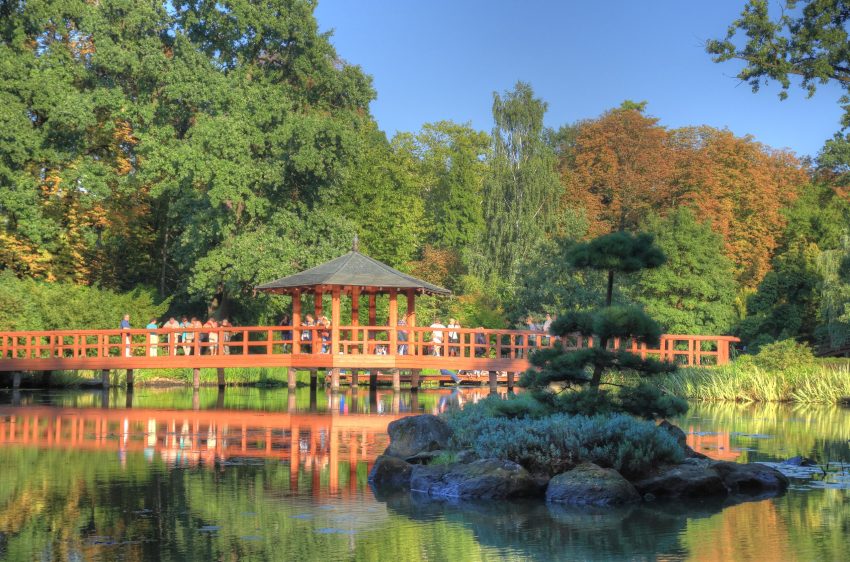
Tucked into Szczytnicki Park beside Centennial Hall, the Japanese Garden (Ogród Japoński) feels like stepping into a carefully composed miniature landscape: arched bridges, streams and cascades, stone lanterns, and tranquil pond views that change with every turn. It's not a huge place, but that's part of the charm-the paths are designed for slow wandering, where a single maple, a sculpted pine, or a glimpse of koi beneath the surface becomes the moment you remember.
If you're balancing busy Old Town sightseeing with a need to breathe, this spot is one of the best places to visit in Wrocław, and it fits naturally into a walking tour of Wrocław when you want to add something peaceful and photogenic beyond the central squares. Come with a “stroll first, checklist later” mindset, and the garden rewards you with quiet details rather than big-ticket spectacle.
Table of Contents
- History and Significance of the Japanese Garden
- Things to See and Do in the Japanese Garden
- How to Get to the Japanese Garden
- Practical Tips on Visiting the Japanese Garden
- Where to Stay Close to the Japanese Garden
- Is the Japanese Garden Worth Visiting?
- For Different Travelers
- FAQs for Visiting Japanese Garden
- Nearby Attractions to the Japanese Garden
History and Significance of the Japanese Garden
The garden’s roots go back to the early 20th century, when it was created as part of the Centennial Exhibition era, reflecting Wrocław’s long-standing interest in international design and horticulture. While the original layout did not survive intact, the idea of a Japanese-inspired contemplative garden endured, and the site became a natural place for revival rather than reinvention.
Its modern identity is shaped by late-20th-century reconstruction, when specialists helped re-establish a Japanese character through the composition of water, stone, and planting design. That’s why the garden feels “authentically intentional”: sightlines are choreographed, edges are softened, and the landscape is arranged to reveal itself gradually rather than all at once.
Beyond aesthetics, the garden carries a civic message about restoration and care. It's a living example of how Wrocław protects its green spaces as cultural assets, not just parks, and why this area around Centennial Hall has become one of the city's most satisfying places to slow down.
Things to See and Do in the Japanese Garden
Start by letting the water guide you. Streams, small cascades, and ponds create natural pauses, and the best views are often from the bridges where you can look back across layered planting and reflected sky. If you visit on a breezy day, the ripples and moving leaves add a sense of motion that makes the garden feel bigger than it is.
Look for the details that make Japanese garden design so absorbing: stone lanterns, carefully placed boulders, trimmed forms that create “sculpture in living material,” and framed views that feel almost cinematic. The garden also shines in seasonal transitions-fresh greens and blossoms in spring, deeper foliage in summer, and warm colours as autumn approaches.
If you want to extend the experience, pair the visit with the wider Szczytnicki Park and the Centennial Hall precinct. The contrast works beautifully: structured serenity in the garden, then open park paths, the Pergola, and fountains nearby for a more expansive walk.
How to Get to the Japanese Garden
The garden is in Szczytnicki Park, close to Centennial Hall (Hala Stulecia) and the Pergola, so the simplest plan is to aim for that landmark cluster first and walk the final few minutes through the park.
The nearest airport is Wrocław Copernicus Airport (WRO). For the best deals and a seamless booking experience, check out these flights to Wrocław on Booking.com.
If you arrive by train, Wrocław Główny is the main station, and it's easiest to take a tram toward the Centennial Hall area and then walk through Szczytnicki Park to the entrance. You can easily check schedules and book tickets through the PKP Intercity website. However, for a smoother experience, we recommend using Omio, which simplifies the booking process and lets you compare prices and schedules all in one place.
Trams and buses are the most convenient option from the centre, especially if you are building a day around Centennial Hall, the Pergola, and the park rather than treating the garden as a quick pop-in.
If you're driving, use paid parking in the Centennial Hall area and do the rest on foot so you're not dealing with tighter streets and longer walks from random curbside spots. If you are looking to rent a car in Poland I recommend having a look at Discover Cars, first, as they compare prices and review multiple car rental agencies for you.
Practical Tips on Visiting the Japanese Garden
- Entrance fee: Normal 30 PLN; Reduced 20 PLN; Family 80 PLN.
- Opening hours: (Summer) 1 April – 31 October: Daily: 09:00–19:00. (Winter) 1 November – 31 March: Closed.
- Best time to visit: Late morning or late afternoon tends to feel calmest, and softer light makes the water and planting textures look especially good in photos.
- How long to spend: 45-90 minutes is ideal for a slow loop, a few photo stops, and time to sit and take in the atmosphere.
- Accessibility: Expect park-style paths and some uneven surfaces; it’s manageable at a gentle pace, but it’s not a fully smooth, barrier-free environment.
- Facilities: Treat it as a “stroll and reset” stop and plan cafés, restrooms, and longer breaks around Centennial Hall and the surrounding park zone.
Where to Stay Close to the Japanese Garden
For a culture-heavy itinerary, base yourself centrally near Rynek so you can walk to the main sights and only hop on a tram for the garden; if your priority is greenery, calmer evenings, and easy access to the park-and-river side of the city, stay around Plac Grunwaldzki or the eastern riverside.
If you want to be genuinely close to the garden area for an early, uncrowded visit, Hotel Zoo by Afrykarium Wroclaw is a practical choice near the park attractions. For a high-comfort base that stays well connected to both the Old Town and the garden by tram, Radisson Blu Hotel, Wroclaw is an easy, reliable pick. If you want a polished city stay with straightforward transport links for day-tripping between the centre and the park zone, DoubleTree by Hilton Wroclaw works well for a smooth, low-stress itinerary.
Is the Japanese Garden Worth Visiting?
Yes-especially if you like places where the “activity” is simply slowing down and noticing the design. It’s not about ticking off rooms or monuments; it’s about atmosphere, composition, and the kind of quiet beauty that balances out a city break.
It's also one of the easiest ways to see a different side of Wrocław. If your trip is heavy on Old Town streets and architecture, the garden gives you a reset without feeling like you've left the city's main story behind.
What Other Travellers Say...

Ogród Japoński at Adama Mickiewicza 1 in Wrocław is a tranquil Japanese-style garden featuring a tea pavilion, carp-filled ponds, bridges and thoughtfully arranged plants and flowers; visitors praise it as a peaceful spot for reflection, photography and quiet walks where traditional architectural elements are well integrated into the greenery.


For Different Travelers
Families with Kids
This is a great family stop if you frame it as a gentle exploration rather than a long botanical lesson. Bridges, water, fish-spotting, and “find the next viewpoint” games keep kids engaged without needing a strict plan.
Keep the visit short and sweet, then let kids burn off energy in the wider park area nearby. That combination usually works better than trying to make the garden itself the full afternoon.
Couples & Romantic Getaways
For couples, the garden is ideal for a slower, more intimate pace-quiet corners, beautiful framing for photos, and plenty of natural excuses to stop and linger. It’s especially good when you want a shared moment that isn’t built around queues or schedules.
Pair it with a relaxed walk through the surrounding park zone to keep the mood going. The best “romantic” version of this visit is unhurried: fewer goals, more wandering.
Budget Travelers
The garden works well for budget travelers because it delivers a high “experience per hour” without needing a big-ticket plan. You can build a low-cost day around park walks, viewpoints, and a simple picnic-style break nearby.
Use public transport and treat this as part of a broader loop with Centennial Hall and the park, so one paid entry turns into a full half-day of satisfying sightseeing.
FAQs for Visiting Japanese Garden
Getting There
Tickets & Entry
Visiting Experience
Tours, Context & Itineraries
Photography
Accessibility & Facilities
Food & Breaks Nearby
Safety & Timing
Nearby Attractions to the Japanese Garden
- Centennial Hall (Hala Stulecia): A UNESCO-listed modernist landmark that anchors the whole park district and is worth seeing even from the outside.
- Pergola (Pergola przy Hali Stulecia): A grand colonnaded walkway that pairs perfectly with a slow stroll after the garden.
- Wrocław Fountain (Fontanna Multimedialna): A popular open-air fountain area that adds a fun, modern counterpoint to the garden's calm.
- Szczytnicki Park: One of Wrocław's largest parks, ideal for longer walks when you want greenery without leaving the city.
- Wrocław Zoo and Afrykarium: A major family-friendly attraction nearby, easy to combine with the garden for a full day in this district.
The Japanese Garden appears in our Complete Guide to Visiting Wrocław!

Moira & Andy
Hey! We're Moira & Andy. From hiking the Camino to trips around Europe in Bert our campervan — we've been traveling together since retirement in 2020!
This website uses affiliate links which may earn a commission at no additional cost to you!
Planning Your Visit
(Summer) 1 April - 31 October: Daily: 09:00-19:00.
(Winter) 1 November - 31 March: Closed.
Normal 30 PLN; Reduced 20 PLN; Family 80 PLN.
Nearby Attractions
- Wroclaw Fountain (0.1) km
Fountain - Four Domes Pavilion (0.3) km
Museum - Centennial Hall (0.3) km
Historic Building - Wrocław Zoo and Afrykarium (0.5) km
Zoo - Szczytnicki Park (0.6) km
Park - Ethnographic Museum in Wrocław (2.1) km
Museum - National Museum of Wrocław (2.2) km
Museum - Cathedral Island (2.3) km
Area and Island - Wroclaw Cathedral (2.3) km
Cathedral - Raclawice Panorama (2.4) km
Gallery