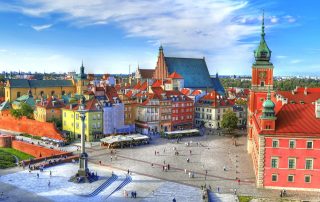
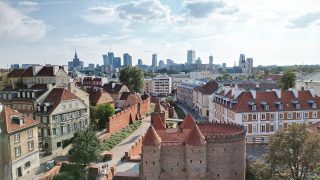
Jan Kiliński Monument, Warsaw
Monument in Warsaw
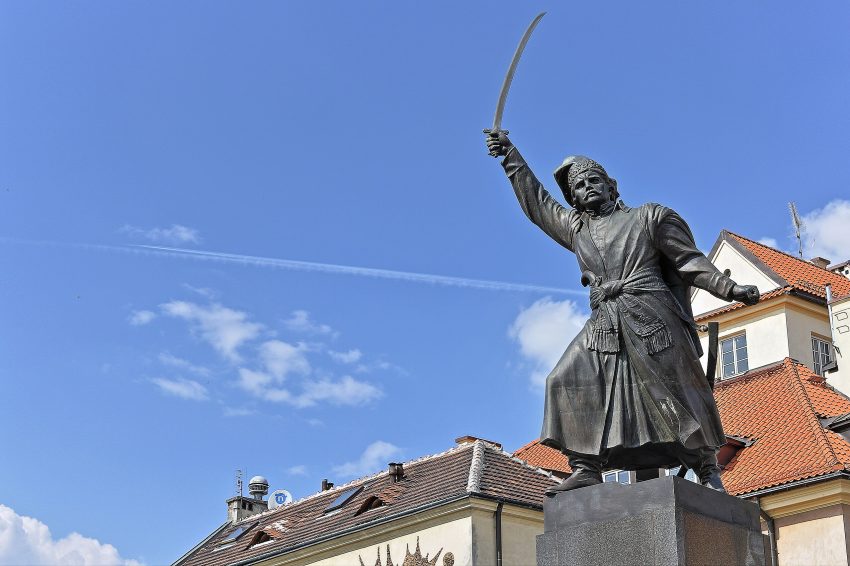
The Jan Kiliński Monument is one of those Old Town landmarks that you almost stumble upon-and then end up staying longer than expected. Set by Warsaw's defensive walls on Podwale Street, it shows Kiliński striding forward with a raised sabre: a shoemaker-turned-insurgent captured in a moment of urgency, as if he's stepping straight out of history and into today's street scene.
It's one of the top sights in Warsaw to include on a walking tour of Warsaw because it sits right on a natural Old Town loop: Barbican, walls, cathedral lanes, and the little backstreets that feel more “lived-in” than the main squares. Even if you're not deep into Polish history, the statue's energy is easy to read-every detail is designed to signal civic courage and the idea that ordinary people can move a city's story.
Table of Contents
- History and Significance of the Jan Kiliński Monument
- Things to See and Do in the Jan Kiliński Monument
- How to Get to the Jan Kiliński Monument
- Practical Tips on Visiting the Jan Kiliński Monument
- Where to Stay Close to the Jan Kiliński Monument
- Is the Jan Kiliński Monument Worth Visiting?
- For Different Travelers
- FAQs for Visiting the Jan Kiliński Monument
- Nearby Attractions to the Jan Kiliński Monument
History and Significance of the Jan Kiliński Monument
Jan Kiliński became a folk hero during the Kościuszko Uprising of 1794, remembered as a leader who embodied Warsaw’s popular resistance rather than elite power. The monument leans hard into that symbolism: he’s not posed like a distant statesman, but shown in motion, turning a tradesman’s identity into a public statement about civic agency.
The statue was originally unveiled in 1936 and later removed by the German occupiers during the Second World War, a pattern you’ll see repeated across Warsaw’s story-symbols matter, so they were targeted. The monument survived, returned after the war, and in 1959 was placed in its current Old Town location near the walls, where the setting reinforces the idea of defence, endurance, and the long arc of Warsaw’s fight to remain itself.
Today, it works as both a historic marker and an emotional punctuation point on an Old Town walk. You can read it quickly as “a hero statue,” but if you pause for a minute, it also becomes a reminder of how Warsaw repeatedly reasserts its identity through memory, reconstruction, and small acts of cultural stubbornness.
Things to See and Do in the Jan Kiliński Monument
Start by circling the pedestal and reading the inscription-this is one of those monuments where the text and stance are meant to work together, turning a simple stop into a short narrative about leadership and the city’s “people-powered” moments. Then step back and look at the statue’s line of sight and posture; it’s deliberately dynamic, built to feel like an interruption in the calm of the Old Town rather than a static decoration.
Use the location to your advantage: the defensive walls and the Barbican area make a perfect backdrop for photos, and the lanes here are some of the most atmospheric in the Old Town. It’s also a good place to slow down before re-entering the busier Market Square orbit-think of it as a quiet hinge between headline landmarks and the quieter “in-between” streets.
If you want a mini-history moment without committing to a museum, this is an ideal stop to reflect on how Warsaw’s commemorations often tie together different eras of resistance. Kiliński’s 1794 uprising story can feel surprisingly connected to the city’s later struggles, and the Old Town setting makes that continuity easy to sense even without a guide.
How to Get to the Jan Kiliński Monument
The Jan Kiliński Monument is in Warsaw's Old Town on Podwale Street by the city walls, next to the intersection with Piekarska Street, and it's easiest to reach on foot from the Barbican or Castle Square.
The nearest airports are Warsaw Chopin Airport (WAW) and Warsaw Modlin Airport (WMI). For the best deals and a seamless booking experience, check out these flights to Warsaw on Booking.com.
If you’re arriving by rail, start from Warszawa Centralna and continue by metro/tram/bus toward the Old Town edge, then walk in through the historic streets. You can easily check schedules and book tickets through the PKP Intercity website. However, for a smoother experience, we recommend using Omio, which simplifies the booking process and lets you compare prices and schedules all in one place.
Buses are often the most practical way to get close to the Old Town perimeter, but once you’re in the historic core you’ll want to do everything on foot for the best flow.
If you’re travelling by car, park in a paid garage or zone outside the Old Town and walk in, because driving into the historic centre is slow and rarely worth the hassle. If you are looking to rent a car in Poland I recommend having a look at Discover Cars, first, as they compare prices and review multiple car rental agencies for you.
Practical Tips on Visiting the Jan Kiliński Monument
- Entrance fee: Free
- Opening hours: 24 Hours
- Best time to visit: Early morning is best for calm streets and clean photos; late afternoon works well if you want warm light along the walls.
- How long to spend: 10-20 minutes is enough for the monument, or 45-90 minutes if you combine it with the Barbican and a slow Old Town lane loop.
- Accessibility: Expect uneven cobblestones and occasional steps or narrow pavement edges in the surrounding lanes.
- Facilities: This is an outdoor stop, so plan café and restroom breaks around the Old Town Market Square or Castle Square areas.
Where to Stay Close to the Jan Kiliński Monument
If your priority is a culture-heavy itinerary with maximum walkability, base yourself in the Old Town or the Royal Route edge of Śródmieście; if nightlife and dining matter most, Nowy Świat is usually the better base with a quick ride back to the historic core.
For a refined stay right on the Old/New Town edge that keeps early-morning Old Town walks easy, Mamaison Hotel Le Regina Warsaw is a strong pick. If you want a classic Warsaw address on the Royal Route with an easy stroll into Old Town landmarks, Hotel Bristol, a Luxury Collection Hotel, Warsaw places you perfectly for both history and city-centre energy. For a simple, characterful base that puts you close to Castle Square and the Old Town lanes, Castle Inn is hard to beat for location.
Is the Jan Kiliński Monument Worth Visiting?
Yes, especially if you like Warsaw’s history best when it shows up in the streets rather than behind glass. The monument is fast to visit, easy to fit into an Old Town loop, and genuinely expressive-its “in-motion” design gives it more personality than many heroic statues.
It’s also a smart stop because it improves your route: you get the walls, the Barbican area atmosphere, and a meaningful civic story in one place, without needing tickets or planning.
What Other Travellers Say...

Monument to Jan Kiliński sits in Stryiskyi Park in Lviv and is praised by visitors as a beautiful, impressive and cool monument that suits the park’s atmosphere; reviewers recommend stopping by the park to see it, note it prompts thoughts about Lviv’s history, and suggest looking up the figure to learn more.


For Different Travelers
Families with Kids
This stop works well for families because it’s outdoors, quick, and visually clear-kids immediately understand “a person marching with a sword,” even if the deeper history comes later. Make it a short mission: spot the sabre, find the inscription, then continue to the Barbican and walls where there’s more to look at without needing long attention spans.
If you’re doing Old Town with children, this is also a good pacing point. It breaks up the café-and-square rhythm with a simple story and a bit of space to move before you head back into busier streets.
Couples & Romantic Getaways
For couples, the monument is less about romance and more about atmosphere and shared context-one of those stops that makes a city feel layered rather than just pretty. The nearby walls and lantern-lit lanes can feel especially cinematic in the softer light, and it’s a great “slow walk” section of the Old Town.
Pair it with a gentle loop toward the cathedral streets and back to a coffee stop, and it becomes part of a day that's more about mood than ticking off major interiors. It's also an easy place to pause and talk, because you're slightly off the loudest Old Town currents.
Budget Travelers
Budget travellers should absolutely include this stop: it’s free, central, and adds real meaning to an Old Town walk without costing you time or money. It also naturally links to other free highlights nearby, so you can build a full, satisfying route before spending anything on museums.
If you're trying to keep your day efficient, use it as a navigation anchor: Barbican, Kiliński, cathedral lanes, Castle Square. That loop feels “planned” even when you're doing it independently.
FAQs for Visiting the Jan Kiliński Monument
Getting There
Tickets & Entry
Visiting Experience
Tours, Context & Itineraries
Photography
Accessibility & Facilities
Food & Breaks Nearby
Safety & Timing
Nearby Attractions to the Jan Kiliński Monument
- Warsaw Barbican: A photogenic stretch of historic fortifications that makes the walls-and-lanes area feel like a time capsule.
- Old Town Market Square (Rynek Starego Miasta): The colourful heart of Old Town, ideal for a slow wander and a café stop.
- St John's Archcathedral: A major Old Town church with deep historical resonance and an easy pairing with nearby lanes.
- Royal Castle in Warsaw: The flagship landmark at Castle Square, perfect as the “big” stop on the same Old Town loop.
- Castle Square (Plac Zamkowy): The Old Town's grand gateway, great for people-watching and continuing along the Royal Route.
The Jan Kiliński Monument appears in our Complete Guide to Visiting Warsaw!

Moira & Andy
Hey! We're Moira & Andy. From hiking the Camino to trips around Europe in Bert our campervan — we've been traveling together since retirement in 2020!
This website uses affiliate links which may earn a commission at no additional cost to you!
Planning Your Visit
24 Hours
Free
Nearby Attractions
- Mały Powstaniec, Little Insurgent Monument (0.1) km
Monument - St John's Archcathedral (0.2) km
Church - Old Town Market Square (0.2) km
Square - Mermaid of Warsaw (0.2) km
Statue - Sigismund’s Column (0.2) km
Statue - Castle Square (0.2) km
Square - Royal Castle (0.2) km
Castle - Old Town Wishing Bell (0.2) km
Monument and Street - Warsaw Barbican (0.3) km
Castle - Field Cathedral of the Polish Army (0.3) km
Cathedral