Jade Emperor Pagoda, Ho Chi Minh City (Saigon)
Pagoda in Ho Chi Minh City (Saigon)
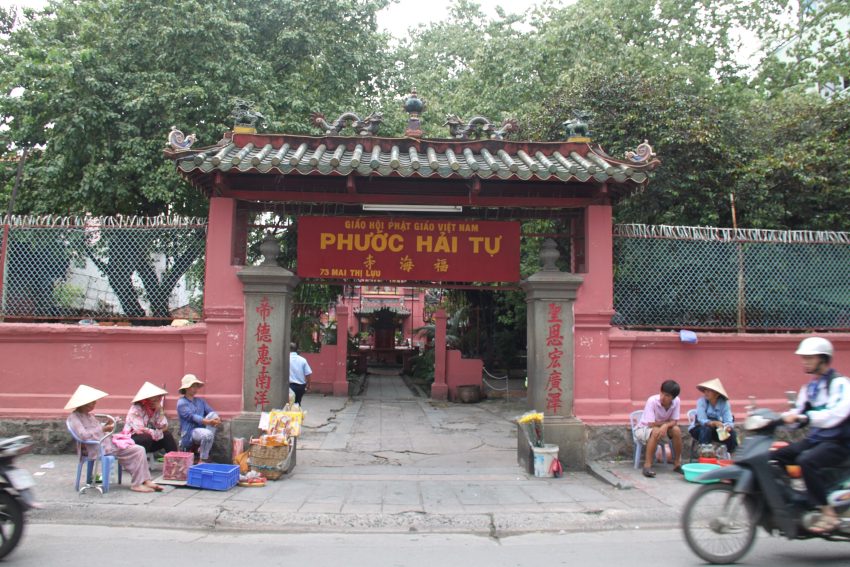
Tucked into Da Kao Ward in District 1, the Jade Emperor Pagoda (Chùa Ngọc Hoàng) is one of Ho Chi Minh City's most vivid temple experiences: dark wooden halls, swirling incense smoke, and dense layers of Taoist and Buddhist imagery that make every corner feel like a small discovery. From the street it looks modest, but once inside, the atmosphere is immediate-warm light, ornate altars, and a quiet hum of local worship that gives the place a living, devotional energy.
It’s best approached as a working temple rather than a museum. People come here to pray for health, luck, love, and especially fertility, and the pagoda’s famous shrines draw a steady mix of locals and curious travelers. If you want a spiritual stop that feels distinctly Saigon-intense, intimate, and beautifully textured-this is one of the city’s most rewarding.
Table of Contents
- History and Significance of the Jade Emperor Pagoda
- Things to See and Do in the Jade Emperor Pagoda
- How to Get to the Jade Emperor Pagoda
- Practical Tips on Visiting the Jade Emperor Pagoda
- Where to Stay Close to the Jade Emperor Pagoda
- Is the Jade Emperor Pagoda Worth Visiting?
- For Different Travelers
- FAQs for Visiting Jade Emperor Pagoda
- Nearby Attractions to the Jade Emperor Pagoda
History and Significance of the Jade Emperor Pagoda
The pagoda was built in the early 20th century, commonly dated to 1909, by members of the Cantonese Chinese community in Saigon and dedicated to Ngọc Hoàng Thượng Đế (the Jade Emperor), the supreme deity in Taoism. Over time it evolved into a blended place of worship, where Taoist cosmology sits alongside Buddhist devotion, reflecting the way Vietnamese urban temples often hold multiple traditions in one sacred space.
In the 1980s, the pagoda came under Buddhist management and was officially associated with the Vietnam Buddhist community, and it is also known by the name Phước Hải Tự. Despite the formal name, most visitors still use “Jade Emperor Pagoda” because the central sanctuary and its iconography remain the defining draw.
Its cultural significance is closely tied to local belief and practice. This is not just an architectural relic; it is a place where people actively seek help for real life concerns-family, relationships, business luck-making it one of the best sites in the city for understanding how everyday spirituality is expressed in modern Ho Chi Minh City.
Things to See and Do in the Jade Emperor Pagoda
Begin in the main sanctuary, where the Jade Emperor’s altar anchors the experience and sets the tone: elaborate carvings, guardian figures, and a layered arrangement of offerings that changes subtly with the rhythm of the day. Take your time here-many visitors rush, but the details only reveal themselves when you slow down and let your eyes adjust to the low, smoky light.
Make a point of visiting the fertility shrines, which are among the most visited areas in the complex. The imagery around Kim Hoa Thánh Mẫu and the attendant figures is especially distinctive, and it offers a direct window into the folk practices that keep the pagoda central to local life.
Before you leave, step into the courtyard areas and pause at the small tanks (often associated with turtles and fish), which many visitors notice as part of the pagoda’s quieter, contemplative side. It is also a good moment to reset your senses after the incense-heavy interior and decide whether to continue your walk deeper into District 1.
How to Get to the Jade Emperor Pagoda
The nearest airport is Tan Son Nhat International Airport (SGN), and the simplest option is a taxi or ride-hailing app straight to Da Kao Ward in District 1. For the best deals and a seamless booking experience, check out these flights to Ho Chi Minh City (Saigon) on Booking.com.
If you are arriving in Ho Chi Minh City by rail, you will typically reach Saigon Railway Station and then continue by taxi or ride-hailing to the pagoda, which is a straightforward cross-city trip outside peak traffic. Train schedules and bookings can be found on Omio.
Local buses run through District 1 and the Da Kao area, but for most visitors the easiest approach is to combine a short walk with a quick ride-hail hop, especially in the heat. If you are already sightseeing around the cathedral, post office, or central museums, it is often simplest to come on foot as part of a District 1 loop.
If you are traveling by car, plan to be dropped off nearby rather than expecting convenient on-the-spot parking, as the surrounding streets can be busy and space is limited.
Practical Tips on Visiting the Jade Emperor Pagoda
- Entrance fee: Free (donations welcome).
- Opening hours: Daily: 07:00–18:00. Open later on the first & fifteenth days of the lunar month.
- Best time to visit: Go early in the morning for a calmer atmosphere and cleaner photos before the crowds and heavier incense build up. If you want to see it at its most lively, visit around local festival periods, but expect a busier, smokier interior.
- How long to spend: Allow 45-75 minutes to explore the main halls slowly, take in the details, and pause in the courtyards. If you are combining it with nearby stops, it also works well as a focused 30-45 minute visit.
- Accessibility: Expect steps, uneven thresholds, and tighter interior spaces that can be tricky for wheelchairs or anyone with limited mobility. If you are visiting with a stroller, it is usually easier to park it and carry valuables inside, especially during peak times.
- Facilities: Facilities are limited and geared toward worship rather than tourism, so plan restrooms and longer breaks elsewhere. There are usually small stalls nearby for drinks or simple snacks, and it is worth bringing a bottle of water if you are visiting in the heat.
Where to Stay Close to the Jade Emperor Pagoda
For a culture-heavy itinerary with maximum walkability, base yourself in District 1 around Da Kao and the Dong Khoi/Turtle Lake area; if your trip is more about nightlife and late-night food, base closer to Bùi Viện and the backpacker quarter.
For a classic, central stay that keeps you close to District 1 landmarks and makes the pagoda an easy walk or short taxi ride, consider Sofitel Saigon Plaza. If you want a polished, convenient base near the city’s main sights with reliable comfort, Hotel Majestic Saigon places you in an excellent position for a broader District 1 itinerary. For a modern, central option that works well for first-time visitors who plan to walk a lot, Liberty Central Saigon Citypoint is a practical choice.
Is the Jade Emperor Pagoda Worth Visiting?
Yes-this is one of Ho Chi Minh City’s most atmospheric temples, and it delivers something you cannot replicate elsewhere in the city: an immersive interior of incense haze, intricate iconography, and active local worship that makes the visit feel immediate rather than staged. It also fits easily into a District 1 day without requiring complicated planning or long travel.
The honest pivot is that you may want to skip it if you are sensitive to incense smoke or find crowded, enclosed sacred spaces uncomfortable, as the interior can feel intense at busy times. If that is you, a quieter alternative is to prioritise open-air colonial-era sights and parks nearby, then choose a calmer temple visit elsewhere.
What Other Travellers Say...

Jade Emperor Pagoda at 73 Mai Thị Lựu in District 1 is a compact, peaceful temple complex tucked into the city where visitors can enter for free, pause to pray or reflect, and admire detailed carvings and craftsmanship; photography is restricted inside, modest dress is expected, donation boxes are available, and there's free parking on the premises, though it can be popular with tour groups.


For Different Travelers
Families with Kids
This works best for families as a short, focused visit: go in with one simple goal (spot the dramatic guardians, find the main altar, then step back out) rather than trying to see every corner. The interior can be dark and smoky, so keep the pace gentle and take breaks outside if anyone feels overwhelmed.
If you are visiting with very young children, treat it as a “peek inside” stop and combine it with nearby open spaces afterward so the day does not become a sequence of indoor attractions. A small snack and water plan helps, as this part of District 1 can feel hot and busy.
Couples & Romantic Getaways
For couples, the pagoda is a memorable stop because it’s tied to local rituals for love and good fortune, and it adds a spiritual, story-driven layer to a District 1 day. It pairs well with a slow walk afterward through the cathedral/post office area or a café stop that lets you decompress and talk about what you saw.
If you like photography and mood, arrive when the light is softer and the temple feels calmer; the combination of shadow, carved detail, and incense creates a distinctive atmosphere that feels very “old Saigon” even in the middle of the modern city.
Budget Travelers
It is excellent value because it is free, centrally located, and easy to combine with other walkable District 1 highlights. If you are planning a low-cost day, build a loop of the pagoda, the cathedral area, and a museum stop, then use street food or a simple café as your main spend.
To keep costs and friction down, walk between sights where possible and only use ride-hailing for longer hops in the heat. The pagoda is one of those places where a short visit can still feel like a genuine cultural experience.
History Buffs
History-focused visitors will appreciate how the pagoda reflects the Chinese-Vietnamese religious landscape of early 20th-century Saigon, and how it continued to evolve under changing administration and devotional practice. The visual program-deities, guardians, symbolic animals, and ritual objects-reads like a living archive of belief rather than a static heritage display.
To deepen the context, pair it with a visit to another Chinese-influenced temple in the city (such as in Chợ Lớn) so you can compare how architecture and worship styles shift across neighborhoods. It turns a single temple visit into a more complete story about migration, community identity, and urban religion.
FAQs for Visiting Jade Emperor Pagoda
Getting There
Tickets & Entry
Visiting Experience
Tours, Context & Itineraries
Photography
Accessibility & Facilities
Food & Breaks Nearby
Safety & Timing
Nearby Attractions to the Jade Emperor Pagoda
- War Remnants Museum: A powerful, well-curated museum that gives essential context to modern Vietnamese history.
- Independence Palace: A landmark site where you can walk through the political history of Saigon and the end of the war era.
- Notre Dame Cathedral of Saigon: An iconic colonial-era façade and one of the city’s best-known photo stops.
- Saigon Central Post Office: A beautiful historic building that pairs naturally with the cathedral for a short architecture loop.
- Ho Chi Minh City Museum of History: A solid add-on for travelers who want deeper context on the region beyond the modern city.
The Jade Emperor Pagoda appears in our Complete Guide to Visiting Ho Chi Minh City (Saigon)!

Moira & Andy
Hey! We're Moira & Andy. From hiking the Camino to trips around Europe in Bert our campervan — we've been traveling together since retirement in 2020!
This website uses affiliate links which may earn a commission at no additional cost to you!
Planning Your Visit
Daily: 07:00-18:00. Open later on the first & fifteenth days of the lunar month.
Free (donations welcome).
Nearby Attractions
- History Museum (0.8) km
Museum - Saigon Zoo & Botanical Garden (0.9) km
Zoo - Central Post Office (1.4) km
Historic Building - Notre-Dame Cathedral (1.5) km
Cathedral - War Remnants Museum (1.5) km
Museum - Ben Nghe Street Food Market (1.6) km
Market - Reunification Palace (1.7) km
Historic Site - Ho Chi Minh City Museum (1.8) km
Museum - Ho Chi Minh City Opera House (1.8) km
Opera House - The Golden Dragon Water Puppet Theater (1.9) km
Theatre