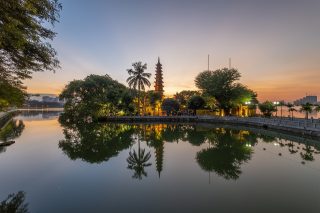
Ho Chi Minh Museum, Hanoi
Museum in Hanoi
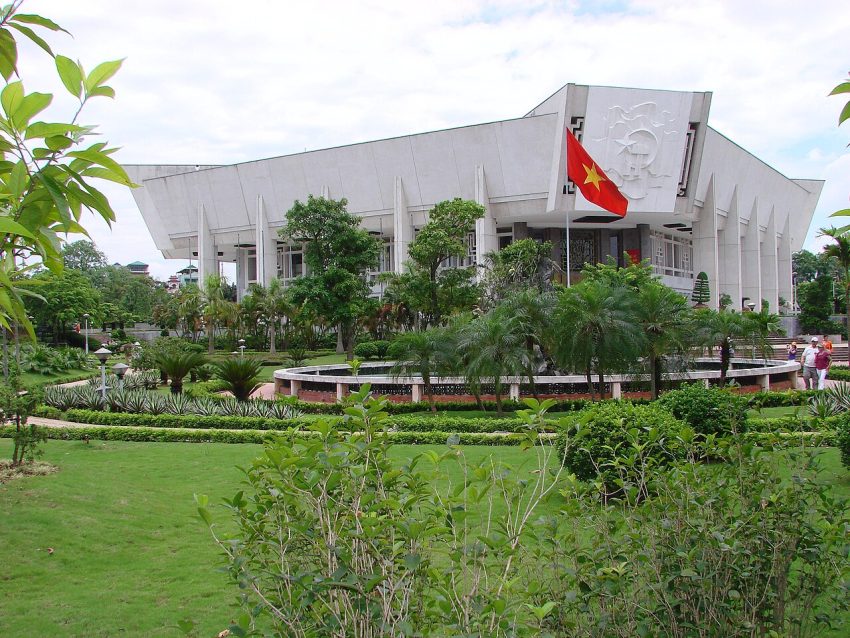
The Ho Chi Minh Museum is a striking cultural landmark that offers an immersive exploration of Vietnam's revolutionary history and the life of Ho Chi Minh. Built in the 1990s within the Ho Chi Minh Complex, this museum honours the leader who devoted his life to Vietnam's independence. Designed with bold architectural lines and symbolic elements, it provides a thoughtful journey through one of Southeast Asia's most influential political figures. For travellers curious about Vietnam's modern history, it is one of the best places to visit in Hanoi.
Often visited on walking tours of Hanoi's Ba Dinh District, the museum pairs emotional storytelling with historical depth, creating an insightful experience for both local and international visitors.
Table of Contents
- History and Significance of the Ho Chi Minh Museum
- Things to See and Do in the Ho Chi Minh Museum
- How to Get to the Ho Chi Minh Museum
- Practical Tips on Visiting the Ho Chi Minh Museum
- Where to Stay close to the Ho Chi Minh Museum
- Is the Ho Chi Minh Museum Worth Visiting?
- FAQs for Visiting the Ho Chi Minh Museum
- Nearby Attractions to the Ho Chi Minh Museum
History and Significance of the Ho Chi Minh Museum
The museum was established to commemorate Ho Chi Minh's contributions to Vietnam's struggle against colonial and foreign domination. It stands near Ba Dinh Square-the place where he declared Vietnam's independence in 1945-and forms part of a larger complex that includes the Mausoleum, Presidential Palace, and Stilt House.
Completed in the early 1990s, its architecture symbolises a white lotus flower, representing purity and the ideals of the revolutionary movement. The museum’s purpose is both commemorative and educational, providing visitors with a narrative of the nation’s fight for freedom and the ideology that shaped modern Vietnam.
The building serves not only as a repository of artifacts but also as a national symbol of gratitude, celebrating Ho Chi Minh as a leader, philosopher, patriot, and cultural icon.
Things to See and Do in the Ho Chi Minh Museum
Inside, the museum presents eight chronological exhibits that guide visitors through the major phases of Ho Chi Minh’s life and the evolution of the Vietnamese revolution.
Early Life (1890-1910)
The first gallery introduces Ho Chi Minh’s origins, childhood, family background, and early influences in Nghe An Province.
Global Journey (1910-1920)
This section explores his decade-long travels to Europe, Africa, and the Americas, during which he searched for political strategies to liberate Vietnam.
Formation of Revolutionary Ideology (1920-1945)
Three exhibits cover his adoption of Marxist-Leninist thought, the founding of the Vietnamese Communist Party, and the events leading to the August Revolution of 1945.
Leadership of an Independent Nation (1945-1969)
Exhibits six and seven highlight his years as President and Prime Minister of North Vietnam, documenting his writings, leadership style, and nation-building efforts.
Legacy and National Heroism
The final exhibit celebrates his lasting cultural and political impact, showcasing how he became a symbol of unity and independence.
Museum Collections
The museum preserves more than 170,000 items, including documents, personal belongings, gifts from international allies, miniatures, and films. Information is provided in Vietnamese, English, and French, and guided tours can be arranged upon request for deeper insights.
How to Get to the Ho Chi Minh Museum
The museum is located within the Ho Chi Minh Complex in Ba Dinh District. Travellers arriving by air will land at Nội Bài International Airport, around 40 minutes away. For the best deals and a seamless booking experience, check out these flights to Hanoi on Booking.com.
Hanoi Railway Station is nearby and offers convenient access via taxi or public bus. Train schedules and bookings can be found on Omio.
Travelling by car is a simple option, though visitors should expect crowding around major landmarks during peak hours.
Practical Tips on Visiting the Ho Chi Minh Museum
- Suggested tips: Explore the museum after visiting the Mausoleum to follow a logical historical timeline.
- Best time to visit: Late morning or early afternoon when tour groups have dispersed.
- Entrance fee: 40,000 VND/person
- Opening hours: 8 am to 11:30 am Daily (closed on Mondays and Fridays)
- Official website: https://baotanghochiminh.vn/
- How long to spend: 60-90 minutes.
- Accessibility: Ramps and elevators available throughout the museum.
- Facilities: Restrooms, gift shop, shaded seating areas.
- Photography tip: Capture the museum’s lotus-inspired façade from a low angle for a distinctive shot.
- Guided tours: Available upon request in multiple languages.
- Nearby food options: Streets around Ba Dinh offer cafés and traditional Vietnamese restaurants.
Where to Stay close to the Ho Chi Minh Museum
Staying in Ba Dinh District provides great access to the museum and surrounding sites. For an upscale stay, consider Dolce by Wyndham Hanoi Golden Lake. A reliable mid-range option is Hanoi La Rosa Hotel. For boutique charm near the Old Quarter, try La Sinfonía del Rey Hotel.
Is the Ho Chi Minh Museum Worth Visiting?
Yes, the Ho Chi Minh Museum is absolutely worth visiting. It offers a comprehensive, engaging look at Ho Chi Minh's life, the revolutionary movement, and Vietnam's path to independence. This spot is a highlight of any walking tour of Hanoi for visitors seeking historical depth and cultural context.
What Other Travellers Say...

Ho Chi Minh's Mausoleum at 1 Hùng Vương, Điện Biên, Ba Đình, Hà Nội is a solemn, well maintained complex where visitors can view the leader's preserved body; entry to the mausoleum itself is free but there are strict security checks and a dress code (sleeves and knee-covering bottoms advised), visiting hours are limited in the morning so it's best to go early, and queues move steadily with professional guards. The grounds and Ba Đình Square are pleasant to stroll, and nearby sites within the complex—such as the One Pillar Pagoda, the stilt house and the Ho Chi Minh Museum—may require separate tickets; volunteer-led tours and paid guided options are available to deepen your understanding.


FAQs for Visiting the Ho Chi Minh Museum
Nearby Attractions to the Ho Chi Minh Museum
- Ho Chi Minh Mausoleum: The resting place of Vietnam's revered leader.
- One Pillar Pagoda: A unique lotus-inspired Buddhist monument.
- Presidential Palace: Iconic French colonial architecture.
- Imperial Citadel of Thang Long: A UNESCO archaeological site nearby.
- Vietnam Military History Museum: Extensive wartime exhibits and vehicle displays.
The Ho Chi Minh Museum appears in our Complete Guide to Visiting Hanoi!

Moira & Andy
Hey! We're Moira & Andy. From hiking the Camino to trips around Europe in Bert our campervan — we've been traveling together since retirement in 2020!
This website uses affiliate links which may earn a commission at no additional cost to you!
Planning Your Visit
8 am to 11:30 am Daily (closed on Mondays and Fridays)
40,000 VND/person
Nearby Attractions
- One Pillar Pagoda (0.1) km
Buddhist Temple - Ho Chi Minh’s Mausoleum (0.3) km
Mausoleum - Ho Chi Minh's Stilt House (0.3) km
Historic Building - Ba Dinh Square (0.3) km
Square - Presidential Palace (0.5) km
Palace - Vietnam National Museum of Fine Arts (0.7) km
Museum - Imperial Citadel of Thang Long (0.8) km
Castle - Lenin Park (0.8) km
Park - Temple of Literature (0.9) km
Religious Building - Vietnam Military History Museum (0.9) km
Museum