Golubac Fortress, Belgrade
near Belgrade
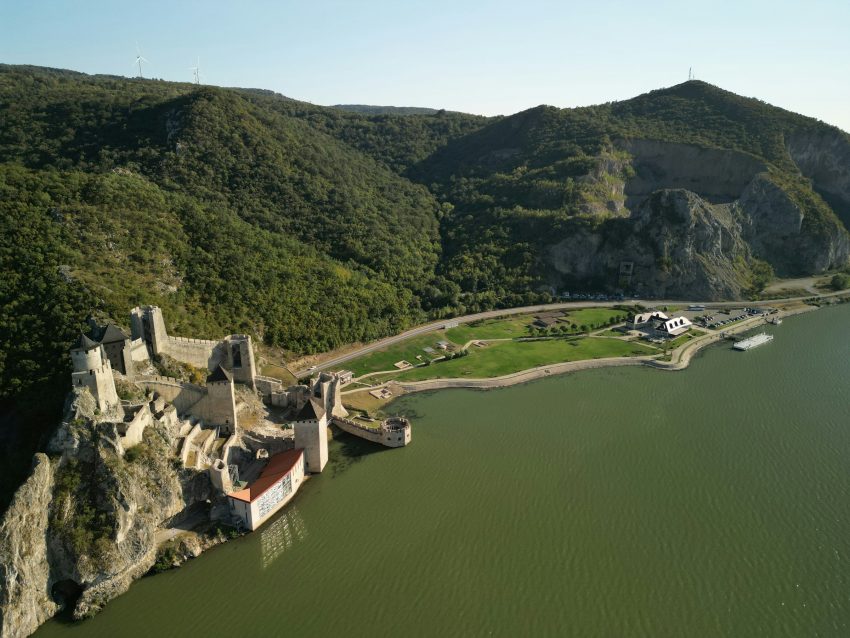
Golubac Fortress sits on the right bank of the Danube in eastern Serbia, dramatically placed where the river narrows and the landscape starts to feel wilder and more rugged. It is a restored medieval fortress with towers, walls, lookout points, and a visitor complex, and it is easily one of the best places to visit in this part of the country for anyone interested in history, scenery, or photography.
What makes it memorable is the combination of scale and setting. Even before you step inside, the fortress feels theatrical, and once you begin walking through the lower sections you get wide Danube views, a strong sense of the site's defensive logic, and the feeling that this is the sort of stop that anchors a walking tour, road trip, or longer exploration of the Iron Gates region.
Table of Contents
- History and Significance of the Golubac Fortress
- Things to See and Do in the Golubac Fortress
- How to Get to the Golubac Fortress
- Practical Tips on Visiting the Golubac Fortress
- Where to Stay Close to the Golubac Fortress
- Is the Golubac Fortress Worth Visiting?
- For Different Travelers
- FAQs for Visiting Golubac Fortress
- Nearby Attractions to the Golubac Fortress
History and Significance of the Golubac Fortress
Golubac Fortress has long occupied a strategic position on the Danube, controlling movement through one of the most important river corridors in the region. Because of that location, it passed between competing powers over the centuries, including Serbian, Hungarian, and Ottoman rulers, and its military importance far outweighed the size of the nearby settlement.
The fortress seen today is strongly associated with the medieval period, especially the 14th and 15th centuries, when fortified river control mattered enormously in southeastern Europe. Its towers and defensive lines were designed not just for protection from land assault, but also to monitor and influence river traffic, which helps explain why the site feels so tightly bound to the Danube itself.
Its modern significance comes from restoration as much as from survival. After major conservation work, Golubac Fortress became one of Serbia's best-presented medieval monuments, giving visitors a chance to experience both the architecture and the landscape in a much more accessible way than before.
Things to See and Do in the Golubac Fortress
The first thing to notice is the fortress silhouette itself, with towers stacked above the river and rocky hillside. Even from outside the walls, it is a rewarding stop, but going inside gives you a clearer feel for how the complex was organized and how the different defensive levels worked together.
The visitor centre and archaeological park add useful context, especially if you want more than just a scenic photo stop. Guided interpretation is available on site, and the official fortress information notes that stories about the fortress are presented by guides at regular intervals, which can make the visit much richer if you want historical framing rather than just a self-guided wander.
Photography is a major part of the appeal here. The classic views combine towers, cliffs, and the Danube, and the changing angle of light over the water gives the fortress a different character through the day. If you choose a higher-access route, you also get more dramatic vantage points, though those sections are more physically demanding and are not suitable for everyone.
How to Get to the Golubac Fortress
Flying is the most practical long-distance option if you are arriving from abroad, with Belgrade Nikola Tesla Airport the nearest major airport for most travelers. From there, you continue by road toward Golubac and the Danube corridor. For the best deals and a seamless booking experience, check out these flights to Belgrade on Booking.com.
There is no straightforward train connection to the fortress itself, so rail is not the simplest way to reach this site. Most visitors who are not driving use buses from Belgrade to Golubac instead, then complete the final stretch by local transport or taxi. Train schedules and bookings can be found on Omio.
Buses from Belgrade to Golubac run regularly, with direct services taking roughly two and a half hours, which makes the fortress possible as a long day trip if you plan the return carefully. Do note that the fortress is outside the town centre, so the final leg usually requires extra planning rather than assuming you can simply walk from the bus stop.
By car, Golubac Fortress is one of the easiest major historic sights in eastern Serbia to visit independently, and driving gives you the most flexibility if you want to pair it with viewpoints in Đerdap National Park or other Danube stops. From Belgrade, the road journey is roughly 127-131 km and usually under two hours in normal conditions.
Practical Tips on Visiting the Golubac Fortress
- Entrance fee: Adult tickets start from 900 RSD; seniors 500 RSD; students and school groups 350 RSD; children aged 7 – 18 pay 250 RSD; children under 7 enter free. Ticket prices vary by visit type and access zone, and parking is included.
- Opening hours: April: Tuesday – Sunday: 10:00–16:00. Closed on Mondays.
- Official website: https://tvrdjavagolubackigrad.rs/eng/
- Best time to visit: Early or late in the day is best for softer light and a calmer atmosphere, while spring and early autumn usually give the most comfortable conditions for walking around the fortress.
- How long to spend: Allow around 1.5 to 3 hours if you want time for the visitor areas, viewpoints, and photos without rushing.
- Accessibility: The lower parts are easier to manage, but higher zones involve steeper terrain and are not ideal for visitors with limited mobility.
- Facilities: Parking is included with tickets, and the complex includes a visitor centre, archaeological park, coffee shop, and gift shop.
Where to Stay Close to the Golubac Fortress
For most travelers, the best base is central Golubac if you want easy access to the fortress and Danube-side stops, while Vinci suits a quieter nature-focused stay with more of a retreat feel.
If you want something practical and familiar, Hotel Golubački Grad is the most obvious traditional hotel base in the area and works well for travelers who want straightforward access to town services as well as the fortress. Its location makes it a sensible pick for a short stay built around culture, road-tripping, and the Danube.
For a more atmospheric stay, Vila Dunavski Raj is a strong choice if your trip is as much about the river landscape as the fortress itself. It is better suited to travelers who want a slower pace, a more intimate setting, and easy access to the wider Đerdap area.
Another good option is Apartments NANA for travelers who prefer apartment-style flexibility and a central town location. It fits well if you want something casual and convenient rather than a classic hotel setup.
Is the Golubac Fortress Worth Visiting?
Yes, definitely. Golubac Fortress is one of those places that easily justifies the journey because it delivers both substance and spectacle: the history is real, the setting is exceptional, and the restoration makes the site far more engaging than many fortresses that are little more than ruins on a hill.
The honest pivot is that travelers who dislike steps, exposed viewpoints, or out-of-town logistics may find it less effortless than urban sights in Belgrade or Novi Sad. It is also not the best fit for someone who wants museums, cafés, and old-town wandering all in one compact area, because the main appeal here is the fortress-and-landscape experience rather than a full historic centre around it.
What Other Travellers Say...

Reviewers consistently describe Golubac Fortress as a stunning, beautifully restored medieval site with strong historical atmosphere and spectacular views over the Danube and surrounding national park. Visitors appreciate the well-organized visitor center, helpful staff and guides, clear safety measures, and the choice of routes/circuits for different ability levels, with pricing generally seen as fair. Common drawbacks are that some towers or sections may be closed due to weather or seasonal hours, and several note practical cautions such as wind, needing proper footwear/long pants, and occasional warnings about snakes in summer.


For Different Travelers
Families with Kids
Golubac Fortress can work very well for families, especially if you treat it as a scenic outdoor stop rather than an all-day history lesson. The lower-access areas, the river views, and the sense of exploring towers and walls usually give children enough visual interest to stay engaged, and the visitor complex helps break up the experience.
The main thing is to be realistic about routes and supervision. Some sections are far better suited to older children than to toddlers, and if you are visiting with a stroller or very young kids, it is smarter to focus on the easier zones and enjoy the fortress as a family-friendly viewpoint stop rather than trying to do the most demanding parts.
Couples & Romantic Getaways
For couples, this is one of the most atmospheric fortresses in Serbia because the setting does so much of the work. The Danube backdrop, the changing light on the towers, and the wider Iron Gates scenery make it feel naturally cinematic without trying too hard.
It works especially well as part of a slow road trip or an overnight stay nearby, when you can avoid the rushed day-trip rhythm and enjoy the landscape as much as the monument. A stay in Vinci or on the riverfront side of Golubac gives the visit a more relaxed and memorable feel.
Budget Travelers
Golubac Fortress is a good budget-friendly historic stop by regional standards, especially because standard entry is not expensive and parking is included in the ticket. If you are already traveling through eastern Serbia by bus or car, it is an easy place to add without turning the day into a costly excursion.
The main budgeting challenge is transport rather than admission. Public transport can get you to Golubac, but the final connection to the fortress takes more planning, so independent travelers should check whether a bus-plus-taxi combination is still cheaper and simpler than joining a shared excursion.
History Buffs
History lovers will get more out of Golubac than casual visitors because the fortress tells a broader frontier story, not just a local one. Its position on the Danube, its repeated shifts between rival powers, and its layered defensive design all speak to the larger politics of the medieval Balkans and central Europe.
It is also satisfying because the restoration allows you to read the site more clearly than at many partially ruined fortresses. Instead of imagining everything from fragments, you can see how circulation, observation, and defense likely functioned, which makes the visit feel more historically legible.
FAQs for Visiting Golubac Fortress
Getting There
Tickets & Entry
Visiting Experience
Tours, Context & Itineraries
Photography
Accessibility & Facilities
Food & Breaks Nearby
Safety & Timing
Nearby Attractions to the Golubac Fortress
- Đerdap National Park: Serbia’s great Danube landscape park surrounds the wider region with dramatic gorges, viewpoints, and nature-focused stops.
- Golubac town centre: The nearby town is a useful base for cafés, accommodation, and a slower look at everyday Danube life.
- Vinci: This quieter riverside settlement is a good detour if you want a more peaceful overnight stay close to the water.
- Lepenski Vir: One of Serbia’s most important archaeological sites, it adds prehistoric depth to a trip that might otherwise focus only on medieval history.
- Iron Gates Danube viewpoints: The wider gorge area offers some of the most impressive scenic drives and river panoramas in the country, making it a natural companion to the fortress.
The Golubac Fortress appears in our Complete Guide to Visiting Belgrade!

Moira & Andy
Hey! We're Moira & Andy. From hiking the Camino to trips around Europe in Bert our campervan — we've been traveling together since retirement in 2020!
This website uses affiliate links which may earn a commission at no additional cost to you!
Planning Your Visit
April: Tuesday - Sunday: 10:00-16:00. Closed on Mondays.
Adult tickets start from 900 RSD; seniors 500 RSD; students and school groups 350 RSD; children aged 7 - 18 pay 250 RSD; children under 7 enter free. Ticket prices vary by visit type and access zone, and parking is included.
Nearby Attractions
- Manasija Monastery (64.4) km
Monastery - Nikola Tesla Museum (96.7) km
Museum - Cathedral of Saint Sava (96.8) km
Cathedral, Church and Religious Building - Tašmajdan Park (96.8) km
Area and Park - St. Mark's Church (97) km
Church, Historic Building and Religious Building - Skupština (97.2) km
Attraction, Historic Building and Notable Building - Beli Dvor (97.4) km
Historic Building, Historic Site and Palace - Old Palace (97.4) km
Historic Building, Historic Site and Palace - Skadarlija Street (97.5) km
Area, Street and Walk - National Theatre (97.7) km
Arts Venue, Opera House and Theatre