Galleria Umberto I, Naples
Shopping Centre in Naples
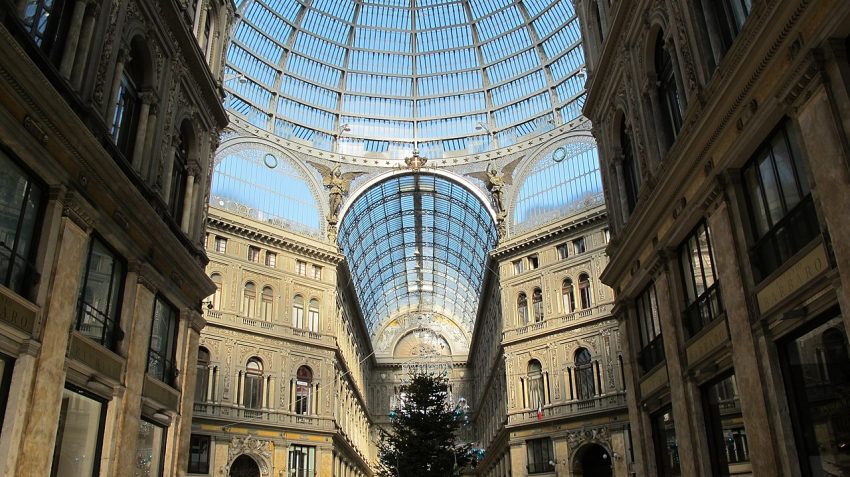
Galleria Umberto I is one of the top sights in Naples if you love grand urban spaces where architecture, history, and daily life flow together under a soaring glass dome. Built between 1887 and 1890 as part of the great “risanamento” that reshaped the city, this cross-shaped arcade was designed by Emanuele Rocco in the Stile Umbertino and quickly became a symbol of modern Naples. Its iron-and-glass vaults, patterned floors, and elegant façades were inspired by Milan's Galleria Vittorio Emanuele II, but the mood here is pure Naples: lively, slightly chaotic, and irresistibly theatrical.
Named after King Umberto I, the arcade was conceived as a multifunctional space, mixing chic shops, cafés, and businesses at ground level with apartments above. One wing opens directly toward via Toledo (now via Roma), while another connects to the Teatro di San Carlo, making the gallery a kind of indoor piazza between the shopping streets and the cultural heart of the city. Today, as part of Naples' UNESCO World Heritage-listed historic centre, Galleria Umberto I is a great place to visit on a walking tour of Naples, whether you come to shop, sip a coffee, escape a rain shower, or simply look up and admire the light through the dome.
Table of Contents
- History and Significance of the Galleria Umberto I
- Things to See and Do in the Galleria Umberto I
- How to Get to the Galleria Umberto I
- Practical Tips on Visiting the Galleria Umberto I
- Where to Stay close to the Galleria Umberto I
- Is the Galleria Umberto I Worth Visiting?
- FAQs for Visiting Galleria Umberto I
- Nearby Attractions to the Galleria Umberto I
History and Significance of the Galleria Umberto I
Galleria Umberto I was born from a moment when Naples was determined to reinvent itself. In the late 19th century, the city launched a vast urban renewal programme known as the “risanamento” (“making healthy again”) to improve hygiene, circulation, and the overall image of the capital. Between 1887 and 1890, the gallery rose on a site where older, unhealthy buildings once stood, transforming a dense district into a monumental, airy crossroads of commerce and culture.
Architect Emanuele Rocco designed the arcade in the Stile Umbertino, a late 19th-century Italian style that blended classical references with modern materials like iron and glass. The structure was carefully planned as a cross-shaped complex, with four covered streets meeting beneath a central dome. The aim was not just to build a handsome shopping passage, but to create a new civic centre linking via Toledo, the San Carlo Theatre, and the surrounding monumental district, giving Naples a modern showcase to rival other European capitals.
Over time, the Galleria has mirrored the fortunes of the city itself. It flourished as a fashionable meeting place, then suffered periods of neglect and decay in the 20th century, before being cleaned up and brought back into the urban spotlight. Its inclusion in the UNESCO-listed historic centre recognises both its architectural quality and its role in Naples’ social and cultural life. It even found its way into international literature as the setting for “The Gallery” (1947) by American writer John Horne Burns, who captured its post-war atmosphere through the eyes of an occupying soldier.
Things to See and Do in the Galleria Umberto I
The first thing to do is simply walk in, step into the open space under the dome, and look up. The glass-and-iron roof, radiating out from the central octagonal dome along four barrel-vaulted arms, filters daylight into intricate patterns on the mosaic floor. Sixteen metal ribs support the dome, creating a geometric lacework that feels airy despite the structure's size. This is one of the best places to see in Galleria Umberto I if you want to feel the full impact of 19th-century engineering used as urban theatre.
Take your time to explore each of the four wings. At ground level, arcaded shopfronts and cafés line the corridors, their façades decorated with pilasters, cornices, and balconies that echo the exterior architecture. You will find a mix of long-established businesses and more contemporary shops, as well as bars and pastry counters where you can linger over an espresso or a sweet treat while watching people drift through. Above, the third-floor apartments remind you that this was always meant to be a living as well as commercial space-a vertical slice of city life.
Do not miss the details. Look for sculpted figures, coats of arms, and decorative motifs on the upper levels; follow the designs in the floor mosaics as they shift under your feet; notice how one arm of the cross leads you toward via Toledo and the lively shopping streets, while another guides you to the discreet entrance for the San Carlo Theatre. Depending on when you visit, you might encounter musicians playing under the dome, seasonal decorations, or simply the constant flow of locals using the Galleria as a shortcut between different corners of downtown Naples.
How to Get to the Galleria Umberto I
Galleria Umberto I sits in the monumental centre of Naples, just steps from via Toledo, Piazza del Plebiscito, and Teatro di San Carlo, making it very easy to reach on foot from many central locations. If you are arriving by air, you will land at Naples International Airport (Capodichino), from which taxis, rideshares, and shuttle buses connect you to the city centre in around 20-30 minutes; once there, you can walk along via Toledo or nearby streets to reach the Galleria. For the best deals and a seamless booking experience, check out these flights to Naples on Booking.com.
Visitors arriving by train will come into Napoli Centrale at Piazza Garibaldi, a major hub for both long-distance and regional services. From the station, you can ride the metro (for example toward Toledo station) or catch a bus closer to the monumental district, then walk the short distance to the Galleria’s entrances. Use Omnio to easily compare schedules, book train tickets, and find the best prices all in one place for a hassle-free journey across Italy.
If you are travelling by car, follow signs for Napoli centro and look for parking garages near via Toledo, the port, or Piazza Municipio, as street parking near the Galleria itself is limited and traffic is often restricted. If you are looking to rent a car in Italy I recommend having a look at Discover Cars, first, as they compare prices and review multiple car rental agencies for you. After parking, it is only a few minutes' walk to Galleria Umberto I, and exploring the surrounding area is best done on foot.
Practical Tips on Visiting the Galleria Umberto I
- Suggested tips: Take time to walk all four arms of the Galleria, not just the central dome area, so you can appreciate the full cross-shaped layout and changing perspectives.
- Best time to visit: Late morning or late afternoon provide beautiful natural light through the glass roof; evenings can be atmospheric when the interior is lit and shops and cafés are still open.
- Entrance fee: There is no entrance fee.
- Opening hours: As a public passage, the Galleria is generally open from early morning until late evening, with individual shops and cafés keeping their own hours.
- How long to spend: Plan 30-60 minutes for a relaxed stroll, a coffee, and some photography, longer if you stop to shop or combine your visit with nearby sights.
- Accessibility: The main entrances are step-free and the interior is flat and paved, making it accessible for visitors with reduced mobility; some individual shops may have small steps or older thresholds.
- Facilities: While there are no standalone public facilities inside, cafés and bars within and around the Galleria provide toilets and refreshments; ATMs and other services are available on nearby streets.
- Photography tip: Shoot upward from the central crossing to capture the dome and all four arms; then experiment with diagonal views along the corridors to highlight the perspective, floor patterns, and upper façades.
- Guided tours: Many city walking tours include a stop in Galleria Umberto I, often pairing it with Teatro di San Carlo, Piazza del Plebiscito, and Castel Nuovo for a full overview of the monumental centre.
- Nearby food options: You will find cafés and pastry shops inside the Galleria and countless eateries along via Toledo and in the streets leading toward the historic centre and the seafront.
Where to Stay close to the Galleria Umberto I
Staying near Galleria Umberto I puts you right between the shopping axis of via Toledo, the cultural landmark of Teatro di San Carlo, and the open space of Piazza del Plebiscito. For a comfortable, central base with easy access to all three, Grand Hotel Oriente offers modern rooms within a short walk of the Galleria and nearby metro stops. If you would like to pair city views with quick access to the arcade and waterfront, NH Napoli Panorama is well placed between Castel Nuovo, Piazza Municipio, and the monumental district. For a slightly more atmospheric stay close to the historic centre but still within walking distance of Galleria Umberto I, Santa Chiara Boutique Hotel situates you along Spaccanapoli, a pleasant stroll away through lively streets.
Is the Galleria Umberto I Worth Visiting?
Galleria Umberto I is absolutely worth visiting, even if you only have a short time in Naples. Architecturally, it is a superb example of 19th-century iron-and-glass design, on a par with other great European galleries; historically, it tells the story of a city trying to modernise and “make itself healthy” again; socially, it remains a lived-in, much-used passage where locals and travellers cross paths every day. Whether you are here to shop, escape the sun or rain for a while, or simply admire the dome and people-watch over a coffee, it is one of the must-see places in Naples for anyone who enjoys grand urban interiors.
What Other Travellers Say...

Prince of Naples Gallery on Via Broggia is a handsome covered shopping arcade with striking architecture and a decorative floor featuring zodiac motifs; inside it hosts several pleasant shops and evokes the feel of Milan's famous galleria. Visitors say it's worth walking through, though some report the exterior and parts of the building are in need of cleaning and repair, with scaffolding and signs of disrepair at times affecting the experience.


FAQs for Visiting Galleria Umberto I
Nearby Attractions to the Galleria Umberto I
- Teatro di San Carlo: One of Europe's oldest and most prestigious opera houses, just next door and perfect to combine with a gallery visit.
- Piazza del Plebiscito: The vast central square framed by the Royal Palace and Basilica of San Francesco di Paola, a few minutes' walk away.
- Castel Nuovo (Maschio Angioino): A medieval fortress by the port, offering museum spaces and harbour views, easily reached on foot from the Galleria.
- Royal Palace of Naples: The former Bourbon residence on Piazza del Plebiscito, with richly decorated rooms and historic courtyards.
- Via Toledo and the Historic Centre: The main shopping street leading toward the UNESCO-listed old town, where you can dive into narrow alleys, churches, and classic pizzerias.
The Galleria Umberto I appears in our Complete Guide to Visiting Naples!

Moira & Andy
Hey! We're Moira & Andy. From hiking the Camino to trips around Europe in Bert our campervan — we've been traveling together since retirement in 2020!
This website uses affiliate links which may earn a commission at no additional cost to you!
Planning Your Visit
As a public passage, the Galleria is generally open from early morning until late evening, with individual shops and cafés keeping their own hours.
There is no entrance fee.
Nearby Attractions
- Teatro di San Carlo (0.1) km
Theatre - Royal Palace of Naples (0.3) km
Palace - Castel Nuovo (0.3) km
Castle - Piazza del Plebiscito (0.3) km
Square - Napoli Sotterranea (0.4) km
Historic Site - San Francesco di Paola (0.4) km
Church - Bourbon Tunnel (0.4) km
Historic Site - San Martino Monastery (0.9) km
Monastery and Museum - Fontana del Gigante (1.0) km
Fountain - Santa Chiara (1.0) km
Abbey