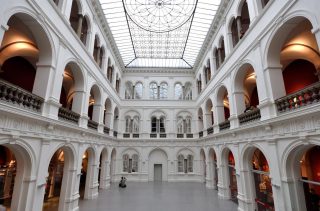
Four Domes Pavilion, Wrocław
Museum in Wrocław
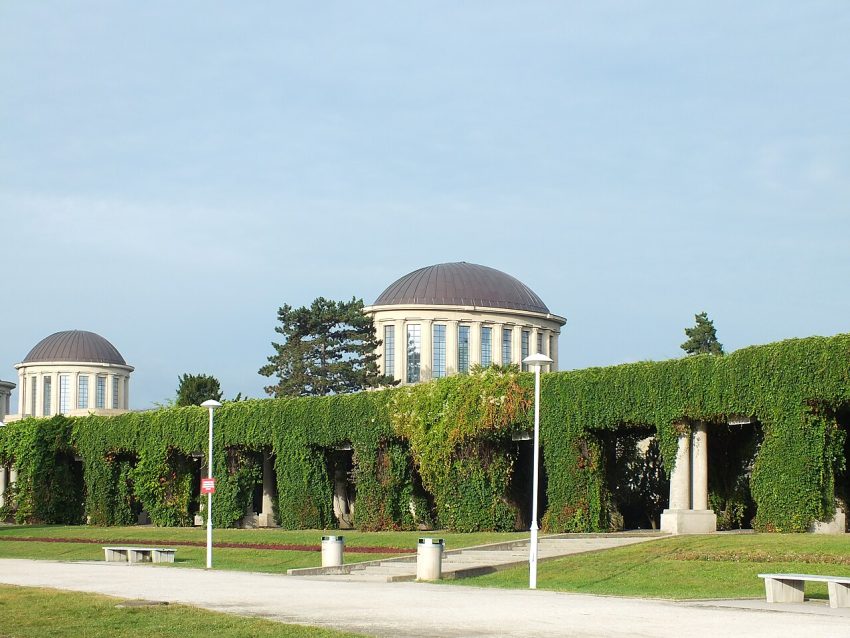
The Four Domes Pavilion (Pawilon Czterech Kopuł) is Wrocław's most distinctive contemporary-art venue: a calm, modernist building of skylights, clean lines, and a central courtyard that makes even a quick visit feel spacious and unhurried. Set on the exhibition grounds near Centennial Hall, it's the kind of museum where the architecture genuinely shapes the experience-soft daylight, big gallery volumes, and plenty of room to slow down and actually look.
Because it sits a little east of the Old Town, it's an easy “add-on” to a walking tour of Wrocław when you want a change of pace from medieval streets and Baroque façades. If you're even mildly curious about Polish art after 1945, this spot is one of the top sights in Wrocław for understanding the city's creative, modern identity.
Table of Contents
- History and Significance of the Four Domes Pavilion
- Things to See and Do in the Four Domes Pavilion
- How to Get to the Four Domes Pavilion
- Practical Tips on Visiting the Four Domes Pavilion
- Where to Stay Close to the Four Domes Pavilion
- Is the Four Domes Pavilion Worth Visiting?
- For Different Travelers
- FAQs for Visiting Four Domes Pavilion
- Nearby Attractions to the Four Domes Pavilion
History and Significance of the Four Domes Pavilion
The building was designed by the architect Hans Poelzig as part of Wrocław’s early-20th-century exhibition grounds, planned around a square footprint with four domes and an internal courtyard. What stands out today is how intentionally the structure uses natural light-skylights and diffused illumination that still feel modern, even in a century-old building.
After decades of changing uses, the Pavilion was restored and adapted into a dedicated museum space, opening in 2016 as the Museum of Contemporary Art, a branch of the National Museum in Wrocław. That “second life” matters: the Pavilion is now one of the city's clearest statements that contemporary culture belongs alongside its historic monuments, not tucked away at the margins.
Its location is part of the appeal. You're a short walk from the UNESCO-listed Centennial Hall, so you can make a single, well-balanced half-day that mixes architecture, public space, and art without rushing between distant neighborhoods.
Things to See and Do in the Four Domes Pavilion
Start with the permanent display of Polish art from the second half of the 20th century and the early 21st century. The collection is strong enough that you can visit with no prior knowledge and still come away with a feel for major movements, tensions, and experiments-from post-war reconstruction through conceptual turns and into more recent voices.
Look out for big-name works and recognizable signatures in modern Polish art, including artists such as Magdalena Abakanowicz, Tadeusz Kantor, Alina Szapocznikow, Jerzy Nowosielski, and Władysław Hasior. Even if you’re not “an art museum person,” the variety of media and scale makes the visit approachable, and the building’s calm layout helps you find your own rhythm.
Don’t treat the Pavilion as only an indoor stop. The courtyard and the flow between wings are part of the design logic, and temporary exhibitions often change the mood entirely-so if something specific is on, it’s worth scanning what’s currently showing before you go.
How to Get to the Four Domes Pavilion
From the Old Town (Rynek), the simplest approach is public transport: trams run directly toward the Centennial Hall area, and you can get off at the Hala Stulecia stop, then walk a short, straightforward final stretch to ul. Wystawowa 1.
If you're arriving by air, Wrocław Copernicus Airport (WRO) is the nearest airport, and the easiest plan is to head into the city and then connect onward toward the Centennial Hall area. For the best deals and a seamless booking experience, check out these flights to Wrocław on Booking.com.
If you're coming by rail, aim for Wrocław Główny, then use tram connections toward Hala Stulecia for a direct and predictable ride. You can easily check schedules and book tickets through the PKP Intercity website. However, for a smoother experience, we recommend using Omio, which simplifies the booking process and lets you compare prices and schedules all in one place.
If you're driving, it's generally simplest to park in the Centennial Hall vicinity and treat the Pavilion as part of a walkable cluster of sights rather than trying to hop between stops by car. If you are looking to rent a car in Poland I recommend having a look at Discover Cars, first, as they compare prices and review multiple car rental agencies for you.
Practical Tips on Visiting the Four Domes Pavilion
- Entrance fee: Permanent exhibition: 20 zł (regular), 15 zł (discount); permanent and temporary exhibitions: 45 zł (regular), 30 zł (discount). Tuesdays: free admission to the permanent exhibition.
- Opening hours: (Summer) 1 April – 30 September; Tuesday – Thursday: 10:00–17:00; Friday: 10:00–19:00; Saturday: 10:00–20:00; Sunday: 10:00–18:00. (Winter) 1 October – 31 March; Tuesday – Thursday: 10:00–16:00; Friday: 10:00–18:00; Saturday: 10:00–20:00; Sunday: 10:00–18:00. Closed on Monday.
- Official website: https://mnwr.pl/en/branches/four-domes-pavilion/information/
- Best time to visit: Late morning on a weekday is ideal for quiet galleries and steady natural light, while early evening can pair well with nearby riverside walks and the Centennial Hall area atmosphere.
- How long to spend: Plan 1-2 hours for the permanent exhibition at a relaxed pace, and add extra time if temporary shows are on or you like reading wall text in depth.
- Accessibility: The museum is designed as a modern public venue, so expect a more accessible experience than older sites, but check the official accessibility notes if you rely on specific facilities or routes.
- Facilities: You'll typically have ticketing, restrooms, and staff help on-site, and the wider Centennial Hall area has multiple places to take a break between stops.
Where to Stay Close to the Four Domes Pavilion
For a culture-heavy itinerary, base yourself in the Old Town for walkable dining and classic landmarks, but if this side of the city is a main focus, Śródmieście near Szczytnicki Park is the most convenient for the Pavilion and green space.
If you want to stay genuinely close, Hotel Zoo puts you within easy reach of the Centennial Hall area, which makes early entry times and relaxed evenings very straightforward. Hotel Zoo
If you'd rather stay central and commute out for the visit, Mercure Wrocław Centrum is a strong, practical base near major transport connections and an easy run to the Old Town between museum days. Hotel Mercure Wroclaw Centrum
For a comfortable, river-adjacent stay that still keeps you well connected to both the Old Town and the eastern sights, HP Park Plaza is a solid “middle ground” option. HP Park Plaza Wroclaw
Is the Four Domes Pavilion Worth Visiting?
Yes-especially if you want a smart, low-stress museum experience that adds depth to a Wrocław trip without feeling like homework. The combination of a serious contemporary collection and a bright, architectural setting makes it rewarding even for travelers who normally prioritize historic churches and market squares.
It's also one of those places that improves the overall “shape” of your itinerary: pair it with the Centennial Hall area and you get a full, satisfying half-day that feels different from the Old Town, rather than a repeat of the same streets and views.
What Other Travellers Say...

Four Domes Pavilion at Wystawowa 1 in Wrocław is a restored 1912 building housing a contemporary art museum with paintings, sculptures and other modern works; visitors praise its strong collection of Polish contemporary pieces (including works by Abakanowicz), find the entrance affordable — often included in a multi‑museum ticket — and recommend catching the hourly musical fountain display, though some note the collection is not huge and the atmosphere can be noisy with occasionally unfriendly staff.


For Different Travelers
Families with Kids
If you’re visiting as a family, treat the Pavilion as a shorter, high-quality museum stop rather than a marathon. Pick a few rooms to focus on, then reset attention spans with a walk outside in the surrounding area.
It also helps to plan a simple “reward loop” afterward-nearby open spaces and easy routes make it practical to mix culture with fresh air, which is usually the difference between a calm visit and a tiring one.
Couples & Romantic Getaways
For couples, the Pavilion works well as a slower, more thoughtful contrast to sightseeing-heavy days. The light-filled interiors and quiet pace create space for conversation, and it’s easy to take your time without feeling pushed along.
Make it part of an east-of-centre afternoon: art first, then a walk in the wider Centennial Hall area before heading back toward the Old Town for dinner.
Budget Travelers
Budget travelers should keep an eye on what’s included with different ticket types and what’s on temporarily, then plan around what matters most to you. A well-chosen museum visit can replace multiple smaller paid attractions and still feel substantial.
Also, consider structuring the day so you’re not paying for transport repeatedly-bundle nearby stops together, walk when you can, and treat this as part of a single cluster rather than a standalone out-and-back.
History Buffs
If you're history-minded, the Pavilion is less about medieval Wrocław and more about the story of modern Poland told through art, design, and social change. The works often carry political and cultural context that rewards slow looking.
Approach it like a lens on the 20th century: you’ll spot shifts in materials, symbolism, and artistic freedom that map neatly onto wider European history.
FAQs for Visiting Four Domes Pavilion
Getting There
Tickets & Entry
Visiting Experience
Tours, Context & Itineraries
Photography
Accessibility & Facilities
Food & Breaks Nearby
Safety & Timing
Nearby Attractions to the Four Domes Pavilion
- Centennial Hall: A landmark event hall and architectural icon that anchors the exhibition grounds and makes an easy paired stop.
- Japanese Garden: A peaceful, beautifully designed garden nearby that's ideal for slowing down after museum time.
- Pergola and Multimedia Fountain: A popular outdoor promenade with seasonal fountain shows and an easy, scenic stroll.
- Wrocław Zoo: A major family-friendly attraction close enough to combine with this area in one day.
- Oder River embankments: Riverside paths that are perfect for a gentle walk back toward the city, especially in good light.
The Four Domes Pavilion appears in our Complete Guide to Visiting Wrocław!

Moira & Andy
Hey! We're Moira & Andy. From hiking the Camino to trips around Europe in Bert our campervan — we've been traveling together since retirement in 2020!
This website uses affiliate links which may earn a commission at no additional cost to you!
Planning Your Visit
(Summer) 1 April - 30 September; Tuesday - Thursday: 10:00-17:00; Friday: 10:00-19:00; Saturday: 10:00-20:00; Sunday: 10:00-18:00.
(Winter) 1 October - 31 March; Tuesday - Thursday: 10:00-16:00; Friday: 10:00-18:00; Saturday: 10:00-20:00; Sunday: 10:00-18:00.
Closed on Monday.
Permanent exhibition: 20 zł (regular), 15 zł (discount); permanent and temporary exhibitions: 45 zł (regular), 30 zł (discount). Tuesdays: free admission to the permanent exhibition.
Nearby Attractions
- Centennial Hall (0.2) km
Historic Building - Wroclaw Fountain (0.2) km
Fountain - Japanese Garden (0.3) km
- Wrocław Zoo and Afrykarium (0.3) km
Zoo - Szczytnicki Park (0.8) km
Park - Ethnographic Museum in Wrocław (1.8) km
Museum - National Museum of Wrocław (2.0) km
Museum - Cathedral Island (2.1) km
Area and Island - Wroclaw Cathedral (2.2) km
Cathedral - Raclawice Panorama (2.2) km
Gallery