City Walls of Winchester
City Walls in Winchester
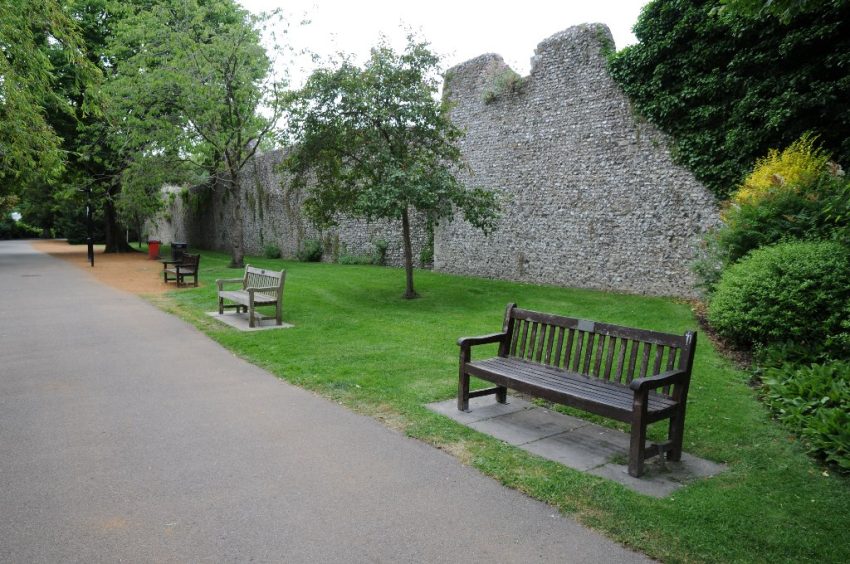
Winchester City Walls aren't a single “site” so much as a set of surviving fragments and alignments that still shape how the city feels as you walk it. In places, you'll spot stretches of flint and stone running behind streets or edging green spaces; in others, the walls are more about the sense of a boundary-where the old city once held itself together.
What makes them special is how effortlessly they slot into your day. You can treat the walls as one of the things to see in Winchester while moving between bigger stops, and they give you a constant reminder that this compact cathedral city once carried the weight of Roman urban planning and later medieval defence.
Table of Contents
- History and Significance of the Winchester City Walls
- Things to See and Do in the Winchester City Walls
- How to Get to the Winchester City Walls
- Practical Tips on Visiting the Winchester City Walls
- Where to Stay Close to the Winchester City Walls
- Is the Winchester City Walls Worth Visiting?
- For Different Travelers
- FAQs for Visiting Winchester City Walls
- Nearby Attractions to the Winchester City Walls
History and Significance of the Winchester City Walls
Winchester began as Roman Venta Belgarum, and the earliest defensive circuit started as earthworks before later phases introduced more substantial construction. Over centuries, the walls were reworked, repaired, and partially replaced, and their story became tied to the city's changing fortunes-from Saxon Winchester to Norman power and beyond.
Later medieval Winchester had multiple gates and a fortified feel, but modern traffic patterns and redevelopment reduced what survives above ground. What remains today still matters: the walls are a physical diagram of Winchester's old footprint, and once you start noticing them, you'll see how they connect the Cathedral precinct, the Castle area, and the city's historic lanes into a coherent, walkable whole.
Things to See and Do in the Winchester City Walls
Treat this as a “connect-the-dots” experience rather than a single viewpoint. Start near the Cathedral precinct where wall fragments and boundary lines still feel tangible, then drift toward the Castle area and the surviving gates to understand how the city was entered, controlled, and defended.
The most satisfying way to experience the walls is as part of a walking tour of Winchester: you get small moments of discovery-an unexpected stretch of masonry, a turn that follows an old defensive line-without needing to commit to a long, formal route. Bring curiosity more than a checklist, and let the walls quietly explain why Winchester's centre feels so contained and characterful.
How to Get to the Winchester City Walls
Winchester is well placed for arrivals via Southampton Airport, with Heathrow and Gatwick also workable for international connections if you don't mind a longer onward journey. For the best deals and a seamless booking experience, check out these flights to Winchester on Booking.com.
Trains into Winchester are frequent and put you within easy walking distance of multiple wall fragments and the main historic core. Train schedules and bookings can be found on Omio.
Local buses cover the central area and are useful if you’re staying on the outskirts, but the walls make most sense on foot because the “best bits” appear in short bursts between streets and landmarks.
If you’re driving, park once (city-centre car parks or park-and-ride) and explore the walls as a pedestrian route rather than trying to hop between sections by car.
Practical Tips on Visiting the Winchester City Walls
- Entrance fee: Free
- Opening hours: 24 Hours
- Best time to visit: Morning is ideal for quieter streets and easier photography; late afternoon is great for warmer light on stone and flint.
- How long to spend: 30-60 minutes gives you a satisfying “trace the outline” walk, but you can also enjoy it in short bursts throughout the day.
- Accessibility: Expect mixed surfaces and occasional steps or narrow paths where fragments run behind streets; keep your route flexible and choose the most level stretches.
- Facilities: Because the walls weave through the centre, your “facilities plan” is simply the city-cafés, restrooms, and benches are easiest around the Cathedral/High Street hub.
Where to Stay Close to the Winchester City Walls
For a culture-heavy itinerary, base yourself around the Cathedral Quarter and the High Street so you can walk to the most meaningful wall fragments and historic lanes without relying on transport. Hotel du Vin Winchester is a strong choice for an easy, walk-first stay that keeps you close to the historic core. For maximum proximity to the Cathedral/Castle axis, Winchester Wessex Hotel by Sunday is well placed for early starts and effortless evenings. If you want a more traditional Winchester feel with a historic setting, The Wykeham Arms puts you right in the old city grain where the walls and gates make the most sense.
Is the Winchester City Walls Worth Visiting?
Yes-especially because the “effort-to-reward” ratio is so high. The walls add context to almost every other Winchester sight, and they're best enjoyed as a flexible, open-air layer you weave into your day rather than a stand-alone attraction.
What Other Travellers Say...

Roman wall in Winchester (SO23 9LH) sits beside the river on The Weirs near the High Street and is accessible year‑round; visitors praise the peaceful riverside walk and find it a good spot for quiet reflection, though several reviewers say the small surviving stretch is easy to miss and appears neglected or overgrown and could benefit from better upkeep and clearer interpretation.


For Different Travelers
Families with Kids
This works well as a “spot the wall” game that keeps children engaged between bigger attractions. Because you can dip in and out, it’s easy to keep moving and avoid the feeling of a long, structured history stop.
If you’re travelling with a buggy, pick the most level, street-adjacent stretches and treat the more tucked-away fragments as optional. Winchester’s centre is compact, so you can always reroute without losing the thread of the day.
Couples & Romantic Getaways
The walls are excellent for slow wandering, especially when you're not trying to see everything at once. They also deliver that romantic “old city” feeling-quiet corners, unexpected views, and lanes that make you feel like you've found your own Winchester.
Use the walls as your connective route between drinks, dinner, and the Cathedral area. It’s a subtle way to turn simple walking time into something atmospheric.
Budget Travelers
Free, outdoors, and genuinely meaningful: the walls are perfect for a budget itinerary. Build your day around free exterior sights and choose just one paid interior (if any) to keep costs predictable.
Because the walls sit right in the centre, you won’t spend money on local transport to “reach” them. Your budget stretches further simply by staying walk-based.
History Buffs
This is Winchester’s “big context” experience. The surviving circuit and fragments help you picture how the city worked as a defended place across multiple periods, and they sharpen your understanding of everything nearby-from gates to precinct walls to the Castle area.
If you want more depth, bring a simple map and trace the likely line of the old circuit as you walk. Even when nothing survives above ground, street alignments and edges can still tell the story.
FAQs for Visiting Winchester City Walls
Getting There
Tickets & Entry
Visiting Experience
Tours, Context & Itineraries
Photography
Accessibility & Facilities
Nearby Attractions to the Winchester City Walls
- Winchester Cathedral: A major landmark whose precinct edges help you visualise the old city boundaries.
- The Great Hall and the Round Table: A classic Winchester history stop near the Castle area.
- Westgate: One of the surviving city gates and a strong anchor point for understanding the medieval city.
- Wolvesey Castle: Ruins by the River Itchen that pair nicely with an old-city walk.
- Winchester City Mill: A riverside heritage spot that adds variety after wall-and-lane exploring.
The City Walls of Winchester appears in our Complete Guide to Visiting Winchester!

Moira & Andy
Hey! We're Moira & Andy. From hiking the Camino to trips around Europe in Bert our campervan — we've been traveling together since retirement in 2020!
This website uses affiliate links which may earn a commission at no additional cost to you!
Planning Your Visit
24 Hours
Free
Nearby Attractions
- Winchester City Mill (0.1) km
Mill - The Chesil Rectory (0.1) km
Historic Building - Chesil Theatre (0.1) km
Church and Theatre - St Mary Magdalen Hospital Alms-houses (0.1) km
Historic Building - Nunnaminster (0.1) km
Abbey - King Alfred Statue (0.1) km
Statue - Winchester Guildhall (0.2) km
Historic Building and Tourist Office - Wolvesey Castle (0.2) km
Palace - Itchen Navigation Heritage Trail (0.3) km
Walk - Winchester Cathedral (0.4) km
Cathedral