Cathedral of San Lorenzo, Perugia
Cathedral in Perugia
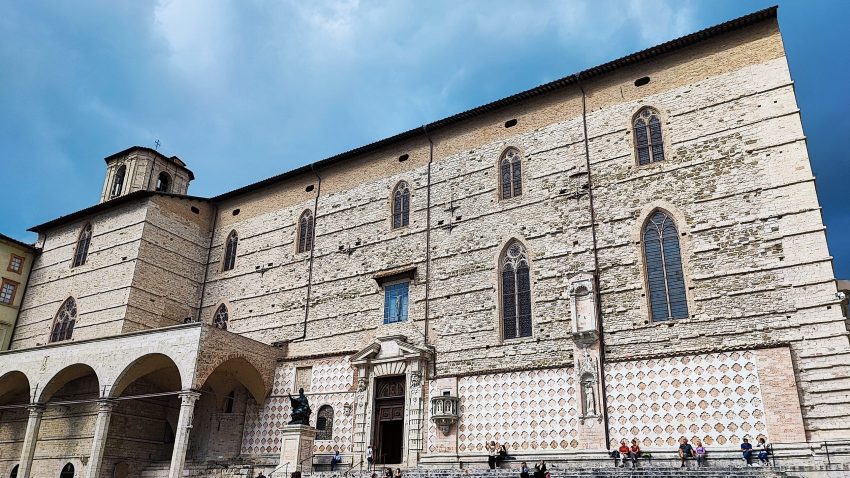
Rising above Perugia's main square, the Duomo di Perugia (Cattedrale Metropolitana di San Lorenzo) is the city's most important church and a place where centuries of history are etched into stone. Construction began in 1345 and was only completed in 1490, with consecration following much later in 1587, so every side of the building reflects a different moment in the city's evolving story, making it one of the must-see places in Perugia for anyone drawn to architecture and sacred art.
Unlike many cathedrals, this one presents its flank to the main piazza rather than a grand frontal façade, giving the square a slightly unexpected, almost theatrical backdrop. Walk around the exterior and you see the unfinished patch of white and pink marble lozenges on the main front, a Baroque portal by Pietro Carattoli and, on the side, the statue of Pope Julius III by Vincenzo Danti, thanking him for restoring the local magistrature. Step inside and you find a lofty three-aisled interior filled with chapels, frescoes, sculptures and relics, a highlight of any walking tour of Perugia.
Table of Contents
- History and Significance of the Duomo di Perugia
- Things to See and Do in the Duomo di Perugia
- How to Get to the Duomo di Perugia
- Practical Tips on Visiting the Duomo di Perugia
- Where to Stay close to the Duomo di Perugia
- Is the Duomo di Perugia Worth Visiting
- FAQs for Visiting Duomo di Perugia
- Nearby Attractions to the Duomo di Perugia
History and Significance of the Duomo di Perugia
The Duomo di Perugia took shape over more than a century, with work starting in 1345 and finishing in 1490, a long gestation that explains some of its quirks. The cathedral is dedicated to San Lorenzo and stands on ground that has long been the religious heart of the city, close to the civic centre around Piazza IV Novembre. Its delayed consecration in 1587 is a reminder that finishing a church of this scale was as much about politics and finances as about faith.
One of the most striking aspects of the cathedral is its incomplete exterior decoration. The original plan called for a full cladding of white and pink marble lozenges, but only a trial section on the main façade was ever finished. Today you can still see this patterned patch, which acts like a tantalising glimpse of what might have been. The façade itself carries a later Baroque portal designed by Pietro Carattoli in 1729, adding yet another stylistic layer to an already complex building.
The orientation is also unusual. Instead of facing the square head on, the Duomo presents its long side to the piazza, turning what would normally be a lateral elevation into the public front. On this flank stands the statue of Pope Julius III by Vincenzo Danti, erected in 1555 to commemorate his role in restoring Perugia’s local magistrate after it had been suppressed by Pope Paul III. Nearby rises the massive tower, built between 1606 and 1612, which anchors the cathedral on the skyline and underlines its role as both spiritual and visual landmark.
Things to See and Do in the Duomo di Perugia
Inside, the cathedral opens into a 68 foot high hall with three naves of equal height, a layout that creates a sense of width and light rather than the usual towering central nave and lower side aisles. This balanced interior gives you clear views along the length of the church and makes it easy to move between chapels without feeling confined, inviting you to wander slowly and let details reveal themselves.
In the right nave, seek out the Sacrament Chapel, designed by Galeazzo Alessi in 1576. Here you will find Cesare Nebbia's altarpiece of the Pentecost from 1563, a vivid depiction of the moment the Holy Spirit descends upon the apostles. The very next bay contains the Baptistery Chapel, where a marble perspective by Pietro di Paolo di Andrea da Como (1477) creates an illusionistic architectural backdrop, and where the much loved Madonna delle Grazie by Giannicola di Paolo, a follower of Perugino, is venerated by locals and visitors alike.
Another essential stop is the Chapel of St Bernardino, enclosed by a 15th century railing and home to the cathedral’s most celebrated painting, the Deposition from the Cross by Federico Barocci, painted between 1567 and 1569. Its emotional intensity, rich colour and carefully orchestrated figures make it a powerful focus for contemplation. Beyond the chapels, the sacristy is entirely frescoed by Gian Antonio Pandolfi in the 1570s, and the cloister houses architectonic and sculptural fragments, including a head attributed to Giovanni Pisano and a Renaissance bust of the Redeemer. These quieter corners reward visitors who take the time to explore beyond the main nave.
How to Get to the Duomo di Perugia
Most visitors arrive in Perugia via Perugia San Francesco d'Assisi Airport or through larger hubs such as Rome or Florence, then continue into the city by bus, train or car. For the best deals and a seamless booking experience, check out these flights to Perugia on Booking.com. From the local airport, shuttle buses and taxis connect you to the lower town, where you can transfer to the minimetro or local buses up to the historic centre.
If you travel by train, you will arrive at Perugia’s main station in the valley, served by regional and intercity services from major Italian cities.Use Omnio to easily compare schedules, book train tickets, and find the best prices all in one place for a hassle-free journey across Italy. From there, the minimetro or city buses take you up to the hilltop centre; once you reach the top, it is a short walk through medieval streets to Piazza IV Novembre, where the cathedral dominates one side of the square.
Travelling by car, you follow main roads into Perugia from the Umbrian countryside and neighbouring regions, then park in one of the multi storey or terrace car parks below or around the historic core.If you are looking to rent a car in Italy I recommend having a look at Discover Cars, first, as they compare prices and review multiple car rental agencies for you. Escalators, lifts and pedestrian routes bring you up into the old town, from which the Duomo di Perugia is easy to reach on foot by following signs for the cathedral or the main piazza.
Practical Tips on Visiting the Duomo di Perugia
- Suggested tips: Take a slow lap around both the exterior and interior, noting the unfinished marble test patch outside and the different chapels inside, and bring a small leaflet or map to help you identify key artworks as you go.
- Best time to visit: Late morning or mid afternoon on weekdays offers a calmer atmosphere; early evening can also be beautiful when the light in the square softens and the interior feels more contemplative.
- Entrance fee: Free
- Opening hours: From Monday to Saturday 8.30/12.30 – 15.30/19.30 Sunday and holidays 8.30/12.30 – 15.00/19.00
- Official website: https://www.cattedrale.perugia.it/
- How long to spend: Plan 45-90 minutes to appreciate the nave, the principal chapels, the sacristy and the cloister fragments without feeling rushed.
- Accessibility: The cathedral stands on a hill and has some steps and uneven surfaces; visitors with mobility issues should look for gentler approach routes and check for ramped entrances where available.
- Facilities: Basic facilities such as information points and possibly toilets are available nearby, while cafés and shops are scattered around the square and surrounding streets.
- Photography tip: Capture the unusual side-on view of the cathedral from Piazza IV Novembre, then inside, focus on details of Barocci's Deposition, the marble perspective in the Baptistery Chapel and the frescoed walls of the sacristy, respecting any restrictions on photography.
- Guided tours: Consider joining a guided visit or audio tour to fully grasp the historical layers, artworks and stories behind each chapel and the Holy Ring reliquary.
- Nearby food options: The surrounding streets are filled with cafés, gelaterias and trattorias, making it easy to follow your visit with a coffee or meal overlooking the piazza.
Where to Stay close to the Duomo di Perugia
Staying in Perugia's historic centre puts the Duomo di Perugia right on your doorstep, so you can experience it at different times of day. A classic choice is Sina Brufani, which offers panoramic views and a short stroll to Piazza IV Novembre. For something more intimate and full of character, Hotel Fortuna sits just off Corso Vannucci, giving you easy access to the cathedral and the city's main museums. If you prefer a boutique atmosphere with a touch of greenery, Hotel Priori Secret Garden provides a stylish base within walking distance of the Duomo and other key sights.
Is the Duomo di Perugia Worth Visiting
The Duomo di Perugia is absolutely worth visiting, both as a spiritual centre and as a showcase of Umbrian art and architecture. Its eccentric orientation, unfinished façade and stratified history tell you as much about Perugia's civic life as its religious one, while inside, chapels like those of the Sacrament, the Baptistery and St Bernardino offer masterpieces that reward close, unhurried viewing. Add in the frescoed sacristy, cloister fragments and the famed Holy Ring reliquary in the Chapel of San Giuseppe, and it becomes clear that this cathedral is one of the top sights in Perugia for anyone keen to understand the city's cultural heart.
What Other Travellers Say...

Perugia Cathedral on Piazza IV Novembre is a circa-1400s church featuring paintings and frescoes, with an adjacent museum that houses artifacts and manuscripts; visitors praise its peaceful interior and lovely artwork, note it as a pleasant refuge from the heat, and describe the surrounding old town as a charming hilltop area with cobbled streets and a lively, authentic atmosphere—pilgrims also visit when a notable relic is exposed in July and September, though some find the interior less imposing than the cathedral's piazza façade.


FAQs for Visiting Duomo di Perugia
Nearby Attractions to the Duomo di Perugia
- Piazza IV Novembre and Fontana Maggiore: The central square in front of the cathedral, dominated by a beautiful medieval fountain and civic buildings.
- Palazzo dei Priori: A powerful Gothic civic palace on the same square, home to important art collections and echoing some of the cathedral's decorative motifs.
- National Gallery of Umbria: Located within Palazzo dei Priori, this major museum showcases masterpieces by Perugino, Pinturicchio and other Umbrian artists.
- Rocca Paolina: A fascinating underground fortress carved into the hillside, offering vaulted passages and a very different angle on Perugia's history.
- Corso Vannucci: The city's main pedestrian street, ideal for a leisurely stroll, shopping and people watching after your cathedral visit.
The Cathedral of San Lorenzo appears in our Complete Guide to Visiting Perugia!

Moira & Andy
Hey! We're Moira & Andy. From hiking the Camino to trips around Europe in Bert our campervan — we've been traveling together since retirement in 2020!
This website uses affiliate links which may earn a commission at no additional cost to you!
Planning Your Visit
From Monday to Saturday 8.30/12.30 - 15.30/19.30
Sunday and holidays 8.30/12.30 - 15.00/19.00
Free
Nearby Attractions
- Etruscan Well (0.0) km
Historic Site - Fontana Maggiore (0.1) km
Fountain - Piazza IV Novembre (0.1) km
Square - Underground Perugia (0.1) km
Historic Site - Palazzo dei Priori (0.1) km
Town Hall - House Museum of Palazzo Sorbello (0.1) km
Museum - Nobile Collegio della Mercanzia (0.1) km
Historic Building and Museum - National Gallery of Umbria (0.1) km
Gallery - Corso Vannucci (0.2) km
Street - Palazzo del Capitano del Popolo (0.2) km
Palace