Burgtor, Graz
City Gate in Graz
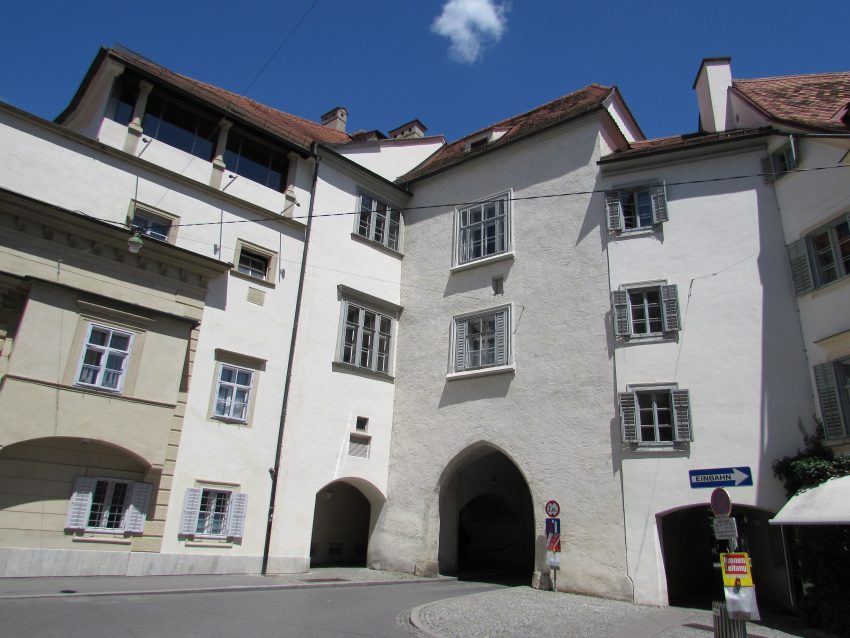
The Burgtor is one of those Graz sights you almost “accidentally” enjoy-because it sits right on a natural route between the historic core and the Stadtpark, quietly framing your walk with centuries of stonework. From the Hofgasse side you get the more austere, older feel; from the park side the gate reads more like a dignified ceremonial entrance, and that contrast is part of its charm.
If you're doing a self-guided walking tour through Graz's Old Town, this is a classic link-stop: you pass under it, pause for the details, then continue straight into a cluster of top-tier sights. It's not a place you plan half a day around-it's a place that elevates the walk you were already going to take.
Table of Contents
- History and Significance of the Burgtor, Graz
- Things to See and Do in the Burgtor, Graz
- How to Get to the Burgtor, Graz
- Practical Tips on Visiting the Burgtor, Graz
- Where to Stay Close to the Burgtor, Graz
- Is the Burgtor, Graz Worth Visiting?
- For Different Travelers
- FAQs for Visiting Burgtor, Graz
- Nearby Attractions to the Burgtor, Graz
History and Significance of the Burgtor, Graz
Burgtor is tied to Graz's medieval fortifications and the growth of the city around the ducal residence. Sources place its key phase in the 14th century, and over time it became the “castle gate” in the literal sense-anchoring the connection between the city and the Burg complex.
One of the most fascinating notes in its story is that the gate was closed for centuries (a reminder that city gates weren’t just decorative-they were security infrastructure). When you stand beneath the arch today, it’s easy to imagine the controlled movement, the watchfulness, and the sense of “inside vs outside” that shaped daily urban life.
More recently, the area has also been shaped by remembrance and modern city life: the Burgtor is no longer a barrier, but a threshold you cross as you move between the formal streets of the old centre and the greener, more open feel of the park. That shift-from defense to connection-is part of what makes it feel meaningful even as a brief stop.
Things to See and Do in the Burgtor, Graz
Start by looking at the gate as two experiences in one: the passageway itself (stone, vaulting, the sense of enclosure) and the façades on either side (the “street side” versus the “park side”). Even if you’re not an architecture nerd, the change in mood is obvious and makes for a satisfying before-and-after moment as you walk through.
Take a minute for the details you'd normally rush past: the proportions of the arch, the way the gate frames the streetscape, and how it funnels you toward nearby landmarks. It's also a surprisingly good spot to slow down and orient yourself-one direction pulls you into the densest cluster of historic Graz, the other opens out toward trees, paths, and a calmer pace.
If you like photography, treat it like a framing device rather than “the subject.” Use the arch to bracket people walking through, or stand slightly off-centre so you catch texture in the stone. Early morning and late afternoon tend to give the most flattering light, but even on grey days the gate’s surfaces photograph well because the forms are bold and readable.
How to Get to the Burgtor, Graz
If you're arriving by air, Graz Airport (GRZ) is the closest, and from there you can use public transport or a taxi into the centre; once you're in the Inner City, Burgtor is an easy walk to reach. For the best deals and a seamless booking experience, check out these flights to Graz on Booking.com.
If you're coming by train, Graz Hauptbahnhof is the main station, and you can connect onward by tram or a short taxi ride toward the old town; from there it's straightforward on foot to Hofgasse/Erzherzog-Johann-Allee and the gate. You can easily check timetables and book train tickets through the ÖBB (Austrian Federal Railways) website. However, for a smoother experience, we recommend using Omio, which simplifies the booking process and lets you compare routes, prices, and departure times all in one place.
If you’re driving, aim for a central parking garage and finish the last stretch on foot, because the historic centre is easier (and less stressful) without a car. If you are looking to rent a car in Austria I recommend having a look at Discover Cars, first, as they compare prices and review multiple car rental agencies for you.
Practical Tips on Visiting the Burgtor, Graz
- Entrance fee: Free
- Opening hours: 24 Hours
- Official website: https://www.graztourismus.at/en
- Best time to visit: Early morning for quieter photos and a calmer feel, or late afternoon when the light softens the stone and the stroll into the park feels especially good.
- How long to spend: 5-15 minutes is plenty unless you’re lingering for photos or pairing it with nearby sights in one continuous loop.
- Accessibility: The approach is generally easy on foot, but surfaces around the historic centre can be uneven; take it slowly if you have mobility concerns.
- Facilities: No dedicated visitor facilities on-site, but you’re minutes from cafés, benches, and restrooms in nearby museums and public venues.
Where to Stay Close to the Burgtor, Graz
For a culture-heavy itinerary, base yourself in the Innere Stadt so you can walk to the main sights; if your trip is more about transport convenience, stay closer to Graz Hauptbahnhof and ride in by tram when needed.
If you want to be steps from the old town’s classic route, consider Schlossberghotel, which puts you right in the historic fabric while still feeling tucked away. For a central, polished option that keeps you walkable to just about everything, Hotel Das Weitzer is a reliable base with easy access across the river and into the centre.
If you’d rather optimise for arrivals and day trips, Hotel Daniel Graz is practical near the main station-then you can treat Burgtor as one of your first “welcome to Graz” stops once you head into town.
Is the Burgtor, Graz Worth Visiting?
Yes-especially because it's an effortless, high-character stop that makes your walk through Graz feel more historic and more “story-shaped” without demanding extra time or planning. It's the kind of sight that rewards curiosity: a quick pause, a closer look, and suddenly you're noticing how the city fits together.
Honest pivot: if you only enjoy attractions with interiors, exhibitions, or big “wow” moments, you might find Burgtor too brief to register as a standalone destination. In that case, treat it as connective tissue-something you appreciate while moving between the Burg, Cathedral, and the park-rather than a stop you chase across town.
What Other Travellers Say...

Reviewers describe this as an impressive historic gate and entrance to Graz Castle, appreciated for its Gothic/Renaissance architecture and pleasant passageway. It's frequently noted as a convenient stop while exploring the old town, close to major sights like the cathedral and the double spiral staircase, with some recommending a short walk in the castle garden. Criticism is minimal, with the only mild negative being that it's a brief visit rather than a standalone attraction.


For Different Travelers
Families with Kids
With kids, Burgtor works best as a “pass-through highlight” rather than a long stop-make it a quick game of spotting details, then head for the nearby green space where they can reset. Pairing the gate with a short loop that includes a park stroll usually keeps everyone happier than trying to turn it into a history lesson.
Couples & Romantic Getaways
For couples, it's a lovely little threshold moment on a classic Graz walk: old stone, quiet photos, then an easy drift toward cafés or a park path. Visit in softer light and it feels cinematic without trying too hard-perfect for a low-key, romantic interlude between bigger sights.
Budget Travelers
Burgtor is ideal on a budget because it's free, always accessible, and slots neatly into a self-guided route that hits multiple top sights with minimal transport costs. Use it as a waypoint to build your own mini-itinerary through the old town, then save paid entry for the one museum or viewpoint you're most excited about.
History Buffs
For history buffs, the appeal is in the layering: the medieval defensive logic, later stylistic changes, and the way the gate's role shifted as Graz evolved. Read it as infrastructure, not decoration-then you'll start noticing how nearby streets, civic buildings, and the Burg precinct relate to the city's older boundaries.
FAQs for Visiting Burgtor, Graz
Getting There
Tickets & Entry
Visiting Experience
Tours, Context & Itineraries
Photography
Accessibility & Facilities
Food & Breaks Nearby
Safety & Timing
Nearby Attractions to the Burgtor, Graz
- Graz Cathedral: A richly atmospheric landmark nearby, easy to pair with Burgtor on the same short walking stretch.
- Mausoleum of Emperor Ferdinand II: A standout baroque monument with an impressive dome and decorative detail, just minutes away.
- Grazer Burg and Double Spiral Staircase: A unique architectural curiosity that makes a perfect “next stop” after passing through the gate.
- Burggarten: A small, elegant green space that’s ideal for a breather after old-town wandering.
- Schlossberg: Graz's iconic hill viewpoint area-great to combine if you want a bigger “highlight payoff” after a quick historic stop.
The Burgtor appears in our Complete Guide to Visiting Graz!

Moira & Andy
Hey! We're Moira & Andy. From hiking the Camino to trips around Europe in Bert our campervan — we've been traveling together since retirement in 2020!
This website uses affiliate links which may earn a commission at no additional cost to you!
Planning Your Visit
24 Hours
Free
Nearby Attractions
- Grazer Burg (0.0) km
Castle, Courtyard and Historic Building - St. Catherine's Church and Mausoleum (0.1) km
Church, Historic Building and Mausoleum - Cathedral of St. Giles (0.1) km
Cathedral, Church and Religious Building - Diocese Museum (0.1) km
Gallery, Museum and Religious Building - Glockenspiel (0.2) km
Attraction, Historic Building and Square - Sporgasse (0.3) km
Area and Street - Landhaus (0.3) km
Courtyard, Historic Building and Historic Site - Landeszeughaus (0.3) km
Armory and Museum - Gemaltes Haus (0.3) km
Historic Building, Historic Site and Notable Building - Herrengasse (0.4) km
Street