Basilica di San Pietro, Perugia
Abbey and Basilica in Perugia
Just beyond the southern edge of Perugia's historic centre, the Basilica di San Pietro forms a peaceful monastic enclave where the city seems to fall quiet. The abbey was founded in 996 by Abbot Pietro Vincioli on the site of an earlier cathedral, itself built in the 4th century AD for Perugia's first bishopric, over land that had already been sacred to pagan Etruscans and Romans for centuries. This extraordinary continuity of worship makes the complex one of the must-see places in Perugia if you are interested in how spiritual sites evolve over time.
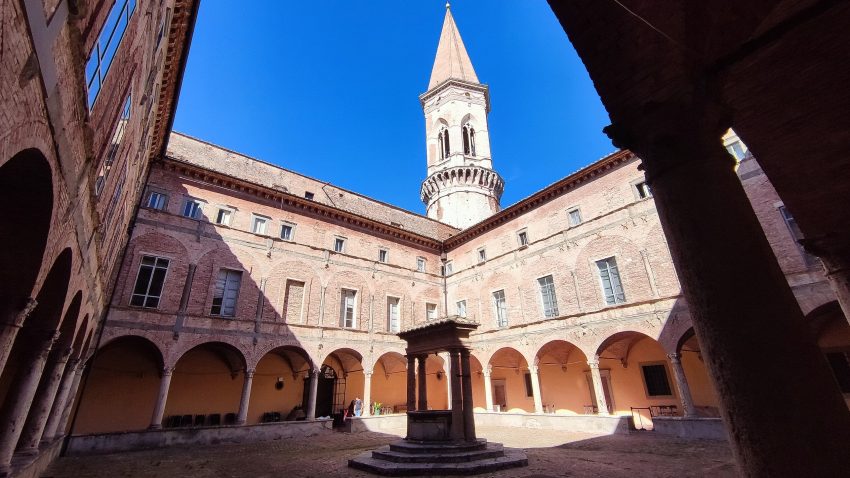
Step through the entrance and into the main court, with its 13th century polygonal clock tower, and you feel the atmosphere shift from busy streets to cloistered calm. Inside, the basilica's interior recalls an early Christian temple but is enriched with Gothic and Renaissance details, including a wooden choir, a triple-arched portal and an astonishing concentration of artworks in the sacristy and side chapels. It is easy to see why this is a highlight of any walking tour of Perugia, especially for travellers who love the combination of architecture, art history and a slightly off-the-beaten-path setting.
Table of Contents
- History and Significance of the Basilica di San Pietro
- Things to See and Do in the Basilica di San Pietro
- How to Get to the Basilica di San Pietro
- Practical Tips on Visiting the Basilica di San Pietro
- Where to Stay close to the Basilica di San Pietro
- Is the Basilica di San Pietro Worth Visiting
- FAQs for Visiting Basilica di San Pietro
- Nearby Attractions to the Basilica di San Pietro
History and Significance of the Basilica di San Pietro
The Basilica di San Pietro stands on ground that has been revered since long before Christianity reached Perugia. The site was sacred to the pagan Etruscans and Romans, and by the 4th century AD it held what is believed to have been the first cathedral of Perugia, serving the earliest Christian community in the city. When Abbot Pietro Vincioli founded the Benedictine abbey here in 996, later becoming Saint Peter himself, he anchored a new monastic life onto these older sacred layers.
For centuries, the abbey coexisted relatively peacefully with the people of Perugia, but politics eventually intruded. In 1398 the citizens burned the monastery in retaliation after Abbot Francesco Guidalotti arranged the killing of a leader of the Raspanti Party, the faction most Perugians supported. The arson was a dramatic reminder that even religious houses were deeply entwined with civic rivalries, and it marked a turning point in the abbey's relationship with the city around it.
Monastic life continued, however, and the complex evolved architecturally and artistically through the Gothic and Renaissance periods. Only in 1899, with the death of the last monk of San Pietro, did the abbey's religious community come to an end. The property then passed into the hands of the Department of Agricultural, Food and Environmental Sciences of the University of Perugia, creating the unusual situation you see today: a former Benedictine powerhouse now partly dedicated to academic research, yet still centred on a richly decorated basilica that keeps its spiritual and artistic heritage alive.
Things to See and Do in the Basilica di San Pietro
Begin in the main court, where the 13th century polygonal clock tower rises over the complex and immediately signals the site’s medieval strength. Take a moment to absorb how the basilica, cloisters and other buildings form a self-contained world on the edge of the city, with the tower acting as both a timekeeper and a visual anchor. As you move towards the church, look at the façade: the Romanesque blind arches you see today are the result of later restoration, subtly weaving together older and newer phases of the building.
Inside, the basilica’s plan evokes an early Christian temple, with a clear longitudinal axis and a sense of ordered space that contrasts with the often exuberant decoration of later centuries. The Gothic wooden choir, dating from the 16th century, adds warmth and intricacy, while the triple-arched portal designed by Galeazzo Alessi in 1571 is a highlight in its own right, framing your movement between court and church. Walking slowly up the nave, pay attention to how the different elements coexist: Romanesque structure, Gothic fittings and Renaissance interventions all layered into a coherent whole.
The true treasure trove, though, lies in the sacristy and side chapels. Added in 1451, the sacristy is adorned with frescoes and paintings by major names such as Perugino, Parmigianino and Raphael, turning it into something of a compact gallery. Look for Perugino’s smaller paintings of Santa Scholastica, Sant’Ercolano, San Costantino, San Pietro Abate, San Mauro and San Placido, which line the space with serene, balanced figures. Above the door leading to St Joseph’s Chapel in the right aisle you will find 17th century copies by Giovanni Battista Salvi, known as Sassoferrato, while in the Sacramento Chapel in the left aisle Perugino’s moving Pietà includes a discreet self-portrait of the artist as Giuseppe di Arimatea. These details reward an unhurried eye and make the basilica a genuine pilgrimage site for art lovers.
How to Get to the Basilica di San Pietro
Most international visitors will arrive via Perugia San Francesco d'Assisi Airport or larger hubs such as Rome or Florence, connecting onwards by train, bus or car to Perugia. For the best deals and a seamless booking experience, check out these flights to Perugia on Booking.com. From Perugia’s airport, shuttle buses and taxis make the short trip into the city, where you can link up with local transport or continue on foot towards the historic centre.
Perugia's main railway station lies in the lower part of town, with regular services from cities such as Rome, Florence and Assisi.Use Omnio to easily compare schedules, book train tickets, and find the best prices all in one place for a hassle-free journey across Italy. From the station, local buses and the minimetro take you up to the historic centre; from there, it is a pleasant walk downhill towards the southern edge of the old town and the Basilica di San Pietro, which sits near one of the historic gateways.
If you are travelling by car, major roads lead into Perugia from the surrounding Umbrian countryside and neighbouring regions.If you are looking to rent a car in Italy I recommend having a look at Discover Cars, first, as they compare prices and review multiple car rental agencies for you. You will generally park in one of the multi-storey or terrace car parks below or around the centre and then either ride the minimetro or walk into town; from the upper stops, signed streets and gentle downhill routes guide you towards the basilica and the adjoining university buildings.
Practical Tips on Visiting the Basilica di San Pietro
- Suggested tips: Wear comfortable shoes, as reaching the basilica involves some slopes and cobbled streets, and allow extra time to appreciate the sacristy and chapels rather than just passing through the nave.
- Best time to visit: Late morning or mid afternoon offers a good balance of light and calm; visiting on a weekday often means fewer people and a more contemplative atmosphere.
- Entrance fee: Adults: €6.00
- Opening hours: Tuesdays to Saturdays h. 10:00 am – 1:00 pm / 3:00 pm – 6:00 pm The church is free for worshippers Sundays and Mondays h. 7:30 pm - 12:30 pm / 3:00 pm - 6:00 pm
- Official website: https://www.fondazioneagraria.it/
- How long to spend: Plan at least 45-90 minutes to explore the church, cloister areas and art in the sacristy and chapels without rushing.
- Accessibility: As a historic complex on a slope, access may involve steps and uneven surfaces; visitors with limited mobility should check routes in advance and may find some spaces easier to reach than others.
- Facilities: Basic facilities such as toilets may be available within or near the complex, but for cafés and shops you will head back towards the main streets of the historic centre.
- Photography tip: Capture the contrast between the polygonal tower and the basilica in the main court, then move inside to focus on details of the choir, the Alessi portal and Perugino’s paintings; always be respectful of any restrictions in sacred areas.
- Guided tours: If possible, join a guided visit or an art-focused tour, as an expert explanation adds a lot to understanding the layered history and the many important works tucked into chapels and the sacristy.
- Nearby food options: Small cafés, bars and trattorias are scattered along the streets leading back towards the centre, making it easy to combine your visit with a relaxed lunch or coffee.
Where to Stay close to the Basilica di San Pietro
Staying near the southern side of Perugia's historic centre puts you within easy walking distance of the Basilica di San Pietro while still giving you quick access to the main squares and streets. A long-established option with panoramic views is Sina Brufani, which offers classic comfort at the top of the hill and convenient links to public transport. For something more intimate and characterful, Hotel Fortuna sits in the heart of the old town, making it simple to wander down to the basilica and back up to Corso Vannucci. If you prefer a boutique-style stay in historic surroundings, Hotel Priori Secret Garden gives you a charming base within walking distance of both the abbey complex and Perugia’s key museums and churches.
Is the Basilica di San Pietro Worth Visiting
For anyone with an interest in art, architecture or the long, layered history of Perugia, the Basilica di San Pietro is absolutely worth visiting. It combines a deeply rooted sacred site, a thousand years of monastic history and an exceptional concentration of works by Perugino and his contemporaries, all wrapped in a peaceful atmosphere just outside the busiest part of the centre. Beyond its obvious artistic treasures, the way the abbey grounds now sit alongside university departments adds another, very Perugian layer to the experience, showing how the city continues to reinvent its historic spaces without losing sight of their origins.
What Other Travellers Say...

Abbazia di San Pietro on Borgo XX Giugno in Perugia is a striking Benedictine abbey set within an elegant cloistered campus and marked by a clock tower; visitors praise its richly painted and decorated interior, a breathtaking church space with vivid colors, a gorgeous organ and exceptional Gothic wood choir stalls whose detailed carvings of people and animals invite close inspection.


FAQs for Visiting Basilica di San Pietro
Nearby Attractions to the Basilica di San Pietro
- Porta San Pietro and surrounding walls: One of Perugia’s historic gateways, giving a clear sense of the old defensive line and the transition between town and countryside.
- Church of San Domenico: A vast Gothic church with an impressive interior and important artworks, located a short walk back towards the centre.
- Giardini del Frontone: A pleasant garden and open space near the basilica, ideal for a quiet stroll or a rest on a bench with city views.
- Rocca Paolina: The atmospheric underground fortress carved into the hill, where vaulted passages recall Perugia's later defensive history.
- Corso Vannucci and Piazza IV Novembre: The main street and central square of Perugia, perfect for a passeggiata, a coffee stop and further exploration of the city's historic core.
The Basilica di San Pietro appears in our Complete Guide to Visiting Perugia!

Moira & Andy
Hey! We're Moira & Andy. From hiking the Camino to trips around Europe in Bert our campervan — we've been traveling together since retirement in 2020!
This website uses affiliate links which may earn a commission at no additional cost to you!
Planning Your Visit
Tuesdays to Saturdays h. 10:00 am - 1:00 pm / 3:00 pm - 6:00 pm
The church is free for worshippers Sundays and Mondays h. 7:30 pm – 12:30 pm / 3:00 pm – 6:00 pm
Adults: €6.00
Nearby Attractions
- National Archeological Museum of Perugia (0.7) km
Museum - Civic Museum at Palazzo della Penna (0.9) km
Historic Building and Museum - Rocca Paolina (0.9) km
Castle and Gallery - Piazza Italia (1.0) km
Square - Palazzo Baldeschi al Corso (1.2) km
Palace - Perugino Monument (1.2) km
Monument - Palazzo del Capitano del Popolo (1.2) km
Palace - Corso Vannucci (1.2) km
Street - Nobile Collegio del Cambio (1.2) km
Museum - National Gallery of Umbria (1.3) km
Gallery