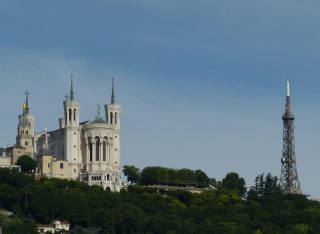
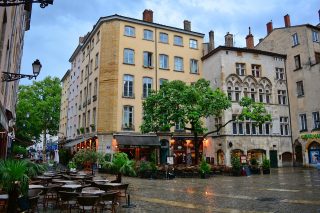
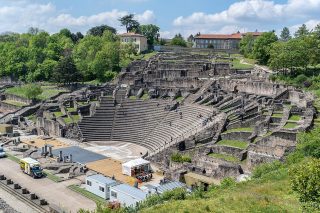
Ancient Theatre of Fourvière, Lyon
Roman Site in Lyon

The Ancient Theatre of Fourvière, or Théâtre Antique de Lyon, is where Lyon's Roman past suddenly feels very real. Built around 15 BCE during the reign of Emperor Augustus, it's the oldest Roman theatre in France, carved into the slope of Fourvière Hill so the stone tiers fan out above what was once the bustling city of Lugdunum. Sitting on the steps with the skyline of modern Lyon in the distance, it's easy to imagine robed spectators gathering for plays, poetry readings and political speeches almost 2,000 years ago. It is one of the must-see places in Lyon if you're even remotely interested in history or archaeology.
What makes this theatre special is that it isn't frozen in the past. By day, it's a free, open site where you can wander the terraces, examine the stage, and take in the views; by night in summer, it comes alive again during Les Nuits de Fourvière, when music, theatre, dance and film take over the ancient stones under the stars. With the Gallo-Roman Museum right next door adding context through artefacts and exhibits, the whole area feels like a perfectly balanced blend of site, story and atmosphere, a highlight of any walking tour of Lyon's Hill of Fourvière if you want to trace the city back to its Roman roots.
Table of Contents
- History and Significance of the Ancient Theatre of Fourvière
- Things to See and Do in the Ancient Theatre of Fourvière
- How to Get to the Ancient Theatre of Fourvière
- Practical Tips on Visiting the Ancient Theatre of Fourvière
- Where to Stay close to the Ancient Theatre of Fourvière
- Is the Ancient Theatre of Fourvière Worth Visiting?
- FAQs for Visiting Ancient Theatre of Fourvière
- Nearby Attractions to the Ancient Theatre of Fourvière
History and Significance of the Ancient Theatre of Fourvière
The Ancient Theatre of Fourvière dates back to around 15 BCE, when Lugdunum was the Roman capital of Gaul and an important political and commercial hub. Built under Emperor Augustus, the theatre took full advantage of the hill's natural slope, using the terrain to create a semi-circular cavea of seating rising above the orchestra and stage. At its peak, it could hold around 10,000 spectators, making it a major venue for civic life.
The theatre was used for a wide range of events: tragedies and comedies, poetry recitals, music, and public assemblies. For Roman citizens, it wasn’t just entertainment; it was a space where culture, politics and community came together. Over the centuries, as the Roman Empire declined and urban life shifted, the theatre fell partially into ruin, its stones reused or buried, and the hill gradually changed character. Yet the basic form survived well enough to be rediscovered and studied, revealing just how sophisticated Roman engineering and acoustics were.
Today, the theatre is a central piece of Lyon's UNESCO World Heritage-listed historic ensemble. It stands as tangible evidence that the city's story didn't start in the Middle Ages or the Renaissance but in the age of emperors and legions. The neighbouring Gallo-Roman Museum deepens that story, displaying sculptures, inscriptions and everyday objects that once belonged to the people who sat on these seats. Together, the theatre and museum form one of the top sights in Lyon for understanding the city's long, layered history.
Things to See and Do in the Ancient Theatre of Fourvière
A visit to the theatre usually starts from the upper paths, where you get a full view of the semi-circular seating, orchestra and reconstructed stage area. Take a moment to stand at the top and look down; it's the best way to appreciate the overall shape and how the builders used the hillside to create such a harmonious, practical space. From here, you also get broad views over Lyon, which makes the connection between ancient Lugdunum and the modern metropolis below feel very immediate.
Walk down through the tiers, stopping to sit where Roman spectators once sat and noticing details like the stairways, drainage channels and stonework. If you stand on the stage area and speak in a normal voice, you’ll get a sense of the theatre’s acoustics-part of why these structures were so effective for live performance. Information panels around the site help you interpret what you’re seeing: where the orchestra was, how the stage backdrop would have looked, and how people moved in and out during events.
If you can, time your visit to coincide with Les Nuits de Fourvière, the summer arts festival that brings contemporary performances back into this ancient arena. Watching a concert or play here, with modern lighting and sound working seamlessly with the old stone, feels almost surreal. Even if you visit outside festival season, you can combine the theatre with the adjacent Gallo-Roman Museum, where models, artefacts and multimedia displays put the site into a wider context of Roman life in Lugdunum.
How to Get to the Ancient Theatre of Fourvière
Most international visitors reach Lyon via Lyon-Saint Exupéry Airport (LYS), which has frequent connections to cities across Europe and beyond. For the best deals and a seamless booking experience, check out these flights to Lyon on Booking.com. From the airport, the Rhônexpress tram runs into Lyon Part-Dieu station, giving easy access to the city’s public transport network.
From the centre of Lyon, the simplest way to reach the theatre by public transport is to take metro line D to Vieux Lyon - Cathédrale Saint-Jean, then transfer to the Fourvière funicular and ride up towards the hilltop, from where it's a short walk to the site.You can use SNCF Connect to check schedules, compare routes, and purchase tickets for National (SNCF ) and regional trains (TER). For a more streamlined experience, we recommend using Omio, which allows you to easily compare prices, schedules, and book tickets for both National and Regional travel across all of Europe, all in one place. Alternatively, you can walk up from Vieux Lyon via stairways and paths, or approach from the direction of the Basilica of Notre-Dame de Fourvière and follow signs down to the theatre and museum; this takes a bit more effort but offers great views along the way.
If you’re travelling by car, you can drive up to the Fourvière area by following signposts from the city centre and use one of the nearby car parks, though the roads are narrow and parking can be limited, especially in busy periods.If you are looking to rent a car in France I recommend having a look at Discover Cars, first, as they compare prices and review multiple car rental agencies for you. Many visitors find it easier to park on the Presqu'île or in Vieux Lyon and then switch to the funicular or walk. Once you're on the hill, the Ancient Theatre, Gallo-Roman Museum and basilica are all within easy walking distance of each other.
Practical Tips on Visiting the Ancient Theatre of Fourvière
- Suggested tips: Wear comfortable shoes with good grip-the stone steps can be uneven and a bit slippery, especially after rain, and you’ll enjoy the site more if you can move around easily.
- Best time to visit: Late afternoon offers softer light and cooler temperatures, while evenings in summer are magical if you’re attending a performance during Les Nuits de Fourvière.
- Entrance fee: Free
- Opening hours: May 2 to September 30: 7:00 AM to 9:00 PM October 1 to April 30: 7:00 AM to 7:00 PM
- Official website: https://lugdunum.grandlyon.com/en
- How long to spend: Allow at least 45-60 minutes to explore the theatre itself; add another 1-2 hours if you’re visiting the museum or lingering to enjoy the views.
- Accessibility: The site involves slopes and many steps, which can be challenging for visitors with reduced mobility; some viewpoints from the top are more accessible than the lower seating levels.
- Facilities: Toilets and additional services are available at or near the Gallo-Roman Museum; cafés and restaurants can be found downhill in Vieux Lyon and on the Presqu'île.
- Photography tip: For dramatic shots, frame the curve of the seating with the city in the background, or shoot from the stage looking up to emphasise the height and scale of the tiers.
- Guided tours: Consider joining a guided tour or using an audio guide that covers both the theatre and the museum to get a fuller picture of Roman Lugdunum.
- Nearby food options: After your visit, head down to Vieux Lyon for a meal in a bouchon or a relaxed drink on a riverside terrace-perfect for digesting both history and food.
Where to Stay close to the Ancient Theatre of Fourvière
For a stay that keeps you close to both the theatre and the rest of historic Lyon, Villa Florentine is an excellent choice. Set on the slopes of Fourvière, it offers terraces with panoramic views over the city and puts you within walking distance of the Ancient Theatre, the basilica and Vieux Lyon.
If you’d rather be based in the heart of the old town, Cour des Loges Lyon, a Radisson Collection Hotel combines Renaissance character with modern comfort. From here, you can take the funicular or walk up to the theatre, then wander back down through Vieux Lyon’s traboules and cobbled lanes after your visit.
Another appealing option is Collège Hôtel, located near the Saône and just a short walk from Vieux Lyon and the foot of Fourvière Hill. It offers easy access to both the Roman sites above and the lively bars, restaurants and quays below, making it a convenient base for exploring the city on foot.
Is the Ancient Theatre of Fourvière Worth Visiting?
The Ancient Theatre of Fourvière is absolutely worth visiting, especially if you're at all curious about how far back Lyon's story goes. Few places let you move so freely through such an old, intact structure while also feeling plugged into contemporary city life. By day, you can sit where Roman citizens once sat and look out over a city that has completely transformed; by night in summer, you can watch performances that prove the venue still works beautifully. Combined with the nearby Gallo-Roman Museum and basilica, it turns the Fourvière hill into a compact, unforgettable slice of Lyon where past and present meet.
What Other Travellers Say...
Reviews Summary
The Ancient Theatre of Fourvière in Lyon sits on Rue de l'Antiquaille and is presented as a notable historic site in the 5th arrondissement, offering visitors a chance to see well-preserved ancient architecture in a compact, easily walkable location.
FAQs for Visiting Ancient Theatre of Fourvière
Nearby Attractions to the Ancient Theatre of Fourvière
- Basilica of Notre-Dame de Fourvière - Lyon's landmark hilltop basilica with stunning mosaics and some of the best city views, just a short walk away.
- Gallo-Roman Museum of Lyon-Fourvière - An excellent museum beside the theatre, showcasing artefacts and models that bring Roman Lugdunum to life.
- Roman Odeon of Lyon - A smaller, neighbouring Roman performance space that complements the main theatre and shows how multiple venues once worked together.
- Vieux Lyon - The atmospheric Renaissance old town at the foot of the hill, packed with traboules, courtyards and traditional bouchons.
- Place Bellecour - Lyon's vast central square on the Presqu'île, easily reached by funicular and metro from Fourvière and a natural hub for further exploration.
The Ancient Theatre of Fourvière appears in our Complete Guide to Visiting Lyon!

Moira & Andy
Hey! We're Moira & Andy. From hiking the Camino to trips around Europe in Bert our campervan — we've been traveling together since retirement in 2020!
This website uses affiliate links which may earn a commission at no additional cost to you!
Planning Your Visit
May 2 to September 30: 7:00 AM to 9:00 PM
October 1 to April 30: 7:00 AM to 7:00 PM
Free
Nearby Attractions
- Gallo-Roman Museum of Lyon-Fourvière (0.1) km
Museum - Odeon of Lyon (0.1) km
Roman Site - Ancient Baths of Lyon (0.3) km
Roman Site - Basilica of Notre-Dame de Fourvière (0.4) km
Basilica - Parc des Hauteurs (0.4) km
Park - Metallic Tower of Fourvière (0.5) km
Tower - Funiculaire de Lyon (0.5) km
Cable Car - Tomb of Turpio (0.6) km
Roman Site - Cathédrale Saint-Jean (0.6) km
Cathedral - Place de la Basoche (0.6) km
Square