Ancient Baths of Lyon
Roman Site in Lyon
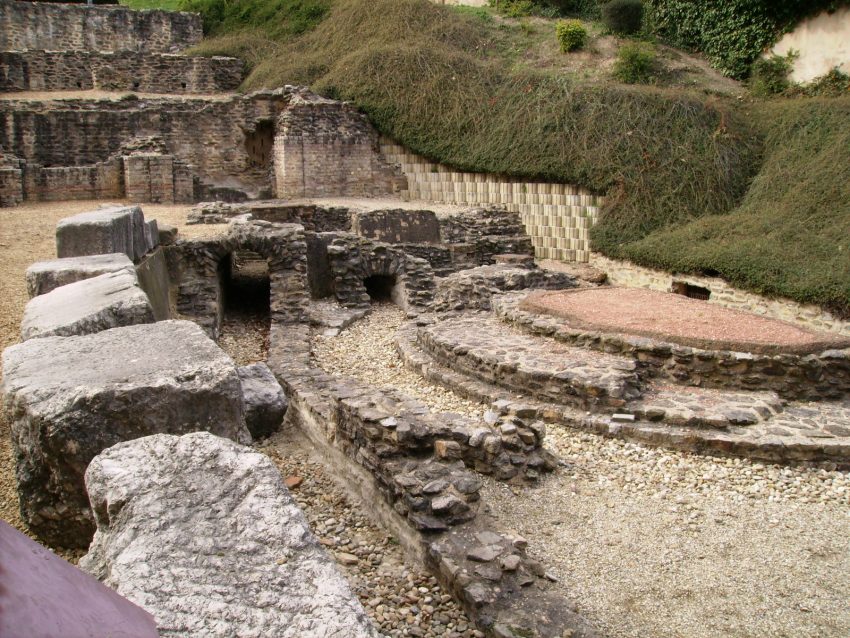
Tucked into the slope of Fourvière Hill, the Roman Baths on Rue des Farges are one of the things to do in Lyon if you enjoy tracking down quiet, half-hidden pieces of history. Discovered during roadworks in the 1970s, this site revealed one of the city's oldest Roman districts, including a large bath complex that may once have been known as the Baths of Apollo. Today, the remains lie partly beneath modern buildings, with vaults and arches visible under a residential block at 6, rue des Farges-an evocative reminder of how layers of Lugdunum still lie beneath present-day Lyon.
What makes this place so intriguing is the way it bridges everyday life and archaeology. At its peak in the late 1st and 2nd centuries, the complex was a municipally funded bathhouse of roughly 75 x 50 metres, surrounded by houses and shops on upper terraces and a palaestra (exercise court) on a lower level, supported by vaulted galleries that may have doubled as firewood storage. Over time, the area shifted into a necropolis as Roman power declined, and the baths were forgotten until bulldozers and archaeologists brought them back to light. It's often visited on walking-tours of Vieux Lyon that thread Roman ruins, hillside views, and quiet backstreets into a single route.
Table of Contents
- History and Significance of the Roman Baths on Rue des Farges
- Things to See and Do in the Roman Baths on Rue des Farges
- How to Get to the Roman Baths on Rue des Farges
- Practical Tips on Visiting the Roman Baths on Rue des Farges
- Where to Stay close to the Roman Baths on Rue des Farges
- Is the Roman Baths on Rue des Farges Worth Visiting?
- FAQs for Visiting Roman Baths on Rue des Farges
- Nearby Attractions to the Roman Baths on Rue des Farges
History and Significance of the Roman Baths on Rue des Farges
The story of the Roman Baths on Rue des Farges begins with an accident. In the 1970s, urban development on the slopes of Fourvière damaged buried structures, prompting archaeologists to investigate. What they uncovered was a substantial Roman district dating from the late 1st century AD and abandoned by the 2nd or 3rd century: terraced housing, shops, underground galleries, and a major public bath complex that showed just how developed Lugdunum had become as a Roman city.
Early on, two vaulted underground rooms were mistakenly interpreted as early Christian prisons, a theory that captured the imagination but didn’t stand up to further study. As excavations progressed, archaeologists realised these spaces were more likely connected to the baths and their support infrastructure, perhaps used for storage or service functions. In 1975, the vaulted rooms were classified as historical monuments, cementing their importance within Lyon’s archaeological record and correcting the earlier misidentification.
The bath complex itself is thought to have been a municipally funded facility-a place where citizens could bathe, socialise, exercise, and do business. Upper terraces held homes and shops, such as the richly decorated House of Masks and the House of Carts, while a lower palaestra, propped up by vaulted galleries, provided an exercise area. Over time, as the Roman Empire declined and urban priorities shifted, the district was gradually abandoned and repurposed as a necropolis. Today, even though much of the site has been reburied for protection, the visible remains on Rue des Farges still speak powerfully of the city's ancient daily life.
Things to See and Do in the Roman Baths on Rue des Farges
Visiting the Roman Baths on Rue des Farges is less about a formal “site visit” and more about learning to read the traces of the past in an ordinary Lyon street. At 6, rue des Farges, look under the arches of the residential building and you'll see preserved sections of the bath complex-stone walls, vaults, and structural elements that once formed part of a large thermal installation. Standing here, it's surprisingly easy to imagine steam, conversation, and the movement of bathers passing through hot and cold rooms.
Although the original palaestra and upper terrace houses are no longer exposed, knowing they once existed helps you picture the scale of the complex. As you walk along Rue des Farges and nearby streets on the hillside, you're effectively traversing layers of Roman urban planning: terraces that held shops and homes, galleries that supported exercise courts, and spaces that later became burial grounds as the city's fortunes changed. This spot is one of the best places to see in the Fourvière area if you enjoy piecing together ruins, topography, and written history.
To deepen the experience, combine your stop here with a visit to the nearby Ancient Theatre, the Odeon, and the Gallo-Roman Museum of Lyon-Fourvière. The museum's displays give context to sites like Rue des Farges, showing how bath complexes, houses, and public spaces fitted into the wider life of Lugdunum. Walking between these points, you begin to see Fourvière not just as a hill with a basilica, but as a densely populated Roman city whose infrastructure still shapes the modern streets.
How to Get to the Roman Baths on Rue des Farges
If you're arriving from abroad, you'll likely land at Lyon-Saint Exupéry Airport (LYS), which has regular flights from across Europe and beyond; from there, the Rhônexpress tram takes you into central Lyon, where you can connect to the metro and then the funicular or buses up towards Fourvière and the surrounding hillside streets. For the best deals and a seamless booking experience, check out these flights to Lyon on Booking.com.
From within France or neighbouring countries, trains bring you into Lyon Part-Dieu or Lyon Perrache. From Part-Dieu, you can ride the metro to Vieux Lyon - Cathédrale Saint-Jean, then either walk uphill via stairways and streets or transfer to the funicular and continue on foot to Rue des Farges; from Perrache, buses and metro connections make it straightforward to reach the same area, with a bit of uphill walking required at the end. You can use SNCF Connect to check schedules, compare routes, and purchase tickets for National (SNCF ) and regional trains (TER). For a more streamlined experience, we recommend using Omio, which allows you to easily compare prices, schedules, and book tickets for both National and Regional travel across all of Europe, all in one place.
If you're travelling by car, follow signs towards Fourvière or Vieux Lyon and look for parking either at the foot of the hill or in small car parks higher up; once you've parked, allow time to navigate the narrow, sloped streets on foot to reach Rue des Farges and the arches at number 6. If you are looking to rent a car in France I recommend having a look at Discover Cars, first, as they compare prices and review multiple car rental agencies for you. Given the gradients and limited parking, many visitors find it easier to rely on public transport and walking for this part of the city.
Practical Tips on Visiting the Roman Baths on Rue des Farges
- Suggested tips: Bring a brief description or map of the site so you know exactly what you’re looking at-this is very much an “urban archaeology” spot rather than a signed, fenced-off monument.
- Best time to visit: Early morning or late afternoon offers quieter streets and softer light under the arches, making details easier to see and photograph.
- Entrance fee: Free — the visible remains are outdoors and integrated into a residential building’s ground level.
- Opening hours: Visible at any time from the street, though daylight hours are obviously best for appreciating the details.
- Official website: https://lugdunum.grandlyon.com
- How long to spend: Plan 10-20 minutes at Rue des Farges itself, plus extra time if you're linking the visit with the nearby theatre, Odeon, or Gallo-Roman Museum.
- Accessibility: The street is on a slope and pavements may be uneven, so comfortable shoes are essential; visitors with reduced mobility may find some approaches challenging.
- Facilities: There are no on-site facilities; toilets, cafés, and shops are available near the Gallo-Roman Museum, in Vieux Lyon, or around the Fourvière funicular stations.
- Photography tip: Stand slightly back from the arches to capture the contrast between ancient masonry and modern building above; avoid harsh midday light if possible.
- Guided tours: Some specialist Roman-history or archaeology tours include Rue des Farges as a stop, explaining how the baths and surrounding district once looked.
- Nearby food options: Head down towards Vieux Lyon or across to the Presqu'île for a wide choice of bouchons, cafés, and bakeries once you've finished exploring the hillside.
Where to Stay close to the Roman Baths on Rue des Farges
For a stay that keeps you close to Fourvière’s Roman sites and offers sweeping views over the city, Villa Florentine is an excellent choice. From here, you can reach the Ancient Theatre, Odeon, Gallo-Roman Museum, and Rue des Farges on foot, linking them into a relaxed loop around the hill.
If you prefer to base yourself in the atmospheric streets of Vieux Lyon at the foot of the slope, Cour des Loges Lyon, a Radisson Collection Hotel places you in the middle of Renaissance passageways and traboules. From the hotel, it's a climb or a short funicular ride followed by a walk to reach Rue des Farges and the baths, with plenty of options nearby for dinner afterwards.
Another good option is Collège Hôtel, close to the Saône and the Saint-Paul quarter. Staying here gives you easy access to both banks of the city and a manageable walk or public transport connection up to Fourvière, making it simple to slot the Roman Baths on Rue des Farges into a broader exploration of Lyon.
Is the Roman Baths on Rue des Farges Worth Visiting?
The Roman Baths on Rue des Farges are definitely worth visiting if you enjoy uncovering smaller, less obvious layers of history. You won't find big crowds or dramatic reconstructions here, but you will find authentic Roman masonry quietly supporting modern life-a powerful illustration of how Lugdunum still underpins Lyon. Combined with the nearby theatre, Odeon, and museum, this modest but evocative site adds depth to your understanding of the city's ancient past and rewards travellers who like to look beyond the headline monuments.
What Other Travellers Say...

Thermes Antiques de Lyon at 6 Rue des Farges is a compact site of well-preserved Roman ruins tucked behind housing; visitors praise the pleasant views and quiet atmosphere, especially in sunshine or on weekday mornings, and note informational signs on site, though several reviewers warn the ruins are small, somewhat hidden and can be hard to approach from public lanes with limited sightlines and surrounding private property.


FAQs for Visiting Roman Baths on Rue des Farges
Nearby Attractions to the Roman Baths on Rue des Farges
- Parc des Hauteurs - A series of walkways and terraces along the ridge of Fourvière, linking viewpoints, Roman sites, and quiet green corners above the city.
- Ancient Theatre of Fourvière - Lyon's grand Roman theatre, once seating thousands and still used today for cultural festivals and performances.
- Odeon of Lyon - A smaller, more intimate Roman performance venue beside the theatre, designed for music, readings, and speeches.
- Gallo-Roman Museum of Lyon-Fourvière - An excellent museum built into the hillside, explaining the history of Lugdunum with artefacts and models.
- Basilica of Notre-Dame de Fourvière - The hilltop basilica that dominates Lyon's skyline, offering richly decorated interiors and panoramic views.
The Ancient Baths of Lyon appears in our Complete Guide to Visiting Lyon!

Moira & Andy
Hey! We're Moira & Andy. From hiking the Camino to trips around Europe in Bert our campervan — we've been traveling together since retirement in 2020!
This website uses affiliate links which may earn a commission at no additional cost to you!
Planning Your Visit
Visible at any time from the street, though daylight hours are obviously best for appreciating the details.
Free - the visible remains are outdoors and integrated into a residential building’s ground level.
Nearby Attractions
- Odeon of Lyon (0.2) km
Roman Site - Ancient Theatre of Fourvière (0.3) km
Roman Site - Gallo-Roman Museum of Lyon-Fourvière (0.4) km
Museum - Tomb of Turpio (0.4) km
Roman Site - Funiculaire de Lyon (0.6) km
Cable Car - Basilica of Notre-Dame de Fourvière (0.6) km
Basilica - Abbaye Saint-Martin d’Ainay (0.6) km
Abbey - Parc des Hauteurs (0.6) km
Park - Cathédrale Saint-Jean (0.7) km
Cathedral - Place de la Basoche (0.7) km
Square