Aître Saint Maclou, Rouen
Historic Building in Rouen
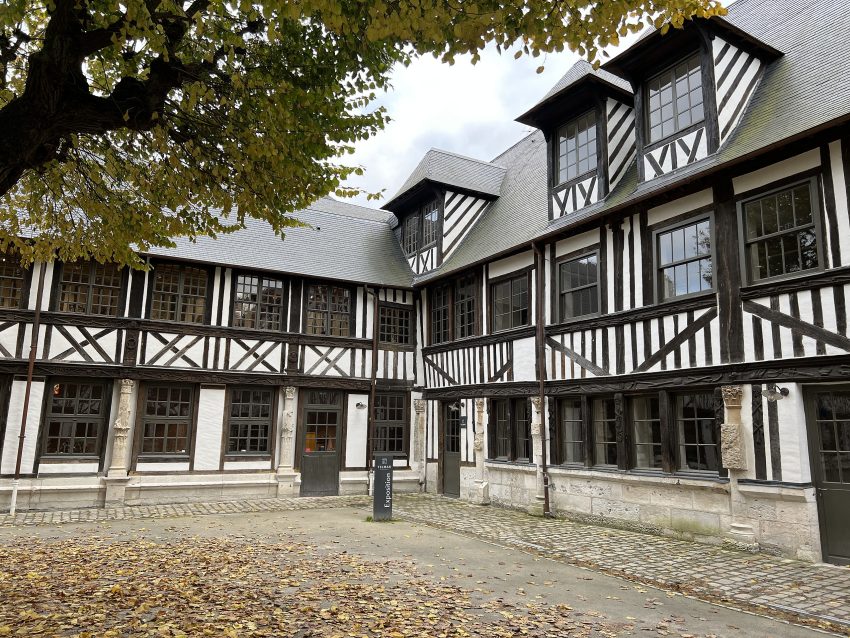
Tucked behind Église Saint-Maclou in the historic centre of Rouen, the Aître Saint-Maclou is one of the city's most unusual and memorable places to step into. At first glance it feels like a peaceful courtyard framed by half-timbered galleries, but a closer look reveals why it's so distinctive: the beams are carved with skulls, bones, and symbols of burial, quietly preserving the site's origins as a plague-era ossuary.
It's one of the must-see places in Rouen for travellers who like their history tangible and slightly eerie, the kind of stop that stays with you long after you leave. It also works beautifully on a walking tour of Rouen because it's compact, central, and offers a completely different mood from the grand Gothic monuments nearby.
Table of Contents
- History and Significance of the Aître Saint-Maclou
- Things to See and Do in the Aître Saint-Maclou
- Practical Tips on Visiting the Aître Saint-Maclou
- Where to Stay Close to the Aître Saint-Maclou
- Is the Aître Saint-Maclou Worth Visiting?
- For Different Travelers
- FAQs for Visiting the Aître Saint-Maclou
- Nearby Attractions to the Aître Saint-Maclou
History and Significance of the Aître Saint-Maclou
The Aître Saint-Maclou was shaped by crisis. After the Black Death overwhelmed Rouen's burial grounds, the parish cemetery here became a place where the city had to confront death on a scale that was difficult to process. In the early 16th century, timber-framed galleries were built around the courtyard to store disinterred bones, freeing space for new burials while turning the site into a stark reminder of mortality.
What makes the Aître so compelling is how openly it communicates that medieval worldview. The carvings on the beams are not decorative flourishes; they are a visual language of death and impermanence-skulls, crossed bones, and gravediggers’ tools-echoing the broader “danse macabre” culture that spread through Europe as communities tried to make sense of repeated epidemics.
Over time the courtyard evolved from a strictly funerary space into a more everyday institution, with parts later used for schooling and other civic roles. That layered history is part of the site’s impact today: you’re not only standing in a place of mourning, but in a setting that has repeatedly been repurposed by the city, most recently as a cultural venue after restoration.
Things to See and Do in the Aître Saint-Maclou
Begin by doing a slow circuit of the galleries and looking up. The carvings are the main reason to visit, and they’re easy to miss if you treat the courtyard like a simple photo stop. Scan the beams for repeating motifs-skulls, bones, and tools-and notice how the imagery is both blunt and strangely stylised, as if it’s trying to be instructive as well as expressive.
Then step back to appreciate the architecture as a whole. Ossuaries rarely look like this: a timber-framed rectangle enclosing an open courtyard, with a sense of domestic scale that contrasts with the seriousness of its purpose. It feels intimate rather than monumental, which makes the experience more personal than many bigger landmarks.
If there’s an exhibition or cultural event on, it’s worth timing your visit to include it, because the setting adds atmosphere to almost anything displayed here. Even without an event, it’s a strong place to pause for a few minutes and let the context sink in, especially if you’ve been moving quickly between Rouen’s larger sights.
Practical Tips on Visiting the Aître Saint-Maclou
- Entrance fee: Free
- Opening hours: 24 Hours.
- Best time to visit: Late morning or early afternoon is ideal, when there's enough light to spot the beam carvings clearly without rushing. If you want a quieter feel, aim for earlier in the day before the centre of Rouen gets busier.
- How long to spend: Plan 20-40 minutes for a satisfying visit, longer if you like slow-looking and reading exhibition material. It also works well as a short, high-impact stop between bigger landmarks.
- Accessibility: The courtyard is relatively compact and easy to navigate at a gentle pace, though historic surfaces can be uneven. If you have mobility concerns, check current access arrangements because layouts and entry points can vary with exhibitions.
- Facilities: Think of this as an atmospheric heritage stop rather than a full visitor complex. For breaks, you’re better off using nearby cafés and amenities in the Saint-Maclou and cathedral area.
Where to Stay Close to the Aître Saint-Maclou
For a culture-heavy itinerary, the best area to base yourself is central Rouen around the cathedral quarter so you can walk to major sights early and return easily in the evening for food and atmosphere.
If you want a high-comfort stay right in the historic centre, Hôtel de Bourgtheroulde, Autograph Collection is a strong choice for walking access to Rouen’s headline landmarks. For a practical, central base that keeps you close to the old streets and riverside routes, Mercure Rouen Centre Cathédrale works well. If you prefer a modern hotel with straightforward logistics, Radisson Blu Hotel, Rouen Centre is a solid option for comfort and easy connections.
Is the Aître Saint-Maclou Worth Visiting?
Yes, particularly if you're drawn to places that feel specific to a city rather than interchangeable. Rouen has plenty of monumental Gothic architecture, but the Aître offers something rarer: a small, concentrated space that makes medieval history feel close and human.
It's also worth visiting because it's efficient. You can experience it fully in under an hour, and the mood shift it provides-quiet, reflective, slightly unsettling in an intelligent way-adds real depth to a day of sightseeing in Rouen.
What Other Travellers Say...

St. Maclou Catholic Church, at 7 Pl. Barthélémy in Rouen, is a flamboyant Gothic church praised for its delicate, richly carved stone façade and impressive interior; visitors note its sculpted Renaissance wooden doors, its setting amid Tudor-style buildings with cafés and restaurants a short walk from the cathedral, and occasional limited opening hours that can include a midday closure, so plan visits accordingly.


For Different Travelers
Families with Kids
For families, this is best approached as a short, curiosity-led stop rather than a deep historical lesson. The carvings can feel like a “spot-the-symbols” activity, and the enclosed courtyard makes it easy to manage pacing without feeling scattered.
Because the theme is mortality, it helps to keep the framing simple and age-appropriate: it’s a historic place that shows how people remembered those who died long ago. Pair it with a lighter nearby stop afterward, like a market square or a treat break, to balance the mood.
Couples & Romantic Getaways
For couples, the Aître is a memorable change of tone-quiet, intimate, and atmospheric, with the kind of beauty that comes from age and detail rather than glamour. It’s a strong place for slow wandering and conversation, especially if you enjoy travel that leans into story and setting.
It also pairs well with an unplanned afternoon in Rouen: the Aître, then a café nearby, then a gentle wander through timber-framed streets as the light shifts. It's less about ticking boxes and more about letting the city's layers reveal themselves.
Budget Travelers
This is a great budget-friendly stop because it delivers a unique experience without demanding a big time commitment or complicated planning. Even a short visit feels substantial because the site is so distinctive and centrally located.
Use it as an anchor in a low-cost day built around walking: connect it with nearby churches, historic streets, and public squares. You'll get a full, varied Rouen experience largely on foot, with spending reserved for food or one paid attraction that truly matters to you.
History Buffs
For history buffs, the Aître Saint-Maclou is essential because it captures everyday medieval reality in a way grand monuments sometimes don't. It's a physical record of how a city responded to plague, burial pressure, and the need to keep living while surrounded by loss.
It's also a lesson in reuse: funerary space becoming educational space, then cultural space, without losing the trace of what it once was. That continuity makes it one of the most thought-provoking historic sites in Rouen, even if you spend less time here than at the cathedral.
FAQs for Visiting the Aître Saint-Maclou
Getting There
Tickets & Entry
Visiting Experience
Tours, Context & Itineraries
Photography
Accessibility & Facilities
Food & Breaks Nearby
Safety & Timing
Nearby Attractions to the Aître Saint-Maclou
- Rouen Cathedral: Rouen's headline Gothic monument, packed with sculptural detail and an unforgettable façade.
- Rue du Gros-Horloge: A lively pedestrian street with Rouen's iconic clock arch and classic timber-framed scenery.
- Palais de Justice de Rouen: A monumental late-medieval civic building whose stonework rewards slow, detail-focused looking.
- Place du Vieux-Marché: A historic square linked to Joan of Arc, now filled with cafés and daily city energy.
- Église Saint-Ouen: A soaring Rayonnant Gothic masterpiece known for its vast interior volume and luminous stained glass.
The Aître Saint Maclou appears in our Complete Guide to Visiting Rouen!

Moira & Andy
Hey! We're Moira & Andy. From hiking the Camino to trips around Europe in Bert our campervan — we've been traveling together since retirement in 2020!
This website uses affiliate links which may earn a commission at no additional cost to you!
Planning Your Visit
24 Hours.
Free
Nearby Attractions
- Musée National de l'Éducation in Rouen (0.2) km
Museum - Historial Jeanne d’Arc in Rouen (0.3) km
Museum - Église Saint-Ouen (0.3) km
Abbey - Rouen Cathedral (0.3) km
Cathedral - Place du Général-de-Gaulle (0.4) km
Square - Rue du Gros-Horloge (0.6) km
Historic Site and Street - Musée Le Secq des Tournelles (0.6) km
Museum - Gros-Horloge (0.6) km
Tower - Palais de Justice de Rouen (0.6) km
Historic Building - Musée des Beaux-Arts (0.6) km
Museum