Abbaye aux Dames, Caen
Abbey in Caen
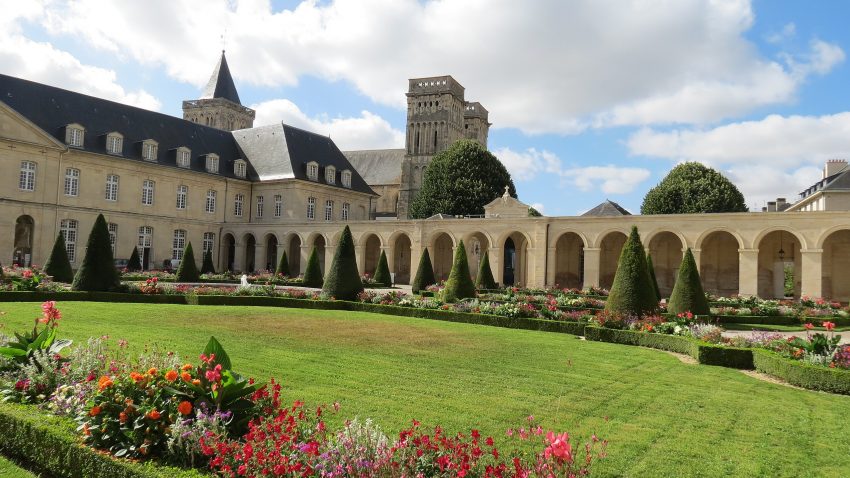
The Abbaye aux Dames is one of the best places to visit in Caen for travelers seeking a quieter but deeply meaningful glimpse into Norman history. Founded by Matilda of Flanders in 1060, this elegant abbey is the spiritual counterpart to the nearby Men's Abbey and offers a harmonious blend of Romanesque purity and later classical refinement. Its graceful church, serene cloisters, and links to the founders of the Norman dynasty make it a captivating place to wander.
Great place to visit on a walking tour of Caen, the abbey stands as a testament to Matilda's influence and the shared political vision she held with William the Conqueror. The atmosphere here is peaceful and contemplative, with luminous interiors and gardens that encourage slow exploration. Whether you're drawn by its architecture or its royal associations, the Abbaye aux Dames offers a richly rewarding experience.
Table of Contents
- History and Significance of the Abbaye aux Dames
- Things to See and Do in the Abbaye aux Dames
- How to Get There
- Practical Tips on Visiting the Abbaye aux Dames
- Where to Stay close to the Abbaye aux Dames
- Is the Abbaye aux Dames Worth Visiting?
- FAQs for Visiting the Abbaye aux Dames
- Nearby Attractions to Abbaye aux Dames
History and Significance of the Abbaye aux Dames
Founded in 1060, the Abbaye aux Dames was established as part of the same reconciliation with the Pope that led William the Conqueror to found the Men's Abbey. Dedicated to the Holy Trinity, it became one of the most prestigious convents in Normandy, home to noblewomen whose lives were devoted to prayer, scholarship, and charity. The abbey played an essential role in shaping medieval Caen, supporting religious life while reinforcing the ducal couple's political and spiritual authority.
The abbey’s church, Église de la Sainte-Trinité, is a masterpiece of Norman Romanesque architecture. Its tall, slender columns, minimalist ornamentation, and serene interior give it an almost ethereal quality. Later Gothic elements and 17th-century renovations added complexity while preserving the building’s original harmony. Matilda of Flanders was buried here, and although her tomb was disturbed over the centuries, a memorial stone still marks her burial site, creating a poignant connection to one of medieval Europe’s most influential queens.
Like many religious institutions, the abbey underwent profound changes after the French Revolution. Secularized and repurposed, it eventually became the seat of Normandy's regional council. Despite these shifts, the core of the abbey remains remarkably intact, preserving its monastic beauty while continuing to serve as an important civic institution in Caen.
Things to See and Do in the Abbaye aux Dames
A visit to the abbey begins with the church of Sainte-Trinité, whose Romanesque symmetry and graceful vaults create a sense of calm. The luminous interior highlights the purity of its architectural lines, and the memorial to Matilda of Flanders invites visitors to pause and reflect on her legacy. The church’s blend of early Romanesque structure and later Gothic enhancements makes it particularly fascinating for those interested in architectural evolution.
The cloisters and adjacent gardens offer quiet spaces for wandering, with their restrained classical design stemming from 17th-century renovations. The elegant convent buildings, once home to generations of noblewomen, now house the regional council offices, illustrating how the abbey’s civic and monastic roles have intersected across time.
Seasonal exhibitions and occasional cultural events further enliven the site. Even at its busiest, the abbey maintains a gentle, contemplative atmosphere-ideal for visitors who enjoy historic sites that balance beauty with tranquillity.
How to Get There
The Abbaye aux Dames is located in the eastern part of central Caen and is easily accessible on foot from other major landmarks.
Travelers arriving by train will find Caen Station conveniently connected to the city center. You can use SNCF Connect to check schedules, compare routes, and purchase tickets for National (SNCF ) and regional trains (TER). For a more streamlined experience, we recommend using Omio, which allows you to easily compare prices, schedules, and book tickets for both National and Regional travel across all of Europe, all in one place.
Drivers can use public car parks scattered throughout the area, making access by car straightforward. If you are looking to rent a car in France I recommend having a look at Discover Cars, first, as they compare prices and review multiple car rental agencies for you.
For those flying, Caen-Carpiquet Airport provides quick regional connections into the city. For the best deals and a seamless booking experience, check out these flights to Caen on Booking.com.
Practical Tips on Visiting the Abbaye aux Dames
- Best time to visit Abbaye aux Dames: Late morning for beautiful light inside the church.
- Entrance fee in Euros: Church typically free; special tours or exhibits may have a small fee.
- Opening hours: Usually open daily; hours vary depending on season and events.
- Official website: https://caen.fr
- How long to spend: Around 1 hour for the church and gardens, longer if exploring exhibitions.
- Accessibility: Generally good, with some uneven ground in older sections.
- Facilities: Restrooms, information panels, nearby cafés and green spaces.
- Photography tip: Capture the height of the nave and the gentle contrast of light and stone.
- Guided-tours: Offered seasonally; highly recommended for learning about Matilda's legacy.
- Nearby food options: Numerous cafés and restaurants are within an easy walk.
Where to Stay close to the Abbaye aux Dames
Caen offers excellent accommodations within walking distance of the abbey. A reliable option is Royal Hôtel Caen Centre, offering comfortable rooms near the heart of the city. For a boutique stay with easy access to historic sites, Hotel Saint-Pierre is an inviting choice. Another nearby option is Best Western Plus Le Moderne, ideal for travelers seeking modern amenities and a central location.
Is the Abbaye aux Dames Worth Visiting?
Absolutely. The Abbaye aux Dames is one of Caen's most serene and historically rich landmarks. Its Romanesque church, quiet cloisters, royal tomb, and centuries of evolving civic life make it a place where history feels both intimate and enduring. For anyone exploring Normandy's medieval heritage, it is an essential stop.
What Other Travellers Say...

Abbaye aux Dames de Caen sits on a hill in Caen and is an 11th-century abbey with an arcaded courtyard and the tomb of Queen Mathilda; visitors praise its peaceful atmosphere, fine architectural detail, ancient fabric complemented by modern stained glass at the east end, and rotating exhibitions inside, and note free entry, free French tours, adjacent gardens with a large cedar and good city views.


FAQs for Visiting the Abbaye aux Dames
Nearby Attractions to Abbaye aux Dames
- Jardin des Plantes de Caen: A peaceful botanical garden ideal for a quiet stroll.
- Abbaye aux Hommes: The abbey's historic counterpart founded by William the Conqueror.
- Caen Castle: A vast medieval fortress with museums and panoramic views.
- Caen Memorial: A major museum dedicated to World War II and peace history.
- Church of Saint-Pierre: A striking Gothic landmark in central Caen.
The Abbaye aux Dames appears in our Complete Guide to Visiting Caen!

Moira & Andy
Hey! We're Moira & Andy. From hiking the Camino to trips around Europe in Bert our campervan — we've been traveling together since retirement in 2020!
This website uses affiliate links which may earn a commission at no additional cost to you!
Nearby Attractions
- Vaugueux District (0.5) km
Area - Tour Leroy (0.5) km
Tower - Église Saint-Pierre (0.6) km
Church - Musée des Beaux-Arts de Caen (0.6) km
Museum - Maison des Quatrans (0.7) km
Historic Building - Château de Caen (0.7) km
Castle - Musée de Normandie (0.8) km
Museum - Church of Saint-Étienne-le-Vieux (1.3) km
Church - Jardin des Plantes de Caen (1.4) km
Gardens - Abbaye aux Hommes (1.5) km
Abbey