Eritrea: The Ultimate Travel Guide 2026
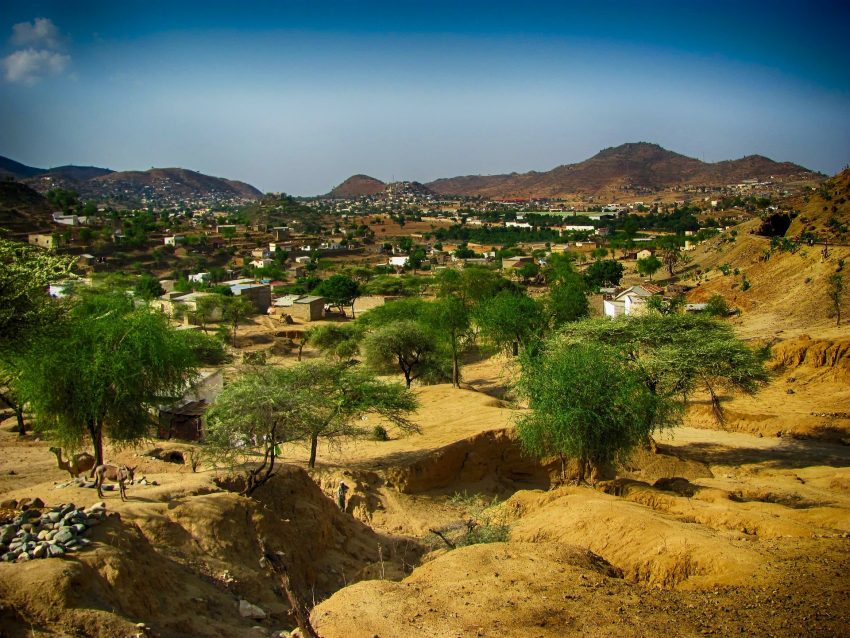
Eritrea is a country in the Horn of Africa, stretching along the Red Sea and bordered by Sudan, Ethiopia, and Djibouti. Its coastline and nearby islands give it a strong maritime character, while inland landscapes range from arid lowlands to cooler highland plateaus. The capital, Asmara, sits in the highlands and serves as the country’s main administrative, cultural, and economic hub.
The country is known for its linguistic and cultural diversity, with multiple ethnic communities and languages spoken across different regions. Daily life reflects a blend of traditions shaped by geography, faith, and local customs, and community ties play an important role in social life. Eritrean cuisine often centers on shared meals, with staples like injera-style flatbreads, stews, and strong coffee traditions that emphasize hospitality.
Eritrea’s economy and livelihoods are closely linked to agriculture, pastoralism, and services, with growing attention to ports, trade, and regional connectivity. Its natural environment includes coastal plains, rugged mountains, and semi-desert areas, creating varied climates and ecosystems within a relatively small area. For visitors and observers alike, Eritrea stands out for its striking scenery, distinctive urban character in Asmara, and the everyday resilience of communities across its diverse regions.
Table of Contents
- History of Eritrea
- Ancient and early medieval eras
- Islamic and regional polities
- Italian colonization
- British administration and the postwar settlement
- Federation undone and annexation
- The independence struggle
- Independence and early statehood
- Border war with Ethiopia
- Prolonged stalemate and internal consolidation
- Rapprochement, new conflicts, and recent developments
- Best Time to Visit Eritrea
- Food and Drink from Eritrea
History of Eritrea
Eritrea’s history is shaped by its Red Sea coastline, highland–lowland geography, and position between the Nile Valley, the Horn of Africa, and Arabia. Over time it has been a crossroads for trade, religion, and empires, and in the modern era a focal point of colonialism, federation, annexation, and a long war for independence.
Ancient and early medieval eras
Archaeological and linguistic evidence points to long-standing human settlement and connections across the Red Sea. The northern Horn’s highlands and coastal plains participated in regional trade networks linking Africa, Arabia, and the Mediterranean world.
From roughly the first millennium BCE into the early centuries CE, the region became intertwined with the rise of complex polities in the northern Horn. The Kingdom of Aksum (centered in what is now northern Ethiopia and Eritrea) emerged as a major power and trading state, with ports on the Red Sea facilitating commerce in ivory, gold, and other goods. Christianity became influential in the Aksumite realm in the 4th century, leaving a deep cultural legacy in the highlands.
As Aksum declined (often associated with shifting trade routes and regional pressures), political authority fragmented. Coastal and lowland areas were increasingly influenced by Red Sea and Islamic networks, while highland communities maintained Christian institutions and local governance traditions.
Islamic and regional polities (7th–19th centuries)
From the 7th century onward, Islam spread along the Red Sea coast and into parts of the lowlands through trade, migration, and religious scholarship. The coast and adjacent areas were drawn into wider Islamic commercial and cultural spheres, while the highlands remained predominantly Christian, creating a long-standing religious and cultural mosaic.
Across these centuries, Eritrea’s territories were not typically unified under a single enduring state. Instead, power shifted among local rulers, highland principalities, lowland sultanates, and external empires. The Ottoman Empire established influence along parts of the Red Sea coast from the 16th century, later administered in practice through Ottoman-Egyptian arrangements. Egyptian expansion in the 19th century also affected coastal and western areas, reflecting the strategic value of Red Sea access.
Italian colonization (1880s–1941)
Italy began acquiring coastal footholds in the 1880s, using them as a base for expansion inland. In 1890, Italy formally declared the Colony of Eritrea, creating a colonial boundary that would later become the modern state’s borders.
Italian rule built ports, roads, and urban infrastructure—especially in Asmara and Massawa—and introduced a colonial economy oriented toward Italian interests. Eritrea became a key node in Italy’s ambitions in the Horn, including the later conquest of Ethiopia in 1935–36 and the creation of Italian East Africa. Colonial development was accompanied by racial hierarchy, land and labor exploitation, and political repression.
British administration and the postwar settlement (1941–1952)
During World War II, British forces defeated Italy in East Africa, and Eritrea came under British Military Administration (1941–1952). This period saw political mobilization and competing visions for Eritrea’s future: independence, partition, or union with Ethiopia. The question became entangled with Cold War geopolitics and regional strategy, including the importance of Red Sea access.
In 1952, the United Nations arranged a federation between Eritrea and Ethiopia. Eritrea was to have its own parliament and autonomy in internal affairs, while Ethiopia controlled defense and foreign policy.
Federation undone and annexation (1952–1962)
The federal arrangement steadily eroded as Ethiopian authorities centralized power. Eritrean political parties and institutions were constrained, and key symbols of autonomy were removed. In 1962, Ethiopia formally annexed Eritrea, dissolving the federation and making Eritrea a province. This act became a decisive catalyst for armed resistance.
The independence struggle (1961–1991)
Armed struggle began in 1961, initially led by the Eritrean Liberation Front (ELF). Over time, internal divisions and ideological debates produced new movements, most notably the Eritrean People’s Liberation Front (EPLF), which became the dominant force.
The war unfolded amid major regional upheavals: Ethiopia’s imperial regime fell in 1974, replaced by the Derg military government, which aligned with the Soviet bloc and prosecuted the war with substantial external support. Eritrean forces developed effective guerrilla and conventional capabilities, built administrative structures in liberated areas, and sustained a long campaign despite severe humanitarian costs, displacement, and periodic famine.
By the late 1980s, the Derg weakened under military pressure and internal crisis. In 1991, the EPLF captured Asmara, effectively ending Ethiopian rule in Eritrea, while allied Ethiopian rebels toppled the Derg in Addis Ababa.
Independence and early statehood (1991–1998)
Eritrea established a transitional government and held an internationally observed referendum in 1993 in which Eritreans overwhelmingly voted for independence. Eritrea joined the United Nations and set out to build state institutions, rebuild war-damaged infrastructure, and define its economic and political system under the leadership that had emerged from the liberation struggle.
Border war with Ethiopia (1998–2000)
Tensions with Ethiopia escalated into full-scale war in 1998, triggered by disputes along the border—most prominently around Badme—alongside broader disagreements over trade, currency, and sovereignty. The conflict caused heavy casualties and mass displacement on both sides.
A ceasefire in 2000 led to the Algiers Agreement, establishing mechanisms for boundary delimitation and claims. Although an international boundary commission later issued a ruling, implementation and normalization were delayed for years, contributing to prolonged militarization and political rigidity.
Prolonged stalemate and internal consolidation (2000s–2017)
The unresolved border situation and national security concerns shaped Eritrea’s domestic trajectory. The state emphasized self-reliance and security, and maintained extensive national service. Political space remained tightly controlled, and many Eritreans left the country over time, forming a large diaspora that became economically and politically significant through remittances and transnational networks.
Rapprochement, new conflicts, and recent developments (2018–present)
In 2018, Eritrea and Ethiopia announced a peace declaration that reopened diplomatic relations and raised hopes for regional integration. Borders briefly opened and contacts resumed, though the pace and depth of normalization later fluctuated.
From 2020, the war in Ethiopia’s Tigray region destabilized the northern Horn and had major humanitarian and political repercussions. Eritrea became deeply implicated in the conflict’s dynamics, and the period reshaped regional alignments and security concerns. In the years since, Eritrea has remained a pivotal actor in Red Sea–Horn geopolitics, while many Eritreans continue to navigate the legacies of war, state-building under pressure, and migration.
Eritrea today is defined by the endurance of its independence project, the strategic importance of its coastline, and the lasting impact of decades of conflict on governance, society, and regional relations.
Best Time to Visit Eritrea
Visiting Eritrea in Winter (Best)
Winter (roughly December to February) is often the most comfortable time to visit Eritrea, especially for exploring Asmara and the central highlands. Days are typically sunny and mild, with cooler evenings, making it ideal for walking tours, café-hopping, and day trips without intense heat. It’s also a strong season for heading to the Red Sea coast if you want warm, beach-friendly weather without the peak summer humidity.
Visiting Eritrea in Spring
Spring (roughly March to May) is a great shoulder season for mixed itineraries—combining the highlands and the coast—before the hottest months arrive. Conditions are generally warm and pleasant, and it’s a good time for scenic drives and outdoor sightseeing. If you’re interested in local culture, keep an eye out for Easter (Fasika), which can be a meaningful time to experience Eritrean traditions, especially in Asmara.
Visiting Eritrea in Summer
Summer (roughly June to August) can be hot, particularly in lowland areas and along the coast, and it may feel more humid near the Red Sea. Travel is still very possible, but it’s best suited to visitors who don’t mind higher temperatures and who plan activities for early mornings and evenings. A major highlight is Eritrea’s Independence Day (May 24) celebrations, which can extend into the early summer period with events and a festive atmosphere in cities.
Visiting Eritrea in Autumn
Autumn (roughly September to November) is another excellent time to visit, as temperatures begin to ease after summer and travel conditions become more comfortable across regions. It’s a good season for city exploration, historical sites, and combining highland and coastal stops without extreme heat. If you’re planning around cultural highlights, Meskel (typically in September) can be a standout festival period, with gatherings and celebrations that offer a memorable look at local traditions.
Food and Drink from Eritrea
Eritrean food is built around communal eating and bold, layered flavors. A typical meal is served on a large round platter lined with injera, a spongy sour flatbread that acts as both plate and utensil. Diners tear off pieces of injera to scoop up stews and salads, making meals social and hands-on. The cuisine reflects the country’s diverse regions and influences from the Horn of Africa and the Red Sea, balancing hearty highland dishes with lighter coastal preparations.
A centerpiece of Eritrean cooking is tsebhi (stew), often slow-simmered with onions, garlic, and a spiced butter or oil base. Popular versions include tsebhi dorho (chicken stew, sometimes served with boiled eggs) and tsebhi siga (beef stew), frequently seasoned with berbere, a warm spice blend that can range from mildly aromatic to quite hot. Lentil and split-pea stews are also common, especially during fasting periods, and are served alongside vegetables like collard greens, cabbage, potatoes, and carrots. Another staple is shiro, a smooth, comforting stew made from ground legumes and spices.
Beyond injera, Eritreans enjoy breads and grains suited to different areas and occasions. Kitcha is a simple, pan-cooked flatbread that can be torn and mixed with spiced butter and berbere to make kitcha fit-fit, a quick, satisfying dish. In some households, you’ll find rice dishes, pasta, or baked breads influenced by historical connections and trade, often paired with stews and fresh salads. Along the coast, seafood—grilled fish, prawns, and calamari—features more prominently, typically seasoned with citrus, chilies, and fragrant spices.
Drinks in Eritrea range from everyday coffee to traditional fermented beverages. Coffee is central to hospitality, often prepared in a ceremonial style where beans are roasted, ground, and brewed in a jebena, then served in small cups with sugar. Tea is also widely enjoyed, sometimes spiced and sweetened. For special occasions, people may serve suwa, a homemade grain beer, or mies, a honey wine, both reflecting long-standing local traditions of fermentation and celebration.