Algeria: The Ultimate Travel Guide 2026
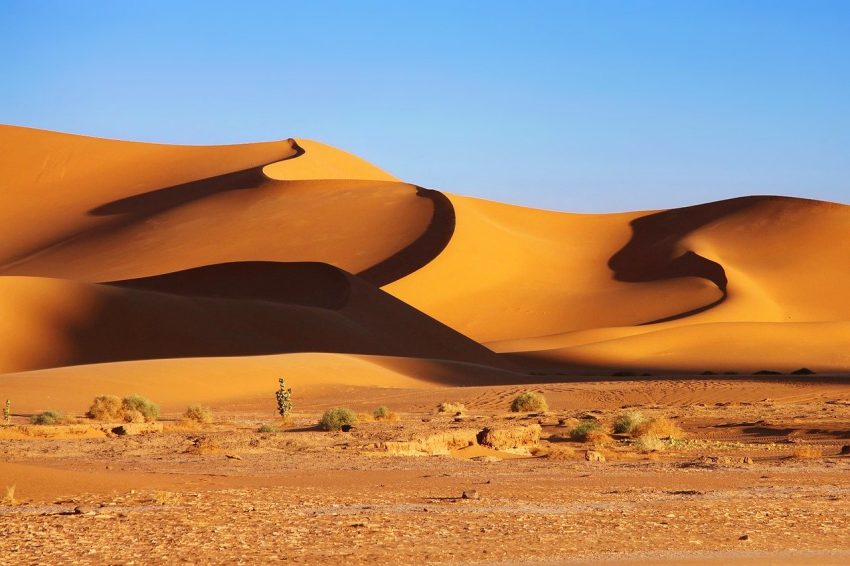
Algeria is the largest country in Africa, stretching from the Mediterranean coast deep into the Sahara Desert. Its landscapes range from lively coastal cities and fertile plains in the north to vast dunes, rocky plateaus, and dramatic mountain ranges farther south. This variety shapes how people live across the country, from seaside neighborhoods to oasis towns.
The capital, Algiers, sits along the coast and is known for its whitewashed buildings, steep streets, and sweeping views over the bay. Arabic is the official language, Tamazight is also official, and French is widely used in daily life, reflecting the country’s multilingual character. Algerian culture is rich and diverse, expressed through music, food, crafts, and regional traditions that differ from one area to another.
Algeria’s economy is strongly linked to its natural resources, especially oil and natural gas, while agriculture, trade, and services play important roles in many regions. The country’s location connects the Mediterranean world with the heart of North Africa, giving it a distinctive blend of coastal and desert influences. Whether you’re drawn by its scenery, cities, or cultural variety, Algeria offers a striking sense of scale and contrast.
Table of Contents
- History of Algeria
- Prehistory and Early Peoples
- Phoenician and Carthaginian Influence
- Numidian Kingdoms and the Roman Era
- Vandal and Byzantine Interludes
- The Islamic Conquests and the Islamization of Algeria
- Medieval Dynasties and Regional Power
- Ottoman Algeria and the Regency of Algiers
- French Conquest and Colonial Rule
- The Algerian War of Independence
- Post-Independence State-Building and One-Party Rule
- Political Opening, Crisis, and the “Black Decade”
- Contemporary Algeria
- Algeria’s Historical Themes
- Best Time to Visit Algeria
- Food and Drink from Algeria
History of Algeria
Prehistory and Early Peoples (before 1000 BCE)
Human presence in what is now Algeria dates back deep into prehistory, with archaeological evidence from the Sahara and the northern coastal regions. Over millennia, shifting climates transformed parts of the Sahara from greener landscapes into desert, influencing settlement patterns and migration. Indigenous Amazigh (Berber) communities gradually became the dominant populations across North Africa, developing distinct languages, social structures, and regional identities.
Phoenician and Carthaginian Influence (c. 1000–146 BCE)
Coastal trading networks expanded as Phoenician merchants established ports and commercial outposts across North Africa. These settlements later fell under the influence of Carthage, which helped integrate the Algerian coast into a wider Mediterranean economy. Inland areas remained largely under Amazigh control, though trade and cultural exchange linked coast and interior.
Numidian Kingdoms and the Roman Era (c. 3rd century BCE–5th century CE)
In the centuries around the Punic Wars, Amazigh political power consolidated into Numidian kingdoms. Numidia became a significant regional force, sometimes allied with and sometimes opposed to Rome. After Rome’s victory over Carthage and subsequent interventions, much of northern Algeria was incorporated into the Roman Empire.
Under Roman rule, cities expanded, agriculture intensified in fertile northern zones, and infrastructure—roads, aqueducts, and urban centers—grew. Latin culture and institutions spread, while local identities persisted. Christianity also gained a strong foothold, producing influential religious figures and movements, alongside periodic conflict and debate within the church.
Vandal and Byzantine Interludes (5th–7th centuries)
Roman authority weakened in the west, and the Vandals established control over parts of North Africa, including sections of coastal Algeria. Later, the Byzantine Empire attempted to restore imperial rule, holding some coastal and urban areas. Political fragmentation increased, and control beyond major centers was often limited.
The Islamic Conquests and the Islamization of Algeria (7th–10th centuries)
Arab-Muslim armies entered North Africa in the 7th century, bringing Islam and new political structures. Over time, Islam spread widely, though the process involved alliances, resistance, and gradual cultural change. Arabic became increasingly influential, especially in administration and religious life, while Amazigh languages and identities remained central across many regions.
A series of dynasties and local powers governed parts of Algeria, reflecting the region’s strategic position between the central Maghreb and Ifriqiya (roughly modern Tunisia) and its connections to trans-Saharan routes.
Medieval Dynasties and Regional Power (11th–15th centuries)
From the 11th century onward, major Amazigh-led dynasties shaped the Maghreb, including the Almoravids and Almohads, whose influence extended across North Africa and into Iberia. Later, successor states and regional rulers competed for control, with shifting capitals, alliances, and trade patterns.
Coastal cities participated in Mediterranean commerce, while inland regions were linked to trans-Saharan trade in gold, salt, and other goods. Religious scholarship and Sufi networks also expanded, helping knit together communities across distances.
Ottoman Algeria and the Regency of Algiers (16th–1830)
In the 16th century, amid Spanish expansion along the North African coast and broader Mediterranean rivalry, Algiers came under Ottoman protection and then Ottoman sovereignty. The Regency of Algiers developed into a powerful political entity centered on Algiers, with varying degrees of control over the interior.
This period featured naval warfare and privateering in the Mediterranean, diplomatic relations with European powers, and a complex internal structure involving Ottoman officials, local elites, and tribal confederations. While formally part of the Ottoman Empire, the regency often operated with substantial autonomy.
French Conquest and Colonial Rule (1830–1954)
France invaded Algiers in 1830, beginning a long and often brutal conquest that extended over decades. Resistance emerged under leaders such as Emir Abdelkader, but French forces gradually imposed control. Algeria became a settler colony, with large numbers of European settlers (pieds-noirs) and extensive land appropriation.
Colonial rule reshaped Algeria’s economy and society: new infrastructure and export-oriented agriculture expanded, while many Algerians faced dispossession, legal inequality, and political exclusion. Cultural and linguistic pressures intensified, and periodic uprisings and protests were met with repression. Over time, reformist, nationalist, and labor movements grew, demanding rights, representation, and ultimately independence.
The Algerian War of Independence (1954–1962)
In 1954, the National Liberation Front (FLN) launched an armed struggle against French rule. The conflict escalated into a major war marked by guerrilla warfare, counterinsurgency, mass displacement, and widespread human rights abuses, including torture and attacks on civilians.
The war deeply polarized both Algeria and France. Negotiations eventually led to the Evian Accords, and Algeria gained independence in 1962. Independence was accompanied by large-scale departure of European settlers and significant upheaval as the new state took shape.
Post-Independence State-Building and One-Party Rule (1962–1988)
After independence, the FLN became the dominant political force. The new government pursued state-led development, land reforms, and nationalization policies, including major control over hydrocarbon resources. Algeria positioned itself as a prominent actor in anti-colonial and non-aligned international politics.
Political life was tightly controlled, and while the state expanded education, healthcare, and infrastructure, it also faced challenges: economic dependence on oil and gas revenues, regional inequalities, and tensions over identity, language, and governance.
Political Opening, Crisis, and the “Black Decade” (1988–2002)
Economic strain and social unrest culminated in major protests in 1988, leading to political reforms and a move toward multiparty politics. In the early 1990s, electoral gains by an Islamist party prompted the military to intervene, halting the electoral process. The result was a devastating civil conflict involving state forces, insurgent groups, and militias.
The 1990s—often called the “Black Decade”—saw extensive violence and trauma across the country. By the early 2000s, the conflict diminished through a combination of security measures and reconciliation initiatives, though the legacy of the period remained profound.
Contemporary Algeria (2000s–present)
In the 2000s, high energy revenues supported public spending and reconstruction, while political power remained concentrated. Over time, economic pressures, unemployment, corruption concerns, and demands for political accountability fueled renewed public activism.
Beginning in 2019, mass protests known as the Hirak called for systemic political change, leading to the resignation of long-time president Abdelaziz Bouteflika. Subsequent years have involved efforts to manage political transition, maintain stability, and address economic diversification, with ongoing debates over governance, freedoms, and the country’s future direction.
Algeria’s Historical Themes
Across its long history, Algeria has been shaped by:
- Its position between the Mediterranean and the Sahara, linking coastal trade and trans-Saharan routes
- The endurance and evolution of Amazigh identities alongside Arab-Islamic cultural influence
- Repeated encounters with empires and external powers, from Rome to the Ottomans to France
- The central role of anti-colonial struggle in modern national identity
- The continuing importance of oil and gas in state capacity and economic policy
Best Time to Visit Algeria
Visiting Algeria in Spring (Best)
Spring (March to May) is one of the most comfortable and rewarding times to visit Algeria. Temperatures are generally mild, landscapes are greener in the north, and it’s ideal for exploring coastal cities and ancient Roman sites without peak summer heat. It’s also a great season for outdoor sightseeing in places like Algiers, Tipasa, and the Kabylie region.
Festival highlight: Ramadan and Eid celebrations can fall in spring (dates vary each year). If they do, evenings can be especially lively with food, family gatherings, and a festive atmosphere after sunset.
Visiting Algeria in Summer
Summer (June to August) is best if your focus is the Mediterranean coast, beach time, and late-night city energy. Inland areas can become very hot, and the Sahara is often extreme, so summer travel is most comfortable along the coast (such as Algiers, Oran, and Annaba) or in higher-elevation areas.
Festival highlight: Algeria’s Independence Day (July 5) is marked nationwide, often with public events and celebrations.
Visiting Algeria in Autumn
Autumn (September to November) brings cooler temperatures and fewer crowds, making it a strong choice for cultural trips and longer overland travel. Early autumn can still be warm, but conditions steadily improve for visiting desert gateway towns and for exploring historic sites and museums in the north.
Festival highlight: Mawlid (the Prophet’s Birthday) may fall in autumn (date varies), and in some areas it’s observed with community gatherings and local traditions.
Visiting Algeria in Winter
Winter (December to February) is a quieter season and can be a good time for city breaks and cultural travel, especially if you prefer cooler weather. Coastal and northern areas can be rainy and chilly, while the Sahara can be pleasantly warm during the day but cold at night—making it suitable for desert trips if you pack for big temperature swings.
Festival highlight: Yennayer (Amazigh New Year, January 12) is a notable cultural celebration in many regions, often featuring traditional foods, music, and community events.
Food and Drink from Algeria
Algerian food and drink reflect a blend of Amazigh (Berber), Arab, Ottoman, and Mediterranean influences, shaped by the country’s varied landscapes from the coast to the Sahara. Bread is central to daily meals, often served with olive oil, harissa, or hearty stews, and families commonly gather around shared dishes. Meals tend to balance grains, legumes, vegetables, and meat, with spices used to build warmth and aroma rather than extreme heat.
Couscous is the best-known staple, typically steamed and topped with vegetables and lamb or chicken, and it appears in both everyday cooking and celebrations. Another beloved dish is chorba, a comforting soup often made with tomatoes, chickpeas, and vermicelli, especially popular during Ramadan. Tajines and slow-cooked stews are common too, alongside dishes like rechta (handmade noodles with chicken and sauce) and chakhchoukha, where torn flatbread is mixed with a rich, spiced broth and meat.
Street food and regional specialties add variety, particularly in cities. Merguez sausages, grilled meats, and sandwiches are widely enjoyed, while coastal areas feature more seafood dishes. Sweets are an important part of hospitality, with pastries made from almonds, honey, and dates, and desserts that highlight orange blossom water, cinnamon, and sesame. Seasonal fruits and nuts also feature prominently, reflecting Algeria’s agricultural diversity.
Tea and coffee anchor Algerian drink culture, often served to welcome guests and mark social moments. Mint tea is especially common, poured from a height and sweetened to taste, while strong coffee is popular in cafés. Fresh juices are widely available, and drinks flavored with citrus or herbs suit the warm climate. In the south, dates and milk-based refreshments are traditional, underscoring the Sahara’s influence on everyday tastes and customs.