Palermo, Italy: The Ultimate Travel Guide 2026
Palermo is a bold, sunlit city where everyday life spills into the streets-open-air markets, baroque facades, and seaside promenades all within easy reach. Set on Sicily’s northwestern coast, it’s a place to come hungry and curious: you can start the day with an espresso and a warm pastry, wander through grand churches and palaces, then end up by the water as the light turns golden over the Tyrrhenian Sea.
What makes visiting Palermo especially rewarding is how quickly the city shifts in mood from one neighborhood to the next. The historic center is dense and walkable, packed with monuments and small lanes, while areas like Politeama/Libertà feel more modern and elegant. You can plan a structured itinerary, but Palermo also shines when you leave space for spontaneous discoveries-an unexpected courtyard, a tiny trattoria, or a street-food stall that becomes the highlight of your day.
Palermo works well for short breaks and longer stays alike. In a long weekend you can cover the essentials-cathedrals, markets, museums, and a beach escape-while a week lets you slow down and add day trips nearby. The city's energy is lively year-round, and its mix of culture, food, and coastal scenery makes it one of the most characterful stops in Italy.
Table of Contents
- History of Palermo
- Palermo in Antiquity: Phoenician Foundations to Roman Rule
- Palermo in the Early Middle Ages: Byzantine, Arab, and Cultural Transformation
- Palermo under the Normans and Hohenstaufen: A Mediterranean Capital
- Palermo from Aragonese to Bourbon Eras: Baroque Grandeur and Social Change
- Palermo in Modern Italy: Unification, War, and Contemporary Renewal
- Best things to do and See in Palermo
- Palermo Cathedral
- Palermo Palazzo dei Normanni & Cappella Palatina
- Palermo Teatro Massimo
- Palermo Quattro Canti & the Baroque Crossroads
- Palermo Fontana Pretoria & Piazza Pretoria
- Palermo Ballarò Market
- Palermo Mercato del Capo
- Palermo Monreale Cathedral
- Palermo Catacombe dei Cappuccini
- Palermo Mondello Beach & Seafront
- 2 Best Day Trips from Palermo
- Where to Stay in Palermo
- Best Time to Visit Palermo
- How to get to Palermo
History of Palermo
Palermo in Antiquity: Phoenician Foundations to Roman Rule
Palermo’s earliest urban roots are typically linked to Phoenician traders who established a strategic port settlement that could serve maritime routes across the central Mediterranean. Its harbor and position made it valuable as a commercial and military node, drawing competing powers over time.
Under Carthaginian influence, Palermo developed as part of a wider Punic network until the Roman period reshaped the city’s administration and economy. Roman rule integrated Palermo into imperial systems of trade and governance, leaving a legacy of urban continuity even as the city’s fortunes rose and fell with broader Mediterranean politics.
Palermo in the Early Middle Ages: Byzantine, Arab, and Cultural Transformation
After the Western Roman Empire’s decline, Palermo passed through phases of control that included Byzantine authority, but the most transformative early-medieval shift came with Arab rule. Palermo expanded significantly in population and urban complexity, becoming a major center of administration, learning, and commerce.
This era influenced the city’s layout, agriculture in surrounding lands, and everyday culture. Elements of language, crafts, and culinary traditions took root, helping form the layered identity that later periods would build upon.
Palermo under the Normans and Hohenstaufen: A Mediterranean Capital
Norman conquest brought Palermo into a period often remembered for its courtly splendor and cultural synthesis. The city became a seat of power where Latin, Greek, and Arab traditions interacted in governance, art, and architecture.
Under subsequent dynasties such as the Hohenstaufen, Palermo remained politically important, though shifting imperial priorities and regional conflicts affected stability. Even so, the city’s reputation as a crossroads of cultures endured.
Palermo from Aragonese to Bourbon Eras: Baroque Grandeur and Social Change
Later medieval and early modern centuries saw Palermo under Aragonese and then Spanish influence, with institutions and aristocratic power shaping civic life. Wealth and patronage fueled building campaigns, and the city accumulated churches, palaces, and public spaces that signaled status and devotion.
In the Bourbon period, reforms and tensions reflected wider European currents. Palermo experienced both modernization efforts and persistent inequality, setting the stage for political upheavals that would follow.
Palermo in Modern Italy: Unification, War, and Contemporary Renewal
The 19th century brought revolutionary movements and the push toward Italian unification, with Palermo playing a visible role in the era’s political struggles. Industrial and infrastructural changes arrived unevenly, while social challenges remained pronounced.
During World War II, Palermo suffered heavy damage, followed by difficult postwar decades marked by rapid development and contested urban growth. In more recent years, restoration projects, cultural initiatives, and renewed attention to public spaces have helped Palermo reassert itself as a major cultural destination.

Moira & Andy
Hey! We're Moira & Andy. From hiking the Camino to trips around Europe in Bert our campervan — we've been traveling together since retirement in 2020!
Visiting Palermo for the first time and wondering what are the top places to see in the city? In this complete guide, I share the best things to do in Palermo on the first visit. To help you plan your trip, I have also included an interactive map and practical tips for visiting!
This website uses affiliate links which earn a small commission at no additional cost to you.
Best things to do and See in Palermo
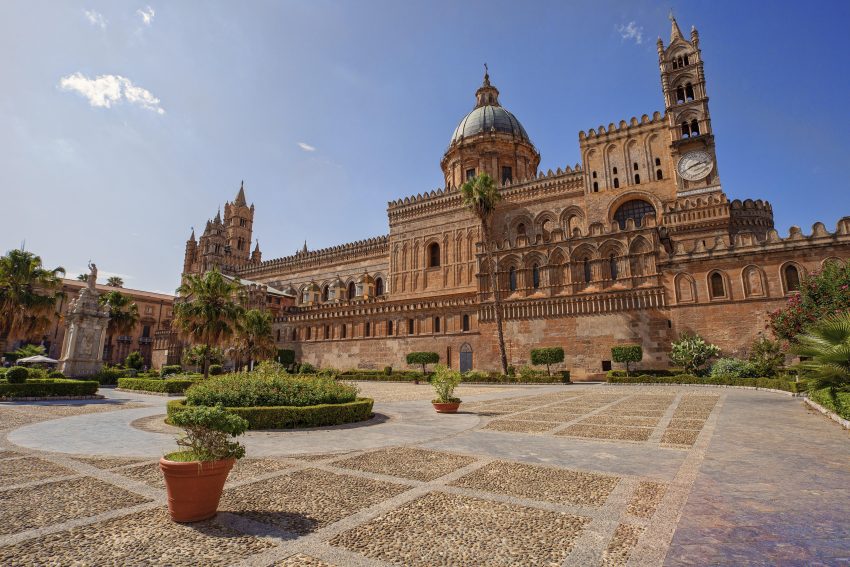
1. Palermo Cathedral (Cattedrale di Palermo)
Palermo Cathedral is a must for understanding the city’s layered identity through architecture—its exterior is a striking mix of styles, and the interior feels grand yet contemplative. Give yourself time to walk around the building to appreciate the different façades and details that reveal centuries of additions.
The rooftop/terrace areas (when accessible) are a highlight for panoramic views over domes, rooftops, and distant hills. It’s a great first stop because it orients you geographically and visually, helping you plan the rest of your days.
Entry: Cathedral interior is typically free; terraces/treasury/crypt may require a ticket (prices vary by option). Hours: Generally open daily with reduced hours during services; check on arrival for same-day access.
2. Palermo Palazzo dei Normanni & Cappella Palatina
This complex is one of Palermo’s most celebrated sights, pairing royal power with extraordinary artistry. The Cappella Palatina’s mosaics are the star—golden, luminous, and richly detailed—creating an atmosphere that feels both intimate and monumental.
Arrive early if you can, as it’s popular and can get crowded. Beyond the chapel, the palace areas open to visitors add context about governance and the city’s role in Mediterranean politics, without needing a deep dive to be impressed.
Entry: Ticketed (prices vary by route/areas open). Hours: Typically open most days; hours can change for official events—verify on the day.
3. Palermo Teatro Massimo
Teatro Massimo is an icon of Palermo—imposing, elegant, and central to the city’s cultural life. Even if you don’t attend a performance, a guided visit is worthwhile for the interiors, the scale of the auditorium, and the behind-the-scenes stories that bring the building to life.
In the surrounding area, you’ll find a pleasant evening atmosphere with cafés and passeggiata energy. Pair a daytime visit with a nighttime performance if schedules align for a classic Palermo experience.
Entry: Guided tour ticketed; performance tickets vary by seat and program. Hours: Tours run on set schedules; performance times are usually evenings—check the current calendar.
4. Palermo Quattro Canti & the Baroque Crossroads
Quattro Canti is Palermo’s theatrical urban “stage set,” where four ornate façades frame a crossroads in the historic center. It’s a quick stop, but it’s also a perfect place to pause and watch the city move—locals, visitors, scooters, and street life converging.
Use it as a hub: from here you can easily walk to major churches, markets, and historic streets. Early morning is calmer for photos; late afternoon is best for atmosphere.
Entry: Free. Hours: Always accessible.
5. Palermo Fontana Pretoria & Piazza Pretoria
The Fontana Pretoria is one of Palermo’s most photogenic landmarks, with sculpted figures and a dramatic setting that contrasts with the surrounding streets. The square feels like a small open-air gallery, and it’s easy to combine with nearby churches and lanes.
Spend time circling the fountain to catch different angles and details. It’s also a good spot to reset your route—close to other highlights without requiring a long detour.
Entry: Free to view. Hours: Always accessible.
6. Palermo Ballarò Market (Street Food & Daily Life)
Ballarò is Palermo at its most immediate: loud calls, stacked produce, sizzling grills, and a constant flow of locals shopping. It’s the place to try classic street foods and to see how the city’s everyday rhythms shape the historic center.
Go hungry and be open-minded—sampling a few small bites is better than committing to one big meal. Late morning into lunchtime is typically the liveliest window, while afternoons can be quieter as stalls close.
Entry: Free. Hours: Generally mornings to early afternoon; exact stall times vary.
7. Palermo Mercato del Capo (Food Stalls & Neighborhood Wandering)
The Capo market area is another essential Palermo experience, slightly different in feel from Ballarò, with a strong mix of food stalls and neighborhood streets. It’s excellent for grazing—seafood, fried snacks, seasonal fruit—and for casual photography.
Because it’s close to major monuments, it fits neatly into a half-day plan. Combine it with a nearby church visit, then linger for a simple lunch built from whatever looks best at the moment.
Entry: Free. Hours: Typically mornings to early afternoon; many stalls close later in the day.
8. Palermo Monreale Cathedral (Duomo di Monreale) – Easy Trip Within 10 km
Just outside Palermo, Monreale is one of the most rewarding short trips you can do, famous for its breathtaking mosaic-covered interior. The effect is immersive: walls shimmering with gold and narrative scenes that feel almost cinematic.
The hilltop setting also brings cooler air and wide views back toward Palermo. Plan for a relaxed half-day including the cathedral, a walk nearby, and a coffee with a view.
Entry: Cathedral access may be free or ticketed depending on areas; cloister is typically ticketed (prices vary). Hours: Usually open daily with breaks around services—confirm on arrival.
9. Palermo Catacombe dei Cappuccini (Capuchin Catacombs)
This is one of Palermo’s most unusual and thought-provoking visits. The catacombs present a stark, sometimes unsettling look at historical attitudes toward death and remembrance, with preserved remains displayed along corridors.
It’s not for everyone, but for many travelers it becomes an unforgettable cultural experience precisely because it challenges expectations. Go with respect, allow time to process, and consider pairing it with a lighter activity afterward.
Entry: Ticketed (prices vary). Hours: Typically open daily with set closing times; check locally as schedules can change.
10. Palermo Mondello Beach & Seafront
Mondello is Palermo’s classic beach escape—pale sand, clear water, and a lively seaside strip. It’s ideal when you want to balance churches and museums with a swim and a long, easy lunch by the sea.
In peak season, it can be busy, and parts of the beach are managed by lidos with sunbed rentals. Go early for calmer water and easier parking/transport, or late afternoon for a gentler pace and sunset light.
Entry: Public beach is free; lidos charge for umbrellas/sunbeds (varies by season). Hours: Beach access anytime; lido hours vary seasonally.