Ta' Kola Windmill, Victoria (Rabat), Gozo
Windmill in Victoria (Rabat), Gozo
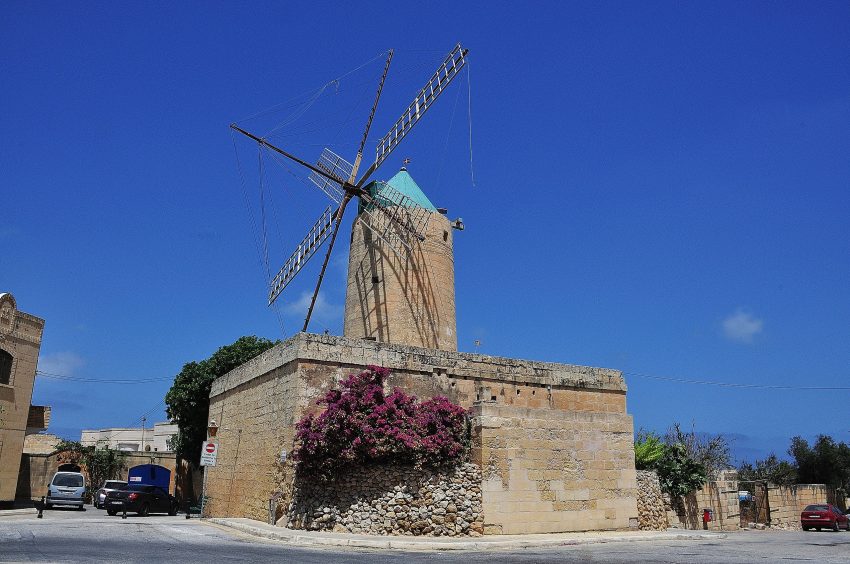
Ta' Kola Windmill is one of those places that instantly makes you feel like you've slipped behind the scenes of everyday Gozo. Set right in the village of Xagħra, it's a beautifully preserved stone windmill where the “museum” part feels lived-in: workshops, tools, and living rooms arranged the way they once were, with the heavy mechanics of milling still at the heart of the building. It's one of the things to do in Xagħra when you want something that's small-scale, atmospheric, and genuinely local.
What I love most is how easy it is to weave into a wider walking tour of Xagħra, especially if you're already heading to the nearby Ġgantija Temples. The windmill is compact, but it's rich in detail-perfect for slowing down, noticing the craft behind daily life, and appreciating how much ingenuity went into feeding an island community before modern industry.
Table of Contents
- History and Significance of the Ta’ Kola Windmill
- Things to See and Do in the Ta’ Kola Windmill
- How to Get to the Ta’ Kola Windmill
- Practical Tips on Visiting the Ta’ Kola Windmill
- Where to Stay Close to the Ta’ Kola Windmill
- Is the Ta’ Kola Windmill Worth Visiting?
- For Different Travelers
- FAQs for Visiting Ta’ Kola Windmill
- Nearby Attractions to the Ta’ Kola Windmill
History and Significance of the Ta’ Kola Windmill
Ta' Kola Windmill dates to the Knights of St John era, when windmills were critical infrastructure rather than picturesque landmarks. In an age when bread and flour were essentials shaped by weather and harvests, a working mill was a community lifeline-one that connected rural farming to village life through a very practical kind of technology.
The windmill is closely associated with its last miller, whose tools and working environment remain part of the visit today. That’s what gives the site its particular pull: it doesn’t just explain milling in abstract terms, it shows the human scale of it-maintenance, repairs, storage, and the daily rhythm of a household that revolved around wind, grain, and demand.
As a museum space, it also helps anchor Xagħra’s story beyond prehistory. Pairing Ta’ Kola with the temples nearby creates a rare, satisfying timeline in a single village-moving from ancient monumentality to the tactile, domestic reality of more recent Gozitan life.
Things to See and Do in the Ta’ Kola Windmill
Start on the lower levels where the workshops set the tone. The tools and workbenches make it clear that a miller wasn’t only operating machinery-he was also a problem-solver, keeping complex moving parts in shape and improvising repairs as needed. It’s the kind of detail that makes the visit feel grounded rather than “displayed.”
As you climb, look out for the way the interior shifts from work to home. The recreated living quarters-simple rooms, everyday objects, and practical furnishings-add warmth to the story and help you picture what it meant to live inside your workplace, with family life shaped by the same wind that powered the sails.
Save a little time for the upper sections where the milling mechanism is most impressive. Seeing the stones and the connected components in situ makes the process click, and it’s easy to imagine the sound and vibration of the mill when conditions were right. If you’re visiting around golden hour, the village streets outside feel especially photogenic after the atmospheric interior.
How to Get to the Ta’ Kola Windmill
Most visitors fly into Malta International Airport (MLA) and then continue to Gozo by ferry via the Ċirkewwa terminal (or the fast ferry from Valletta to Mġarr, Gozo, depending on season and schedules). For the best deals and a seamless booking experience, check out these flights to Victoria (Rabat), Gozo on Booking.com. From Mġarr Harbour on Gozo, you can take a bus or a quick taxi up to Xagħra, which is one of the island’s most straightforward villages to reach.
Malta doesn’t have a passenger train network, so your public-transport plan is all about buses (or taxis/ride-hailing) once you’re on the islands. Train schedules and bookings can be found on Omio. On Gozo, Victoria (Rabat) is the main hub for buses, so it's usually easiest to route through there and then ride onward to Xagħra before finishing on foot.
Driving is also simple, especially if you want the flexibility to combine the windmill with Ramla Bay, coastal viewpoints, and a few smaller caves or chapels without clock-watching for buses. Parking is typically on village streets nearby, and the final approach is an easy walk.
Practical Tips on Visiting the Ta’ Kola Windmill
- Entrance fee: Adults (18+): €10; Youths (12–17): €8; Seniors (60+): €8; Students & concessions: €8; Children (6–11): €6; Infants (1–5): Free.
- Opening hours: Daily: 09:00–17:00. Closed on 24 December, 25 December & 31 December; 01 January; Good Friday.
- Official website: https://heritagemalta.mt/explore/ta-kola-windmill/
- Best time to visit: Go mid-morning for a calm, unhurried look at the exhibits, or late afternoon if you want softer light outside and an easy transition to a nearby sunset stop.
- How long to spend: Around 30-45 minutes works well for most travelers; allow up to an hour if you like reading displays and taking your time on the upper levels.
- Accessibility: Expect stairs and tight interior passages; some areas are not suitable for wheelchairs or anyone who struggles with steep steps.
- Facilities: It’s a compact site, so plan for cafés and longer breaks in Xagħra’s centre; combine your visit with nearby attractions for a fuller half-day.
Where to Stay Close to the Ta’ Kola Windmill
If you want maximum convenience for island-hopping and bus connections, base yourself in Victoria (Rabat); if your trip is focused on archaeology, countryside walks, and a slower village feel, staying in or near Xagħra makes the most sense.
For a comfortable village stay close to the windmill and Ġgantija, consider Cornucopia Hotel, a well-established option with a relaxed garden atmosphere that suits longer stays. Another strong Xagħra pick is The Segond Hotel, which is handy for walking to local restaurants and sights while still feeling quiet at night. If you’d rather be right in the island’s central hub, The Duke Boutique Hotel is ideal for easy buses, evening dining, and quick access to the Cittadella.
Is the Ta’ Kola Windmill Worth Visiting?
Yes-especially if you enjoy places that feel intimate, specific, and rooted in everyday history rather than grand spectacle. It’s a short visit, but it adds texture to your Gozo itinerary, and it pairs brilliantly with Ġgantija by giving you a very human-scale counterpoint to the temples’ epic time depth.
What Other Travellers Say...

Ta' Kola Windmill in Xagħra is a well-preserved traditional windmill from the 1700s that now serves as a small museum showcasing the grist mill and former living quarters; visitors say it's quaint, interesting, and worth a stop—often combined with nearby temple entry, staffed by friendly attendants, with short waits and free entry available with some ruin tickets, and it's just a short walk from the Ġgantija Temples.


For Different Travelers
Families with Kids
This is a good “short-and-interesting” stop for families, because the rooms change quickly as you climb and there’s always something concrete to point to-tools, mechanisms, stairs, and the idea of a home inside a windmill. It works best as part of a two-stop plan (windmill plus Ġgantija, or windmill plus a beach), so children don’t feel like it’s too museum-heavy.
If you’re visiting with smaller kids, treat it as a supervised exploration: the appeal is in the winding interior and the story of how flour was made, but the stairs and tight corners mean it’s not a free-roam kind of place. A snack break in Xagħra afterwards is the perfect reset.
Couples & Romantic Getaways
For couples, Ta’ Kola is an easy, charming interlude-quiet, atmospheric, and full of small details that spark conversation. It’s the kind of place where you can slow down for 40 minutes and then wander out into village streets that still feel distinctly Gozitan rather than built around tourism.
If your trip leans romantic, pair this visit with a leisurely lunch in Xagħra and then an afternoon at Ramla Bay or a coastal viewpoint. The day feels varied without being rushed, and you get that satisfying mix of culture and scenery.
Budget Travelers
Ta’ Kola works well for budget itineraries because it’s compact, walkable, and easy to bundle with nearby attractions, so you’re not spending extra on transport for a single quick stop. Plan your day around one village and you’ll save both time and money while still seeing a lot.
If you're using buses, route through Victoria and aim to cluster Xagħra sights together-windmill, Ġgantija, and one of the nearby caves-before heading back. That way you're maximizing value without turning the day into a logistics exercise.
History Buffs
This is a small museum, but it’s a rewarding one for anyone who cares about lived history-the kind that explains how communities actually functioned. The combination of workshop spaces and domestic rooms makes the site feel specific rather than generic, and it’s a rare chance to see rural life interpreted through an intact working environment.
For deeper context, visit after Ġgantija rather than before. You’ll appreciate the contrast more: from monumental prehistory to the practical technologies that kept a rural community running, all within the same village landscape.
FAQs for Visiting Ta’ Kola Windmill
Getting There
Tickets & Entry
Visiting Experience
Tours, Context & Itineraries
Photography
Accessibility & Facilities
Food & Breaks Nearby
Safety & Timing
Nearby Attractions to the Ta’ Kola Windmill
- Ġgantija Archaeological Park: A UNESCO-listed temple complex that’s the essential pairing with the windmill for a layered Xagħra visit.
- Ramla Bay: Gozo’s most famous red-gold beach, ideal for a swim or sunset stroll after culture-heavy sightseeing.
- Xerri’s Grotto: A small limestone cave in Xagħra with dramatic formations that makes an easy, quick add-on.
- Ninu’s Cave: Another compact cave experience nearby, perfect if you want a second underground stop without a big detour.
- The Cittadella (Victoria): Gozo's historic fortified centre, great for panoramic views, museums, and an evening wander before dinner.
The Ta' Kola Windmill appears in our Complete Guide to Visiting Victoria (Rabat), Gozo!

Moira & Andy
Hey! We're Moira & Andy. From hiking the Camino to trips around Europe in Bert our campervan — we've been traveling together since retirement in 2020!
This website uses affiliate links which may earn a commission at no additional cost to you!
Planning Your Visit
Daily: 09:00-17:00.
Closed on 24 December, 25 December & 31 December; 01 January; Good Friday.
Adults (18+): €10; Youths (12-17): €8; Seniors (60+): €8; Students & concessions: €8; Children (6-11): €6; Infants (1-5): Free.
Nearby Attractions
- Ggantija Temples (0.1) km
Historic Site - Cathedral Museum (2.4) km
Museum - Gozo Cathedral (2.5) km
Cathedral - Gozo’s Citadel (Ċittadella) (2.5) km
Castle - Gozo Museum of Archaeology (2.5) km
Museum - The Old Prison (2.5) km
Historic Building - Tal-Mixta Cave (2.5) km
Cave - Gozo Aqueduct (3.4) km
Aqueduct - Xwejni Salt Pans (3.8) km
Natural Phenomenon - Ta’ Sopu Watchtower (3.9) km
Tower