Skofja Loka, Ljubljana
Town near Ljubljana
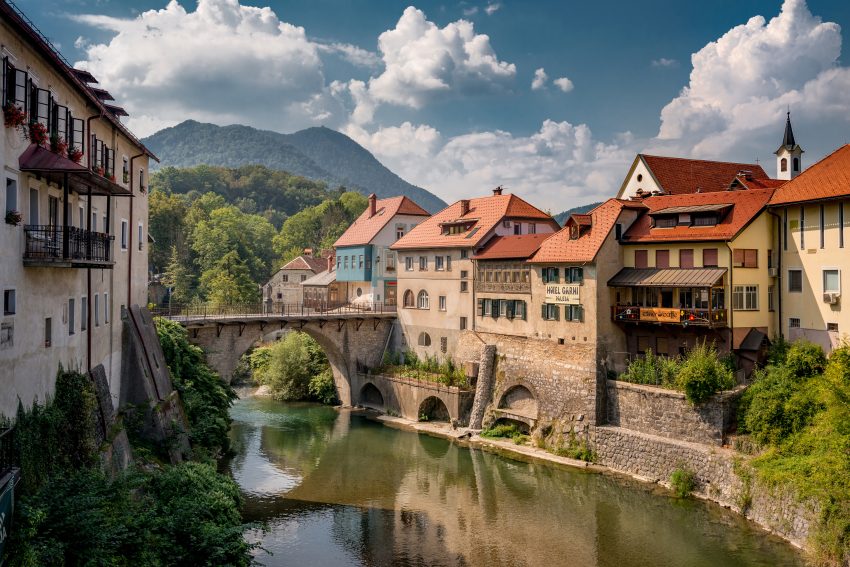
Škofja Loka is the kind of small town that makes you slow down. Tucked where the Poljanska and Selška rivers meet, about 25 kilometres northwest of Ljubljana, it feels like a perfectly framed medieval painting: pastel façades, cobbled streets, a stone bridge, and a castle watching over it all from a wooded hill. First mentioned in 973 AD, it has grown and rebuilt over the centuries, but the historic centre remains wonderfully intact, with a calm, lived-in atmosphere rather than a theme-park feel.
The Old Town is the heart of the experience, a compact maze of alleyways, arcades, and handsome townhouses that still carry hints of their medieval and Baroque past. From the Capuchin Bridge, one of the oldest preserved stone bridges in Central Europe, you get classic views of the old street line and castle above. Up on the hill, Škofja Loka Castle guards the town and now houses the Loka Museum, which pulls together stories of local crafts, folk costumes, and regional history. Between the setting, the architecture, and the traditions that still thrive here, Škofja Loka easily ranks as one of the best places to visit in Škofja Loka’s wider region for travellers who like places with depth as well as beauty.
History and Significance of Škofja Loka
Škofja Loka’s origins stretch back over a thousand years, with the town first recorded in 973 AD when it was granted to the Bishops of Freising. For centuries, it was administered as a bishop’s estate, and that long ecclesiastical rule left a strong imprint on its layout and architecture. The meeting of two rivers made it a natural hub for trade and craft, while the castle on the hill provided both protection and a visible symbol of authority. Fires and earthquakes, including major damage in the 16th and 19th centuries, repeatedly reshaped the town, but careful rebuilding preserved its medieval street pattern and many historic façades.
The Old Town you see today is one of the best-preserved medieval centres in Slovenia. Narrow streets, small squares, and tall townhouses with arcades and painted details all speak to a period when merchants and craftsmen lived above their workshops and the town was an important regional market. The Capuchin Bridge, dating from the 14th century, is a reminder of Škofja Loka’s long-standing role as a river crossing and transport node, while the castle above the town reflects the need to control routes and protect the settlement below.
Culturally, Škofja Loka is famous for the Škofja Loka Passion Play (Škofjeloški pasijon), the oldest preserved dramatic text in Slovene. Staged as a vast community performance roughly every six years, it has been recognised by UNESCO as an example of intangible cultural heritage. This tradition, alongside festivals, craft fairs, and seasonal events, shows that Škofja Loka is not just a museum-piece town but a place where historical identity continues to be performed and renewed.
Things to See and Do in Škofja Loka
Start in the Old Town, where Mestni trg (Town Square) and Spodnji trg (Lower Square) form the core of the historic centre. Take time to notice the façades: many houses are centuries old, with arched entrances, decorative details, and coats of arms that hint at former owners. Slip into side alleys and arcades to find small shops, cafés, and quiet courtyards; even a short wander can reveal fresco fragments, carved doorframes, and glimpses of the rivers flowing just beyond the houses.
Make your way to the Capuchin Bridge, whose simple stone arch has spanned the Poljanska River since the 14th century. From here, you get one of the best views of Škofja Loka Castle above the town, as well as postcard angles of the houses that line the riverbank. The bridge itself feels like a hinge between past and present: traffic may have changed from carts to cars and pedestrians, but the basic rhythm of crossing into the town remains the same.
Then head up to Škofja Loka Castle. The walk is short but steep, rewarded by broad views of the town, rivers, and surrounding hills. Inside, the Loka Museum brings together archaeological finds, historical artefacts, traditional costumes, and craft exhibits that explain how people in the region lived and worked over the centuries. Temporary exhibitions and occasional events-concerts, workshops, performances-add a contemporary layer to the story. Depending on when you visit, you may also encounter smaller festivals or cultural events in the town below, from folk music and local food fairs to historical celebrations linked to the Passion Play tradition.
How to Get to Škofja Loka
Škofja Loka is about 25 kilometres northwest of Ljubljana, making it an easy half-day or full-day outing from the capital.
If you are arriving by air, the nearest airport is Ljubljana Jože Pučnik Airport, which lies roughly between Ljubljana and Škofja Loka and offers convenient road connections to both. For the best deals and a seamless booking experience, check out these flights to Ljubljana on Booking.com. From the airport, you can hire a car, take a taxi, or arrange a transfer that brings you directly to the town.
By train or bus, connections from Ljubljana are straightforward. Regional trains and frequent buses run from the capital toward Škofja Loka or nearby stops, with journey times typically under an hour depending on the service.You can easily check schedules and book tickets through the Slovenian Railways. However, for a smoother experience, we recommend using Omio, which simplifies the booking process and lets you compare prices and schedules all in one place. From the station or bus stop, it is a short walk into the Old Town, with the castle hill clearly visible as your landmark.
If you are driving, well-maintained roads link Ljubljana to Škofja Loka in around 30 minutes, depending on traffic. Parking is available on the edges of the historic centre; from there, you can easily explore the Old Town and castle on foot.
Practical Tips on Visiting Škofja Loka
- Suggested tips: Wear comfortable shoes-the Old Town streets are cobbled and the walk up to the castle involves a short uphill stretch.
- Best time to visit: Spring and autumn offer mild weather and fewer crowds, while summer brings livelier streets and more frequent events.
- Entrance fee: Entry to the Old Town is free; expect a modest fee (often under €10) for Škofja Loka Castle and the Loka Museum, with discounts for children, students, and families.
- Opening hours: The Old Town is accessible at all times; the castle and museum keep regular daytime hours, typically closing in the late afternoon.
- How long to spend: Plan at least half a day to explore the Old Town and castle; a full day allows time for a relaxed lunch, museum visit, and short walks in the surrounding hills.
- Accessibility: The historic centre is compact but includes cobbles and some slopes; the path to the castle is uphill and may be challenging for visitors with reduced mobility.
- Facilities: You will find cafés, restaurants, small shops, and basic services in and around the main squares; public restrooms are usually available near central areas or in cultural venues.
- Photography tip: For classic shots, photograph the town from the castle terrace, or use the Capuchin Bridge to frame views of the Old Town and castle; early morning and late afternoon light are especially flattering.
- Guided tours: Local guides and information centres can help arrange tours focused on medieval history, the Passion Play, or architectural highlights if you want deeper context.
- Nearby food options: Traditional inns and cafés in the Old Town serve local dishes, pastries, and coffee, making it easy to combine sightseeing with a leisurely meal.
Where to Stay close to Škofja Loka
If you decide to linger, staying in or near Škofja Loka lets you enjoy the town after day-trippers have gone and the streets fall quiet. In the historic centre, Hotel Garni Paleta offers a cosy riverside stay within a short walk of the main squares and the path up to the castle. For a more countryside feel just outside town, Turistična Kmetija Megušar provides a homely, rural atmosphere while still being only a few minutes' drive from the Old Town. Travellers looking for a base that also works well for trips back into Ljubljana might choose Hotel Vodnik, which sits between the capital, Škofja Loka, and the airport, convenient for a broader exploration of central Slovenia.
Is Škofja Loka Worth Visiting?
Škofja Loka is definitely worth visiting, especially if you want to see a smaller Slovenian town that has kept its medieval character without feeling overrun. The combination of castle, rivers, stone bridge, frescoed façades, and a genuine cultural life built around traditions like the Passion Play gives the town a depth that reveals itself slowly as you wander. It works beautifully as a day trip from Ljubljana, but it is also the kind of place where an overnight stay rewards you with quiet evenings, misty mornings, and the sense that you are briefly living inside a Central European storybook.
What Other Travellers Say...
Reviews Summary
Škofja Loka is a compact, historic town in Slovenia whose name suggests a picturesque setting; visitors can expect the character of a traditional Slovenian settlement with narrow streets and local charm.
FAQs for Visiting Škofja Loka
Nearby Attractions to Škofja Loka
- Poljanska and Selška Valleys - Scenic valleys leading into the hills around Škofja Loka, ideal for gentle drives, cycling, and village walks.
- Ljubljana - Slovenia's capital city, about 25 kilometres away, offering museums, markets, and riverside cafés.
- Jamnik Church - A hilltop church near Kranj with wide views of the Alps and rolling countryside, popular with photographers.
- Kranj - Historic town to the northeast with its own old centre perched above a river canyon and several cultural sites.
- Sveti Jošt nad Kranjem - A popular hiking destination with a church and panoramic views, easily reachable from the Škofja Loka and Kranj area.
The Skofja Loka appears in our Complete Guide to Visiting Ljubljana!

Moira & Andy
Hey! We're Moira & Andy. From hiking the Camino to trips around Europe in Bert our campervan — we've been traveling together since retirement in 2020!
This website uses affiliate links which may earn a commission at no additional cost to you!
Planning Your Visit
The Old Town is accessible at all times; the castle and museum keep regular daytime hours, typically closing in the late afternoon.
Entry to the Old Town is free; expect a modest fee (often under €10) for Škofja Loka Castle and the Loka Museum, with discounts for children, students, and families.
Nearby Attractions
- Franciscan Church of the Annunciation (20.1) km
Church - Congress Square (20.1) km
Square - Preseren Square (20.1) km
Square - Triple Bridge (Tromostovje) (20.1) km
Bridge - Kresija Palace (20.2) km
Palace - Ljubljana Cathedral (20.3) km
Cathedral - Ljubljana Town Hall (20.3) km
Town Hall - Cobblers' Bridge (20.3) km
Bridge - Cankarjevo Riverside (20.3) km
Walk - Dragon Bridge (20.3) km
Bridge