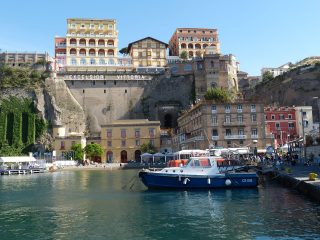
San Martino Monastery, Naples
Monastery and Museum in Naples

High above the chaos of Naples, the Certosa di San Martino crowns the Vomero hill alongside Castel Sant'Elmo, looking out over the Gulf, Vesuvius, and the jumble of rooftops below. Once a secluded Carthusian monastery founded in 1368 under Queen Joan I and dedicated to St Martin of Tours, it is now one of the top sights in Naples for travellers who love a mix of big views, quiet cloisters, and rich history. The pale stone complex feels almost like a small village in itself, with courtyards, terraces, a church, and gardens all wrapped in crisp monastic architecture.
Over the centuries, the Certosa was expanded, rebuilt, and refined, with major works in the early 16th century and a dramatic Baroque transformation in 1623 led by architect and sculptor Cosimo Fanzago. Suppressed during the French occupation in 1799 and finally confiscated by the Italian state in 1866, it has since been reborn as the National Museum of San Martino. Today, the complex hosts extraordinary collections from the Spanish and Bourbon periods and some of the finest presepe (Nativity scenes) in the world, making it a highlight of any walking tour of Naples that ventures up to Vomero.
Table of Contents
- History and Significance of the Certosa di San Martino
- Things to See and Do in the Certosa di San Martino
- How to Get to the Certosa di San Martino
- Practical Tips on Visiting the Certosa di San Martino
- Where to Stay close to the Certosa di San Martino
- Is the Certosa di San Martino Worth Visiting?
- FAQs for Visiting Certosa di San Martino
- Nearby Attractions to the Certosa di San Martino
History and Significance of the Certosa di San Martino
The Certosa di San Martino was founded in 1368, when Queen Joan I chose the hilltop site high above Naples for a new Carthusian monastery. Dedicated to St Martin of Tours, it was designed as a place of contemplation, silence, and prayer, yet it always had a strong visual presence, dominating the skyline alongside the neighbouring fortress that would become Castel Sant'Elmo. In medieval Naples, the certosa stood as a powerful symbol of devotional life watching over the busy port city below.
The complex did not remain static for long. Early 16th-century expansions enlarged the monastic buildings and adapted them to new needs, while the 17th century brought a decisive transformation. In 1623, the great artist-architect Cosimo Fanzago was commissioned to remodel the Certosa, giving it much of the layout and Baroque character we see today. Fanzago’s interventions, from decorative stonework to redesigned spaces, turned the monastery into a masterpiece of southern Italian Baroque set within a medieval shell.
History took a harsher turn in 1799, when the French occupation of Naples led to the suppression of the monastery and the expulsion of the Carthusians. Although the monks tried repeatedly to return in the decades that followed, their final attempt in 1866 ended with the Italian state definitively confiscating the property. The former monastery was gradually converted into a museum dedicated to the history and culture of Naples under the Spanish and Bourbon dynasties, preserving the architecture while filling its rooms with art, artifacts, and spectacular presepe that tell the story of the city from above.
Things to See and Do in the Certosa di San Martino
A visit usually begins with the approach: as you enter the Certosa, you pass through courtyards and arcades that still feel monastic in their quiet geometry. The main church and its chapels are richly decorated, reflecting centuries of patronage and artistic commissions that contrast with the Carthusian vow of simplicity. Marble inlays, painted ceilings, and sculptural details show how artists like Cosimo Fanzago integrated Baroque exuberance into a space originally designed for silence and prayer.
The National Museum of San Martino spreads through former monastic spaces, displaying an impressive range of artifacts from the Spanish and Bourbon periods. You’ll find paintings, furniture, uniforms, maps, ship models, and documents that chart Naples’ political and maritime history, helping you understand how the city functioned as a major Mediterranean capital. One of the museum’s most celebrated sections is the presepe collection: intricate Nativity scenes filled with hundreds of tiny figures, animals, and everyday life details that turn biblical stories into miniature Neapolitan street scenes.
Don't miss the terraces and viewpoints, which are among the most spectacular in Naples. From the belvedere you can admire sweeping panoramas of the historic centre, the bay, Vesuvius, and the surrounding hills, with Castel Sant'Elmo looming just above. Cloisters and gardens offer quieter corners to sit and absorb the atmosphere, while the long corridors and stairways remind you that this was once a self-contained world of prayer. The combination of architecture, collections, and unforgettable views makes the Certosa di San Martino one of the must-see places in Naples for visitors who want a broader perspective-both literally and historically-on the city.
How to Get to the Certosa di San Martino
The Certosa di San Martino sits on the Vomero hill, just below Castel Sant'Elmo, above the historic centre of Naples. If you arrive by air at Naples International Airport (Capodichino), taxis, rideshares, and shuttle services can bring you into the city and up toward Vomero, or you can connect first to central areas and then continue by funicular or bus to the hilltop. For the best deals and a seamless booking experience, check out these flights to Naples on Booking.com.
From Napoli Centrale railway station at Piazza Garibaldi, you can take the metro or buses into the city centre and then use one of the funicular lines (such as the Montesanto or Chiaia funiculars) to reach Vomero; from the upper stations, it's a short uphill walk to the Certosa and Castel Sant'Elmo. Use Omnio to easily compare schedules, book train tickets, and find the best prices all in one place for a hassle-free journey across Italy. If you enjoy walking and don’t mind a climb, there are also stairways and pedestrian routes that link the lower city to the hill, offering changing views as you ascend.
If you are travelling by car, follow signs to Vomero and look for parking garages or on-street spaces near the fortress and certosa, keeping in mind that hill roads can be narrow and parking limited at busy times. If you are looking to rent a car in Italy I recommend having a look at Discover Cars, first, as they compare prices and review multiple car rental agencies for you. Once parked, it's only a brief walk through residential streets and viewpoints to reach the entrance of the Certosa di San Martino.
Practical Tips on Visiting the Certosa di San Martino
- Suggested tips: Combine your visit to the Certosa with nearby Castel Sant'Elmo for a full hilltop experience of art, history, and views.
- Best time to visit: Late morning or mid-afternoon on clear days offers the best light for panoramic views over the bay and city.
- Entrance fee: Adults: €9.00
- Opening hours: Thursday to Tuesday: 8:30 - 17:00; Closed on Wednesdays
- Official website: https://www.museiitaliani.it/musei/52129e6b-aba0-4ed6-81fb-f925d1734bb5
- How long to spend: Plan on 2-3 hours to see the museum, presepe, church, and terraces without rushing, plus extra time if you also visit Castel Sant'Elmo.
- Accessibility: The complex includes slopes, courtyards, and historic stairways; some areas are more accessible than others, so visitors with reduced mobility should ask staff for the easiest routes.
- Facilities: On site you can expect ticketing, restrooms, and sometimes a small café or vending options; additional cafés and shops are available in the surrounding Vomero neighbourhood.
- Photography tip: Bring a camera or phone with a wide-angle option to capture the sweeping views from the terraces, and look for framed vistas through arches and cloister openings.
- Guided tours: Guided visits or audio guides can deepen your understanding of the Bourbon collections and the symbolic details in the monastery’s architecture and presepe.
- Nearby food options: After your visit, head into Vomero’s streets for cafés, gelaterie, and restaurants, or take the funicular down to the historic centre for classic Neapolitan dishes.
Where to Stay close to the Certosa di San Martino
Staying near the Certosa di San Martino gives you cooler evening air, quieter streets, and easy access to some of the best views in Naples, while still being well connected to the centre by funicular. For a comfortable base on the hill, La Ciliegina Lifestyle Hotel provides stylish rooms with good transport links down to the port and up toward Vomero. If you prefer to be based in the heart of the historic centre and ride up for the day, Hotel Piazza Bellini & Apartments offers a lively location near museums and nightlife. Another appealing option close to major central sights, with easy funicular access to Vomero, is Decumani Hotel De Charme, set in an atmospheric historic palazzo.
Is the Certosa di San Martino Worth Visiting?
The Certosa di San Martino is unquestionably worth visiting, especially if you want to understand Naples from above as well as from its street-level chaos. Here you can move from quiet cloisters and Baroque chapels to galleries filled with Spanish and Bourbon-period artifacts, then step out onto terraces that reveal the city, bay, and Vesuvius spread beneath you. The extraordinary presepe collection adds a uniquely Neapolitan dimension, blending religious devotion with everyday urban life in miniature. Combined with nearby Castel Sant'Elmo, the Certosa offers one of the most complete and rewarding hilltop experiences in the city, making it a highlight of any walking tour of Naples that includes the Vomero district.
What Other Travellers Say...

Certosa e Museo di San Martino, on Largo S. Martino in Naples, is a former monastery turned museum whose baroque church boasts ceiling frescoes and an ornate marble altar, surrounded by richly decorated chambers; visitors praise its outstanding paintings, papier-mâché nativity scenes, peaceful gardens and panoramic views over Naples and Vesuvius best enjoyed on sunny days or at sunset, note the steep approach of about 200 steps (or a short walk from the Montesanto funicular), and appreciate that it's generally uncrowded with an inexpensive entry fee.


FAQs for Visiting Certosa di San Martino
Nearby Attractions to the Certosa di San Martino
- Castel Sant'Elmo: A star-shaped fortress just above the Certosa, offering spectacular 360-degree views over Naples and the bay.
- Vomero District: A lively hilltop neighbourhood with shops, cafés, and local life, easily reached by funicular from the city centre.
- Museo di Capodimonte: A major art museum housed in a Bourbon palace within a large park on the nearby Capodimonte hill.
- National Archaeological Museum of Naples (MANN): One of the world's leading archaeological museums, a funicular or metro ride away down in the city.
- Historic Centre of Naples (Centro Storico): The UNESCO-listed heart of Naples, with Spaccanapoli, San Gregorio Armeno, and countless churches and palaces to explore after you descend from Vomero.
The San Martino Monastery appears in our Complete Guide to Visiting Naples!

Moira & Andy
Hey! We're Moira & Andy. From hiking the Camino to trips around Europe in Bert our campervan — we've been traveling together since retirement in 2020!
This website uses affiliate links which may earn a commission at no additional cost to you!
Planning Your Visit
Thursday to Tuesday: 8:30 – 17:00; Closed on Wednesdays
Adults: €9.00
Nearby Attractions
- Castel Sant’Elmo (0.2) km
Castle - Napoli Sotterranea (0.8) km
Historic Site - Galleria Umberto I (0.9) km
Shopping Centre - Piazza Dante (1.0) km
Square - Teatro di San Carlo (1.0) km
Theatre - Bourbon Tunnel (1.0) km
Historic Site - Santa Chiara (1.1) km
Abbey - San Francesco di Paola (1.1) km
Church - Piazza del Plebiscito (1.1) km
Square - Royal Palace of Naples (1.1) km
Palace