San Lorenzo Maggiore, Naples
Church in Naples
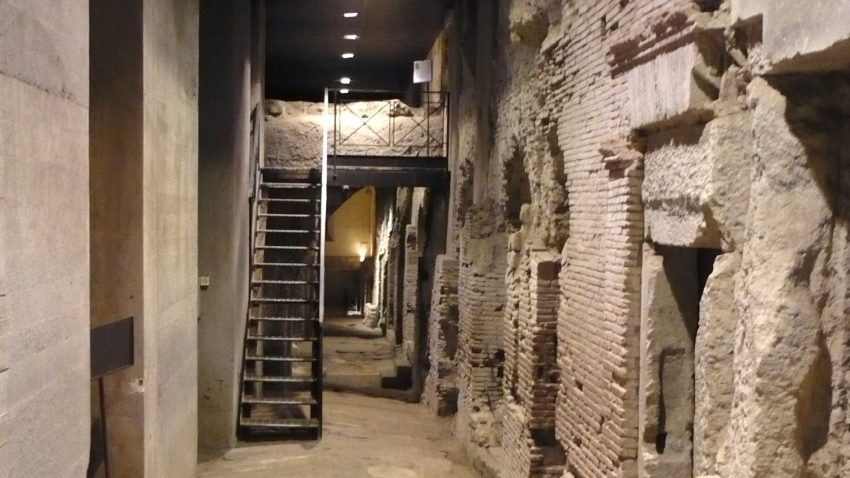
San Lorenzo Maggiore sits right at the geographic centre of ancient Neapolis, where via San Gregorio Armeno meets via dei Tribunali, and it is one of the top attractions in Naples for travellers who love places with multiple layers of history. At street level you see a Gothic Franciscan church with later Baroque chapels, a quiet cloister, and a museum; underneath, you step into the remains of the Roman macellum, a marketplace that once pulsed with trade in the classical city. Few sites in Naples capture so clearly how each era has built on top of the last.
Founded in the late 13th century to compensate the Franciscans after Charles I of Anjou took their previous site to build Maschio Angioino, San Lorenzo grew into a substantial complex of church, monastery, and civic power. Today, its multi-floor museum traces everything from Greek and Roman archaeology to medieval governance and Naples' maritime routes, while the excavated macellum reveals streets, shops, and structures frozen beneath the modern city. With its literary connection to Boccaccio, who met his beloved Fiammetta here in 1338, and its ongoing role with the Conventual Franciscans, San Lorenzo Maggiore is a great place to visit on a walking tour of Naples if you want more than just a quick church stop.
Table of Contents
- History and Significance of the San Lorenzo Maggiore
- Things to See and Do in the San Lorenzo Maggiore
- How to Get to the San Lorenzo Maggiore
- Practical Tips on Visiting the San Lorenzo Maggiore
- Where to Stay close to the San Lorenzo Maggiore
- Is the San Lorenzo Maggiore Worth Visiting?
- FAQs for Visiting San Lorenzo Maggiore
- Nearby Attractions to the San Lorenzo Maggiore
History and Significance of the San Lorenzo Maggiore
The origins of San Lorenzo Maggiore are closely linked to the Franciscans and the reshaping of medieval Naples under Angevin rule. During the lifetime of St Francis of Assisi, the order established itself in the city, but their original site was appropriated by Charles I of Anjou for the construction of Maschio Angioino. As compensation, the Franciscans were granted land at the heart of the ancient Greek-Roman city grid, where they began building a new church and convent in the late 13th century. The resulting complex, San Lorenzo Maggiore, quickly became an important religious and civic landmark.
Over time, San Lorenzo expanded beyond its role as a simple monastic church. The monastery's cloisters and halls hosted meetings and decisions that shaped local governance, especially during the Angevin period when Naples was a thriving Mediterranean capital. The surrounding area, once the classical forum and later the centre of medieval markets and institutions, meant that San Lorenzo stood at the physical and symbolic crossroads of the city's civic life.
Beneath the church and monastery, however, lay an even older story: the macellum, or Roman market, which had once served the inhabitants of Neapolis. This hidden layer remained buried for centuries until systematic excavations, particularly from 1992 onward after decades of preparatory work, brought it back to light. In combining medieval Gothic architecture, Baroque chapels, Franciscan heritage, and a unique archaeological site, San Lorenzo Maggiore offers a rare, continuous thread from ancient Greece and Rome through the Middle Ages and into the present.
Things to See and Do in the San Lorenzo Maggiore
Start your visit in the church itself, where the Gothic structure reflects the austere spirituality of the early Franciscans. The high, pointed arches and relatively restrained decoration contrast beautifully with the exuberant Baroque chapels added later. The atmosphere feels both solemn and deeply rooted, reminding you that this has been an active place of worship and community life for centuries.
Two of the most striking spaces are the Baroque chapels designed by Cosimo Fanzago. The Cacace Chapel, dedicated to Mary of the Rosary and commissioned in the 1640s by Giovan Camillo Cacace, is a showcase of 17th-century taste. Sculptures by Andrea di Bolgi from Bernini’s studio depict members of the De Caro family, while the frescoed cupola by Niccolò De Simone once displayed vivid religious scenes, now partially damaged but still evocative. Adjacent stands the Chapel of Sant’Antonio, created for the Carthusian Order, which further illustrates how different religious communities left their mark on San Lorenzo over time.
From the church and cloister, make your way into the museum, spread across three levels above the courtyard. Here you can follow exhibitions that move from classical archaeology and the city's early development to medieval maritime routes and local governance under the Angevins and later rulers. Displays of documents, models, and artifacts help explain how this central area functioned as the administrative and commercial heart of Naples. Finally, descend to the macellum of Naples, the excavated Roman market beneath the complex. Walking among ancient walls, shop spaces, and pavements, you stand in the only large-scale Greek-Roman archaeological site excavated in downtown Naples, directly under the modern streets. It is one of the must-see places in Naples if you want to experience the city's continuity across more than two millennia.
How to Get to the San Lorenzo Maggiore
San Lorenzo Maggiore is located in the centro storico, right on via dei Tribunali where it meets via San Gregorio Armeno, making it easy to reach on foot once you are in the historic core. If you are arriving by air, you will land at Naples International Airport (Capodichino), from where taxis, rideshares, and shuttle buses connect you to central hubs; from there, it is a short ride or a longer walk into the old town and toward via dei Tribunali. For the best deals and a seamless booking experience, check out these flights to Naples on Booking.com.
Most visitors arriving by train come into Napoli Centrale at Piazza Garibaldi. From the station, you can use the metro or buses to reach the historic centre, then walk along via dei Tribunali or nearby streets until you reach the church and monastery complex at its intersection with via San Gregorio Armeno. Use Omnio to easily compare schedules, book train tickets, and find the best prices all in one place for a hassle-free journey across Italy.
If you are travelling by car, it is best to park in a garage on the edge of the historic centre-near Piazza Garibaldi, Piazza Cavour, or along major routes-and continue on foot, as the narrow streets around San Lorenzo Maggiore are difficult to navigate by car and often restricted to traffic. If you are looking to rent a car in Italy I recommend having a look at Discover Cars, first, as they compare prices and review multiple car rental agencies for you. Once parked, follow signs or maps into the centro storico; the church’s façade and adjoining monastery sit prominently along via dei Tribunali.
Practical Tips on Visiting the San Lorenzo Maggiore
- Suggested tips: Combine your visit to the church, museum, and macellum in one ticket if available, so you can fully appreciate the site from top to bottom.
- Best time to visit: Late morning or early afternoon on weekdays usually offers a calmer atmosphere than weekends or major holidays.
- Entrance fee: Archaeological site and museum: Adults: €9
- Opening hours: Daily from 9:30 am to 5:30 pm
- Official website:
- How long to spend: Plan at least 1-1.5 hours to see the church, museum, and macellum without rushing; history enthusiasts may want even longer.
- Accessibility: Access to the underground macellum involves stairs and uneven surfaces, so it may not be suitable for all visitors; the church and parts of the museum are more accessible but still feature some steps.
- Facilities: Basic services such as ticketing and restrooms are available on site; cafés, bakeries, and shops are plentiful along via dei Tribunali and nearby streets.
- Photography tip: Capture the contrast between the Gothic church and Baroque chapels inside, then switch to wider, atmospheric shots of the tunnels and market spaces underground.
- Guided tours: Consider joining a guided visit or using an audio guide to understand the archaeological layers, the Franciscan story, and the role of San Lorenzo in Naples’ civic life.
- Nearby food options: After your visit, step out onto via dei Tribunali, where you’ll find famous pizzerias and trattorias perfect for a post-history slice of Neapolitan pizza.
Where to Stay close to the San Lorenzo Maggiore
Staying near San Lorenzo Maggiore puts you right in the middle of the historic centre, within easy reach of Naples Cathedral, San Gregorio Armeno, and other key sites. For a charming base in the old town, Decumani Hotel De Charme offers historic interiors and a convenient location for exploring on foot. If you prefer a lively, creative atmosphere close to archaeological sites and nightlife, Hotel Piazza Bellini & Apartments near Piazza Bellini places you a short stroll from via dei Tribunali. For a boutique option along Spaccanapoli but still within easy walking distance of San Lorenzo Maggiore, Santa Chiara Boutique Hotel provides stylish rooms at the heart of the historic streets.
Is the San Lorenzo Maggiore Worth Visiting?
San Lorenzo Maggiore is absolutely worth visiting, especially if you are curious about how Naples' ancient, medieval, and modern histories literally sit on top of each other. Few places allow you to stand in a Gothic-Franciscan church, admire Baroque chapels by Cosimo Fanzago, then descend into a Roman market and walk among its remains. The added layers of museum displays, Angevin-era governance, maritime history, and literary connections to Boccaccio make this more than just another church visit-it becomes a compact, vivid introduction to the city's entire story. For many travellers, it quickly becomes one of the best places to visit in Naples for understanding what lies behind (and beneath) the modern streets.
What Other Travellers Say...

Basilica di San Paolo Maggiore, located on Piazza San Gaetano in Naples' lively city centre, is a Baroque Catholic church whose modest façade conceals a richly decorated interior: gilded ceilings, frescoes, statues and ancient Roman columns reused from the temple to Castor and Pollux give the nave a striking, art-filled atmosphere. Visitors say it’s easy to find after climbing a short flight of steps from the busy street, offers a peaceful spot for reflection, is free to enter (with donations encouraged), and is well worth a stop to admire the architecture and ornate decorations.


FAQs for Visiting San Lorenzo Maggiore
Nearby Attractions to the San Lorenzo Maggiore
- Naples Cathedral (Duomo di San Gennaro): The city's main cathedral, a short walk away, with important relics and chapels.
- Via San Gregorio Armeno: The famous “crib street,” lined with artisan workshops crafting nativity scenes and figurines year-round.
- Napoli Sotterranea: Guided underground tours exploring ancient cisterns and wartime shelters beneath the historic centre.
- San Domenico Maggiore: A historic church and convent complex with ties to major thinkers and artists, just a few minutes’ walk away.
- National Archaeological Museum of Naples (MANN): One of the world's leading archaeological museums, reachable on foot or via a short metro/bus ride from the historic centre.
The San Lorenzo Maggiore appears in our Complete Guide to Visiting Naples!

Moira & Andy
Hey! We're Moira & Andy. From hiking the Camino to trips around Europe in Bert our campervan — we've been traveling together since retirement in 2020!
This website uses affiliate links which may earn a commission at no additional cost to you!
Planning Your Visit
Daily from 9:30 am to 5:30 pm
Archaeological site and museum: Adults: €9
Nearby Attractions
- Chiesa delle Cape di Morte (0.2) km
Church - Naples Cathedral (0.3) km
Cathedral - Cappella Sansevero (0.3) km
Church - Santa Chiara (0.6) km
Abbey - Piazza Dante (0.7) km
Square - National Archeological Museum (0.7) km
Museum - Castel Nuovo (1.4) km
Castle - Galleria Umberto I (1.5) km
Shopping Centre - Teatro di San Carlo (1.6) km
Theatre - San Martino Monastery (1.6) km
Monastery and Museum