Quimper Ramparts
City Walls in Quimper
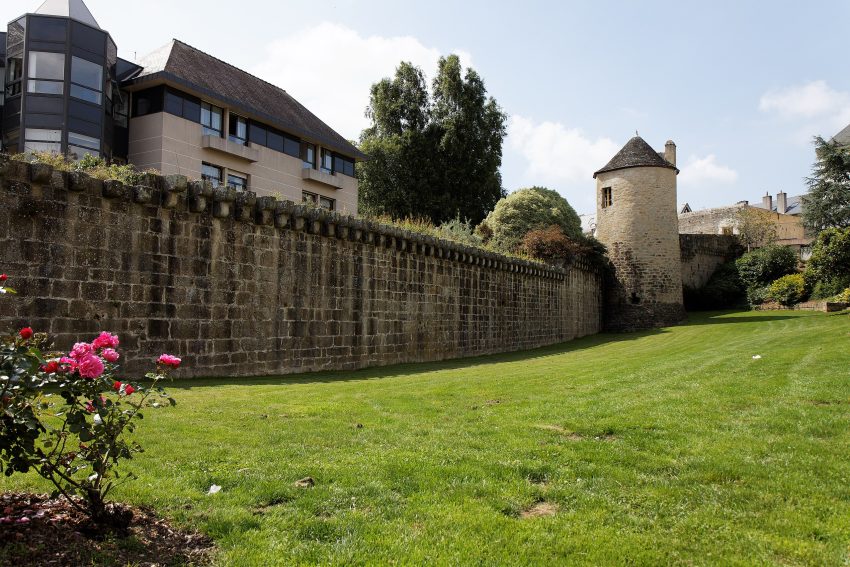
The Quimper Ramparts are one of those historic features you don't always notice at first, because they're woven into the modern city rather than standing apart as a single monument. Built to enclose and protect the medieval heart of Quimper, the surviving sections and gates still hint at how tightly the old town was once controlled, with streets and quarters shaped by walls, watchpoints, and the pull of the cathedral district. If you enjoy exploring a city by reading its layers, this is one of the things to see in Quimper that makes the historic centre feel more intelligible.
Walking the rampart remnants is less about a dramatic “wall walk” and more about spotting fragments: a preserved stretch near the river, an old gate, a curve in the street plan that suddenly makes sense when you realise it followed a defensive line. It's a satisfying kind of sightseeing because it turns an ordinary stroll into a small archaeological puzzle, revealing how medieval Quimper grew from a fortified nucleus into the open, walkable city you see today.
Table of Contents
- History and Significance of the Quimper Ramparts
- Things to See and Do in the Quimper Ramparts
- Practical Tips on Visiting the Quimper Ramparts
- Where to Stay close to the Quimper Ramparts
- Is the Quimper Ramparts Worth Visiting?
- FAQs for Visiting Quimper Ramparts
- For Different Travelers
- Nearby Attractions to the Quimper Ramparts
History and Significance of the Quimper Ramparts
The ramparts date mainly to the 13th and 14th centuries, when Quimper needed physical defences to protect its core institutions and assert control over access to the town. In a period shaped by local conflict, competing jurisdictions, and the constant possibility of raids or unrest, walls were both security and status. They enclosed key sites such as Saint-Corentin Cathedral and the episcopal district, reinforcing the city's identity as a centre of religious authority and administration.
What makes Quimper's ramparts especially interesting is how they reflect the city's medieval political geography. Quimper was marked by a long-standing tension between episcopal power within the fortified core and ducal authority in surrounding areas, and the ramparts helped formalise that division in stone. Gates and towers weren't just defensive features, they were instruments of control, deciding who entered, who traded, and how movement was managed between districts.
Over time, as Quimper expanded beyond its medieval footprint, many sections of the ramparts were dismantled, reused, or absorbed into later development. This is typical of growing cities, where defensive walls become barriers to expansion and valuable sources of building material. The remaining fragments are therefore significant not only as medieval survivals, but as evidence of how Quimper adapted, choosing growth and connectivity over enclosure while still preserving enough to keep the fortified story visible.
Things to See and Do in the Quimper Ramparts
The best way to experience the ramparts is to turn it into a short self-guided hunt as you explore the historic centre. Look for preserved stretches of wall and the way they intersect with later buildings, particularly near the river, where the old defensive line often becomes easiest to read. Seeing medieval stonework embedded into a living city is part of the appeal, because it shows how Quimper didn't replace its past so much as build around it.
Gates and access points are the most dramatic “rampart” moments, because they immediately communicate the idea of controlled entry. The Porte des Réguaires is one of the most notable survivals, and it’s worth slowing down there to imagine how the threshold worked in medieval times, with movement channelled through a limited number of openings. From these points, the surrounding street network often feels more logical, because you can sense how routes were organised toward gates and away from vulnerable edges.
If you enjoy photography, aim for compositions that show the contrast between medieval masonry and later façades. These are not isolated ruins, they are living fragments, so the best shots often include modern street life, greenery, or riverside reflections. It’s also a rewarding experience at different times of day: early mornings highlight textures and quiet streets, while late afternoons bring a sense of how the old town still functions as Quimper’s social core.
Practical Tips on Visiting the Quimper Ramparts
- Suggested tips: Treat the ramparts as a walking theme rather than a single destination, and combine wall fragments with the cathedral quarter for a fuller medieval storyline.
- Best time to visit: Early morning for quieter streets and clearer photos, or late afternoon when the old town feels most lively.
- Entrance fee: Free; the rampart remnants are viewed outdoors in public streets.
- Opening hours: Accessible at all times; individual sites such as gates can be visited during a normal walking day. keeps you close to the historic core and makes it easy to explore on foot. If you want a dependable stay with straightforward logistics for arrivals and day trips while still being near the old town, Mercure Quimper Centre works well. For a practical, central option with good access to the pedestrian streets, Best Western Plus Hôtel Kregenn is another solid choice.
Is the Quimper Ramparts Worth Visiting?
Yes, particularly if you enjoy history that is stitched into everyday streets rather than packaged as a single ticketed attraction. The ramparts add depth to Quimper's old town because they explain why the city feels shaped the way it does, with certain streets acting as natural corridors and certain corners hinting at former boundaries. Even a short “spot the walls” walk can make the rest of your Quimper exploring feel more meaningful.
They are also worth it because the visit is flexible and free. You can spend ten minutes pausing at a gate and a visible wall section, or you can build a full medieval-themed loop around them, linking the cathedral, museum quarter, and riverside. Either way, the ramparts help you experience Quimper as a city that grew out of defence, jurisdiction, and strategic geography.
FAQs for Visiting Quimper Ramparts
They are the surviving remnants of the medieval defensive walls that once enclosed Quimper’s old town.Most sections date from the 13th and 14th centuries, when Quimper’s fortified core was developed and reinforced.In most places, no; the ramparts are experienced as fragments and gates integrated into streets and buildings rather than a continuous wall-walk.Look near the historic centre and riverside areas, and seek out notable surviving structures such as old gates.Yes, it is one of the most visible surviving elements linked to Quimper’s fortified past.No, the ramparts are seen outdoors in public areas and are free to explore.Allow 45-90 minutes for a focused route, longer if you combine it with cathedral and museum visits.Yes, especially if you turn it into a discovery walk, though the historic streets can be uneven so comfortable shoes help.Some sections are obvious, but others are subtle and integrated into buildings, so a map or guided walk can help.Yes, they pair naturally with the cathedral quarter, Rue Kéréon, and museums in the historic centre.What Other Travellers Say...
Jardin exotique de la Retraite, at 35 Rue Élie Freron in Quimper, is a well-kept, peaceful garden close to the city centre where visitors enjoy relaxing breaks with family, friends or pets and can see many healthy tropical plants outdoors.
6 months ago"Lovely quiet gardens close to town centre"3 years ago"This garden worth the visit definitely! It's so amazing see a lot of tropical plants outside and in perfect state."4 months ago"Beautiful place to relax with your whole family (furry or not) or your friends!!"For Different Travelers
Families with Kids
The ramparts work well for families because they turn the old town into a simple exploration game. Instead of asking children to absorb long explanations, invite them to spot the “old wall stones,” look for gateways, and imagine how the city would have been entered and defended. Short stretches of discovery feel more fun than trying to follow a strict route.
Keep the walk flexible and break it up with a snack stop in the pedestrian centre. The best family ramparts visit is usually 30-60 minutes of wandering with a few clear highlights, rather than a long, detail-heavy circuit.
Couples & Romantic Getaways
For couples, the ramparts add a sense of narrative to an old-town stroll. It's a quiet kind of romance, noticing how stonework and street lines reveal the shape of medieval Quimper, then drifting into cafés and small lanes without needing a fixed plan. It's especially enjoyable early in the morning or near dusk, when the streets feel softer and less busy.
Pair the ramparts fragments with a cathedral visit and a long café stop and you have a very Quimper-style day: history, atmosphere, and slow wandering rather than rushing between major sights.
Budget Travelers
This is a great budget activity because it costs nothing and fits perfectly into a walking day. You can get a lot of value from Quimper simply by exploring the historic centre with the ramparts in mind, taking photos, and letting the medieval layout guide your route.
If you want to keep spending low, pick up bakery food and build your day around free streetscapes, river walks, and viewpoints. The ramparts provide the historical structure that makes those free experiences feel purposeful rather than random.
Nearby Attractions to the Quimper Ramparts
- Saint-Corentin Cathedral: Quimper's landmark Gothic cathedral at the heart of the medieval core once protected by the walls.
- Musée Départemental Breton: A major museum of Breton heritage beside the cathedral, ideal for adding context to the fortified city story.
- Rue Kéréon: The iconic pedestrian street that links old-town life, architecture, and the cathedral quarter.
- Place Terre au Duc: A photogenic historic square surrounded by timber-framed houses, perfect for a medieval-themed walking loop.
- Odet River quays: A scenic riverside walk where some rampart remnants and the old town’s historic edges are easiest to sense.


The Quimper Ramparts appears in our Complete Guide to Visiting Quimper!

Moira & Andy
Hey! We're Moira & Andy. From hiking the Camino to trips around Europe in Bert our campervan — we've been traveling together since retirement in 2020!
This website uses affiliate links which may earn a commission at no additional cost to you!
Planning Your Visit
Accessible at all times; individual sites such as gates can be visited during a normal walking day.
Free; the rampart remnants are viewed outdoors in public streets.
Nearby Attractions
- Hotel de Boisbilly (0.2) km
Historic Building - Musée des Beaux-Arts de Quimper (0.2) km
Museum - Quimper Cathedral (0.2) km
Cathedral - Jardin de l’Eveche (0.3) km
Gardens - Musée Départemental Breton (0.3) km
Museum - Pont Medard (0.4) km
Bridge and Street - Theatre Max Jacob (0.4) km
Theatre - Place Terre au Duc (0.4) km
Square - Place Terre au Duc (0.4) km
Square - Mont Frugy (0.5) km
Viewing Point