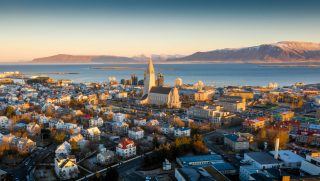
Prime Minister’s Office, Reykjavik
Attraction, Historic Building and Notable Building in Reykjavik
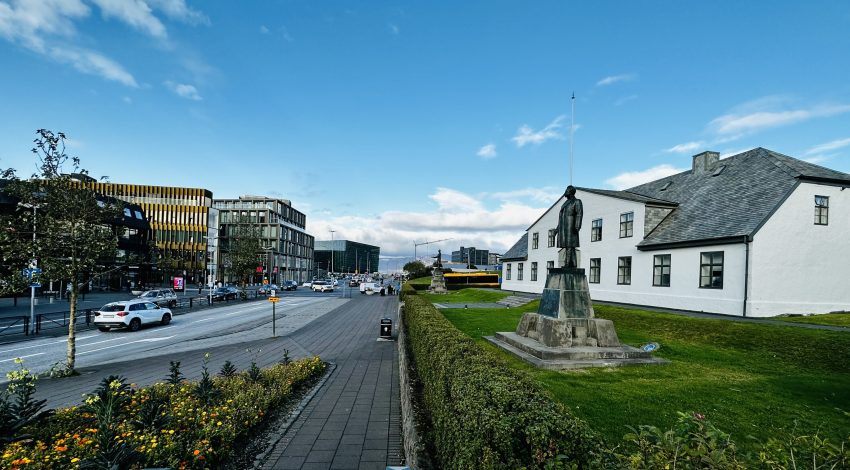
The Prime Minister's Office (Stjórnarráðið) is Iceland's government house in central Reykjavik, set just off Lækjargata within a small, tidy grounds that's easy to pass on foot while exploring downtown. It's not a grand palace-style landmark, but that's part of the charm: it feels distinctly Icelandic in scale, understated, and woven into everyday city life.
Most travelers experience it as a brief, worthwhile stop on a self-guided stroll or a Reykjavik walking tour, pairing it with nearby highlights like Austurvöllur Square, the Parliament area, and the waterfront. Even if you only spend a few minutes here, the statues and the building's backstory add context to the city you're walking through.
Table of Contents
- History and Significance of the Prime Minister’s Office
- Things to See and Do in the Prime Minister’s Office
- How to Get to the Prime Minister’s Office
- Practical Tips on Visiting the Prime Minister’s Office
- Where to Stay Close to the Prime Minister’s Office
- Is the Prime Minister’s Office Worth Visiting?
- For Different Travelers
- FAQs for Visiting Prime Minister’s Office
- Nearby Attractions to the Prime Minister’s Office
History and Significance of the Prime Minister’s Office
Stjórnarráðið is one of Reykjavik's most historically layered buildings: it began life in the 18th century as a penitentiary, long before Reykjavik became the modern capital you see today. That origin story gives the building an unexpected weight, especially when you compare its modest exterior to the role it plays in national governance.
Over time, the building shifted from confinement to administration, serving different state functions as Iceland's political identity evolved. Today it houses the Prime Minister's Office, making it a living piece of civic history rather than a preserved museum.
What makes it especially interesting for visitors is how quietly it sits in the cityscape. You can walk past without realizing what it is, then circle back and suddenly see it as a key symbol of Iceland’s modern state.
Things to See and Do in the Prime Minister’s Office
For most visitors, the main experience is outside: slow down and take in the building’s proportions, its calm grounds, and the way it blends into the downtown streetscape. It’s a great “context stop” that helps connect Reykjavik’s charming small-city feel with the fact that this is the seat of national government.
Don’t miss the statues in the front area, which are among the most rewarding details here. They provide a quick visual lesson in Iceland’s political story and are often what makes travelers pause, read up, and appreciate the site more deeply.
If you're building a short walking route, this is an easy add-on between Austurvöllur Square, the Parliament area, and the pond (Tjörnin). It's also a good spot for a quiet breather before continuing to busier shopping streets.
How to Get to the Prime Minister’s Office
The nearest airport is Keflavík International Airport (KEF), which is the main gateway for international flights into Iceland, while Reykjavik Airport (RKV) is closer to the center and mainly serves domestic and regional routes. For the best deals and a seamless booking experience, check out these flights to Reykjavik on Booking.com.
Reykjavik does not have intercity passenger trains, so you won't be arriving by train; most travelers come into town by airport transfer, scheduled bus, or private shuttle instead. Train schedules and bookings can be found on Omio.
If you’re driving, aim for a central parking garage or metered street parking nearby, then finish the last few minutes on foot since the area is easiest to explore as a walk.
Practical Tips on Visiting the Prime Minister’s Office
- Official website: https://www.stjornarradid.is/raduneyti/forsaetisraduneytid/
- Entrance fee: Free.
- Opening hours: Monday – Friday: 08:30–16:00. Closed on Saturday, Sunday.
- Best time to visit: Go in the morning for calmer streets and cleaner photo angles, or early evening for softer light on the building and statues.
- How long to spend: Plan 10–20 minutes for the exterior and statues, or longer if you’re using it as a stop on a broader downtown walking loop.
- Accessibility: The surrounding streets are generally flat and paved in this part of central Reykjavik, making it manageable for most mobility levels.
- Facilities: There are no visitor facilities on-site; plan for restrooms, cafés, and indoor breaks at nearby museums, hotels, or coffee shops.
Where to Stay Close to the Prime Minister’s Office
Base yourself in central Reykjavik (Downtown/Miðborg) for the easiest walking access to the Prime Minister's Office, the harbor, museums, and the city's best cafés.
If you want a classic, comfortable stay with a strong sense of place, consider a heritage-style hotel close to the old center so you can step out and start sightseeing immediately. For design-forward travelers, a modern boutique option downtown makes it easy to combine daytime walks with evening dining. And if you’re prioritizing convenience, a well-located hotel near the main shopping streets keeps everything within a short stroll.
Reykjavík Konsúlat Hotel, Curio Collection by Hilton Sand Hotel by Keahotels Center Hotels Plaza ION City Hotel Hotel Borg by Keahotels
Is the Prime Minister’s Office Worth Visiting?
Yes, it's worth a stop if you're already exploring downtown Reykjavik on foot. You're not coming for an interior tour or a big “attraction experience,” but for a quick, meaningful look at a real working government building, plus a couple of statues that add historical context to the city.
Honest Pivot: If you're short on time and prefer attractions with interiors, exhibits, or viewpoints, you can skip this and focus on places like Harpa, Hallgrímskirkja, or a museum. The Prime Minister's Office works best as a brief add-on rather than a main event.
What Other Travellers Say...

Reviews are very positive overall, with many travelers describing it as a worthwhile stop while walking through downtown Reykjavik. People like the building's understated look, its central location, and the historical context—especially the statues in front that highlight key figures in Iceland's story. A common downside is that it can feel underwhelming if you expect a grand landmark or interior access, since it's a working government building and the main experience is outside.


For Different Travelers
This is a flexible, low-effort stop that fits neatly into most Reykjavik itineraries, especially if you like walking and spotting small details that tell a bigger story.
Families with Kids
Kids may find the building itself “just a building,” but the statues can spark quick questions and a short history moment without needing a long attention span. It’s also an easy stop to break up a walk between more kid-friendly highlights.
Pair it with a nearby open space like Austurvöllur Square so children can move around while adults take a minute for photos and context. Keep expectations simple: this is a quick look, not an activity.
Couples & Romantic Getaways
For couples, the appeal is the calm, central setting and the way it slots into a scenic downtown stroll. It’s a nice “pause point” before heading to a cozy café or an evening dinner reservation.
If you like travel that mixes architecture, history, and wandering without a strict schedule, this stop adds texture to your walk without taking much time.
Budget Travelers
Budget-wise, it’s ideal: you can appreciate the exterior and statues without paying for entry. It’s also close to many other free or low-cost downtown sights, making it easy to build a full day on foot.
Use it as part of a self-guided route: start at the harbor, loop through the center, pass the Prime Minister's Office, then continue toward Tjörnin and the city's main shopping streets.
History Buffs
History lovers will appreciate the building’s earlier life and how it reflects Iceland’s shift through different political eras. The statues out front are a quick, visual anchor for understanding key figures and milestones.
To deepen the visit, treat this as a “chapter marker” and then continue to nearby institutions and landmarks that expand the story, like the Parliament area and museums within walking distance.
FAQs for Visiting Prime Minister’s Office
Getting There
Tickets & Entry
Visiting Experience
Tours, Context & Itineraries
Photography
Accessibility & Facilities
Food & Breaks Nearby
Safety & Timing
Nearby Attractions to the Prime Minister’s Office
- Austurvöllur Square: A central civic square that's a natural pause point on downtown walking routes.
- Alþingishúsið (Parliament House): A key landmark for understanding Iceland's political life, just a short walk away.
- Tjörnin (The Pond): A scenic city pond that's perfect for a relaxed stroll and birdwatching.
- Harpa Concert Hall: Reykjavik’s iconic modern waterfront building with striking architecture and great views.
- Laugavegur: The city's main shopping and strolling street, lined with boutiques, cafés, and street life.
The Prime Minister’s Office appears in our Complete Guide to Visiting Reykjavik!

Moira & Andy
Hey! We're Moira & Andy. From hiking the Camino to trips around Europe in Bert our campervan — we've been traveling together since retirement in 2020!
This website uses affiliate links which may earn a commission at no additional cost to you!
Planning Your Visit
Monday - Friday: 08:30-16:00.
Closed on Saturday, Sunday.
Free.
Nearby Attractions
- The Icelandic Punk Museum (0.0) km
Attraction and Museum - House of Collections (0.1) km
Gallery, Historic Building and Museum - Dómkirkjan í Reykjavík (0.2) km
Cathedral, Church and Religious Building - Alþingishúsið (0.2) km
Attraction, Historic Building and Notable Building - Austurvöllur (0.2) km
Gardens, Park and Square - Tjörnin (0.3) km
Lake, Park and Walk - Reykjavík Art Museum Hafnarhús (0.3) km
Arts Venue, Gallery and Museum - The Settlement Exhibition (0.3) km
Historic Site, Museum and Ruins - Harpa Concert Hall and Conference Centre (0.3) km
Arts Venue, Notable Building and Opera House - Lutheran Free Church (0.4) km
Church, Historic Building and Religious Building