Cobblers' Bridge, Ljubljana
Bridge in Ljubljana
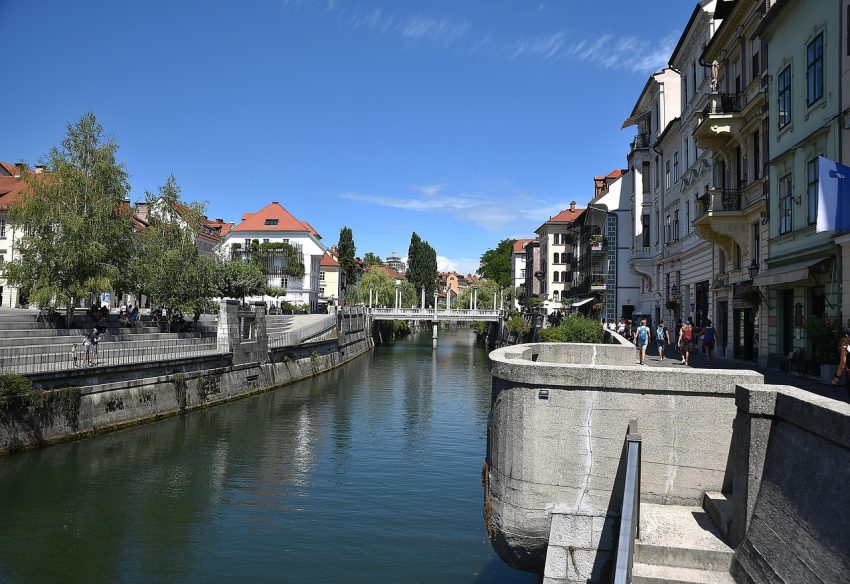
Cobblers' Bridge (Cevljarski Most) is one of Ljubljana's most atmospheric crossings, a place where centuries of trade, craftsmanship, and everyday life have flowed as steadily as the Ljubljanica beneath it. Once a wooden span lined with small workshops, it began as the Upper Bridge in the medieval city and later became home to shoemakers, whose stalls gave the bridge its enduring name. Today, the timber structures and busy stalls are long gone, but the bridge still feels like a social hinge between two sides of the old town, with colourful façades, riverside cafés, and the castle-topped hill all within easy view.
The current stone bridge dates from 1931 and is the work of Jože Plečnik, whose redesign turned a simple crossing into a refined urban stage. Corinthian pillars outline its shape while Ionic columns carry elegant lamps, creating the effect of a pillared hall suspended over the water. Add in its riverside perspectives, nearby monument to modernising mayor Ivan Hribar, and its inscription as part of Plečnik's UNESCO-listed legacy, and it becomes clear why Cobblers' Bridge is one of the must-see places in Ljubljana for anyone interested in how history and design meet in everyday city spaces. It is also a highlight of any walking tour of Ljubljana, linking key streets, squares, and viewpoints in the historic centre.
Table of Contents
History and Significance of Cobblers’ Bridge
The story of Cobblers' Bridge stretches back to at least the 13th century, when a wooden structure known as the Upper Bridge connected important parts of the medieval town. Originally home to butchers' stalls, it was very much a working bridge, crowded with small shops and the sights and smells of everyday trade. Over time, the butchers were moved away because of the odours, and shoemakers took their place, giving the crossing its new identity as Cobblers' Bridge and underlining its role as a hub of craftsmanship and commerce.
Because it sat on a busy stretch of river, the bridge repeatedly suffered damage from floods and fires, prompting several rebuilds. In 1867, a cast-iron bridge replaced the old wooden structure, marking a shift toward more modern engineering while still keeping the location central to city life. That version, too, would eventually give way to a more ambitious vision, as Ljubljana began to reshape its riverfront and public spaces in the early 20th century.
Jože Plečnik's 1931 redesign created the Cobblers' Bridge visitors see today. Rather than simply replacing one functional span with another, he crafted a stone bridge that feels like a classical colonnade, using Corinthian and Ionic columns to define its rhythm and character. In 2021, this and other Plečnik-designed works in Ljubljana were inscribed on the UNESCO World Heritage List, recognising how his architecture helped give the city its distinctive, human-scale urban identity. As a result, Cobblers' Bridge is not just a reminder of medieval trades, but also a key piece of Ljubljana's 20th-century design story.
Things to See and Do in Cobblers’ Bridge
The best way to experience Cobblers' Bridge is to walk it slowly from one side of the river to the other, pausing at different points to take in the details. Look closely at the Corinthian pillars that trace the outline of the bridge and the Ionic columns that serve as lamp-bearers, giving the whole structure the feel of an open-air hall. Even without the pergola Plečnik originally envisioned, the alignment and spacing of these columns create a strong sense of rhythm and presence.
From the middle of the bridge, turn to face each direction in turn. Upstream, you will see other historic bridges, market arcades, and the life of the river as boats slip past; downstream, the Ljubljanica curves away between pastel façades and leafy embankments. Look back toward the old town streets on either side and you will notice how the bridge ties together key pedestrian routes, making it a natural pause point on the way to cafés, small shops, or the path up to Ljubljana Castle.
Just off the bridge, you can find the monument to Ivan Hribar, the mayor who helped modernise Ljubljana between 1895 and 1907 and whose efforts laid much of the groundwork for the city you see today. Cobblers' Bridge also works beautifully as a vantage point for photography and people-watching: frame the castle above the rooftops, capture reflections in the river, or simply lean on the balustrade and watch locals and visitors drift by on both the water and the walkways. This spot is one of the best places to see in Cobblers' Bridge's stretch of the river if you want a calm but characterful perspective on the old town.
How to Get to Cobblers’ Bridge
Cobblers' Bridge sits in the heart of Ljubljana's old town, spanning the Ljubljanica River a short walk from Prešeren Square, the Central Market, and Ljubljana Cathedral. If you are staying in the city centre, you can reach it easily on foot by following the riverside promenades or ducking through narrow side streets: simply head toward the old town and look for the colonnaded stone bridge lined with columns and lamps.
If you are arriving by air, you will land at Ljubljana Jože Pučnik Airport, about 25 kilometres north of the city, with shuttle buses, public buses, and taxis connecting you to the centre in roughly 30-45 minutes depending on traffic. For the best deals and a seamless booking experience, check out these flights to Ljubljana on Booking.com. From typical drop-off points, it is then a straightforward walk into the pedestrian core and along the river to find the bridge.
Travellers arriving by train or intercity bus will reach Ljubljana's main railway and bus stations, which stand next to each other just northeast of the old town. From there, Cobblers' Bridge is about a 10-15 minute walk: head toward the city centre, cross the river near Prešeren Square or the Central Market, and then follow the riverbanks until you reach the colonnaded span, or use a short local bus journey if you prefer.You can easily check schedules and book tickets through the Slovenian Railways. However, for a smoother experience, we recommend using Omio, which simplifies the booking process and lets you compare prices and schedules all in one place.
If you are driving, remember that the historic centre around Cobblers' Bridge is part of Ljubljana's pedestrian and low-traffic zone where private cars are restricted. Plan to park in one of the public garages or car parks on the edge of the centre and then walk into the old town, enjoying the riverfront and side streets as you approach the bridge.
Practical Tips on Visiting Cobblers’ Bridge
- Suggested tips: Visit more than once if you can-see the bridge in the quiet of the morning, the bustle of midday, and the soft light of evening to appreciate how its character changes.
- Best time to visit: Late afternoon and early evening are particularly atmospheric, with warm light on the columns and reflections on the river; nights are great for seeing the lamps and nearby façades illuminated.
- Entrance fee: Free – Cobblers' Bridge is a public pedestrian bridge open to everyone.
- Opening hours: Accessible 24 hours a day; nearby cafés and shops keep their own schedules.
- Official website: https://www.visitljubljana.com/en/poi/cobblers-bridge/
- How long to spend: Allow 20-40 minutes to walk across, enjoy the views, and take photos, though you may cross several times while exploring the old town.
- Accessibility: The bridge is level and generally suitable for wheelchairs and strollers, though some surrounding streets and approaches are cobbled.
- Facilities: There are no facilities on the bridge itself, but restrooms, cafés, and shops are readily available in the adjacent streets and along the river.
- Photography tip: For a classic shot, stand on a neighbouring bridge or riverbank to capture the full sweep of columns over the water; on the bridge itself, use the pillars as a frame for the castle or opposite bank.
- Guided tours: Many history and architecture tours include Cobblers' Bridge as a stop, using it to discuss Plečnik's work, medieval trade, and Ljubljana's UNESCO-listed riverfront.
- Nearby food options: The streets on both sides of the bridge are lined with cafés, bars, and restaurants, making it easy to pair a visit with coffee, ice cream, or a leisurely meal by the river.
Where to Stay close to Cobblers’ Bridge (Cevljarski Most)
Staying near Cobblers' Bridge puts you right in the heart of Ljubljana's old town, with easy access to the river, main squares, and castle hill. For a chic riverside stay just a short stroll away, Vander Urbani Resort offers contemporary interiors, a rooftop terrace, and direct access to the promenades. If you prefer a quieter, more intimate base in the old lanes, Lesar Hotel Angel provides characterful rooms and a garden while still being only a few minutes’ walk from the bridge. Another appealing option is Adora Hotel, a friendly small hotel in the historic centre that makes it easy to explore Cobblers' Bridge and the rest of the old town entirely on foot.
Is Cobblers’ Bridge (Cevljarski Most) Worth Visiting?
Cobblers' Bridge is absolutely worth visiting, and in practice you are likely to cross it several times while exploring Ljubljana's historic core. Its layered history-from medieval merchants and shoemakers to Plečnik's 20th-century redesign and UNESCO recognition-makes it far more than just another river crossing. Add in its views of the Ljubljanica, proximity to key streets and squares, and inviting columns that encourage you to pause and look around, and it becomes a natural favourite for photographers, architecture fans, and casual strollers alike.
What Other Travellers Say...

The Butchers' Bridge in Ljubljana is a pedestrian-only footbridge over the Ljubljanica River linking the central market area with the Petkovškovo embankment/Vodnik Square; its modern steel-and-glass deck is hung with love padlocks left by visitors and punctuated by provocative bronze sculptures, making it a photogenic, slightly macabre spot popular for quick stops and photos (watch the glass walkway when wet).


FAQs for Visiting Cobblers’ Bridge (Cevljarski Most)
Nearby Attractions to Cobblers’ Bridge (Cevljarski Most)
- Ljubljana Castle - Hilltop fortress overlooking the old town, reachable on foot or by funicular, with panoramic views and exhibitions.
- Ljubljana Cathedral (Stolnica svetega Nikolaja) - Baroque cathedral nearby, known for its frescoed dome, bronze doors, and historic bells.
- Prešeren Square - Main city square a short walk away, framed by the Franciscan Church and linked to the river by the Triple Bridge.
- Cankarjevo Nabrežje - Lively riverside promenade lined with cafés and bars, perfect for a drink or stroll along the water.
- Central Market and Vodnikov trg - Bustling market area upriver, ideal for sampling local produce and getting a taste of everyday Ljubljana life.
The Cobblers' Bridge appears in our Complete Guide to Visiting Ljubljana!

Moira & Andy
Hey! We're Moira & Andy. From hiking the Camino to trips around Europe in Bert our campervan — we've been traveling together since retirement in 2020!
This website uses affiliate links which may earn a commission at no additional cost to you!
Planning Your Visit
Accessible 24 hours a day; nearby cafés and shops keep their own schedules.
Free - Cobblers’ Bridge is a public pedestrian bridge open to everyone.
Nearby Attractions
- Old Square (0.1) km
Square - Congress Square (0.2) km
Square - Ljubljana Town Hall (0.2) km
Town Hall - Ljubljana Castle (0.2) km
Castle - Kresija Palace (0.3) km
Palace - Triple Bridge (Tromostovje) (0.3) km
Bridge - Ljubljana Cathedral (0.3) km
Cathedral - Preseren Square (0.3) km
Square - Franciscan Church of the Annunciation (0.4) km
Church - Vodnik Square (0.4) km
Square