Castel Sant’Elmo, Naples
Castle in Naples
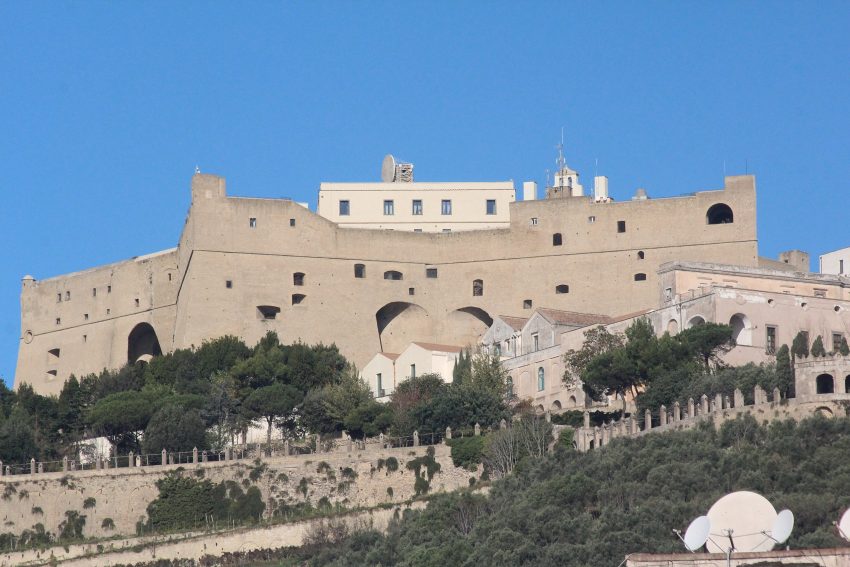
Perched high on Vomero Hill beside the Certosa di San Martino, Castel Sant'Elmo is a powerful reminder that Naples has always been a city that needed to watch both the sea and the sky. What began as a 10th-century church dedicated to Sant'Erasmo evolved into a mighty fortress, reshaped by Angevin, Aragonese, and Bourbon rulers into the hexagonal star we see today. From its vast terraces you get some of the most spectacular panoramas in the city, with Vesuvius, the bay, and the historic centre all laid out below like a map. It is one of the top sights in Naples if you love big views wrapped in solid stone history.
Over the centuries the site changed from a fortified residence known as Belforte to a proper castrum Sancti Erasmi, survived a devastating earthquake in 1456, and was reimagined in the mid-16th century by military architect Pedro Luis Escriva as a cutting-edge star fort. Lightning struck the powder magazines in 1587, triggering an explosion that forced a major rebuild under Domenico Fontana, but the distinctive star-shaped plan remained. Later used as a military prison up to 1952, Castel Sant'Elmo has since been restored as a cultural venue with exhibitions, a major art history library, and thoughtful touches like Braille inscriptions that invite everyone to engage with its story. Today, its mix of history, art, and unforgettable views makes it a highlight of any walking tour of Naples that reaches the Vomero hill.
Table of Contents
- History and Significance of the Castel Sant’Elmo
- Things to See and Do in the Castel Sant’Elmo
- How to Get to the Castel Sant’Elmo
- Practical Tips on Visiting the Castel Sant’Elmo
- Where to Stay close to the Castel Sant’Elmo
- Is the Castel Sant’Elmo Worth Visiting?
- FAQs for Visiting Castel Sant’Elmo
- Nearby Attractions to the Castel Sant’Elmo
History and Significance of the Castel Sant’Elmo
The origins of Castel Sant'Elmo lie in a modest 10th-century church dedicated to Sant'Erasmo, perched on a rocky spur high above Naples. By 1275, under Charles of Anjou, documents already record a fortified complex on the site, and in the early 14th century King Robert of Naples expanded this into a residence known as Belforte. Architect Tino da Camaino helped shape it into a palace-castle hybrid, reflecting both the king's need for defence and his desire for a residence that physically dominated his capital.
Over time, the defensive side of that balance became more important. The palace evolved into a true fortress, the castrum Sancti Erasmi, complete with a chapel dedicated to Saint Erasmus. After the earthquake of 1456 caused serious damage, the Aragonese rulers incorporated the site into a broader strategy of coastal and hilltop fortifications, recognising how vital control of this summit was for the security of Naples. The mid-16th century brought a radical redesign: military architect Pedro Luis Escriva gave the castle its iconic hexagonal star shape, with high walls, bastions, embrasures, and a moat tailored for the age of artillery.
In 1587, lightning hit the munitions depot, triggering a catastrophic explosion that practically demanded a rebuild. Domenico Fontana's reconstruction preserved the star plan while reinforcing the walls and ramparts. From then on, Castel Sant'Elmo served for centuries as a nerve centre of military power and later as a prison, holding political detainees and common criminals alike. After the prison finally closed in 1952, restoration work from 1976 to 1982 removed later accretions to reveal the original defensive geometry. Today, supervised by the Soprintendenza per i Beni Artistici e Storici, the fortress functions as a museum and cultural space, home to the Bruno Molajoli Art History Library and art exhibitions that link its martial past to Naples' creative present.
Things to See and Do in the Castel Sant’Elmo
The real magic of Castel Sant'Elmo begins as soon as you step onto its upper terraces. From the ramparts you get uninterrupted 360-degree views: the dense roofs and domes of the centro storico below, the sweep of the Gulf of Naples, Vesuvius on the horizon, and the hills and islands beyond. It's an incredible place to orient yourself in the city, especially if you've already walked through the alleys of Spaccanapoli and now want to see that maze from above. Many visitors simply wander the walls, pausing at each angle of the star-shaped bastions to take in a slightly different perspective.
Inside the fortress, the spaces that once held garrisons, stores, and prisoners now host art exhibitions and cultural events. The museum areas and the Bruno Molajoli Art History Library give the complex a quieter, more reflective side: shelves of books, contemporary works, and curated displays sit within thick 16th-century walls, showing how a once-feared stronghold has become a place for knowledge and creativity. As you move through stark corridors and open courtyards, it’s easy to picture soldiers on watch or prisoners pacing, even as you read modern interpretive panels and encounter inclusive touches such as the Braille inscription on one of the railings.
Don't overlook the relationship between Castel Sant'Elmo and the neighbouring Certosa di San Martino. From the ramparts you can look down onto the former Carthusian monastery, its cloisters and courtyards laid out in pale stone just below. Many visitors combine both sites in a single visit, starting with the art and presepe of the Certosa and then climbing slightly higher to the fortress for the views. Together, they form one of the best places to visit in Naples if you want to understand how power, faith, and defence shaped the skyline of the city.
How to Get to the Castel Sant’Elmo
Castel Sant'Elmo stands on the Vomero hill, above the historic centre and just beside the Certosa di San Martino, making it easy to combine with other hilltop sights but requiring a bit of planning to reach. If you arrive by air at Naples International Airport (Capodichino), you can take a taxi or rideshare directly up to Vomero, or connect via bus or shuttle into the city centre and then transfer to funiculars or buses that climb the hill. For the best deals and a seamless booking experience, check out these flights to Naples on Booking.com.
From Napoli Centrale railway station at Piazza Garibaldi, most visitors ride the metro or a bus toward central hubs like Montesanto or via Toledo, then switch to one of the funicular lines (such as the Montesanto or Chiaia funicular) up to Vomero. Use Omnio to easily compare schedules, book train tickets, and find the best prices all in one place for a hassle-free journey across Italy. From the funicular stations, it's a short but often steep walk through residential streets and viewpoints to the entrance of Castel Sant'Elmo and the Certosa di San Martino.
If you are travelling by car, follow signs toward Vomero and look for parking near the fortress or in nearby garages, bearing in mind the roads can be narrow and spaces limited, especially at weekends or in peak season. If you are looking to rent a car in Italy I recommend having a look at Discover Cars, first, as they compare prices and review multiple car rental agencies for you. Once you’ve parked, expect a brief walk uphill to the castle entrance, rewarded quickly by the first glimpses of the views.
Practical Tips on Visiting the Castel Sant’Elmo
- Suggested tips: Wear comfortable shoes and bring a light layer-the wind on the ramparts can feel cooler than in the city below, even on sunny days.
- Best time to visit: Late afternoon on a clear day is ideal, when the light softens over the bay and you can stay for golden hour and early evening views.
- Entrance fee: €2.50
- Opening hours: Daily from 8:30 am - 7:30 pm (last entry 6:30 pm)
- Official website: https://www.castelsantelmotickets.com/
- How long to spend: Allow 60-90 minutes to explore the ramparts, viewpoints, and exhibition areas at a relaxed pace, longer if there is a special show on.
- Accessibility: The site includes slopes, steps, and uneven surfaces on the ramparts; some interior areas are more accessible than others, so visitors with mobility issues should ask staff for the easiest routes.
- Facilities: Basic facilities such as ticket office and restrooms are available; cafés and bars can be found nearby in Vomero for refreshments before or after your visit.
- Photography tip: Use the angles of the star-shaped walls to frame your shots-look for compositions that include Vesuvius, the bay, and domes of the old town in a single panorama.
- Guided tours: Check for guided walks or special events that focus on the fortress’s military history and architecture, which can bring the bastions, moats, and embrasures vividly to life.
- Nearby food options: After your visit, head into Vomero’s streets for pizza, gelato, or an aperitivo with a local feel before riding the funicular back down to the historic centre.
Where to Stay close to the Castel Sant’Elmo
Staying near Castel Sant'Elmo is perfect if you like quieter evenings, fresher air, and easy access to some of the best viewpoints in Naples while still being only a funicular ride away from the bustle below. For a comfortable base in Vomero with good links to both the hilltop sights and the centre, Hotel Cimarosa offers a convenient location close to funicular stops. If you prefer the atmosphere of the historic centre but want simple access up to the fortress for sunset, Santa Chiara Boutique Hotel near Spaccanapoli makes it easy to combine city-centre exploration with trips to Vomero. Another appealing option is Hotel Piazza Bellini & Apartments, set near Piazza Bellini with a lively, creative vibe and straightforward connections to the funicular lines that carry you up to Castel Sant'Elmo.
Is the Castel Sant’Elmo Worth Visiting?
Castel Sant'Elmo is absolutely worth visiting, especially if you want to see Naples as a whole rather than just from street level. Its star-shaped ramparts, long military history, and transformation into a cultural space give you plenty to explore, but the views alone justify the trip. From here you can trace the curve of the bay, pick out landmarks in the historic centre, and watch the light change over Vesuvius in a way you simply cannot experience from below. Combined with nearby Certosa di San Martino, it is a highlight of any walking tour of Naples that ventures up to Vomero and a place many travellers remember as the moment they truly understood the layout and drama of the city.
What Other Travellers Say...

Castel Sant'Elmo, a star‑shaped 14th‑century hilltop fortress at Via Tito Angelini 20/A, rewards visitors with expansive terraces and 360° panoramas over Naples, the bay and Mount Vesuvius; reviewers say it's particularly memorable at sunset, offers wide open walkways and ramparts for a scenic stroll, hosts occasional art exhibitions, and is generally well maintained though some note litter nearby and mixed value for the modest entrance fee—many recommend arriving early or taking the funicular to make the most of the views and quieter photo opportunities.


FAQs for Visiting Castel Sant’Elmo
Nearby Attractions to the Castel Sant’Elmo
- Certosa di San Martino: Former Carthusian monastery turned museum, with Bourbon-era collections and famous presepe just below the fortress.
- Vomero District: A lively hilltop neighbourhood with shops, cafés, and local nightlife, easily reached by funicular from the centre.
- Museo di Capodimonte: Major art museum in a Bourbon palace set within a large park on the neighbouring Capodimonte hill.
- National Archaeological Museum of Naples (MANN): World-class archaeological museum located downhill toward the historic centre, reachable by metro or bus.
- Historic Centre of Naples (Centro Storico): The UNESCO-listed heart of the city, with Spaccanapoli, churches, and palaces to explore once you descend from Vomero.
The Castel Sant’Elmo appears in our Complete Guide to Visiting Naples!

Moira & Andy
Hey! We're Moira & Andy. From hiking the Camino to trips around Europe in Bert our campervan — we've been traveling together since retirement in 2020!
This website uses affiliate links which may earn a commission at no additional cost to you!
Planning Your Visit
Daily from 8:30 am – 7:30 pm (last entry 6:30 pm)
€2.50
Nearby Attractions
- San Martino Monastery (0.2) km
Monastery and Museum - Napoli Sotterranea (1.0) km
Historic Site - Piazza Dante (1.1) km
Square - Galleria Umberto I (1.1) km
Shopping Centre - Bourbon Tunnel (1.2) km
Historic Site - Teatro di San Carlo (1.2) km
Theatre - Santa Chiara (1.2) km
Abbey - San Francesco di Paola (1.2) km
Church - Piazza del Plebiscito (1.3) km
Square - Royal Palace of Naples (1.3) km
Palace