Auberge de Castille et Portugal, Birgu
Historic Building in Birgu
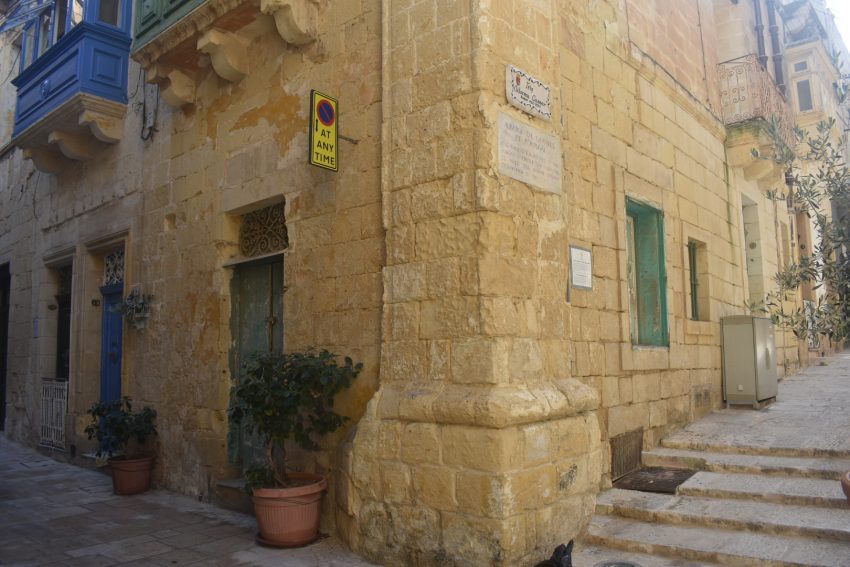
Set along what is now Hilda Tabone Street, the Auberge de Castille et Portugal is one of the must-see places in Birgu for travellers exploring the city's origins as the first headquarters of the Knights of St. John. Built in the 1550s during the rule of Grand Master Claude de la Sengle, it housed the knights of the Langue of Castille, León, and Portugal until their move to Valletta in 1574. Designed by Niccolò Bellavante in the traditional Maltese Melitan style, the building once formed part of the tightly knit network of auberges that shaped Birgu's Collachio district.
Today, though much altered and privately owned, the auberge is a great place to visit on a walking tour of Birgu. Surviving architectural fragments - including a quoin and several window frames with Melitan mouldings - offer rare glimpses into the Order's earliest architectural preferences before their later Baroque splendour transformed Valletta.
Table of Contents
- History and Significance of the Auberge de Castille et Portugal
- Things to See and Do in the Auberge de Castille et Portugal
- How to Get There
- Practical Tips on Visiting the Auberge de Castille et Portugal
- Where to Stay close to the Auberge de Castille et Portugal
- Is the Auberge de Castille et Portugal Worth Visiting?
- FAQs for Visiting
- Nearby Attractions to the Auberge de Castille et Portugal
History and Significance of the Auberge de Castille et Portugal
The Langue of Castille, León, and Portugal first established its presence in Birgu in the 1530s, shortly after the Order arrived in Malta. Their earliest residence, known as the vecchia alberghia di Castiglia, has since vanished without trace, and its exact location remains uncertain.
The second auberge, the one that survives today, was constructed under Grand Master de la Sengle and designed by Niccolò Bellavante. It stood prominently on what was then Barrack Front Street, close to other Langue residences in the Collachio - the knightly quarter restricted to members of the Order. Serving as both residence and administrative hub, it remained in active use until 1574, when the Langue relocated to the grand new Auberge de Castille in Valletta.
Over the centuries, the Birgu auberge has undergone layers of modification, yet important original features endure. These include a distinctive quoin, examples of Melitan window mouldings, and residual elements of the early layout. Such features make it one of the few surviving architectural witnesses to the Order's first decades in Malta.
Its cultural value was formally recognised in 1925 when it was added to the Antiquities List, and again in 2009 when it became a Grade 1 national monument. It is also listed on the National Inventory of the Cultural Property of the Maltese Islands.
Things to See and Do in the Auberge de Castille et Portugal
While the building is privately owned and not accessible internally, its exterior still offers clues to its 16th-century origins. Visitors can observe the remaining original quoin that marks one corner of the structure, as well as window frames displaying Melitan mouldings - a hallmark of the architectural language used by the Order before their shift to the more monumental Mannerist and Baroque styles in Valletta.
The auberge is best appreciated as part of a broader exploration of Birgu’s Collachio district. Walking the surrounding streets reveals how closely packed the residences of the different Langues once were, providing insight into the administrative and social life of the Knights during their early decades on the island.
Nearby plaques and heritage markers also help contextualise the building within Birgu’s wider knightly landscape.
How to Get There
The auberge is located within Birgu's historic core and can be reached on foot from the waterfront. From Valletta, the Grand Harbour ferry offers a scenic route to Birgu, followed by a short walk through the old streets. Regular buses also run from Valletta to the Three Cities. If travelling by car, parking is available along the marina and in public car parks just outside the fortified centre.
Practical Tips on Visiting the Auberge de Castille et Portugal
- Best time to visit the Auberge de Castille et Portugal: Morning or late afternoon for good lighting on the façades.
- Entrance fee in Euros: Not open to the public; exterior viewing is free.
- Opening hours: Viewable at any time from the street.
- Official website: Not applicable.
- How long to spend: 5-10 minutes, more if exploring nearby auberges.
- Accessibility: Narrow streets; mostly accessible on foot with some uneven paving.
- Facilities: None on-site; cafés and amenities are available along Birgu’s waterfront.
- Photography tip: Focus on the Melitan window mouldings for a sense of the original 16th-century style.
- Guided tours: Many Birgu walking tours include this auberge as part of the Collachio district.
- Nearby food options: Cafés and restaurants are plentiful near the marina and central square.
Where to Stay close to the Auberge de Castille et Portugal
Birgu offers several boutique stays within easy walking distance of its historic sites. For an intimate and character-filled base, consider Locanda La Gelsomina. For a luxurious option across the water in Senglea, Cugó Gran Macina Malta provides stunning harbour views. Visitors staying in Valletta can easily reach Birgu via the ferry from Casa Asti.
Is the Auberge de Castille et Portugal Worth Visiting?
Yes. Even though the building cannot be entered, it remains a valuable stop for anyone exploring Birgu’s early Knightly heritage. Its remaining architectural details offer a rare look at the Order’s first generation of Maltese residences, making it an important piece of the city’s historic fabric.
What Other Travellers Say...

Il-Birguża ta' Kastilja (Auberge de Castille) on Merchants Street in Valletta is a grand Baroque auberge rebuilt in the 1740s that now houses Malta's Office of the Prime Minister; perched at the highest point of the city it is noted for its impressive Baroque façade, elegant interior and commanding views over the Grand Harbour, and is usually only open to the public on special occasions when tours—often well organised—offer a rare glimpse inside.


FAQs for Visiting
Nearby Attractions to the Auberge de Castille et Portugal
- Auberge de France: One of Birgu's best-preserved early Langue residences.
- Auberge d'Angleterre: The city's best-preserved Hospitaller auberge.
- Inquisitor's Palace: A rare surviving inquisitorial residence with detailed exhibits.
- St. Lawrence's Church: Birgu's historic parish church and spiritual centre.
- Fort St. Angelo: Malta's most iconic Knightly fortress with sweeping harbour views.
The Auberge de Castille et Portugal appears in our Complete Guide to Visiting Birgu!

Moira & Andy
Hey! We're Moira & Andy. From hiking the Camino to trips around Europe in Bert our campervan — we've been traveling together since retirement in 2020!
This website uses affiliate links which may earn a commission at no additional cost to you!
Planning Your Visit
Nearby Attractions
- Auberge de France (0.1) km
Historic Building - Auberge d'Auvergne et Provence (0.1) km
Historic Building - Auberge d’Angleterre (0.1) km
Historic Building - Armoury of the Knights of Malta (0.1) km
Historic Building - Auberge d’Aragon (0.1) km
Historic Building - Post of Castile (0.1) km
Castle - Inquisitor’s Palace (0.1) km
Historic Building - St. Lawrence’s Church (0.2) km
Church - St. John Bastion and the Advanced Gate (0.3) km
City Gate - Malta Maritime Museum (0.3) km
Museum