Auberge d'Auvergne et Provence, Birgu
Historic Building in Birgu
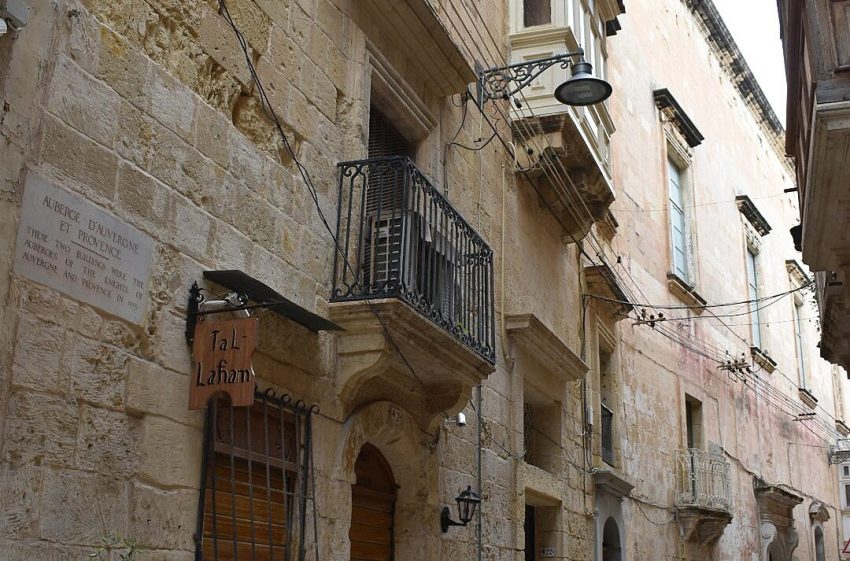
Tucked into the quiet backstreets of Birgu's Collachio district, the Auberge d'Auvergne et Provence is a rare survivor from the earliest days of the Knights of St. John in Malta. Its honey-coloured stone and weathered façades still hint at the energy of the 1530s, when the Knights were establishing their first administrative hub long before Valletta existed. For travellers exploring the Three Cities, this is one of the top sights in Birgu, partly because it offers something very different from the grand Baroque monuments that came later. With its modest scale and layered architecture, it feels surprisingly intimate, almost like stepping into the Knights' private world.
The building remains a great place to visit on a walking tour of Birgu. Much of the Provençal section is still intact, making it easy to imagine knights moving between rooms, planning the Order's future on the island. Even the altered Auvergne wing retains original doorways and internal layouts that whisper stories from centuries past. And because this part of Birgu remains mostly residential, visiting the auberge feels refreshingly authentic and peaceful.
Table of Contents
- History and Significance of Auberge d’Auvergne et Provence
- Things to See and Do in Auberge d’Auvergne et Provence
- How to Get There
- Practical Tips on Visiting Auberge d’Auvergne et Provence
- Where to Stay close to Auberge d’Auvergne et Provence
- Is Auberge d’Auvergne et Provence Worth Visiting?
- FAQs for Visiting
- Nearby Attractions to Auberge d’Auvergne et Provence
History and Significance of Auberge d’Auvergne et Provence
Built in the early 1530s, the Auberge d'Auvergne et Provence was among the very first residences constructed by the Knights of St. John after they settled in Birgu. Records confirm it was already functioning by 1531, making it one of the oldest surviving examples of Hospitaller domestic architecture in Malta. The auberge was originally two separate buildings, one for the Langue of Auvergne and the other for the Langue of Provence, which later merged behind a unified façade. Their construction incorporated earlier structures dating back to the 15th century, and possibly even remnants from the Byzantine period.
The building formed part of a tight network of auberges clustered within Birgu's historic Collachio, the city's exclusive administrative quarter. Alongside the Auberge d'Aragon and Auberge de France, it helped define Birgu as the Knights' first centre of governance. Unlike the grand, carefully planned auberges built later in Valletta, this early example shows a more organic evolution, combining Melitan vernacular features such as moulded cornices, wooden balconies, and multiple doorways that reflected the practical needs of the Order.
The auberge housed both Langues until the late 16th century, when the new capital of Valletta drew the Knights away to more ambitious architectural projects. Although part of the Auvergne section was demolished in the twentieth century to make way for modern buildings, the Provençal side remains remarkably intact. Today it stands as a testament to the Knights' formative decades in Malta, preserving a rare sense of place from their earliest chapter on the island.
Things to See and Do in Auberge d’Auvergne et Provence
A visit to the auberge is a chance to appreciate its architectural layers. Stand before the façade and you’ll notice the distinct configuration of entrances that once served two separate Langues, along with the elegant stone detailing still visible around window and door frames. The Provençal section is the highlight, retaining much of its original stonework and internal structure, giving you a sense of how the Order lived and worked during the 1530s.
Although the interiors are not generally accessible to the public, viewing the building from the outside offers plenty of detail for those interested in architectural history. The surviving doorway of the Auvergne wing is particularly evocative, hinting at the original proportions before partial demolition. The timber balcony added after World War II adds another layer to the story, showing how the building continued to evolve even after the Knights’ era.
Take a moment to explore the surrounding alleyways, which still reflect the medieval street plan of the Collachio. Combined with nearby auberges, churches, and small residential houses, the area gives a vivid sense of Birgu’s role as the Order’s first functioning capital.
How to Get There
Birgu is easily reached from Valletta via the regular ferry service across the Grand Harbour, which is often the most scenic option. Buses also run frequently between Valletta and the Three Cities, stopping near Birgu's waterfront. If you're arriving by car, parking can be limited in the historic centre, so aim for the car parks near the marina.
Practical Tips on Visiting Auberge d’Auvergne et Provence
- Best time to visit Auberge d'Auvergne et Provence: Early morning or late afternoon for quieter streets and softer light on the stone façades.
- Entrance fee in Euros: The building is privately owned; exterior viewing is free.
- Opening hours: Viewable at any time from the street.
- Official website: None.
- How long to spend: Around 15-20 minutes, plus extra time to explore the Collachio.
- Accessibility: Narrow, uneven streets may be challenging for visitors with mobility issues.
- Facilities: No facilities on-site; cafés and services are available around Birgu’s waterfront.
- Photography tip: The Provençal façade catches beautiful light in the afternoon.
- Guided tours: Some local walking tours include the auberge as part of broader Three Cities itineraries.
- Nearby food options: Birgu Waterfront has several cafés and restaurants with harbour views.
Where to Stay close to Auberge d’Auvergne et Provence
Birgu and the wider Three Cities area offer several charming boutique stays that capture the historic atmosphere of the peninsula. You might consider Locanda La Gelsomina for an intimate, art-filled boutique experience set within a restored townhouse. Another excellent option is Casa Asti, which places you just across the harbour with easy ferry access to Birgu. For a converted historic stay in neighbouring Senglea, Cugó Gran Macina Malta blends heritage exteriors with luxury interiors and sweeping harbour views.
Is Auberge d’Auvergne et Provence Worth Visiting?
Yes, especially if you enjoy uncovering Malta's early chapters before Valletta's rise. The auberge may appear understated at first glance, but its historical significance and well-preserved Provençal wing make it an atmospheric stop for anyone exploring Birgu. It offers a rare connection to the Knights' earliest years on the island and tells a quieter, more intimate story than the major fortifications and palaces.
What Other Travellers Say...

Auberge De France, at VGQF+C56 in Birgu, is a compact, romantic historic building now occupied by the Birgu council; it's ideal for a short, wandering visit where you can admire lovely streets and, if you look up to the first floor, a twin-arched window with a slender central pillar and zigzag decoration in a Siculo-Norman style.


FAQs for Visiting
Nearby Attractions to Auberge d’Auvergne et Provence
- Auberge d'Aragon: Another early Knights' residence with a distinctive façade and strong ties to the Order's beginnings.
- Auberge de France: A well-preserved auberge offering insight into the living quarters of another Langue.
- Inquisitor's Palace: A rare surviving example of an inquisitorial residence and courtroom, filled with fascinating exhibits.
- Fort St. Angelo: Birgu's iconic fortress, offering panoramic harbour views and deep medieval history.
- Birgu Waterfront: A scenic promenade lined with cafés, small museums, and restored historic buildings.
The Auberge d'Auvergne et Provence appears in our Complete Guide to Visiting Birgu!

Moira & Andy
Hey! We're Moira & Andy. From hiking the Camino to trips around Europe in Bert our campervan — we've been traveling together since retirement in 2020!
This website uses affiliate links which may earn a commission at no additional cost to you!
Nearby Attractions
- Auberge de France (0.0) km
Historic Building - Auberge d’Aragon (0.0) km
Historic Building - Auberge d’Angleterre (0.0) km
Historic Building - Auberge de Castille et Portugal (0.1) km
Historic Building - Armoury of the Knights of Malta (0.1) km
Historic Building - Inquisitor’s Palace (0.1) km
Historic Building - St. Lawrence’s Church (0.2) km
Church - Malta Maritime Museum (0.2) km
Museum - Post of Castile (0.2) km
Castle - St. John Bastion and the Advanced Gate (0.3) km
City Gate