Liberia: The Ultimate Travel Guide 2026
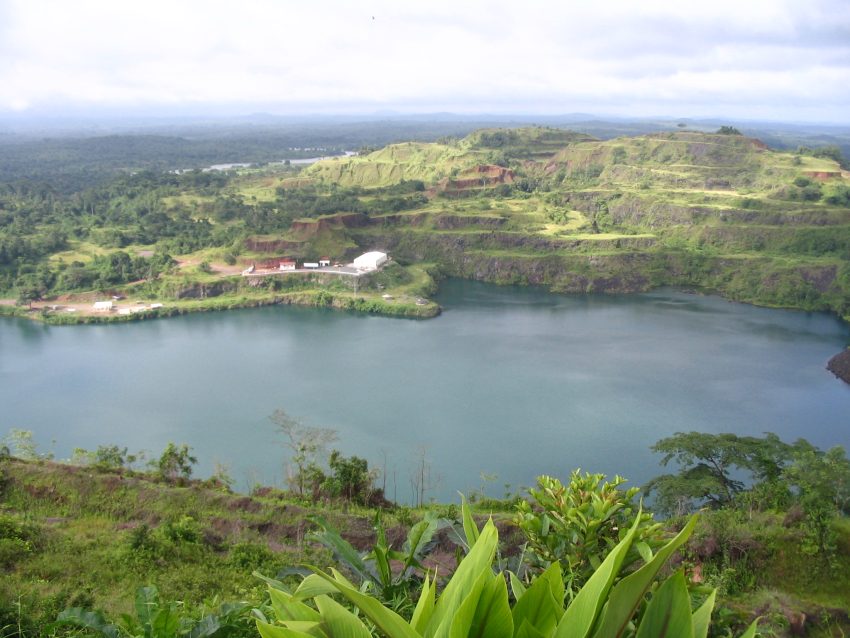
Liberia is a country on the West African coast, bordered by Sierra Leone, Guinea, and Côte d’Ivoire, with the Atlantic Ocean along its southern shoreline. Its landscape ranges from sandy beaches and mangrove-lined lagoons to dense tropical rainforest and rolling inland hills. The capital, Monrovia, is the nation’s largest city and a major hub for government, commerce, and coastal life.
Known for its rich biodiversity, Liberia is home to some of the most significant remaining stretches of Upper Guinean rainforest, supporting a wide variety of wildlife and plant species. Protected areas and forest regions play an important role in conservation, while rivers and fertile land support farming and local livelihoods. The country’s natural resources and environment shape much of its economy and daily life.
Liberia’s culture reflects a mix of many ethnic communities, each with its own languages, traditions, and artistic expressions, alongside a shared national identity. English is the official language, and everyday life is shaped by strong community ties, music and dance, and vibrant local markets. From coastal towns to inland villages, Liberia offers a welcoming blend of natural beauty and cultural diversity.
Table of Contents
- History of Liberia
- Before 1800: Indigenous societies and Atlantic contact
- 1820s–1847: The settlement project and the founding of Liberia
- 1847–1900: Independence and a settler-led republic
- 1900–1944: Territorial pressures, labor controversies, and economic dependence
- 1944–1971: Modernization under Tubman and the “Open Door”
- 1971–1980: Rising tensions and the 1980 coup
- 1980–1989: Doe’s rule and state breakdown
- 1989–1997: First Civil War and regional intervention
- 1997–2003: Taylor’s presidency and the Second Civil War
- 2003–2017: Postwar recovery and democratic consolidation
- 2018–present: Ongoing challenges and political change
- Best Time to Visit Liberia
- Food and Drink from Liberia
History of Liberia
Liberia’s history is shaped by Indigenous societies, Atlantic commerce and conflict, a 19th-century settlement project led by African Americans and free Black people from the United States, the creation of a republic dominated for decades by an Americo-Liberian elite, and late-20th-century civil wars whose effects still influence politics and development.
Before 1800: Indigenous societies and Atlantic contact
Long before the modern state, the region that became Liberia was home to diverse peoples and polities, including groups such as the Kpelle, Bassa, Vai, Kru, Grebo, Gio (Dan), Mano, Gola, Loma, and Mandingo. Communities organized around kinship networks, local chiefs, and trade routes that connected the forest and coastal zones to wider West African commerce. From the 15th century onward, European traders visited the coast, exchanging goods for commodities including ivory, pepper, and later enslaved people. Coastal interactions affected local power balances and intensified competition and raiding in some areas, while many inland societies maintained their own political and cultural systems.
1820s–1847: The settlement project and the founding of Liberia
In the early 19th century, the American Colonization Society (ACS) promoted the relocation of free Black people and formerly enslaved African Americans from the United States to West Africa. Beginning in the 1820s, settlers arrived on the Liberian coast and established communities, including what became Monrovia. The settlement expanded through purchases and treaties—often contested or misunderstood by local leaders—and through armed conflict at times.
The newcomers and their descendants, later known as Americo-Liberians, brought American-influenced institutions, Christianity, and English-language governance. They also developed a social hierarchy that frequently placed settlers above Indigenous communities, laying the groundwork for long-term political and economic inequality.
1847–1900: Independence and a settler-led republic
Liberia declared independence in 1847, adopting a constitution modeled in part on the United States. Joseph Jenkins Roberts became the first president. International recognition came gradually, and Liberia worked to assert sovereignty along a coastline increasingly pressured by European imperial expansion.
Domestically, political power consolidated among Americo-Liberian elites, particularly through the True Whig Party, which became dominant. Indigenous Liberians were often excluded from full political participation and faced systems of indirect rule, taxation, and labor demands. The state’s authority beyond coastal and settler areas remained uneven, and relations between the central government and many interior communities were frequently tense.
1900–1944: Territorial pressures, labor controversies, and economic dependence
In the early 20th century, Liberia faced territorial losses and boundary settlements under pressure from European colonial powers in neighboring territories. Financial strain led to foreign loans and oversight that increased external influence over Liberian finances.
A major turning point came with the growth of concession-based economies. In 1926, the government granted a large concession to the Firestone Tire and Rubber Company, which established rubber plantations and made rubber a central export. While this brought infrastructure and revenue, it also deepened dependence on a narrow export base and foreign capital.
During this era, Liberia was also rocked by international controversy over forced labor and coercive recruitment practices, which damaged its reputation and highlighted the gap between republican ideals and realities on the ground.
1944–1971: Modernization under Tubman and the “Open Door”
President William V. S. Tubman pursued policies aimed at attracting foreign investment and expanding state presence in the interior. His “Open Door” policy encouraged mining and plantation development, while “Unification” rhetoric sought to integrate Indigenous Liberians more fully into national life.
Economic growth accelerated through iron ore mining and other exports, and Monrovia expanded. Yet political power remained centralized, opposition was constrained, and benefits were unevenly distributed. Social divisions persisted between Americo-Liberian elites and the broader population, even as education and urban employment expanded.
1971–1980: Rising tensions and the 1980 coup
After Tubman, President William R. Tolbert Jr. faced mounting pressures: global economic shifts, rising expectations among urban youth and rural communities, and resentment toward entrenched political privilege. In 1979, protests over a proposed increase in rice prices escalated into major unrest in Monrovia, exposing deep economic grievances and political fragility.
In April 1980, Master Sergeant Samuel Doe led a coup that killed Tolbert and ended more than a century of Americo-Liberian-dominated rule. The coup was a watershed: it opened politics to new groups but also ushered in military rule, repression, and intensified ethnic and factional competition.
1980–1989: Doe’s rule and state breakdown
Doe’s government initially promised reform but soon became authoritarian. Political opponents were persecuted, and elections in 1985 were widely viewed as flawed. The state’s institutions weakened amid corruption, economic decline, and growing dissent. Ethnic favoritism and security-force abuses fueled grievances, setting the stage for armed rebellion.
1989–1997: First Civil War and regional intervention
In late 1989, Charles Taylor’s National Patriotic Front of Liberia (NPFL) launched an insurgency that rapidly escalated into a multi-faction civil war. Samuel Doe was captured and killed in 1990, but fighting continued among rival groups. The conflict involved mass atrocities, the use of child soldiers, and the collapse of basic services.
Regional actors intervened through the ECOWAS peacekeeping force (ECOMOG), and multiple peace agreements were attempted. After years of warfare and fragmented control, elections were held in 1997, and Charles Taylor won the presidency, in part because many voters hoped his victory would end the violence.
1997–2003: Taylor’s presidency and the Second Civil War
Taylor’s rule was marked by authoritarianism, renewed conflict, and international isolation. Armed opposition groups—including LURD and later MODEL—fought the government, and Liberia became entangled in wider regional wars, particularly in Sierra Leone and Guinea. Sanctions and diplomatic pressure increased as evidence mounted of support for regional insurgencies and illicit trade.
By 2003, rebel advances and intense fighting around Monrovia, combined with international pressure, led to Taylor’s resignation and exile. A comprehensive peace agreement established a transitional government and set Liberia on a path toward disarmament and elections. A large UN peacekeeping mission helped stabilize the country.
2003–2017: Postwar recovery and democratic consolidation
Liberia undertook disarmament, security-sector reform, and efforts to rebuild institutions. In 2005, Ellen Johnson Sirleaf was elected president, becoming Africa’s first elected female head of state. Her administrations focused on debt relief, infrastructure, governance reforms, and attracting investment, while facing persistent challenges: unemployment, corruption, land disputes, and the difficult task of reconciliation after mass violence.
A Truth and Reconciliation process documented abuses and recommended reforms, but accountability and implementation were uneven, and political debates over justice versus stability continued.
The 2014–2016 Ebola outbreak was a severe national crisis, straining health systems and the economy and causing significant loss of life. Liberia eventually contained the outbreak, and the experience prompted renewed attention to public health capacity.
In 2017, Liberia experienced a peaceful transfer of power through elections, with George Weah winning the presidency—an important milestone for democratic continuity.
2018–present: Ongoing challenges and political change
Recent years have featured efforts to improve roads, education, and public services alongside continued struggles with inflation, jobs, governance, and trust in institutions. Liberia has also navigated the legacy of war, including debates over war-crimes accountability and how to balance justice, reconciliation, and political stability.
Elections and civic activism remain central to national life, reflecting both the resilience of Liberia’s democratic processes and the ongoing work of building a more inclusive and effective state.
Best Time to Visit Liberia
Visiting Liberia in Winter (Best)
December to February is a great time to visit Liberia because it’s typically the driest stretch of the year, with lower humidity and more reliable sunshine. Roads are generally easier to navigate, beach days are more comfortable, and wildlife and nature outings are less likely to be disrupted by heavy rain. This is also a popular period for travel, so booking accommodations in advance is wise in the busiest areas.
Visiting Liberia in Spring
March to May is a warmer shoulder season where conditions can still be good for beaches and exploring, though humidity starts to rise and rainfall becomes more likely as you move toward May. It’s a solid time if you want fewer crowds than peak dry-season months while still having a decent chance of clear days for Monrovia, coastal stops, and inland excursions.
Visiting Liberia in Summer
June to August falls in Liberia’s rainy season, bringing frequent downpours, higher humidity, and a greater chance of travel delays—especially on unpaved roads. That said, the landscape is lush and green, and it can be rewarding for travelers who don’t mind wet weather and prefer quieter travel periods. If you visit in summer, plan flexible itineraries and prioritize destinations with easier access.
Visiting Liberia in Autumn
September to November is a transition period: September is often still quite wet, but conditions usually improve into October and November as the dry season approaches. This can be a good time to visit if you want better weather than mid–rainy season while avoiding the peak-season rush that often starts in December. It’s also a nice window for combining city time with coastal and nature-focused trips as rainfall tapers off.
Food and Drink from Liberia
Liberian food reflects a mix of indigenous traditions and influences from the wider West African coast, shaped by what grows well in the country’s tropical climate. Rice is the everyday staple and is commonly served with rich soups and stews built around leafy greens, peppers, onions, and palm oil. Cassava is also central, eaten as boiled root, processed into flour, or made into dumpling-like sides. Meals tend to be hearty and communal, with bold, savory flavors and a noticeable heat from fresh chilies.
One of the most recognizable dishes is jollof rice, cooked with tomatoes, aromatics, and spices, often paired with chicken, fish, or beef. Another popular favorite is fried rice, typically prepared with vegetables and bits of meat, and served at gatherings and celebrations. Soups and stews are especially important, including palava sauce—made with greens (often cassava leaves or other local leaves), palm oil, and sometimes dried fish or meat—served over rice. Okra soup is also common, valued for its thick, silky texture and often enriched with seafood or smoked meats.
Seafood plays a major role along the coast, where fresh fish is grilled, fried, or simmered into peppery stews. Inland, people rely more on river fish, smoked meats, and preserved ingredients that add depth and smokiness to dishes. Plantains are widely eaten, either fried as a side or cooked into stews, and peanuts are used to make creamy, satisfying sauces. Street foods and snacks can include roasted corn, fried plantain, and small pastries, offering quick, filling bites throughout the day.
Liberian drinks range from everyday refreshments to traditional beverages served at social events. Ginger beer is a popular homemade drink with a spicy kick, and fruit juices made from local produce are common when available. Palm wine, tapped from palm trees, is a traditional alcoholic drink enjoyed in many communities, sometimes alongside celebrations and ceremonies. Whether at home, in markets, or at special gatherings, Liberian food and drink emphasize warmth, shared plates, and flavors that are both comforting and vibrant.