Pecs, Hungary: The Ultimate Travel Guide 2026
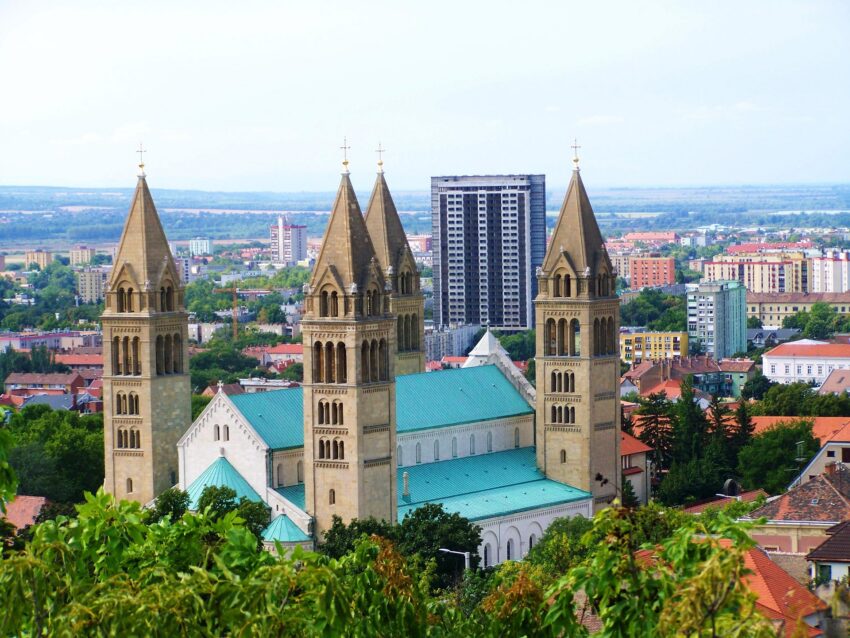
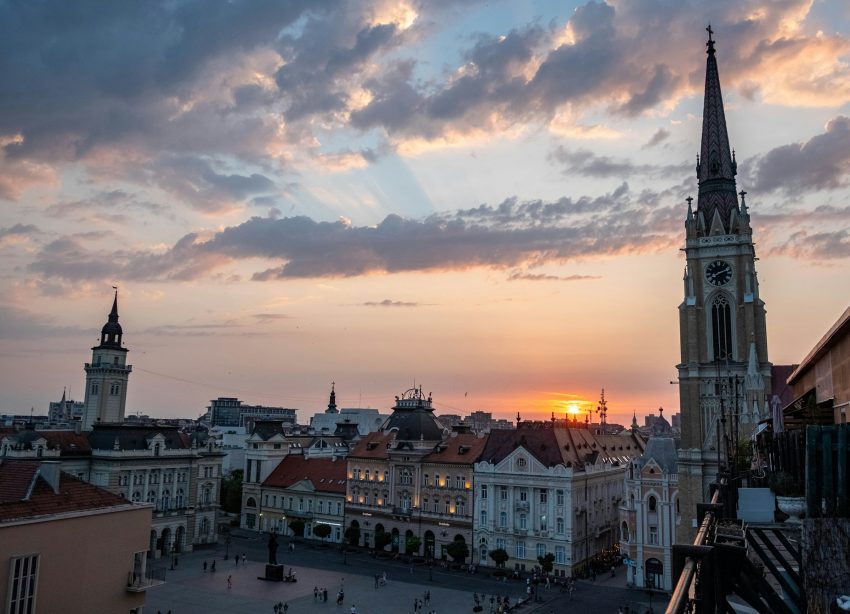
Pécs is one of Hungary's most distinctive cities, set in the south of the country below the Mecsek Hills and shaped by a long history of Roman, medieval, Ottoman, and modern cultural influences. It feels noticeably different from Budapest: smaller in scale, slower in rhythm, and warmer in atmosphere, with pedestrian streets, café terraces, historic squares, and a compact center that is easy to explore on foot. First-time visitors are often drawn by the cathedral, the mosque-church on the main square, and the UNESCO-listed Early Christian Necropolis, but the city's character comes just as much from its lived-in texture as from its headline monuments. Pécs has a reputation for being one of Hungary's most Mediterranean-feeling cities, and that description makes sense once you see the sunlit facades, outdoor social life, and the easy transition between culture, food, and everyday urban life. It suits travelers who enjoy history and architecture but prefer a city that feels intimate rather than monumental.
What makes Pécs especially rewarding is how many layers of identity fit into such a compact area. Roman burial chambers survive beneath the modern city, medieval and ecclesiastical landmarks dominate the hilltop core, Ottoman traces remain in mosques and baths, and the Zsolnay legacy adds a very different kind of cultural prestige through ceramics, design, and adaptive reuse. The city’s role as European Capital of Culture in 2010 helped strengthen that cultural profile further, especially through projects such as the Zsolnay Cultural Quarter and other major institutions. Because the center is so walkable, visitors can move naturally between cathedral precincts, museums, plazas, courtyards, and café stops without ever feeling rushed. Pécs is ideal for travelers interested in art, heritage, urban atmosphere, and a more regionally rooted version of Hungary than the capital provides.
There is also a strong sense of balance here between major history and everyday ease. Pécs is not a city of endless checklist sightseeing; it works best when you combine its monuments with slower pleasures such as wandering Király Street, lingering on Széchenyi Square, climbing to viewpoints, or spending time in the Zsolnay Quarter. The city’s university presence and cultural institutions keep it lively, but the overall mood remains calmer than in Hungary’s larger tourist centers. For travelers who like compact historic cities with serious heritage, strong museums, and an unmistakable local character, Pécs is one of the most rewarding bases in the country.
History of Pecs
Roman Sopianae and the Early Christian Legacy
The roots of Pécs stretch back to the Roman settlement of Sopianae, which became an important town in the province of Pannonia. Its most famous surviving legacy is the Early Christian cemetery, now recognized by UNESCO for its burial chambers, memorial chapels, and painted tomb structures. These monuments are not just archaeological remains but direct evidence that this was already a place of religious, social, and artistic significance in late antiquity.
What makes this Roman layer so important today is that it still shapes how visitors understand the city. Pécs is not simply a pleasant provincial center with historic buildings; it is one of the most important sites in Hungary for understanding continuity from the Roman world into the Christian traditions that followed.
Medieval Growth and the Cathedral City
After the Roman era, the city continued to develop and gained particular importance in the medieval Kingdom of Hungary. Its hilltop ecclesiastical core, dominated by the cathedral and associated church institutions, helped define Pécs as a religious and administrative center. The city’s historic center still reflects this long-standing prominence, with cathedral precincts, squares, and older street lines giving a sense of how central church power was to local identity.
Pécs also became important in intellectual terms. The city is associated with one of Hungary’s earliest universities, founded in the 14th century, reinforcing its status not only as a religious center but as a place of scholarship and urban prestige.
Ottoman Rule and Cultural Layering
Like several Hungarian cities, Pécs was transformed by Ottoman rule in the 16th and 17th centuries. This period left a visible mark on the city, most notably in buildings such as the former mosque on the main square, which still signals how deeply the Ottoman period entered the urban fabric. Rather than replacing everything that came before, Ottoman rule added another layer to the city’s already complex identity.
This is one of the reasons Pécs feels historically richer than its scale might suggest. Roman, Christian, medieval, and Ottoman elements do not appear here as isolated museum pieces, but as parts of a single evolving city.
Habsburg Reordering and the Modern Town
After the Ottoman period, Pécs was drawn more firmly into the Habsburg sphere, and the city gradually took on the civic and ecclesiastical forms that shaped much of its later appearance. Rebuilding, administrative reform, and the strengthening of church and civic institutions all contributed to a more ordered urban core. Over time, Pécs developed as a regional center with cultural, commercial, and educational importance well beyond its size.
These centuries also helped establish the city’s more refined urban face: squares, facades, and institutions that now make the center feel both historic and coherent. The result is a city that feels layered without seeming fragmented.
The Zsolnay Era and Industrial-Cultural Prestige
The 19th century brought one of the city’s most famous modern associations through the Zsolnay family and the ceramics factory that made Pécs internationally known. The success of Zsolnay ceramics linked the city to art, design, applied craft, and architectural decoration on a scale that still shapes its reputation today. This was not just an industrial story but a cultural one, because the Zsolnay name became tied to style, innovation, and a distinctly Hungarian contribution to decorative arts.
The importance of this legacy is still visible in the Zsolnay Cultural Quarter, which turns former industrial space into a major cultural complex. It gives Pécs an identity that is not only historical but also artistic and inventive.
Pécs in the Contemporary Cultural Era
In modern times, Pécs has strengthened its role as one of Hungary’s key cultural cities. Its designation as a European Capital of Culture for 2010 brought major investment and helped reinforce institutions such as the Kodály Centre, museum network, and the revitalized Zsolnay Quarter. This was not a reinvention from nothing, but a continuation of long-standing cultural traditions already present in the city.
Today, Pécs stands out because it combines deep heritage with a strong present-day cultural life. Roman archaeology, cathedral history, Ottoman traces, ceramics, museums, and university energy all coexist within a compact, highly walkable city that feels both historic and active.

Moira & Andy
Hey! We're Moira & Andy. From hiking the Camino to trips around Europe in Bert our campervan — we've been traveling together since retirement in 2020!
Visiting Pecs for the first time and wondering what are the top places to see in the city? In this complete guide, I share the best things to do in Pecs on the first visit. To help you plan your trip, I have also included an interactive map and practical tips for visiting!
This website uses affiliate links which earn a small commission at no additional cost to you.
More from this area
Best things to do and See in Pecs
1. Explore Cathedral Hill and the episcopal center
This is one of the most historically important parts of Pécs and the place where the city’s ecclesiastical identity becomes most visible. The cathedral, surrounding precinct, and elevated setting make it easy to understand why Pécs developed as both a religious and urban center. Even travelers who are not usually drawn to church architecture tend to find this area compelling because of its scale, coherence, and long historical depth.
2. Visit the Early Christian Necropolis
The UNESCO-listed burial chambers are among the city’s defining attractions and one of the strongest reasons to visit Pécs rather than another Hungarian city. They offer a direct encounter with the Roman and early Christian past in a form that is architecturally and artistically unusual for the region. This is the place to go if you want to understand why Pécs matters on a much larger historical map.
3. Spend time in Széchenyi Square and the Ottoman-era core
The main square gives you one of the clearest impressions of Pécs as a layered city, with church, mosque, civic space, and everyday street life all meeting in one central area. It is ideal for walking slowly, pausing for coffee, and letting the city reveal itself through facades, street movement, and changing angles rather than through a single monument alone. For many visitors, this area provides the best introduction to the city’s overall mood.
4. Explore the Zsolnay Cultural Quarter
The Zsolnay Quarter is one of the city’s strongest modern cultural assets, turning former industrial grounds into a large complex of exhibitions, venues, and public space. It stands out because it links local industrial history to art, ceramics, design, family attractions, and adaptive reuse rather than presenting the Zsolnay story as a static museum subject. This is one of the best places in Pécs for travelers who want both heritage and contemporary cultural energy.
5. Visit Pécs’s art museums and galleries
Pécs has a stronger art profile than many visitors expect, with museum and gallery offerings that deepen the city’s reputation as a cultural center rather than simply a historic one. This makes the city particularly rewarding for travelers who like mixing archaeology and churches with painting, design, and modern exhibitions. The museum network gives substance to the city’s European Capital of Culture identity.
6. Wander the center without a strict plan
Pécs is one of those cities where unstructured time often produces some of the best moments. Its size, walkability, and density of squares, courtyards, side streets, and terraces mean that wandering between landmarks can be as satisfying as the landmarks themselves. Travelers who enjoy atmosphere as much as checklist sightseeing tend to do especially well here.