Self-Guided Walking Tour of Alghero (2026)
This website uses affiliate links which earn a small commission at no additional cost to you.
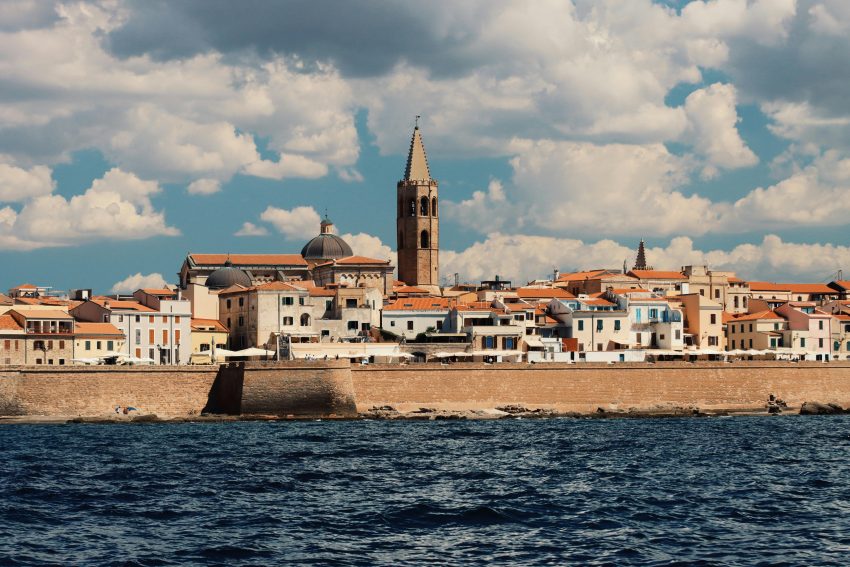
Alghero is one of those places where you can feel the sea in the city's rhythm. The Old Town is compact, walkable, and built for wandering: honey-coloured stone lanes, small squares that open unexpectedly, and long, breezy stretches along the ramparts where the water sits almost level with your view. A self-guided walking tour lets you move at your own pace, detouring for a coffee, a swim, or a quieter backstreet when the main lanes get busy.
This route is designed to stitch together Alghero’s historic centre with its most scenic edges, so you get both the landmark moments and the everyday atmosphere. You will pass fortified walls and bastions, churches and small museums, and the kind of shopfronts and gelaterias that make it easy to turn “a quick walk” into a whole afternoon. It is also a practical way to orient yourself, so later you can return to the spots you liked most for sunset, dinner, or photos.
If you are searching for the best things to see in Alghero, this walking tour covers the essentials without feeling rushed. Expect a mix of history and coastline, with plenty of opportunities to pause and take in the views across the bay. All you really need is comfortable shoes, a bottle of water in summer, and a little flexibility to follow your curiosity when Alghero inevitably tempts you off-route.
How to Get to Alghero
By Air: Alghero's main gateway is Alghero-Fertilia Airport (AHO), a short drive from the city, with seasonal and year-round flights that make it one of the easiest parts of Sardinia to reach from mainland Europe. From the terminal you can continue into town by taxi, rideshare where available, or scheduled airport buses that run to the centre and often stop near the main hotels. In summer, flight schedules can change frequently, so it is worth aligning your arrival time with onward transport options if you do not want to wait around. For the best deals and a seamless booking experience, check out these flights to Alghero on Booking.com.
By Train: Alghero does not have a central train station in the historic core, and rail is generally not the most direct way to arrive. The closest rail hub is usually Sassari, from where you would switch to a bus or taxi for the final leg to Alghero; this can work well if you are already travelling around Sardinia and do not mind a connection. If you prefer rail for part of the journey, treat it as a combined rail-and-bus trip, and plan for longer travel times than driving. Use Omnio to easily compare schedules, book train tickets, and find the best prices all in one place for a hassle-free journey across Italy.
By Car: Driving is often the most flexible option, particularly if you plan to explore the coastline, beaches, and nearby villages beyond Alghero. Roads into town are straightforward, but parking inside the Old Town is limited and traffic restrictions can apply, so it is usually easiest to park outside the historic centre and walk in. If you are arriving in peak season, consider booking accommodation with parking or identifying a reliable public car park in advance to avoid circling at busy times. If you are looking to rent a car in Italy I recommend having a look at Discover Cars, first, as they compare prices and review multiple car rental agencies for you.
By Bus: Intercity buses connect Alghero with key towns and airports across northern Sardinia and are typically the simplest public-transport alternative to driving. Services commonly link Alghero with Sassari and other hubs, and airport routes often operate timed to flight arrivals in high season. Buses usually terminate close to the centre, making them convenient if you are staying in or near the Old Town and want to avoid parking altogether.
Where to Stay in Alghero
To make the most of visiting Alghero and this walking tour, then you consider staying overnight in or very near the centre, so you can start early, take long pauses for coffee and sea views, and return easily for sunset along the bastions. The most convenient base is the Old Town (Centro Storico), where you can step straight into the historic lanes and ramparts within minutes. This area is ideal if you want everything on foot, including restaurants and evening strolls, with the only trade-off being tighter streets and limited parking. For an atmospheric stay right in the middle of the action, consider Hotel Catalunya or El Faro Hotel & Spa if you prefer a more resort-like feel (better for a taxi-in start to the walk) while still keeping Alghero close.
Just outside the walls, the harbour-front and marina area is a strong choice if you want quick access to the Old Town but prefer a slightly calmer feel, easier taxi pick-ups, and a more “open” layout. You will still be able to walk to the first stops in five to fifteen minutes, and you will be well placed for evening aperitivo along the water. Good options here include Hotel Regina Margherita and Hotel La Margherita & SPA, both of which keep you close to the bastions and the main promenade.
If you would rather pair the walking tour with beach time and a more relaxed, holiday base, look toward Lido San Giovanni and the long beach strip to the north-east of the centre. This area gives you a straightforward coastal walk into town (or a short taxi ride) and is especially appealing in warmer months when you want a swim before or after sightseeing. You can base yourself comfortably at Hotel Florida or Hotel Dei Pini, with the second option being better if you prioritise a classic beach setting and are happy to commute into the Old Town for the tour.
A Short History of Alghero
Alghero began as a small medieval port on Sardinia's north-west coast, established by Genoese interests in the early Middle Ages and then transformed decisively after the Crown of Aragon took control in the mid-14th century. Following the Aragonese conquest, the town was resettled with Catalan-speaking settlers, which is why Alghero still carries a distinct Catalan imprint in its language, street pattern, and identity. The historic core grew into a compact, fortified maritime town, with Piazza Civica (Civic Square) forming the civic heart where administration, trade, and daily life converged.
Much of what visitors recognise as “Old Alghero” was shaped between the late medieval period and the early modern era, when successive rulers strengthened coastal defences against raids and rival fleets. The sea walls and bastions, including the panoramic Bastioni Marco Polo, reflect this long defensive chapter, while towers such as Torre di Sulis are part of the same fortification system that guarded the harbour approaches. These structures were not simply military works; they also defined the city's most dramatic public spaces, creating the elevated promenades that are now integral to any walk through the centre.
Alghero’s major churches trace the town’s prosperity and changing styles across centuries. The Cattedrale di Santa Maria Immacolata (Cathedral of Saint Virgin Mary) developed primarily in the 16th century, blending Gothic roots with later additions that mirror Alghero’s evolving tastes and patrons. Nearby, the Chiesa di San Francesco (St. Francis Church) is one of the clearest reminders of the town’s Catalan Gothic phase, while the Chiesa di San Michele (St. Michael’s Church), associated with a later Baroque moment, signals the city’s early modern religious and artistic ambitions. To connect the architecture with the objects of worship and civic patronage, the Museo Diocesano d’Arte Sacra (Museum of Sacred Art) provides context for how local elites and church institutions commissioned art and liturgical treasures over time.
In the 19th and 20th centuries, Alghero expanded beyond the walls and developed the civic amenities that define a modern coastal town. Public life broadened from the medieval lanes into newer gathering spaces, including the Giardini Pubblici (Public Gardens), while markets and cultural venues reinforced Alghero's role as the service centre for the surrounding coastline and rural hinterland. Today, places like the Mercato Centrale (Central Market) and the Coral Museum tie Alghero's present-day rhythm to older economic foundations-food, fishing, and the long tradition of coral craftsmanship that remains one of the city's most recognisable local signatures.
Your Self-Guided Walking Tour of Alghero
Discover Alghero on foot with our walking tour map guiding you between each stop as you explore its honey-stone Old Town, sea-facing bastions, Catalan-influenced lanes, and lively piazzas. This walking tour follows the city's layered story as a fortified port, moving from the waterfront ramparts and marina to cathedral streets, small museums, and local markets, within a compact historic centre where the Mediterranean is never far from view.
1. Piazza Civica
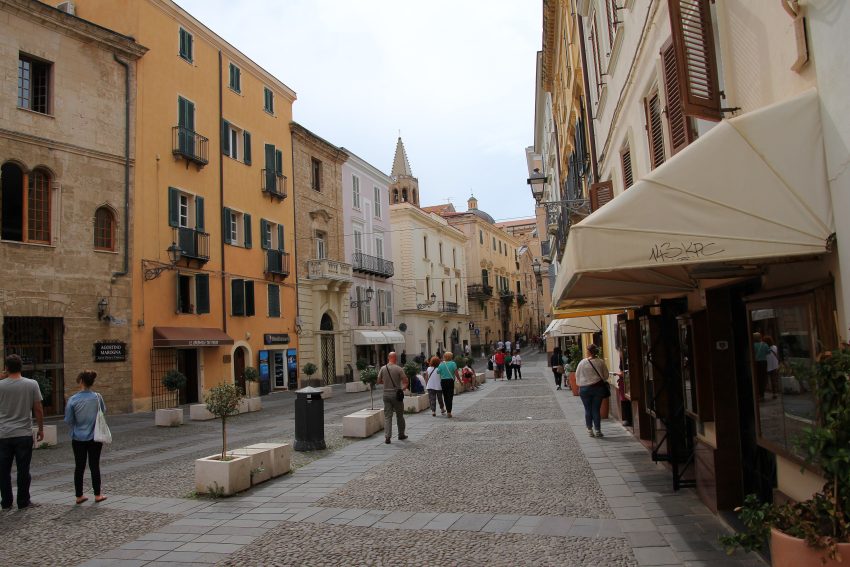
Piazza Civica is the natural “start line” for Alghero’s old town, where café terraces and civic façades frame the everyday rhythm of the historic centre. It is a practical orientation point because several of the core lanes and landmark churches branch off within a few minutes’ walk.
As you stand in the square, look for the way the space acts like a hinge between the busier commercial streets and the quieter medieval lanes. It is also a good place to pause and decide whether you want to prioritise the seafront bastions first (for views) or the churches first (for shade and history).
From Piazza Civica, the most efficient walking-tour flow is to drift toward Piazza del Duomo for the cathedral, keeping your eyes on the street names that pull you deeper into the walled city. You will feel the town tighten and cool as the lanes narrow, which is part of the old town’s character.
Location: Piazza Civica, 07041 Alghero SS, Italy | Hours: 24 Hours | Price: Free
2. Museum of Sacred Art
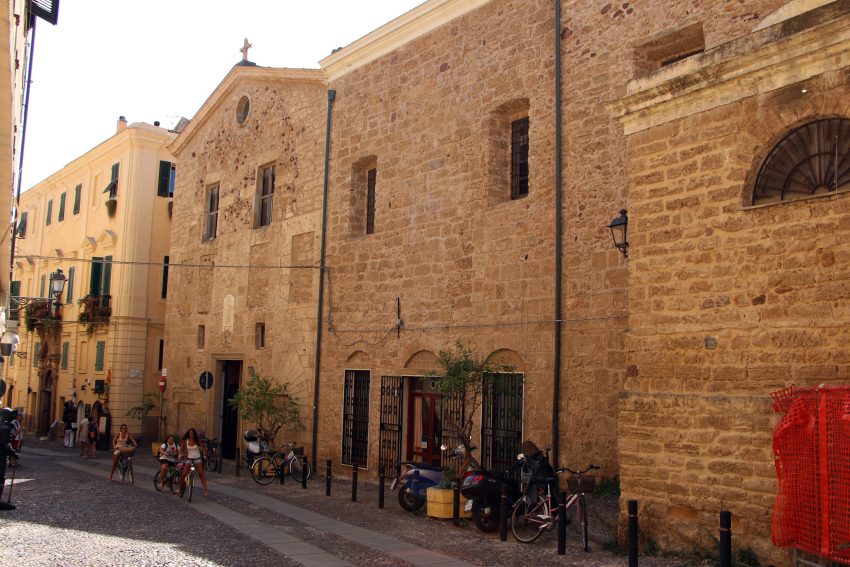
The Diocesan Museum of Sacred Art is the best “deep context” stop for understanding Alghero’s religious life and craftsmanship, with objects connected to the cathedral and the wider diocese. It is typically housed close to the cathedral, so it fits neatly into the same walking segment. If it is open when you visit, give yourself time to slow down: the value here is in the detail—metalwork, devotional objects, and the way these pieces reflect Alghero’s Mediterranean links. It is the kind of small museum that rewards a focused, unhurried lap rather than trying to “see everything.” Be aware that the museum has been reported as temporarily closed at times, so treat it as a “check and slot in” stop rather than the single anchor of your route. If it is closed, keep moving—your next landmark is only a short walk away and the cathedral still gives you the big architectural moment.
Location: Piazza Duomo, 1, 07041 Alghero SS, Italy | Hours: Irregular Hours :( | Price: Adults: €5.00 | Website

3. Cattedrale di Santa Maria Immacolata
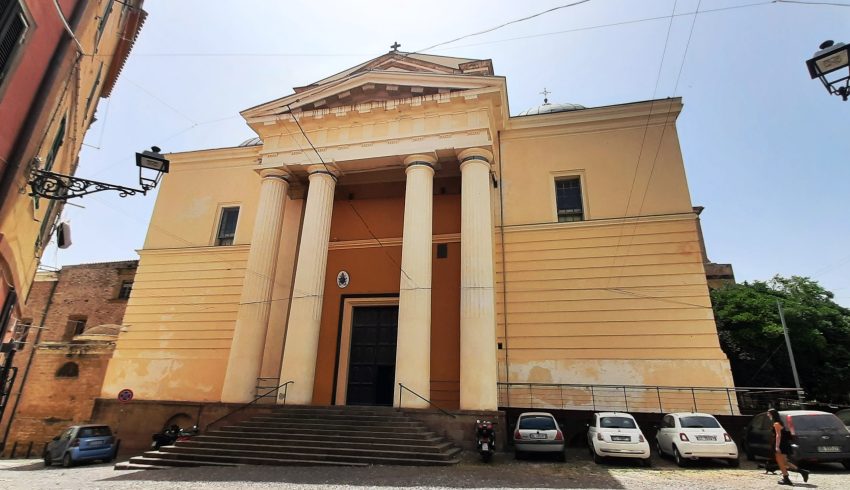
Alghero’s cathedral is the old town’s principal church and a key marker of the city’s long-standing Catholic identity, set in the historic core near the waterfront lanes. It also carries the “Catalan Alghero” story in its fabric, reflecting centuries of influence and rebuilding rather than a single, uniform style. In site, pay attention to the overall layering: this is a building that evolved over time, so the experience is partly about noticing transitions and additions. If you are able to access the bell tower, it is often highlighted as a rewarding viewpoint over rooftops and the sea-facing edge of town. Leaving the cathedral area, the walking-tour momentum typically shifts toward the sea walls and bastions for fresh air and wide angles. You are moving from enclosed lanes to an open promenade, which is a satisfying contrast if you have just spent time indoors.
Location: Piazza Duomo, 2, 07041 Alghero SS, Italy | Hours: Daily: 7:00 AM – 7:00 PM | Price: Free | Website
4. Bastioni Marco Polo
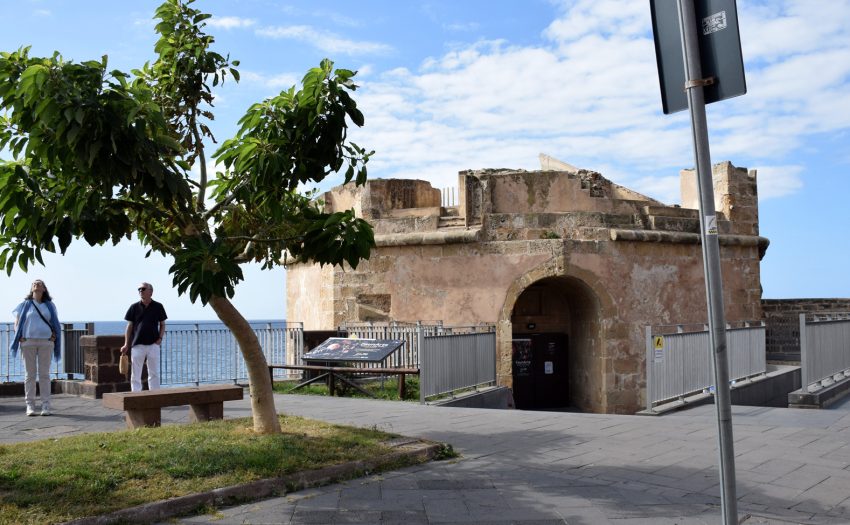
Bastioni Marco Polo is one of Alghero’s most enjoyable stretches of sea-facing ramparts, where the historic defences have become a panoramic promenade. It is a high-impact, low-effort segment: you get views, breeze, and a clear sense of the fortified city’s outline in a short walk. As you walk, look outward for the coastline and inward for how the town sits behind the walls—tight, vertical, and textured. This is also a classic late-afternoon segment because the light tends to flatter both the sea and the warm-toned stonework. From here, keep following the bastions toward Piazza Sulis, where the route naturally funnels you to one of the old towers. This is the walking tour “spine” that links multiple highlights with minimal navigation effort.
Location: Bastioni Marco Polo, 07041 Alghero SS, Italy | Hours: 24 Hours | Price: Free (exterior viewing; interior access limited).
5. Teatro Civico (Civic Theater)

Teatro Civico is one of Alghero’s most characterful cultural stops, notable not just for performances but for the building’s history as a civic project and symbol of local pride. It is often described as a rare survivor in Sardinia for the way it preserves original structural elements.
If you can step inside, focus on the intimacy of the space: smaller theatres often feel more immediate and human-scaled than grand opera houses, and that closeness is part of the charm. Even from outside, it works well as a quick “story stop” on a walking tour—one where your guide narrative can shift from fortifications and churches to everyday urban life and entertainment.
From the theatre area, it is easy to re-enter the medieval street grid and aim for the next pair of churches, which sit along or just off the main old-town routes. This is a good moment to slow your pace and let the lanes do the work of setting the atmosphere.
Location: Piazza del Teatro, 7, 07041 Alghero SS, Italy | Hours: 24 Hours | Price: Free (exterior viewing; interior access limited).
6. Chiesa di San Francesco (St. Francis Church)
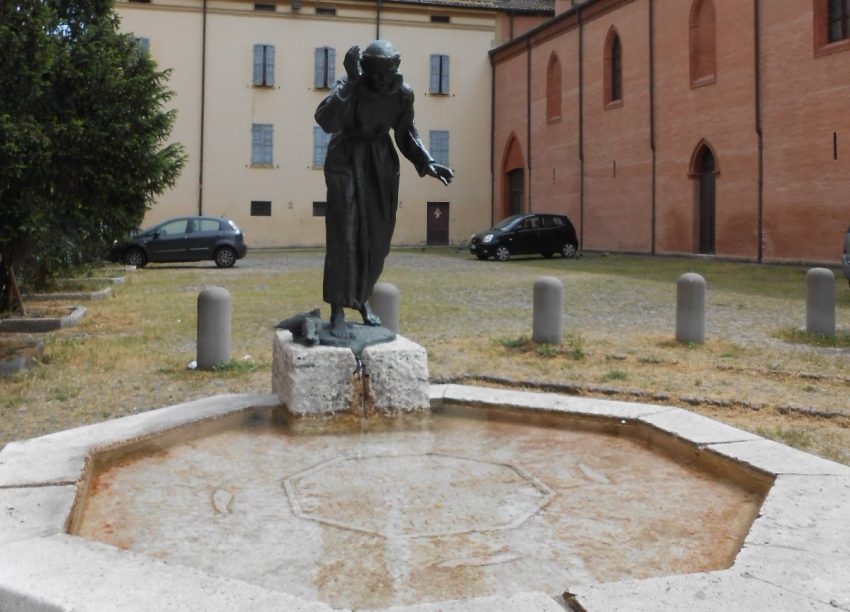
San Francesco is a strong anchor for anyone who enjoys quiet architectural details, particularly because of its cloister and the sense of an enclosed, contemplative world just beyond the busy lanes. It is one of the places in Alghero where the “stone and shadow” mood of the old town feels most concentrated. Inside the complex, the cloister is the highlight: keep an eye on the geometry of the arcades and the way the space frames sky and bell tower. This is also an excellent stop for a short reset in the middle of the walk—calmer, cooler, and typically less rushed than the seafront. When you leave San Francesco, continue along the old town’s main artery to pick up another distinctive church silhouette: San Michele’s dome is an easy “follow the landmark” navigation cue. The route between the two is part of the pleasure, with small shops and the old town’s everyday life filling the gaps.
Location: Chiesa di San Francesco d'Assisi, Piazza San Francesco D'Assisi, Modena, Province of Modena, Italy
7. Palazzo Simon (Simon Palace)Palazzo Simon (Simon Palace)
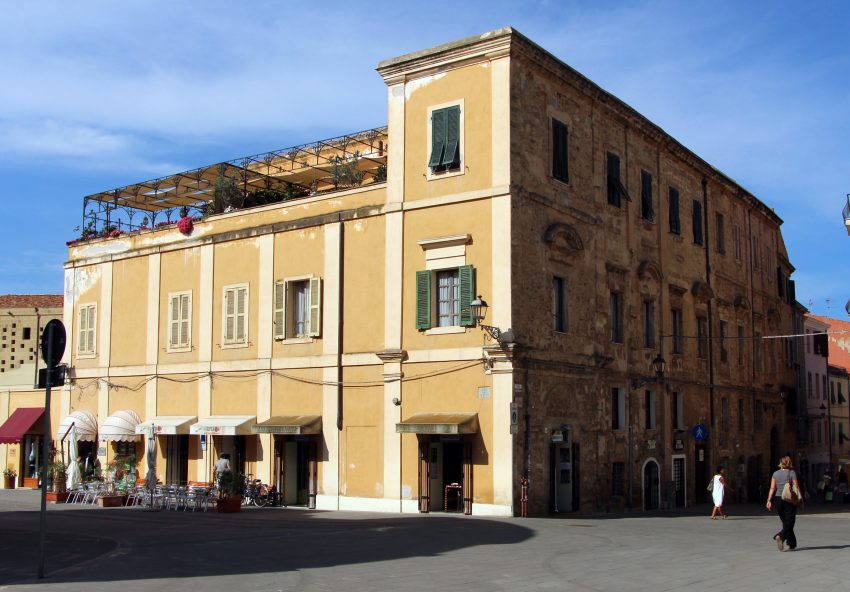
Palazzo Simon is a useful “street-level architecture” stop—an elegant civic façade that reminds you the old town is not only medieval walls and churches, but also later layers of prestige and urban renewal. It stands well on a walking tour because it breaks up religious and military landmarks with a different kind of heritage. Pause to take in the proportions and the formality of the exterior, which reads as more classical and orderly than the older, irregular medieval fabric nearby. If you are walking with an architecture-minded group, this is a good moment to point out how Alghero’s built identity is a composite, not a single-era postcard. From Palazzo Simon, keep moving toward the churches and then back toward the waterfront edge, where the tour can return to big views and open air. This is a natural “transition point” before you shift into the tower-and-bastions segment again.
Location: Via Gilbert Ferret, 97/99, 07041 Alghero SS, Italy | Hours: 24 Hours | Price: Free.
8. Torre di Sulis (Sulis Tower)
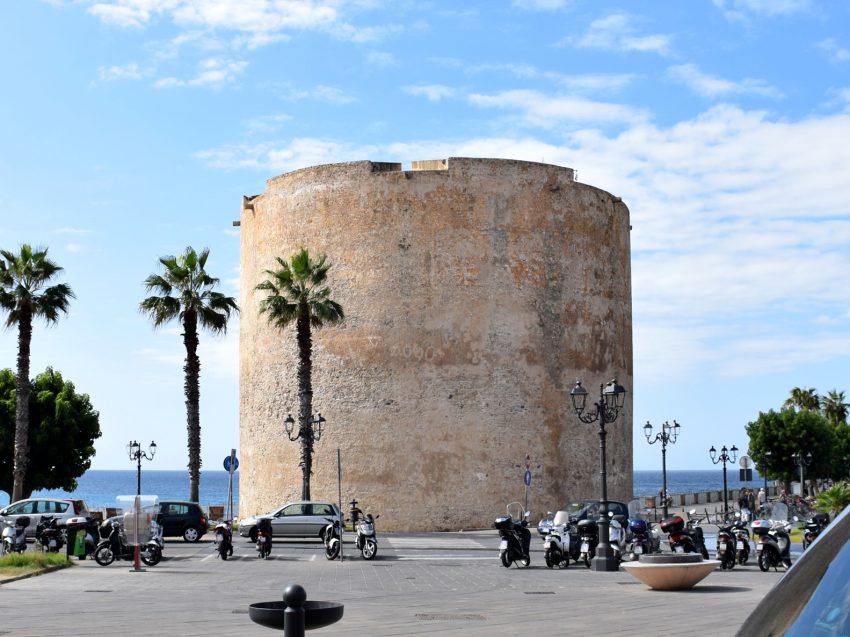
Torre di Sulis is one of the key defensive towers on the seafront edge, visually anchoring Piazza Sulis and marking the start (or end) of the bastions walk. It helps you understand the old town as a fortified system rather than a collection of pretty streets.
This is an excellent “tell the story” stop: the tower’s identity is tied not only to coastal defence but also to the memory of Vincenzo Sulis, a Sardinian revolutionary associated with imprisonment here. Even if you keep the visit external, the narrative adds weight to what could otherwise feel like a simple photo point.
From Torre di Sulis, continue along the bastions for views or peel inland depending on your tour’s priorities. If you are building a balanced loop, this is the moment to pivot toward museums and markets to give the group a different sensory register.
Location: Piazza Sulis, 07041 Alghero SS, Italy | Hours: 24 hours | Price: Free. | Website
9. Coral Museum (Museo del Corallo)
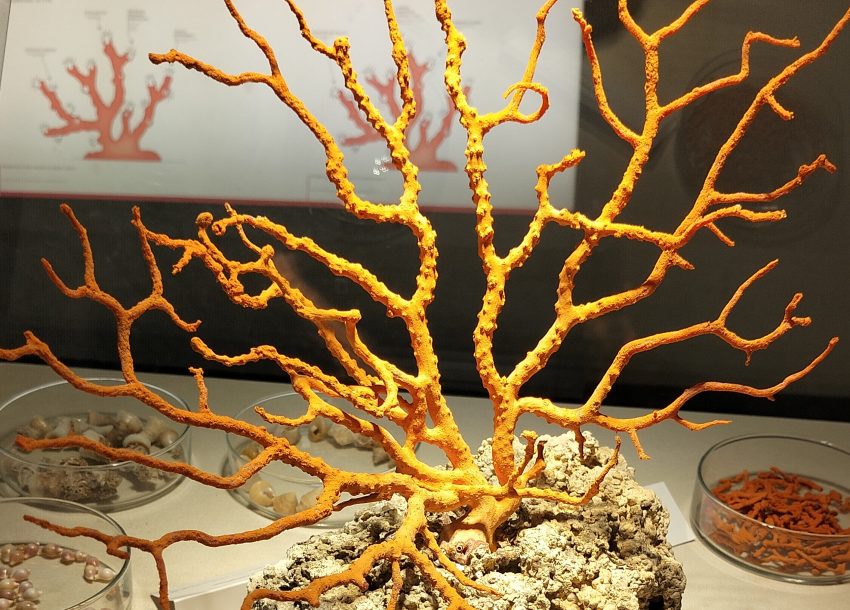
The Coral Museum explains one of Alghero’s signature identities: its long connection with Mediterranean red coral and the trade and craftsmanship that grew around it. It is an especially useful walking-tour stop because it turns what you see in shop windows into a coherent story about place and livelihood.
Inside, focus on the “from sea to atelier” arc—how raw material becomes jewellery, art, and local status. Even for visitors who are not museum-first travellers, it tends to land well because the subject is specific to Alghero rather than generic “regional history.”
When you exit, the route pairs naturally with a market stop: you move from curated exhibits to living, local commerce. It is a good way to keep the tour grounded in real daily life rather than only monuments.
Location: Via XX Settembre, 8, 07041 Alghero SS, Italy | Hours: Monday: 4:30 – 7:00 PM Tuesday: 10:30 AM – 1:00 PM Wednesday: 4:30 – 7:00 PM Thursday: 10:30 AM – 1:00 PM Friday: 10:30 AM – 1:00 PM, 4:30 – 7:00 PM Saturday: 10:30 AM – 1:00 PM, 4:30 – 7:00 PM Sunday: 10:30 AM – 1:00 PM, 4:30 – 7:00 PM | Price: Adults: €4 | Website
10. Mercato Centrale (Central Market)
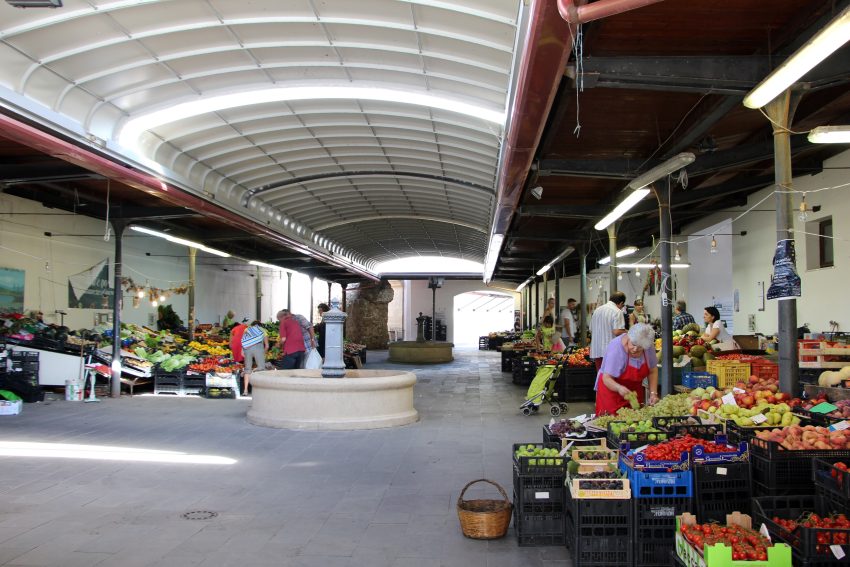
In Alghero, the central market (often referred to as the Mercato Civico) is the most immediate way to experience local produce, seafood, and the practical food culture of the city. It is a high-energy stop that contrasts nicely with the hush of churches and museums.
Walk it like a curator: do one full loop first, then decide what is worth a closer look—seasonal fruit, cured goods, or the day’s catch depending on time and appetite. If your walking tour includes a snack break, this is where you can make it feel distinctly Sardinian without committing to a full sit-down meal.
From the market, guide the group back into the old town lanes toward a green pause point. This is a sensible moment to ease the pace, especially in warmer months, before you finish with fortifications and open-air views.
Location: Via Sassari, 12, 07041 Alghero SS, Italy | Hours: Daily: 6:00 AM – 2:00 PM | Price: Free
11. Giardini Pubblici (Public Gardens)

Giardini Pubblici is the old town’s convenient “breathing space,” a leafy buffer that helps separate the medieval centre from the modern town. Created in the 19th century, it is where your walking tour can soften from stone and history into shade and benches.
Use the gardens as a reset stop: a quick sit, water break, and an opportunity to recap what you have covered so far. For many groups, this is also where attention rebounds—people who were flagging inside museums often re-energise once the tour shifts to open air.
From the gardens, it is a short, logical continuation to the Maddalena fort area, which sits nearby and brings you back to Alghero’s defensive history. The physical closeness makes the transition feel intentional rather than like a detour.
Location: Giardini Pubblici Indro Montanelli, Via Palestro, Milan, Metropolitan City of Milan, Italy | Hours: October to April: 6:30 am to 9:00 pm; May: closed at 10:00 pm; June to September: closed at 11:30 pm. | Price: Free; the park itself is open to the public without charge
12. Forte della Maddalena (Maddalena Fort)
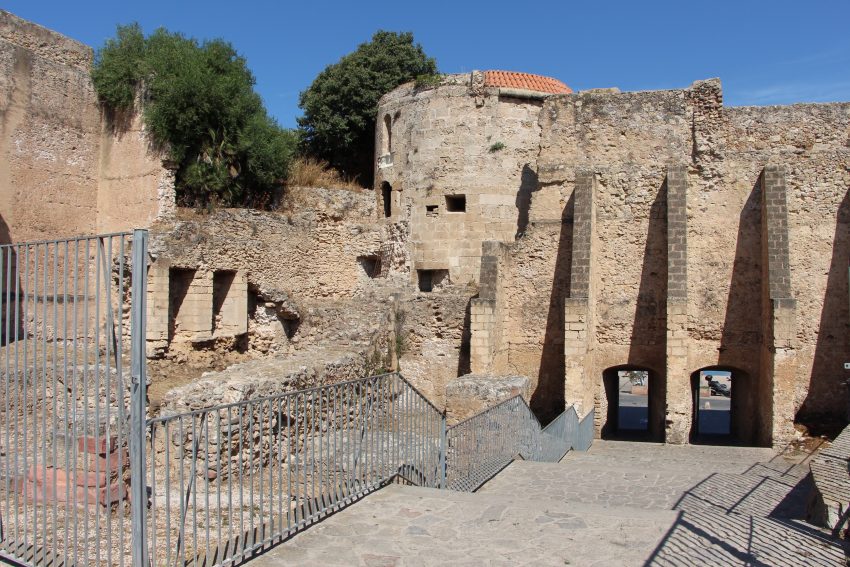
Forte della Maddalena is a key surviving piece of Alghero’s landward defences, dating to the late 16th century fortification effort that strengthened the city against attack. Even in partial remains, it helps visitors “see” the perimeter logic of a fortified settlement.
On site, orient yourself around the core footprint and imagine the lines of approach it was designed to protect. This stop works best when framed as part of a system: connect it verbally to the sea walls and towers you have already walked, so the group understands how layered the city’s defences were.
As a walking-tour finale, this area is strong because it leaves you with open space and a sense of the city’s edge, rather than ending in a crowded lane. From here, you can comfortably release the group toward the seafront promenade or back toward the cafés near Piazza Civica, depending on how you want the day to land.
Location: 07041 Alghero, Province of Sassari, Italy | Hours: 24 Hours | Price: Free

Moira & Andy
Hey! We're Moira & Andy. From hiking the Camino to trips around Europe in Bert our campervan — we've been traveling together since retirement in 2020!
This website uses affiliate links which earn a small commission at no additional cost to you.
Walking Tour Summary
Distance: 2.5 km
Sites: 12
Walking Tour Map