Xwejni Salt Pans, Victoria (Rabat), Gozo
Natural Phenomenon in Victoria (Rabat), Gozo
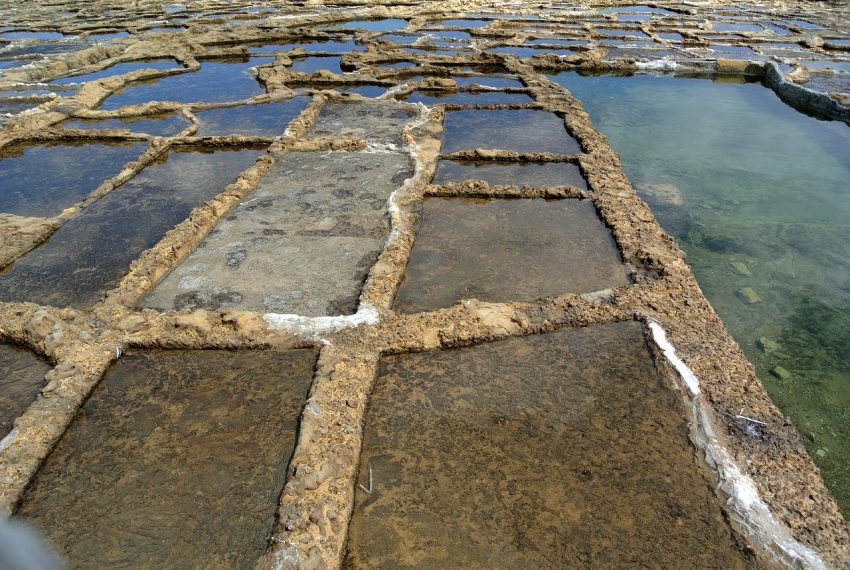
Stretching along Gozo's northern shoreline just beyond Marsalforn, the Xwejni Salt Pans are a long ribbon of rock-cut basins that look almost unreal from above-like a chequerboard carved into the limestone and filled with shimmering seawater. They are one of the top sights in Gozo because the landscape does all the work: stark stone, bright salt, and that deep Mediterranean blue that makes every photo look edited, even when it isn't.
What makes the visit more than a quick stop is the feeling that this is still a working coastline. In the warmer months, you might catch local families tending the pans and gathering salt, and even when nobody's harvesting, you can read the whole process in the terrain-channels, basins, and edges shaped for evaporation and seasonal rhythm. It's an easy win for a walking tour of Marsalforn, especially if you like coastal paths that deliver big views without complicated logistics.
Table of Contents
- History and Significance of the Xwejni Salt Pans
- Things to See and Do in the Xwejni Salt Pans
- How to Get to the Xwejni Salt Pans
- Practical Tips on Visiting the Xwejni Salt Pans
- Where to Stay Close to the Xwejni Salt Pans
- Is the Xwejni Salt Pans Worth Visiting?
- For Different Travelers
- FAQs for Visiting Xwejni Salt Pans
- Nearby Attractions to the Xwejni Salt Pans
History and Significance of the Xwejni Salt Pans
Salt production on Gozo is woven into everyday island history, and Xwejni is where that heritage becomes instantly visible. The pans aren’t a museum display behind glass; they’re an open-air working landscape, shaped by generations of practical knowledge about wind, sun, and sea conditions.
The tradition here is strongly associated with local families who have maintained the pans over time, keeping the craft alive through hands-on upkeep and seasonal harvesting. That continuity is part of the appeal: you’re not just seeing an old site, you’re seeing a living practice that still connects people to place.
Even if you arrive with zero interest in “how salt is made,” the significance lands anyway because the salt pans are an iconic marker of Gozo’s north coast. They turn a rugged shoreline into a patterned cultural landscape, and they give you a deeper sense of how island communities historically used what the sea offered.
Things to See and Do in the Xwejni Salt Pans
Walk the full stretch rather than treating it as a five-minute photo stop. The pans extend for a long distance along the coast, and the patterns change subtly as you go, especially where the basins meet rougher rock and small inlets.
Watch for the “working details” that explain the system: the shallow basins, the narrow channels, and the small storage caves carved into the coastal rock in places. These clues make the site feel legible, as if the coastline is quietly teaching you how it functions.
If you visit in summer, aim to spot harvesting activity, when the pans feel most alive and the tradition becomes tangible. It is also the best season to see the pans at their most reflective and geometric, when evaporation is doing its job and the coastline looks extra crisp.
Pair the walk with nearby swims and viewpoints. Xwejni Bay and Qbajjar Bay are natural add-ons, and continuing toward Marsalforn gives you an easy finish with food, drinks, and a seaside promenade when your legs have had enough.
How to Get to the Xwejni Salt Pans
The salt pans sit on Gozo’s north coast near Xwejni Bay, just west of Marsalforn, and most visitors reach them either via Marsalforn on foot or by driving to the nearby coastal road and starting the walk from there.
Fly into Malta International Airport (MLA) on the main island. For the best deals and a seamless booking experience, check out these flights to Victoria (Rabat), Gozo on Booking.com. From there, continue to Gozo via ferry (either the car ferry from Ċirkewwa or the fast ferry from Valletta, depending on where you're staying), then travel from Mgarr Harbour toward Marsalforn and the north coast by bus or taxi.
There are no trains on Malta or Gozo, so the final leg is always by road-based transport. Train schedules and bookings can be found on Omio.
Gozo’s public buses can get you close via Marsalforn, and from there it’s an enjoyable coastal walk to the pans that naturally turns into part of the experience.
If you’re driving, the easiest approach is to head for Marsalforn/Xwejni Bay, park near the coast, and then explore the pans on foot along the shoreline path.
Practical Tips on Visiting the Xwejni Salt Pans
- Entrance fee: Free
- Opening hours: 24 Hours
- Official website: https://www.visitmalta.com/en/attraction/xwejni-salt-pans-gozo/
- Best time to visit: Sunrise and late afternoon are ideal for softer light, fewer people, and reflections that make the pans look especially geometric.
- How long to spend: 45-90 minutes works well for a relaxed walk and photo stops; add time if you’re combining it with bays or Marsalforn.
- Accessibility: Expect uneven coastal rock, low curbs, and windy stretches; sturdy shoes make the visit more comfortable than sandals.
- Facilities: There are no on-site facilities along the pans, so bring water and use cafés, shops, and restrooms in Marsalforn before or after your walk.
Where to Stay Close to the Xwejni Salt Pans
For a culture-heavy itinerary across Gozo, the best base is Victoria (Rabat) for central access to the island's main sights; if your trip is focused on sea views, coastal walks, and swimming, basing yourself in Marsalforn keeps you closest to the shoreline and makes early-morning visits effortless.
For a seafront base with the salt pans as an easy walk or short hop away, Calypso Hotel is a practical choice with a classic resort-town location. If you want something calmer while still staying close to the north coast, Lantern Guest House is well placed for coastal wandering and quick access to food and swims. For a more intimate, locally run stay in the same area, Maria Giovanna Guest House works well for simple comfort and a strong location.
Is the Xwejni Salt Pans Worth Visiting?
Yes, because it delivers one of Gozo’s most distinctive landscapes with almost no effort: you arrive, walk, and the scenery takes over. It’s also the kind of place that feels different every time-glassy in calm weather, dramatic in wind, and quietly fascinating when you catch the harvesting rhythm in season.
If you’re the sort of traveller who likes places that are both beautiful and functional, this is a standout. The salt pans are simultaneously a photo spot, a coastal walk, and a living tradition you can still read in the rock.
What Other Travellers Say...

Salt Pans sits on the coast where geometric pools of seawater are used for traditional salt production; visitors can drive right up, stroll along the shore to watch harvesting, enjoy sea views and swimming, and find a small shop (which may be closed at times) plus a few information boards, noting the site is exposed, can be very hot in summer and offers only limited on-site interpretation, and some visitors have reported seeing bird hunting activity along nearby coastline.


For Different Travelers
Families with Kids
This is a strong family stop because it feels like an outdoor “pattern hunt” with big visual payoff. Kids usually enjoy hopping between viewpoints and looking for tiny sea life in the rock pools, and the walk can be as short or as long as your energy allows.
To keep it smooth, set simple boundaries: stay off the pans themselves, keep to the edges, and choose a turnaround point before anyone gets tired. Ending with a snack or swim in Marsalforn turns the outing into a complete, low-stress half-day.
Couples & Romantic Getaways
For couples, the salt pans are perfect for slow, scenic time together, especially near sunset when the coastline softens and the reflections get dramatic. It’s an easy place to feel like you’ve “found” something, even though it’s well known-because the setting is open and spacious, not crowded or museum-like.
Plan it as a gentle pre-dinner walk from Marsalforn, then come back for a drink by the water. The rhythm feels naturally romantic: wander, linger, and let the sea set the pace.
Budget Travelers
Budget-wise, it’s ideal: a memorable Gozo highlight that costs nothing and doesn’t require tickets, tours, or a long commute if you’re already on the island. It’s also a good “filler” stop that adds real value between paid attractions like temples or museums.
Bring water and snacks, and treat Marsalforn as your facilities hub. You’ll get a full experience with minimal spend, especially if you time it for great light and skip any extras you don’t need.
FAQs for Visiting Xwejni Salt Pans
Getting There
Tickets & Entry
Visiting Experience
Tours, Context & Itineraries
Photography
Accessibility & Facilities
Food & Breaks Nearby
Safety & Timing
Nearby Attractions to the Xwejni Salt Pans
- Wied il-Għasri: A narrow, cliff-lined inlet that feels like a secret fjord, ideal for a short walk and dramatic sea views.
- Marsalforn: Gozo’s easygoing seaside town for cafés, dinner by the harbour, and a relaxed post-walk finish.
- Qbajjar Bay: A popular swimming spot with sunbathing rocks and clear water, perfect for a quick dip on warm days.
- Xwejni Bay: The nearest bay to the pans, where you can pause for views and watch the coastline’s texture change with the light.
- The Citadel (Cittadella), Victoria: Gozo's historic fortress core, offering panoramic views and a strong dose of island history in one stop.
The Xwejni Salt Pans appears in our Complete Guide to Visiting Victoria (Rabat), Gozo!

Moira & Andy
Hey! We're Moira & Andy. From hiking the Camino to trips around Europe in Bert our campervan — we've been traveling together since retirement in 2020!
This website uses affiliate links which may earn a commission at no additional cost to you!
Planning Your Visit
24 Hours
Free
Nearby Attractions
- Wied il-Għasri (1.6) km
Beach and Valley - Wied il-Mielaħ Natural Arch (3.0) km
Natural Phenomenon - Ta’ Pinu Basilica, Gozo (3.4) km
Basilica - Gozo’s Citadel (Ċittadella) (3.7) km
Castle - Cathedral Museum (3.7) km
Museum - Gozo Aqueduct (3.8) km
Aqueduct - The Old Prison (3.8) km
Historic Building - Gozo Cathedral (3.8) km
Cathedral - Gozo Museum of Archaeology (3.8) km
Museum - Ta' Kola Windmill (3.8) km
Windmill