Underground Perugia
Historic Site in Perugia
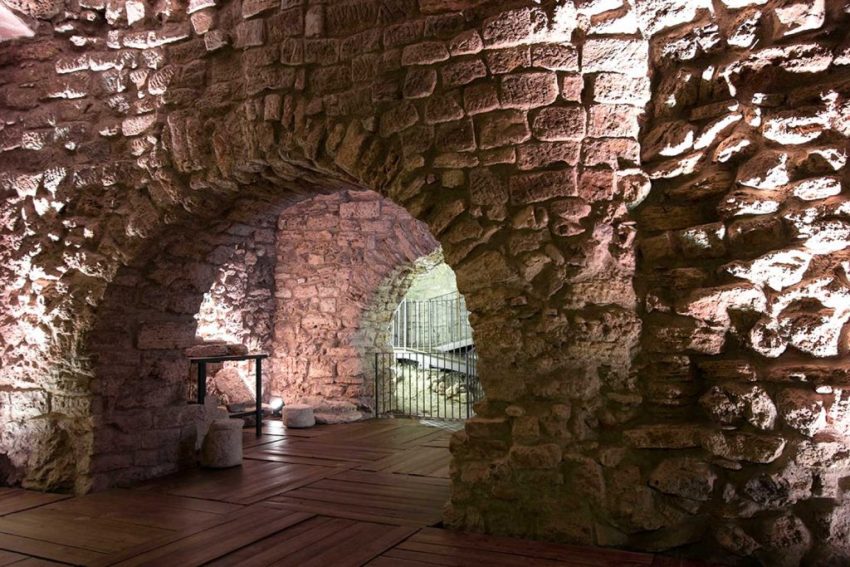
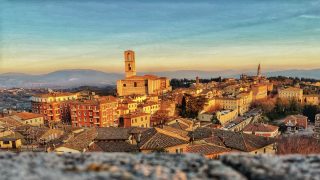
Perugia is already dramatic from above, perched on its hilltop with views towards Lake Trasimeno and the Apennines, but the real surprise lies below the surface. Here, layers of Etruscan, Roman and medieval Perugia are preserved under later buildings and fortifications, creating an underground network of streets, vaults and walls that tells the story of the city's conflicts and reinventions. Walking these buried lanes is one of the top attractions in Perugia if you are fascinated by urban history and how cities literally build on their own past.
From Piazza Partigiani, escalators carry you up into the heart of Rocca Paolina, the 16th century fortress commissioned by Pope Paul III after the “war for the salt,” where entire medieval streets and Baglioni palaces were swallowed into its foundations. Elsewhere, under the Duomo, the route from the Museo del Capitolo di San Lorenzo reveals Etruscan walls, layered vaults and an ancient cobbled road still bearing the ruts of Roman cart wheels. Stitching these experiences together is a highlight of any walking tour of Perugia, letting you move from modern piazzas to buried passages and back out onto Corso Vannucci in a single afternoon.
Table of Contents
- History and Significance of the Perugia Undercity
- Things to See and Do in the Perugia Undercity
- How to Get to the Perugia Undercity
- Practical Tips on Visiting the Perugia Undercity
- Where to Stay close to the Perugia Undercity
- Is the Perugia Undercity Worth Visiting
- FAQs for Visiting Perugia Undercity
- Nearby Attractions to the Perugia Undercity
History and Significance of the Perugia Undercity
Perugia’s underground world is the product of its strategic hilltop position and a long, sometimes violent history. The city began as an important Etruscan centre overlooking Lake Trasimeno and guarding the passes through the Apennines, and the earliest structures you see below ground include Etruscan walls built to enhance the grandeur of the acropolis. These walls later framed an Etruscan temple, possibly dedicated to Uni (Juno Hera), anchoring the area as a sacred and political heart of the city for centuries.
Roman Perugia reused and adapted these Etruscan foundations, overlaying them with new buildings and roads. The ancient cobbled street you can still walk today, with its visible cart ruts, was first used by the Etruscans and then by the Romans, becoming a main artery beneath what is now Piazza Cavallotti. Continuous habitation in this part of town has layered vaults, arches and foundations on top of one another, creating the dense vertical history you encounter on the underground route beneath the cathedral.
The most dramatic reshaping came in the 16th century, when a conflict between the powerful Baglioni family and the Papacy escalated after Pope Paul III imposed a punitive salt tax. The resulting “war for the salt” led to rebellion and a harsh papal response: construction of the Rocca Paolina fortress. To build it, Baglioni palaces and medieval streets were demolished or engulfed, and existing Etruscan and medieval structures were incorporated into the new bastions. The fortress was meant to dominate the city from above, but in doing so it preserved a slice of old Perugia below, giving today's visitors a rare chance to walk through a fossilised medieval neighbourhood.
Things to See and Do in the Perugia Undercity
One of the most surprising entrances to the undercity is via Piazza Partigiani, where a series of escalators carry you gradually upwards into the buried streets of Rocca Paolina. As you ride, watch how modern concrete gives way to ancient stone and brick, then step off into vaulted passages that were once open air alleys and courtyards between Baglioni palaces. Wandering these corridors, you can still recognise doorways, arches and window outlines now embedded in fortress walls, a powerful visual reminder of how the 16th century reshaped the medieval city.
A second, equally fascinating route begins beside the cathedral at the Museo del Capitolo di San Lorenzo. Here your visit starts in the cloister of the Canonica, then leads to the Sala del Conclave, the historic room where four Popes were elected: Honorius III, Honorius IV, Celestine V and Clement V. The mid 20th century wall supporting the cathedral floor above cuts across the space, another small reminder of how each generation leaves its mark on the same rooms. From here, signposted paths take you directly to stretches of Etruscan wall and to the area where the ancient temple to Uni likely stood.
Continuing along the underground route, you follow the old cobbled road itself, first laid by the Etruscans and later reused by the Romans. The worn grooves from cart wheels are still visible in the stone, giving you a vivid sense of traffic flowing through this space two thousand years ago. The path eventually brings you beneath Piazza Cavallotti before returning you towards the light of the modern city. Linking these undercity experiences with an above ground stroll along Corso Vannucci and the main piazzas gives you a uniquely layered perspective on Perugia's past and present.
How to Get to the Perugia Undercity
Most visitors arrive in Perugia via San Francesco d'Assisi - Perugia Airport, a small regional airport with connections to other Italian and European cities. For the best deals and a seamless booking experience, check out these flights to Perugia on Booking.com. From the airport you can take a shuttle bus or taxi into town, then connect with local transport to reach Piazza Partigiani or the historic centre around the Duomo.
If you are travelling by train, you will arrive at Perugia’s main station in the valley, served by regional and intercity services.Use Omnio to easily compare schedules, book train tickets, and find the best prices all in one place for a hassle-free journey across Italy. From there, the minimetro or local buses take you up to the historic centre; you can choose to get off near Piazza Partigiani for the Rocca Paolina escalators, or closer to Piazza IV Novembre and the Duomo for the Museo del Capitolo di San Lorenzo route into the undercity.
Visitors arriving by car follow the main roads into Perugia from the Umbrian countryside or neighbouring regions, then park in one of the multi storey or terrace car parks around the edge of the centre before continuing on foot to Piazza Partigiani or the cathedral district.If you are looking to rent a car in Italy I recommend having a look at Discover Cars, first, as they compare prices and review multiple car rental agencies for you. Once parked, distances are short and the combination of escalators, lifts and pedestrian routes makes it easy to weave between the various underground and surface sites.
Practical Tips on Visiting the Perugia Undercity
- Suggested tips: Wear comfortable shoes and bring a light layer, as the underground passages can feel cooler and slightly damp even in warm weather; start at Piazza Partigiani and work your way up through Rocca Paolina before exploring the cathedral route.
- Best time to visit: Late morning or mid afternoon works well; the underground spaces are weather proof, so they are ideal during heat, rain or cooler seasons when you want a sheltered but atmospheric experience.
- Entrance fee: Adults: €12.00
- Opening hours: Monday - Sunday 10:00 - 19:00.
- Official website: https://isolasanlorenzo.it/info-e-orari/
- How long to spend: Allow at least 45-60 minutes for Rocca Paolina and another 60-90 minutes for the Museo del Capitolo and undercathedral route if you want to appreciate the details without rushing.
- Accessibility: The escalators make the Rocca Paolina route relatively accessible, but underground passages can include steps, uneven surfaces and narrow sections; the archaeological paths beneath the cathedral are more demanding and may not be suitable for all visitors.
- Facilities: Basic services such as toilets and cafés are available near Piazza Partigiani and around the Duomo and main squares; underground areas themselves have limited facilities, so plan breaks accordingly.
- Photography tip: Use the transitions between modern escalators and ancient brickwork for striking contrasts, and look down at the cobbles to capture the cart ruts and worn stones that speak of centuries of use.
- Guided tours: Consider booking a guided visit for the cathedral undercity route, as an expert explanation helps make sense of the overlapping Etruscan, Roman and medieval structures and their functions.
- Nearby food options: Once you emerge onto Corso Vannucci or the main piazzas, you are surrounded by cafés, gelaterias and trattorias, perfect for a restorative coffee or meal after your underground explorations.
Where to Stay close to the Perugia Undercity
For easy access to both Rocca Paolina and the cathedral undercity, stay in or near Perugia's historic centre. A classic option is Sina Brufani, which stands right above the Rocca Paolina escalators and gives you quick access down into the fortress passages and up to Corso Vannucci. For something smaller and full of character, Hotel Fortuna sits just off the main street, putting you within a short walk of both Piazza Partigiani and the Duomo. If you prefer a boutique feel in historic surroundings, Hotel Priori Secret Garden offers a charming base from which you can explore the undercity routes and the rest of Perugia’s old town on foot.
Is the Perugia Undercity Worth Visiting
If you are intrigued by cities with deep, visible layers of history, the Perugia Undercity is absolutely worth adding to your itinerary. Few places let you move so seamlessly from modern streets to preserved medieval lanes, from Etruscan walls to Roman roads still scarred by cart wheels. The combination of Rocca Paolina's buried neighbourhood, the archaeological paths beneath the Duomo and the stories of the “war for the salt” make the undercity one of the must-see places in Perugia for travellers who want more than just surface level sightseeing.
What Other Travellers Say...

Perugia Sotterranea - Area Archeologica, on Piazza IV Novembre in Perugia, offers guided tours through a layered underground complex where you can see an exposed Roman road, remains of a domus, Etruscan walls and temple foundations, and other archaeological finds, all well lit and interpreted by knowledgeable, friendly guides; tours include a virtual reality reconstruction that lets you re-walk the site as it appeared centuries ago (visitors note the VR is brief but impressive), English tours are limited so check availability, and combined tickets with nearby sites are offered.


FAQs for Visiting Perugia Undercity
Nearby Attractions to the Perugia Undercity
- Rocca Paolina upper terraces: The promenades and viewpoints above the fortress, offering open air views that contrast with the underground passages below.
- Duomo di Perugia San Lorenzo: The city's main cathedral, standing above some of the archaeological areas you visit on the undercathedral route.
- Piazza IV Novembre and Fontana Maggiore: Perugia's central square, a natural place to pause between underground explorations and surface sightseeing.
- Palazzo dei Priori and National Gallery of Umbria: A major civic palace and art museum showcasing masterpieces by Perugino and other Umbrian painters.
- Corso Vannucci: The main pedestrian street, perfect for a relaxed stroll, a coffee stop or a gelato after emerging from the undercity.
The Underground Perugia appears in our Complete Guide to Visiting Perugia!

Moira & Andy
Hey! We're Moira & Andy. From hiking the Camino to trips around Europe in Bert our campervan — we've been traveling together since retirement in 2020!
This website uses affiliate links which may earn a commission at no additional cost to you!
Planning Your Visit
Monday – Sunday 10:00 – 19:00.
Adults: €12.00
Nearby Attractions
- Fontana Maggiore (0.0) km
Fountain - Piazza IV Novembre (0.1) km
Square - Palazzo dei Priori (0.1) km
Town Hall - Cathedral of San Lorenzo (0.1) km
Cathedral - Nobile Collegio della Mercanzia (0.1) km
Historic Building and Museum - National Gallery of Umbria (0.1) km
Gallery - Etruscan Well (0.1) km
Historic Site - Corso Vannucci (0.1) km
Street - Nobile Collegio del Cambio (0.1) km
Museum - House Museum of Palazzo Sorbello (0.2) km
Museum