Western Sahara: The Ultimate Travel Guide 2026
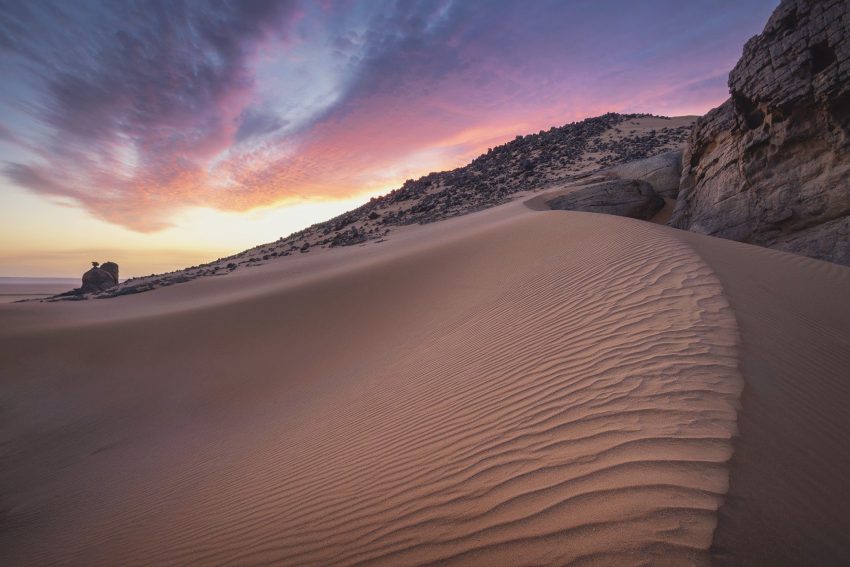
Western Sahara is a sparsely populated territory on the northwest coast of Africa, bordered by Morocco to the north, Algeria to the northeast, and Mauritania to the east and south, with the Atlantic Ocean along its western edge. Much of its landscape is desert and semi-desert, shaped by sandy plains, rocky plateaus, and a harsh, arid climate. The region’s main urban center is Laayoune (El Aaiún), alongside other towns such as Dakhla, which sits on a narrow peninsula and is known for its coastal setting.
The territory is widely discussed in terms of its political status and governance, with different authorities administering different areas and a long-running international dispute over sovereignty. As a result, Western Sahara often appears in global news and diplomacy, and it is referenced in relation to questions of self-determination, borders, and regional security in North Africa. These dynamics also influence practical matters such as travel, trade, and development planning.
Despite its challenging environment, Western Sahara has economic and cultural features tied to both the desert interior and the Atlantic coast. Fishing and related industries are important along the shoreline, and the territory is also associated with natural resources and strategic maritime access. Culturally, local traditions are closely connected to Saharan and nomadic heritage, reflected in language, music, dress, and social customs, alongside influences from neighboring countries and the wider Maghreb.
Table of Contents
- History of Western Sahara
- Before European colonization
- 1880s–1950s: Spanish Sahara
- 1950s–1975: Decolonization pressure and competing claims
- 1975–1976: Madrid Accords, the Green March, and Spain’s withdrawal
- 1976–1991: War and territorial consolidation
- 1991–2000s: Ceasefire and stalled referendum process
- 2000s–2010s: Autonomy proposals, diplomacy, and periodic unrest
- 2020s: Ceasefire breakdown and shifting international positions
- Western Sahara today
- Best Time to Visit Western Sahara
- Food and Drink from Western Sahara
History of Western Sahara
Western Sahara is a sparsely populated territory on the Atlantic coast of northwest Africa whose modern history has been shaped by colonial rule, decolonization disputes, and a long-running conflict over sovereignty between Morocco and the Sahrawi national movement, with Algeria playing a major supporting role for the latter.
Before European colonization
For centuries, the region was inhabited largely by nomadic and semi-nomadic Sahrawi tribes with social, religious, and trading ties extending across the Sahara and into the Maghreb and Sahel. Political authority was typically decentralized, organized around tribal confederations, customary law, and religious networks rather than a single centralized state. Coastal trade and trans-Saharan routes connected the area to wider economic and cultural systems, though the territory remained relatively remote and lightly governed compared with neighboring centers of power.
1880s–1950s: Spanish Sahara
In the late 19th century, Spain asserted control over parts of the coast during the “Scramble for Africa,” gradually consolidating a colonial presence that became known as Spanish Sahara. Administration was limited at first, focused on coastal enclaves and trade, but expanded over time. Spain later organized the territory more formally and developed infrastructure and resource extraction, including phosphate mining at Bou Craa, which became economically significant. Resistance and unrest occurred intermittently, and the territory’s status became increasingly contested as anti-colonial movements spread across Africa after World War II.
1950s–1975: Decolonization pressure and competing claims
As Morocco gained independence (1956) and sought to recover territories it considered historically linked to it, it advanced claims over Western Sahara. Mauritania also asserted a claim based on regional and tribal ties. Meanwhile, Sahrawi nationalism grew, culminating in the formation of the Polisario Front in 1973, which advocated independence and began armed struggle against Spanish rule.
International pressure mounted for decolonization. The United Nations treated Western Sahara as a non-self-governing territory and pushed for a process allowing the population to determine its future. In 1975, the International Court of Justice issued an advisory opinion recognizing that some legal ties of allegiance existed between certain tribes and Morocco (and between the territory and Mauritania), but concluding these did not amount to sovereignty and did not negate the right of self-determination for the people of Western Sahara.
1975–1976: Madrid Accords, the Green March, and Spain’s withdrawal
In late 1975, Morocco organized the Green March, sending large numbers of civilians toward the territory to press its claim. Spain, facing internal and external pressures, negotiated the Madrid Accords with Morocco and Mauritania, agreeing to withdraw and transfer administrative responsibilities. The accords did not resolve sovereignty in a way accepted by all parties, and they did not deliver a self-determination referendum at that time.
As Spain withdrew, Morocco and Mauritania moved in. Many Sahrawis fled, particularly toward Algeria, where large refugee camps were established around Tindouf. In 1976, the Polisario Front proclaimed the Sahrawi Arab Democratic Republic (SADR), seeking international recognition and asserting independence.
1976–1991: War and territorial consolidation
Armed conflict intensified among the Polisario Front, Morocco, and Mauritania. Mauritania, under military and economic strain, signed a peace agreement with Polisario in 1979 and renounced its claim; Morocco then took control of the area Mauritania had administered.
Over the 1980s, Morocco built a series of defensive sand berms (often referred to as “the berm”) with fortifications and minefields, gradually consolidating control over most of the populated and economically valuable parts of the territory. Polisario maintained influence east and south of the berm and continued guerrilla operations. The conflict produced long-term displacement, with a substantial Sahrawi refugee population remaining in camps in Algeria.
1991–2000s: Ceasefire and stalled referendum process
In 1991, a UN-brokered ceasefire took effect and the UN established MINURSO (United Nations Mission for the Referendum in Western Sahara) to monitor the ceasefire and prepare for a referendum on self-determination. Disputes over voter eligibility, the options to be presented, and broader political conditions repeatedly delayed the referendum.
During this period, Morocco expanded administrative integration and development efforts in the areas it controlled, while Polisario and the SADR continued to seek international recognition and a referendum including independence as an option. Diplomatic initiatives proposed various autonomy or transitional arrangements, but none achieved a mutually accepted settlement.
2000s–2010s: Autonomy proposals, diplomacy, and periodic unrest
Morocco advanced proposals for autonomy for Western Sahara under Moroccan sovereignty, presenting this as a compromise. Polisario maintained that any solution must include a referendum with independence as a choice. Negotiations under UN auspices continued intermittently, often without breakthrough.
Tensions periodically flared in the territory, including protests over political rights, economic conditions, and the status of the territory. The most notable episode was the 2010 Gdeim Izik protest camp near Laayoune, which ended in violence and became a significant moment in Sahrawi activism and Moroccan security policy.
2020s: Ceasefire breakdown and shifting international positions
In late 2020, after tensions around a blockade and subsequent military movements in the Guerguerat area, Polisario declared the 1991 ceasefire over and announced a return to armed struggle, while Morocco maintained that it had restored movement and security in the area. Low-intensity hostilities and heightened rhetoric followed, alongside continued UN efforts to revive a political process.
International diplomacy also shifted in notable ways, with some states adjusting their positions on Morocco’s sovereignty claim or on autonomy as a framework, while others reaffirmed support for a UN-led self-determination process. Despite these changes, Western Sahara’s final status remains unresolved, MINURSO continues to operate, and the territory remains divided in practice between Moroccan-administered areas west of the berm and Polisario-controlled areas to the east, with the refugee camps in Algeria remaining central to the humanitarian and political landscape.
Western Sahara today
Western Sahara remains one of the world’s longest-running decolonization disputes. Morocco administers most of the territory and proposes autonomy under its sovereignty; the Polisario Front and the SADR seek independence through a self-determination vote. The UN continues to treat the territory as non-self-governing and supports a negotiated political solution. The conflict’s legacy is visible in the territorial division, the continued displacement of Sahrawi refugees, and the enduring disagreement over who constitutes the electorate and what choices should determine the territory’s future.
Best Time to Visit Western Sahara
Visiting Western Sahara in Spring (Best)
Spring is the most comfortable and reliable time to visit Western Sahara, with warm days, cooler evenings, and generally pleasant conditions for desert excursions. It’s ideal for exploring coastal areas, taking 4×4 trips into the dunes, and spending longer days outdoors without the intense heat of midsummer.
Visiting Western Sahara in Summer
Summer in Western Sahara is very hot, especially inland, and conditions can feel intense for extended sightseeing. This season suits travelers focused on the Atlantic coast, where sea breezes can make temperatures more manageable. Plan activities for early morning or late afternoon, and expect the desert interior to be far less comfortable.
Visiting Western Sahara in Autumn
Autumn is another strong choice for Western Sahara, as temperatures begin to ease after summer and outdoor travel becomes more enjoyable again. It’s a good season for combining coastal stops with desert travel, with fewer weather extremes than in peak summer and generally comfortable conditions for road trips and excursions.
Visiting Western Sahara in Winter
Winter brings cooler temperatures, particularly at night, making it a good time for travelers who prefer mild daytime weather and don’t mind chilly evenings. It can be a highlight season for desert camping if you pack appropriately for nighttime cold. Festival-wise, Ramadan (dates vary each year) can significantly affect opening hours and daytime dining, while Eid celebrations can be a culturally interesting time to visit, though some services may be limited around the holidays.
Food and Drink from Western Sahara
Food and drink in Western Sahara reflect a blend of Sahrawi nomadic traditions, desert geography, and influences from neighboring Morocco and Mauritania. Historically, many communities relied on what could be carried, preserved, or sourced from herding and trade routes, so meals often center on simple, filling staples and shared platters. Hospitality is a defining feature: guests are commonly offered tea and something to eat, and meals are frequently communal, emphasizing togetherness and respect.
A cornerstone of Sahrawi cooking is couscous, typically served with vegetables and, when available, meat such as lamb, goat, or camel. Tagines and stews are also common, seasoned with warm spices and cooked slowly to stretch ingredients and deepen flavor. In coastal areas, fish and seafood play a larger role, prepared grilled, stewed, or fried, and paired with bread or grains. Flatbreads and other breads are widely eaten, used to scoop up sauces and stews and to make simple, portable meals.
Because of the arid climate, dairy and meat from herding have long been important, with camel milk in particular holding cultural value and sometimes consumed fresh or in fermented forms. Dates are a prized food across the desert region, eaten on their own, served to guests, or used to add sweetness and energy. When resources are scarce, dishes tend to be pared down—bread, tea, and small portions of meat or vegetables—yet the emphasis on sharing remains strong.
The most iconic drink is Sahrawi tea, a strong green tea prepared with sugar and poured repeatedly to create foam, often served in three rounds that mark the rhythm of conversation and social life. Tea gatherings can be as important as the meal itself, functioning as a daily ritual and a sign of welcome. Alongside tea, people may drink water, milk, and, where available, fruit juices and soft drinks, especially in towns. Overall, Western Sahara’s food and drink balance practicality with tradition, shaped by desert living and sustained by a deep culture of generosity.