Uzbekistan: The Ultimate Travel Guide 2026
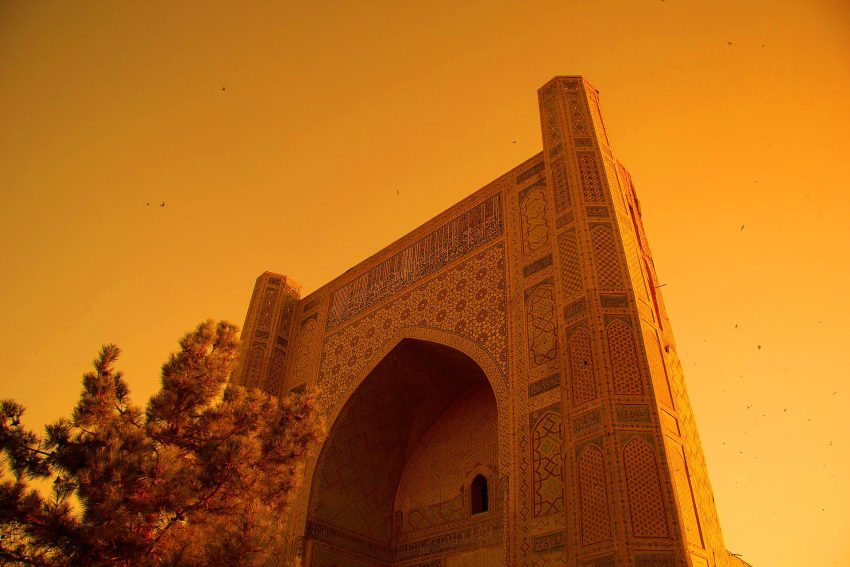
Uzbekistan is a landlocked country in the heart of Central Asia, known for its wide-open deserts, fertile river valleys, and dramatic mountain foothills in the east. It sits at a crossroads of cultures and landscapes, bordering Kazakhstan, Kyrgyzstan, Tajikistan, Afghanistan, and Turkmenistan. From the Kyzylkum Desert to the green oases fed by the Amu Darya and Syr Darya, the country’s geography shapes daily life, agriculture, and travel routes.
Today, Uzbekistan blends a strong sense of tradition with a fast-changing modern identity. Its cities range from grand, monument-filled centers to lively regional hubs where bazaars, neighborhood teahouses, and craft workshops remain central to community life. Uzbek is the official language, Russian is widely used in many settings, and visitors often notice the country’s warm hospitality, distinctive cuisine, and rich artisan culture-especially textiles, ceramics, and woodcarving.
For travelers, Uzbekistan offers an accessible mix of architecture, food, and scenery, with well-connected routes between major destinations and a growing tourism infrastructure. Highlights often include ornate mosques and madrasas, bustling markets, and seasonal experiences like springtime gardens or autumn harvests. Whether you’re interested in cultural sightseeing, hiking in the mountains, or simply sampling plov and fresh bread from a local bakery, Uzbekistan provides a memorable introduction to Central Asia.
Table of Contents
- History of Uzbekistan
- Ancient and Classical eras
- Islamization and early Islamic rule
- Turkic migrations and regional dynasties
- Mongol conquest and the Chagatai realm
- Timur and the Timurid Renaissance
- Uzbek khanates and the Shaybanids
- Russian conquest and colonial rule
- Revolution, national delimitation, and early Soviet period
- Late Soviet Uzbekistan
- Independence and state-building
- Recent reforms and contemporary Uzbekistan
- Best Time to Visit Uzbekistan
- Food and Drink from Uzbekistan
History of Uzbekistan
Uzbekistan’s history is shaped by its position at the crossroads of Inner Asia, Iran, and the wider Islamic world. Cities such as Samarkand, Bukhara, and Khiva became major centers of trade, scholarship, and state power, repeatedly transformed by conquest, migration, and empire.
Ancient and Classical eras (to 7th century)
The territory of modern Uzbekistan included key regions of ancient Central Asia, notably Sogdiana (around Samarkand and Bukhara), Bactria (to the south), and Khwarazm (around the lower Amu Darya). These areas were tied to Persian imperial systems at various times, including the Achaemenid Empire, and later experienced Hellenistic influence after Alexander the Great’s conquests. Sogdian merchants became especially important as long-distance traders and cultural intermediaries across Eurasia, helping to spread goods, ideas, and religions (including forms of Buddhism, Zoroastrianism, and Christianity) along routes later grouped under the “Silk Road.”
Islamization and early Islamic rule (7th–10th centuries)
Arab armies entered Transoxiana (the lands between the Amu Darya and Syr Darya) in the 7th–8th centuries. Over time, Islam became dominant, though the process was gradual and involved local elites, trade networks, and political consolidation. Under the Samanids (9th–10th centuries), Persianate Islamic culture flourished. Bukhara became a major intellectual and religious center, and the region developed institutions and urban life that would remain influential for centuries.
Turkic migrations and regional dynasties (10th–12th centuries)
From the 10th century onward, Turkic-speaking groups increasingly shaped the region’s politics and demography. Dynasties such as the Karakhanids and later the Seljuks and Khwarazmshahs ruled parts of the area. This period deepened the fusion of Turkic and Persianate traditions: Turkic languages expanded, while Persian remained highly influential in administration, literature, and urban culture.
Mongol conquest and the Chagatai realm (13th–14th centuries)
In the early 13th century, the Mongol conquest brought major destruction to many cities and irrigation systems, followed by a reordering of power under Mongol successor states. Much of the region fell under the Chagatai Khanate. Over time, cities revived as trade recovered, and local elites adapted to new political realities. Islam remained central, and the region’s commercial importance endured.
Timur and the Timurid Renaissance (late 14th–15th centuries)
Amir Timur (Tamerlane) rose to power in the late 14th century and made Samarkand a capital of a vast empire. His campaigns were often brutal, but they also redirected wealth and artisans to Central Asia. Under the Timurids, especially in Samarkand and Herat (outside modern Uzbekistan but linked culturally), architecture, astronomy, literature, and the arts flourished. Ulugh Beg, Timur’s grandson, became famous for patronizing science and building an influential observatory in Samarkand.
Uzbek khanates and the Shaybanids (16th–18th centuries)
In the early 16th century, Shaybani Khan and the Shaybanid Uzbeks took control of much of Transoxiana, displacing Timurid rule. The term “Uzbek” became increasingly associated with ruling confederations and, over time, broader populations in the region. Political power later fragmented into khanates, most notably Bukhara, Khiva, and (from the early 18th century) Kokand in the Ferghana Valley. These states competed with each other and managed trade, agriculture, and religious institutions, while facing pressure from nomadic groups and shifting regional commerce.
Russian conquest and colonial rule (19th century)
In the 19th century, the Russian Empire expanded into Central Asia. Tashkent was taken in 1865, and Russian control spread across the region. The Emirate of Bukhara and the Khanate of Khiva became Russian protectorates, while other territories were incorporated more directly into Russian Turkestan. Colonial rule reshaped the economy and society: cotton cultivation expanded, new administrative systems were imposed, and railways linked Central Asia more tightly to the empire. At the same time, reformist movements emerged among local intellectuals, including the Jadids, who advocated modern education and social reform.
Revolution, national delimitation, and early Soviet period (1917–1930s)
After the Russian Revolution, Central Asia experienced upheaval, civil conflict, and anti-Bolshevik resistance often grouped under the term “Basmachi.” The Soviet state gradually consolidated control. In the 1920s, Soviet authorities carried out “national delimitation,” creating new republic boundaries. The Uzbek Soviet Socialist Republic was established in 1924, with later border adjustments. Soviet policies promoted literacy and industrialization but also enforced political repression and campaigns against religious and traditional institutions. Collectivization and state control of agriculture transformed rural life.
Late Soviet Uzbekistan (1940s–1980s)
During and after World War II, Uzbekistan industrialized further and received evacuated industries and populations from other parts of the USSR. Urban growth accelerated, especially in Tashkent. Cotton became central to the republic’s economy, encouraged by Moscow’s planning priorities. This brought infrastructure development but also severe environmental consequences, most notably the shrinking of the Aral Sea due to massive irrigation withdrawals from the Amu Darya and Syr Darya. In the 1970s–80s, corruption scandals tied to cotton production and reporting exposed deep problems in the Soviet administrative system.
Independence and state-building (1991–2016)
Uzbekistan declared independence in 1991 as the Soviet Union dissolved. Islam Karimov became the country’s first president and led a strongly centralized state. The government prioritized stability and sovereignty, while limiting political pluralism and tightly managing civil society and media. The economy transitioned unevenly from Soviet planning, with significant state involvement and gradual reforms. Security concerns, including regional militancy and unrest, shaped domestic and foreign policy.
Recent reforms and contemporary Uzbekistan (2016–present)
After Karimov’s death in 2016, Shavkat Mirziyoyev became president and launched a period of notable change. The government pursued economic liberalization measures, improved regional diplomacy, and eased some restrictions in public life, while maintaining strong executive control. Uzbekistan continues to balance modernization, demographic growth, labor migration patterns, and environmental challenges, while drawing on its historical role as a cultural and commercial hub of Central Asia.
Best Time to Visit Uzbekistan
Visiting Uzbekistan in Spring (Best)
Spring (March to May) is the most comfortable and popular time to visit Uzbekistan, with mild temperatures, greener landscapes, and ideal conditions for exploring historic cities like Samarkand, Bukhara, and Khiva on foot. It’s also a great season for day trips and desert-edge excursions without the intense summer heat. Festival highlight: Navruz (around March 21) is widely celebrated across the country with traditional food, music, dance, and public festivities.
Visiting Uzbekistan in Summer
Summer (June to August) is hot and dry, especially in desert and lowland areas, making midday sightseeing challenging. If you visit in summer, plan early-morning and evening activities, focus on shaded architectural sites, and consider cooler mountain areas near Tashkent for hiking and nature breaks. Festival highlight: Summer can feature local cultural events and open-air performances, though schedules vary by region and year.
Visiting Uzbekistan in Autumn
Autumn (September to November) brings pleasant temperatures and clear skies, making it another excellent season for city sightseeing and longer travel days between destinations. It’s also harvest time, so bazaars are especially abundant with fresh fruits, nuts, and regional specialties. Festival highlight: Many areas celebrate harvest-themed fairs and local food events, which can be a great addition to a cultural itinerary.
Visiting Uzbekistan in Winter
Winter (December to February) is cold, with fewer tourists and a quieter feel at major landmarks. It can be a good choice if you prefer lower prices, less crowded attractions, and don’t mind bundling up—especially in cities where indoor dining and museums balance outdoor sightseeing. Snow can add atmosphere to historic sites, particularly in Samarkand and Tashkent. Festival highlight: New Year celebrations are lively in larger cities, with decorated public spaces and seasonal markets.
Food and Drink from Uzbekistan
Uzbekistan’s food and drink reflect its position on the Silk Road, blending Central Asian traditions with influences from Persian, Turkic, and Russian cuisines. Meals tend to be hearty and built around grains, meat, and vegetables suited to a continental climate. Hospitality is central: guests are often welcomed with a table laid with bread, sweets, and tea, and shared dishes are common at family gatherings and celebrations.
The country’s signature dish is plov (osh), a fragrant rice pilaf cooked in a large kazan with carrots, onions, spices, and usually lamb or beef, sometimes with chickpeas, raisins, or quince depending on the region. Bread (non) is another staple, typically baked in a clay tandoor and served at nearly every meal; it’s treated with respect and often torn by hand rather than cut. Other popular foods include shashlik (skewered grilled meat), manti (steamed dumplings filled with meat and onion), and lagman, a noodle dish served as a soup or stir-fry with vegetables and meat.
Soups and lighter plates also play an important role. Shurpa is a comforting broth with chunks of meat and vegetables, while mastava is a rice soup often finished with herbs. Somsa—flaky pastries filled with minced meat, onion, and fat—are commonly baked in tandoors and sold as street food, alongside salads like achichuk (tomato, onion, and herbs) that cut through richer dishes. Dairy appears in forms such as katyk (yogurt) and suzma (strained yogurt), used as sides, sauces, or simple snacks.
Tea is the everyday drink of Uzbekistan, most often green tea served in small bowls (piala) and poured frequently as part of conversation and ritual. In colder months, black tea and spiced teas are also enjoyed, and compote-like fruit drinks may appear at home meals. Fermented dairy drinks such as ayran are common in warm weather, offering a cooling counterpoint to grilled meats and pilafs. At celebrations, tables may include a wide spread of sweets, dried fruits, and nuts, underscoring the Uzbek preference for generous, abundant hospitality.