Turkmenistan: The Ultimate Travel Guide 2026
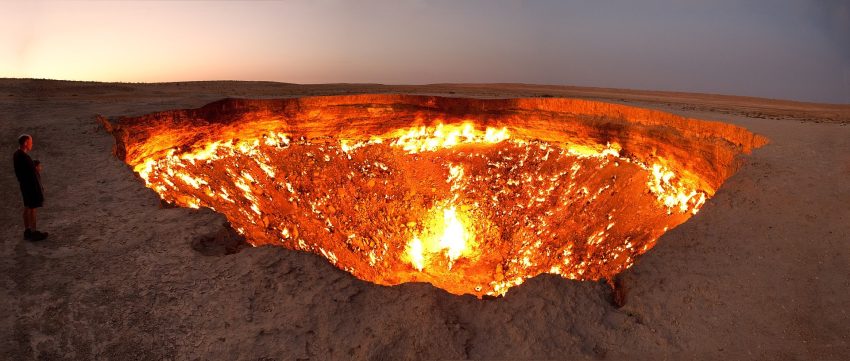
Turkmenistan is a country in Central Asia, bordered by the Caspian Sea to the west and sharing frontiers with Kazakhstan, Uzbekistan, Afghanistan, and Iran. Much of its territory is covered by the Karakum Desert, giving the landscape a stark, open character shaped by sand plains, sparse vegetation, and dramatic temperature swings. Despite the arid setting, pockets of fertile land support agriculture, especially where irrigation makes cultivation possible.
The capital, Ashgabat, is the political and cultural center, known for its wide boulevards, monumental architecture, and carefully planned cityscape. Beyond the capital, life is organized around a mix of urban hubs and smaller settlements, with traditions in music, textiles, and crafts remaining important parts of everyday identity. Turkmen is the official language, and the country’s social fabric reflects both nomadic heritage and modern state institutions.
Turkmenistan’s economy is strongly influenced by its natural resources, particularly natural gas, which plays a major role in national development and international trade. At the same time, the country’s location places it at a crossroads between the Middle East, South Asia, and the broader Central Asian region, shaping its regional connections and transport ambitions. For visitors and observers, Turkmenistan stands out for its desert scenery, distinctive capital city, and a cultural life rooted in hospitality and enduring local customs.
Table of Contents
- History of Turkmenistan
- Ancient and Classical eras
- Silk Road and early Islamic period
- Turkic migrations and Seljuk ascendancy
- Mongol conquest and aftermath
- Tribal confederations and regional empires
- Russian expansion and conquest
- Revolution, border-making, and the Turkmen SSR
- Late Soviet period
- Independence and the Niyazov era
- Berdimuhamedow and state consolidation
- Recent period
- Best Time to Visit Turkmenistan
- Food and Drink from Turkmenistan
History of Turkmenistan
Turkmenistan’s history is shaped by its position on the crossroads of Central Asia: Iranian-speaking civilizations, Turkic migrations, the Silk Road, successive empires, Russian conquest, Soviet rule, and a post-1991 independence marked by strong centralized leadership and a resource-based economy.
Ancient and Classical eras (to 7th century)
The territory of modern Turkmenistan lay on the margins of major ancient Iranian cultural zones. Oasis settlements flourished where irrigation was possible, especially around the Kopet Dag foothills and the Merv oasis. Over time, the region was influenced by Achaemenid Persia, then by the Hellenistic world after Alexander the Great’s campaigns. Later, Parthian power—centered nearby—left a lasting imprint; Nisa (near today’s Ashgabat) became one of the key Parthian centers. Under subsequent Iranian dynasties, oasis cities remained important nodes for trade and administration.
Silk Road and early Islamic period (7th–10th centuries)
With the spread of Islam into Central Asia, the region’s cities and oases became integrated into the Islamic world. Merv in particular grew into one of the great cities of the era—an administrative and cultural hub and a major stop on east–west trade routes. The area saw shifting control among regional dynasties, but its prosperity remained tied to caravan commerce and irrigated agriculture.
Turkic migrations and Seljuk ascendancy (10th–12th centuries)
From the steppe, Oghuz Turkic groups moved into the region over centuries, gradually transforming its linguistic and ethnic landscape. In the 11th century, the Seljuks—an Oghuz Turkic dynasty—rose to power from this broader region and built an empire stretching across Iran, Iraq, and Anatolia. Cities such as Merv became prominent Seljuk centers. The period reinforced Turkic settlement and helped lay foundations for later Turkmen tribal identities.
Mongol conquest and aftermath (13th–15th centuries)
The Mongol invasions devastated many Central Asian cities. Merv was famously destroyed, and the region’s urban life and irrigation systems suffered severe disruption. In the centuries that followed, political control shifted among successor states and regional powers, while many communities became more oriented toward tribal and pastoral structures, especially in the desert and steppe zones.
Tribal confederations and regional empires (16th–18th centuries)
Turkmen tribes and confederations—often organized around major tribal groupings—occupied wide areas from the Caspian littoral to the interior deserts and oases. They interacted with, raided, traded with, and sometimes served as auxiliaries for neighboring powers, including Persian dynasties and the khanates to the north and east. Authority was frequently decentralized, with local leaders and customary law playing major roles.
Russian expansion and conquest (19th century)
In the 19th century, the Russian Empire expanded into Central Asia, seeking strategic depth and control over trade routes and frontiers. Turkmen resistance was significant, culminating in major battles as Russia advanced. By the late 1800s, Russian control was established over most of the territory that would become Turkmenistan. New administrative structures, garrisons, and rail links tied the region more closely to imperial centers, while traditional tribal life persisted in many areas.
Revolution, border-making, and the Turkmen SSR (1917–1940s)
After the Russian Revolution, the region experienced upheaval and conflict as Bolshevik power consolidated. In the 1920s, Soviet national delimitation created the Turkmen Soviet Socialist Republic (Turkmen SSR) in 1924, defining borders that broadly correspond to modern Turkmenistan. Soviet rule brought collectivization, campaigns against traditional elites and religious institutions, and major social engineering. The state promoted a standardized Turkmen identity and language within Soviet frameworks, while integrating the republic into the planned economy.
Late Soviet period (1950s–1991)
Postwar decades saw expanded education, urbanization, and infrastructure, alongside continued political control from Moscow. Large-scale irrigation and agricultural schemes—especially cotton cultivation—reshaped land use and water management, contributing to broader regional environmental stress. Natural gas development became increasingly important, linking Turkmenistan’s economy to Soviet energy networks. Despite modernization, political life remained tightly managed under the Communist Party.
Independence and the Niyazov era (1991–2006)
Turkmenistan became independent in 1991 as the Soviet Union dissolved. Saparmurat Niyazov, the former Communist Party leader, became the country’s first president and built a highly centralized political system. The state emphasized neutrality in foreign policy and cultivated an extensive personality cult, alongside strict controls over media, civil society, and political opposition. Natural gas exports became the backbone of the economy, with infrastructure and export routes shaping foreign relations.
Berdimuhamedow and state consolidation (2007–2022)
After Niyazov’s death, Gurbanguly Berdimuhamedow assumed the presidency. The government moderated some of the most idiosyncratic features of the previous era while maintaining a strongly centralized system and limited political pluralism. The state pursued major construction projects, sought to diversify gas export options, and continued a policy of formal neutrality. Economic performance remained closely tied to hydrocarbon revenues and external demand.
Recent period (2022–present)
In 2022, Serdar Berdimuhamedow became president, marking a leadership transition within the same ruling circle. The political system has remained tightly controlled, with continued emphasis on stability, sovereignty, and neutrality. Energy exports—especially natural gas—continue to dominate economic strategy, while the country manages the challenges of diversification, regional connectivity, and demographic and social pressures within a highly centralized governance model.
Best Time to Visit Turkmenistan
Visiting Turkmenistan in Spring (Best)
Spring (March to May) is generally the most comfortable and popular time to visit Turkmenistan, with mild temperatures that suit sightseeing in Ashgabat and day trips to places like Nisa and the Karakum Desert. Landscapes are at their greenest, and the weather is typically pleasant for exploring without the intense summer heat.
A major highlight is Nowruz (around March 21), celebrated widely with cultural performances, traditional food, and public festivities—one of the most vibrant times to experience local traditions.
Visiting Turkmenistan in Summer
Summer (June to August) is very hot, especially in desert areas, making midday travel and outdoor activities more challenging. If you visit in summer, plan for early-morning and evening sightseeing, and focus on indoor attractions or shorter excursions.
This season can still work if you’re comfortable with high temperatures and want fewer crowds, but it’s generally not ideal for extensive desert touring.
Visiting Turkmenistan in Autumn
Autumn (September to November) brings cooler, more stable weather that’s well-suited to travel across the country. It’s a strong season for combining city visits with desert experiences, including trips toward the Darvaza Gas Crater, as temperatures become more manageable.
Autumn is often a good balance of comfortable days and fewer extremes, making it a great alternative to spring.
Visiting Turkmenistan in Winter
Winter (December to February) is cooler and can be windy, with occasional cold snaps. It’s a quieter time to visit, and while some days are crisp rather than harsh, desert nights can be notably cold.
Winter can be a good choice if you prefer lower visitor numbers and don’t mind bundling up—especially for city-focused travel in Ashgabat and nearby historical sites.
Food and Drink from Turkmenistan
Turkmen cuisine reflects its desert climate, nomadic heritage, and the importance of hospitality. Meals tend to be hearty and practical, built around grains, meat, and dairy, with flavors that are comforting rather than heavily spiced. Bread holds a special place at the table, and sharing food is closely tied to respect for guests and family. Seasonal produce appears when available, but many dishes are designed to be filling and sustaining in a land of wide plains and hot summers.
One of the best-known staples is plov (pilaf), a rice dish cooked with pieces of lamb or beef, onions, carrots, and fragrant oil, often served at celebrations and gatherings. Another common favorite is shurpa, a rich soup made with meat and vegetables that can vary by region and household. Dumplings and filled pastries also appear, including manti-style dumplings and savory bakes that are easy to prepare in large batches. Grilled meats, especially lamb, are popular too, sometimes cooked as kebabs and served with bread and raw onions or simple salads.
Bread and flour-based foods are central to everyday eating. Traditional flatbreads are baked to accompany nearly every meal, used to scoop up food and to round out the table. Noodles and simple dough dishes are common, reflecting the practicality of ingredients that store well. Alongside these, dairy products—such as yogurt and other fermented milk preparations—add tang and nourishment, especially in rural areas where herding traditions remain strong.
Drinks in Turkmenistan are shaped by both climate and custom. Tea is the most common beverage, typically served throughout the day and offered to guests as a sign of welcome. In warmer months, people may turn to cooling dairy-based drinks made from fermented milk, while compotes and fruit drinks can appear when fruit is in season. Whether at a family table or a festive gathering, Turkmen food and drink emphasize generosity, warmth, and the pleasure of sharing simple, satisfying dishes.