Tanzania: The Ultimate Travel Guide 2026
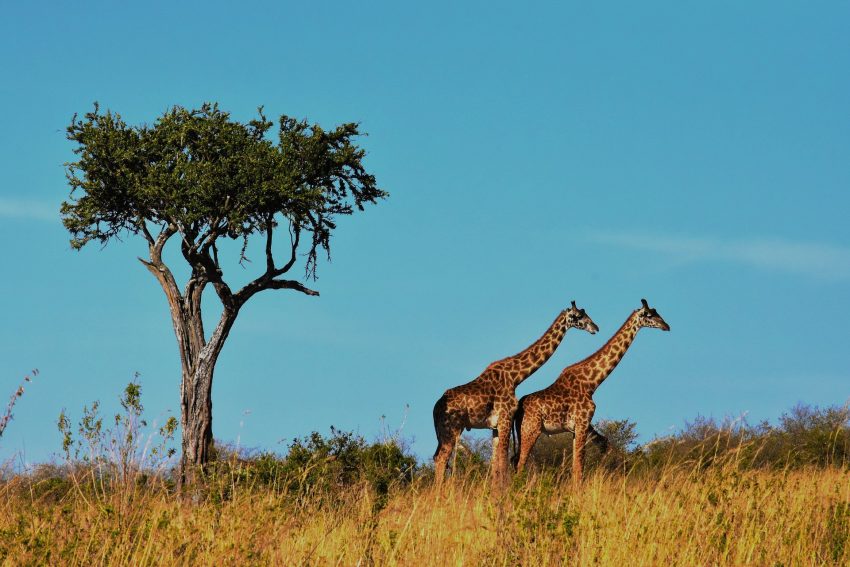
Tanzania is a vibrant East African country known for its striking natural landscapes, rich wildlife, and warm cultural diversity. From the snow-capped peak of Mount Kilimanjaro to the vast plains of the Serengeti, it offers some of the continent’s most iconic scenery and unforgettable outdoor experiences. Along its coastline, the Indian Ocean brings palm-fringed beaches and a laid-back island atmosphere, especially in Zanzibar.
Nature is at the heart of Tanzania’s appeal. World-renowned national parks and conservation areas support extraordinary biodiversity, where visitors can see everything from elephants and lions to flamingos and great migrations of wildebeest. Beyond safaris, Tanzania also invites adventure through hiking, crater lakes, and remote wilderness areas that feel far from the modern rush.
Tanzania’s people and everyday life add another layer of richness. More than 120 ethnic groups contribute to a mosaic of languages, traditions, music, and cuisine, with Swahili serving as a unifying national language. Whether exploring bustling markets in cities like Dar es Salaam, relaxing in smaller towns, or visiting rural communities, travelers often find Tanzania welcoming, colorful, and deeply connected to the land.
Table of Contents
- History of Tanzania
- Early peoples and ancient settlement
- Indian Ocean trade and the Swahili coast
- Portuguese intrusion and coastal power shifts
- Omani ascendancy and the Zanzibar sultanate
- Inland states and societies in the 19th century
- German East Africa
- British Tanganyika
- Independence of Tanganyika and Zanzibar
- Union and the creation of Tanzania
- Ujamaa and socialist nation-building
- Liberalization and multiparty politics
- Contemporary Tanzania
- Best Time to Visit Tanzania
- Food and Drink from Tanzania
History of Tanzania
Tanzania’s history is shaped by deep Indigenous roots, long-distance Indian Ocean trade, the rise of powerful inland states, and successive periods of German and British colonial rule, followed by independence, union, and nation-building.
Early peoples and ancient settlement
Human history in the region stretches back to some of the earliest evidence of hominins in the world, including famous fossil finds in northern Tanzania. Over millennia, diverse communities developed across the savannas, highlands, and lake regions. Farming and ironworking spread widely in the first millennium CE, alongside pastoralist movements that added to the region’s cultural and linguistic diversity.
Indian Ocean trade and the Swahili coast
From roughly the first millennium CE onward, coastal towns and islands became part of a vast Indian Ocean network linking Africa with Arabia, Persia, India, and later Southeast Asia and China. A distinct Swahili culture and language emerged, blending African foundations with influences carried by trade and migration. City-states such as Kilwa, Pemba, and Zanzibar grew wealthy through commerce in gold, ivory, timber, and other goods, and Islam became a major cultural force along the coast.
Portuguese intrusion and coastal power shifts
In the late 15th and 16th centuries, the Portuguese entered the Indian Ocean and sought to control key ports and sea routes. Their influence on the coast waxed and waned, often contested by local rulers and rival powers. Over time, Omani Arabs expanded their influence, eventually displacing Portuguese dominance in many coastal areas.
Omani ascendancy and the Zanzibar sultanate
By the 18th and 19th centuries, Oman’s rulers and their allies consolidated power along the coast, with Zanzibar becoming a major political and commercial center. In the 19th century, Zanzibar’s economy expanded dramatically through plantation agriculture—especially cloves—supported by enslaved labor. Zanzibar also became a hub for caravan trade routes reaching deep into the interior, linking coastal merchants with inland societies and intensifying trade in ivory and enslaved people. International pressure and shifting economics gradually curtailed the slave trade, though its legacies remained profound.
Inland states and societies in the 19th century
While the coast was tied to maritime trade, the interior saw the growth and transformation of many polities and communities. In the north and around the Great Lakes, states and chiefdoms expanded and competed; in central and southern regions, new alliances and conflicts emerged in response to trade, migration, and environmental pressures. Caravan routes reshaped local economies and politics, bringing firearms and new forms of wealth and authority, while also generating violence and displacement in some areas.
German East Africa (1880s–1918)
In the late 19th century, European imperial competition reached the region. Germany established control over much of mainland Tanzania as German East Africa. Colonial rule brought new administrative systems, taxation, cash-crop schemes, and infrastructure projects, including railways, but also coercion and harsh labor practices. Resistance was widespread, most notably the Maji Maji uprising (1905–1907), a major anti-colonial revolt that was met with devastating repression and famine.
During World War I, the territory became a significant theater of conflict. After Germany’s defeat, the mainland was transferred to British control under an international mandate.
British Tanganyika (1919–1961)
Under British administration, Tanganyika was governed through a mix of direct rule and indirect rule via local authorities. The economy expanded through cash crops and continued infrastructure development, though benefits were uneven and many Africans faced constraints on land, labor, and political power. Over time, education and urbanization grew, and nationalist politics gained momentum after World War II.
The Tanganyika African National Union (TANU), led by Julius Nyerere, became the leading force for independence, combining mass mobilization with negotiation.
Independence of Tanganyika and Zanzibar (1961–1964)
Tanganyika achieved independence in 1961 and became a republic in 1962, with Nyerere as a central figure in shaping the new state. Zanzibar, a separate political entity with its own history and demographics, gained independence from Britain in 1963 as a constitutional monarchy. In January 1964, the Zanzibar Revolution overthrew the existing government, leading to major political and social upheaval.
Union and the creation of Tanzania (1964)
In April 1964, Tanganyika and Zanzibar united to form the United Republic of Tanzania. The union created a single sovereign state while preserving Zanzibar’s internal autonomy in key areas. Managing the balance between union-wide governance and Zanzibari self-rule has remained an enduring feature of Tanzanian politics.
Ujamaa and socialist nation-building (late 1960s–1980s)
Tanzania pursued a distinctive post-independence path under Nyerere, emphasizing African socialism (ujamaa), national unity, and self-reliance. Policies included nationalization of major industries and efforts to reorganize rural life through villagization to improve service delivery and agricultural production. The period also saw major investments in education and public health and a strong emphasis on Swahili as a national language to foster cohesion.
Economic difficulties mounted due to a combination of policy challenges, global shocks, droughts, and the costs of conflict, including the 1978–1979 war with Uganda that helped topple Idi Amin’s regime.
Liberalization and multiparty politics (1980s–1990s)
From the mid-1980s onward, Tanzania shifted toward economic reforms, including market liberalization and privatization, alongside cooperation with international financial institutions. In 1992, Tanzania formally adopted multiparty politics, ending the one-party era. Elections became regular, though debates over political openness, governance, and the union structure continued—especially in Zanzibar, where electoral disputes and tensions periodically flared.
Contemporary Tanzania (2000s–present)
In the 21st century, Tanzania has experienced periods of strong economic growth, expansion of infrastructure, and rising regional integration, alongside ongoing challenges such as inequality, youth employment, corruption concerns, and pressures on civic space. Zanzibar’s political settlement and the practical workings of the union remain central issues. Tanzania’s role in East Africa has continued to be shaped by its relative stability, its strategic Indian Ocean coastline, and its position as a bridge between coastal and Great Lakes regions.
Best Time to Visit Tanzania
Visiting Tanzania in Summer (June–August)
This is one of the most popular times to visit Tanzania thanks to cooler, drier weather and excellent wildlife viewing. Vegetation is thinner and animals gather around water sources, making game drives in places like the Serengeti and Ngorongoro especially rewarding. It’s also a great season for trekking, including Mount Kilimanjaro, due to clearer skies and more stable conditions.
Festival highlight: Zanzibar International Film Festival (typically late June/July) is a major cultural draw, bringing film, music, and events to Stone Town.
Visiting Tanzania in Autumn (September–November) (Best)
Autumn is a standout season for safari lovers. September and October are still largely dry, with strong wildlife concentrations and very good visibility in many parks. By November, short rains may begin, but they’re often intermittent and can bring greener landscapes without completely disrupting travel—plus there are often fewer crowds than peak months.
Festival highlight: Mwaka Kogwa (often in July/August, but sometimes aligned with local calendars) can be a unique cultural experience in Zanzibar; if your autumn trip extends into late summer timing, it may be worth planning around.
Visiting Tanzania in Winter (December–February)
Winter is warmer and can be an excellent time for a mix of safari and beach. Wildlife viewing remains strong, and this period is often associated with calving in parts of the Serengeti (timing varies year to year), which can mean abundant predator activity as well. Coastal areas like Zanzibar are hot and inviting for swimming and relaxation.
Festival highlight: Sauti za Busara (typically February) is a major music festival in Zanzibar and a top reason to visit during this season.
Visiting Tanzania in Spring (March–May)
Spring is the long-rains season in much of Tanzania. Landscapes become lush and green, and you can find better deals and fewer visitors, which appeals to travelers who prioritize quieter parks and scenery over peak-condition game drives. Some roads in remote areas can become challenging, and humidity is higher along the coast, so planning and flexibility matter more during this period.
Festival highlight: Easter celebrations (dates vary) can be notable in larger towns and on Zanzibar, with a lively local atmosphere and events around the holiday period.
Food and Drink from Tanzania
Tanzanian food reflects the country’s mix of coastal Swahili culture, inland farming communities, and many ethnic traditions. A typical meal is built around a filling starch served with a flavorful accompaniment. Ugali (a firm maize porridge) is one of the most common staples across the country, often eaten with stewed beans, leafy greens, or meat. Other everyday bases include rice, plantains (matoke), cassava, and sweet potatoes, with coconut and spices featuring more strongly in coastal cooking.
On the coast and in Zanzibar, cuisine is especially aromatic, shaped by Indian Ocean trade and the use of cloves, cardamom, cinnamon, and black pepper. Coconut milk is widely used in curries and stews, pairing well with fish and seafood. Dishes such as pilau (spiced rice), biryani, and various coconut-based fish curries are popular, alongside fresh chapati and sambusa sold as snacks. Street foods like Zanzibar pizza and grilled seafood skewers are also well known, often enjoyed with tangy sauces and fresh lime.
Inland and around the lakes, meals tend to be simpler and centered on local produce and proteins. Nyama choma (grilled meat) is a favorite for social gatherings, commonly served with chipsi (fries), kachumbari (tomato-onion salad), and sometimes ugali. Along Lake Victoria, fresh fish—especially Nile perch and tilapia—is frequently grilled or fried and served with rice or bananas. Beans, groundnuts, and dark leafy vegetables are everyday ingredients, providing hearty, affordable nutrition.
Tanzania’s drinks range from refreshing non-alcoholic options to locally brewed beverages. Chai (tea), often sweet and milky with ginger or spices, is a daily staple, and Tanzanian coffee is enjoyed particularly in coffee-growing regions. Fresh juices and smoothies made from mango, passion fruit, pineapple, and sugarcane are common in markets and cafes. Popular beers include brands like Safari and Kilimanjaro, while traditional drinks such as mbege (banana beer) and other grain-based brews are made in various communities for ceremonies and celebrations.